Three Things Holding Nail Technicians Back Professionally
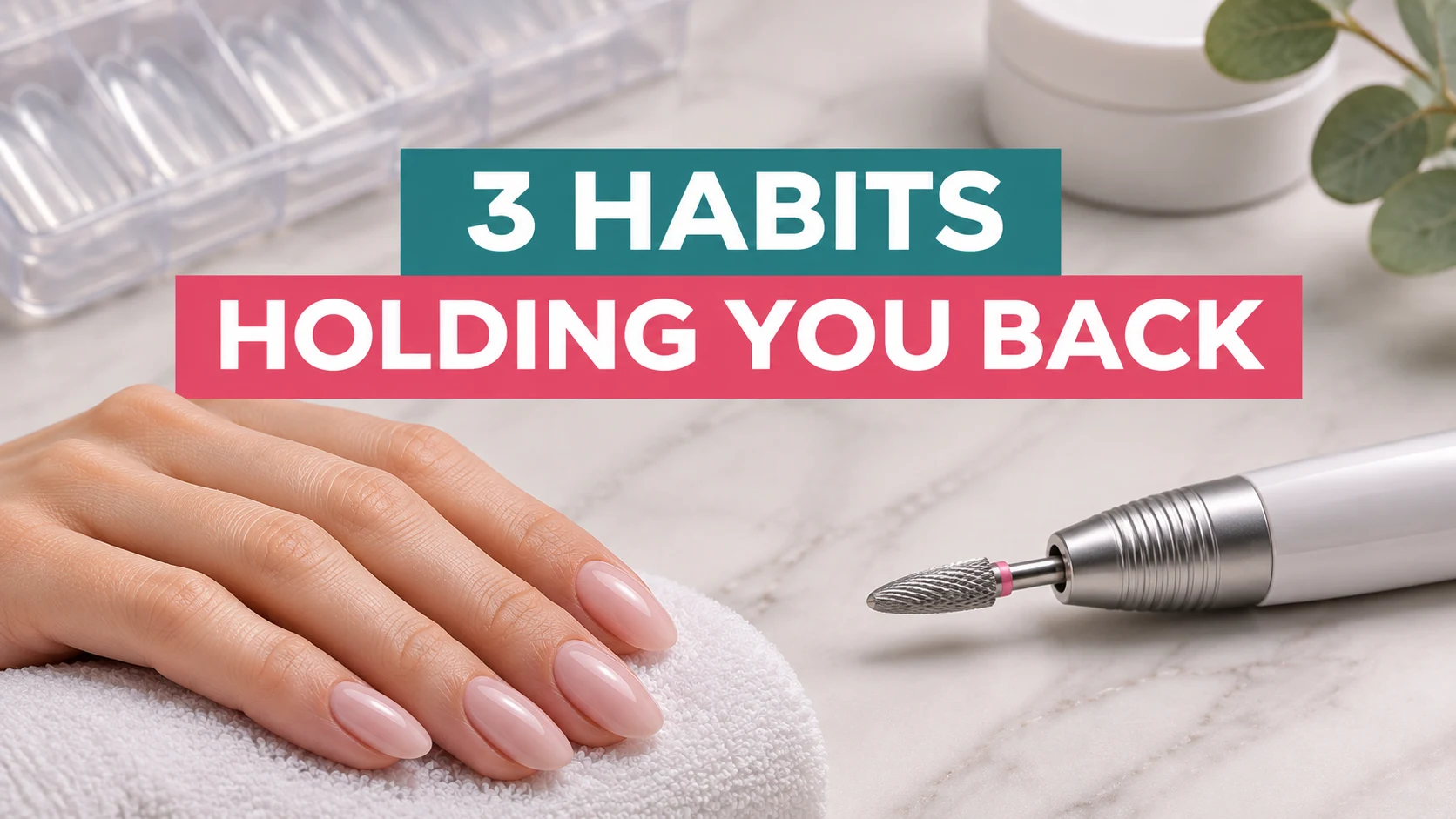
Many technicians keep investing in products, techniques and training and still feel their results are inconsistent. The usual advice is to pay more attention to detail, follow the trends and work faster. I do not think that gets to the cause.
I still work with clients in the salon, and in my teaching I see the same three habits again and again. None of them is about talent. All of them are about how decisions are made.
Quick Answer: What Holds Nail Technicians Back?
Often it is not a lack of techniques. It is how decisions are made with them. Three habits limit results: finishing the steps without assessing the result, following techniques and trends without understanding their purpose or suitability, and confusing working harder with working more effectively. Each one keeps technicians repeating the same problems however many products, courses or years they add.
1. Completing the Steps Without Assessing the Result
It is easy to concentrate on doing each step correctly and never evaluate what you ended up with. Finishing a service and assessing it are different skills. Assessment asks questions the routine does not:
- Was the method suitable for this natural nail?
- Did the product behave as I expected?
- Are the structure and shape appropriate for this client?
- Did I need to file more than I should have, and why?
- Did I adapt the service to the skin and nail in front of me?
Without that, you can follow a routine perfectly and get a different result each time without knowing why. I explain the thinking that comes before the work in The Nail Prep Step Most Nail Techs Rush: Assessment Before Application and what goes wrong when routines are followed without purpose in The Real Reason Nail Prep Fails.
2. Following Techniques and Trends Without Understanding Their Purpose
Keeping up with the industry does not mean buying every new product or copying every popular technique. A new dual form can have a different architecture, flexibility or apex position. That does not make it better for every technician or every nail type. A Russian manicure demonstration can show a deep, clean result, which does not mean every client has the anatomy for the same appearance. Copying the result without the suitability is how problems start. I wrote about this in The Biggest Mistake in Russian Manicure: Performing the Same Technique on Every Client and Why Nail Prep Must Change for Different Nail Types.
To be clear, I am not against learning. I take courses myself and I believe continued education is valuable. My criticism is of learning that stops at the surface: knowing what to do without knowing when it suits and why. The difference is explained in The Difference Between Copying and Understanding in Nail Education.
3. Confusing Working Harder With Working More Effectively
A slow appointment is not always a sign of thoroughness, and a fast one is not always a sign of corners cut. Time is often lost in repeated movements, correcting what could have been prevented earlier, changing tools again and again and working without a clear sequence. I describe a time-saver of mine that cost me time instead in Working Faster Is Not the Same as Working More Efficiently.
Efficient is not the same as rushed. Safety and proper curing cannot be traded for speed. Time also affects what a service can realistically earn, because a price has to cover more than the minutes spent applying product.
Why Knowing More Does Not Always Mean Deciding Better
These three habits have the same root. Each one is a decision made on autopilot: finish the steps, copy the method, push harder. More years, more products or more certificates do not change that on their own. What changes it is learning to assess a problem, understand its cause, choose a solution that suits the nail in front of you and check the result.
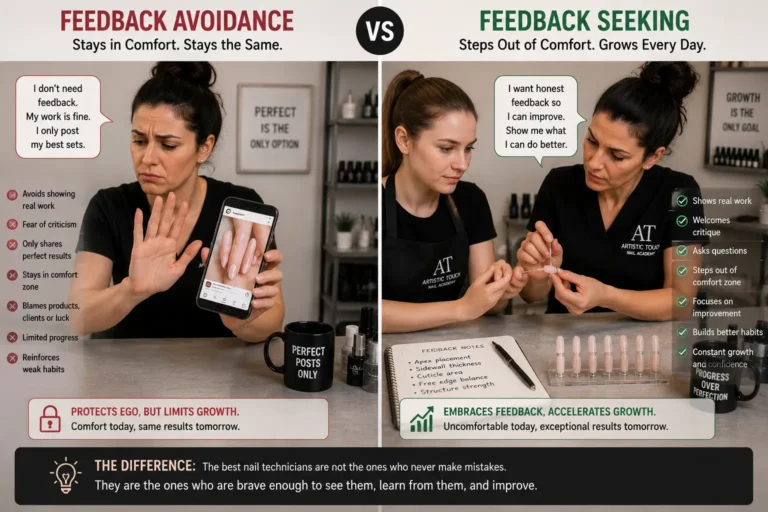
If you recognise yourself here, Why Some Nail Techs Never Progress Beyond Average looks at the protective habits that keep technicians stuck, and Why Improved Nail Work Deserves Higher Prices explains what better work can change for your business.
What Should Change
Start with the question you ask after each service: what did I learn from this result? Then look at your next purchase or course with a different test. Will it help me assess, understand and adapt, or will it only add another thing to copy?
Learn to Assess, Understand and Adapt
Russian Manicure – Beyond Technique teaches anatomy, e-file control, tool selection and decision-making, so you adapt your work to each client instead of repeating one routine. Basic e-file experience is recommended.
Explore Russian Manicure – Beyond Technique →Frequently Asked Questions
Why do I not improve even though I keep learning?
Often because learning has added techniques without improving how you decide when and why to use them. Assessing results, understanding purpose and working efficiently are separate skills.
Does working slowly mean I am less skilled?
Not necessarily. Time can be lost in repeated steps, correcting avoidable problems or unsuitable methods. Look at where the time goes before trying to work faster.
Should I stop following new techniques and trends?
No. Continued education is valuable. The point is to understand what a technique is for and whether it suits the nail and client in front of you.
Do more certificates make me a better technician?
Not automatically. A certificate of completion records that you finished a course, while an assessed qualification may show that specific requirements were met. Neither one on its own proves better judgement, which comes from understanding, assessing and adapting.
Key Takeaway
What holds many technicians back is not missing techniques but autopilot decisions: finishing without assessing, copying without understanding and working harder instead of better.
About the Author
Professional Nail Expert | International Nail Educator
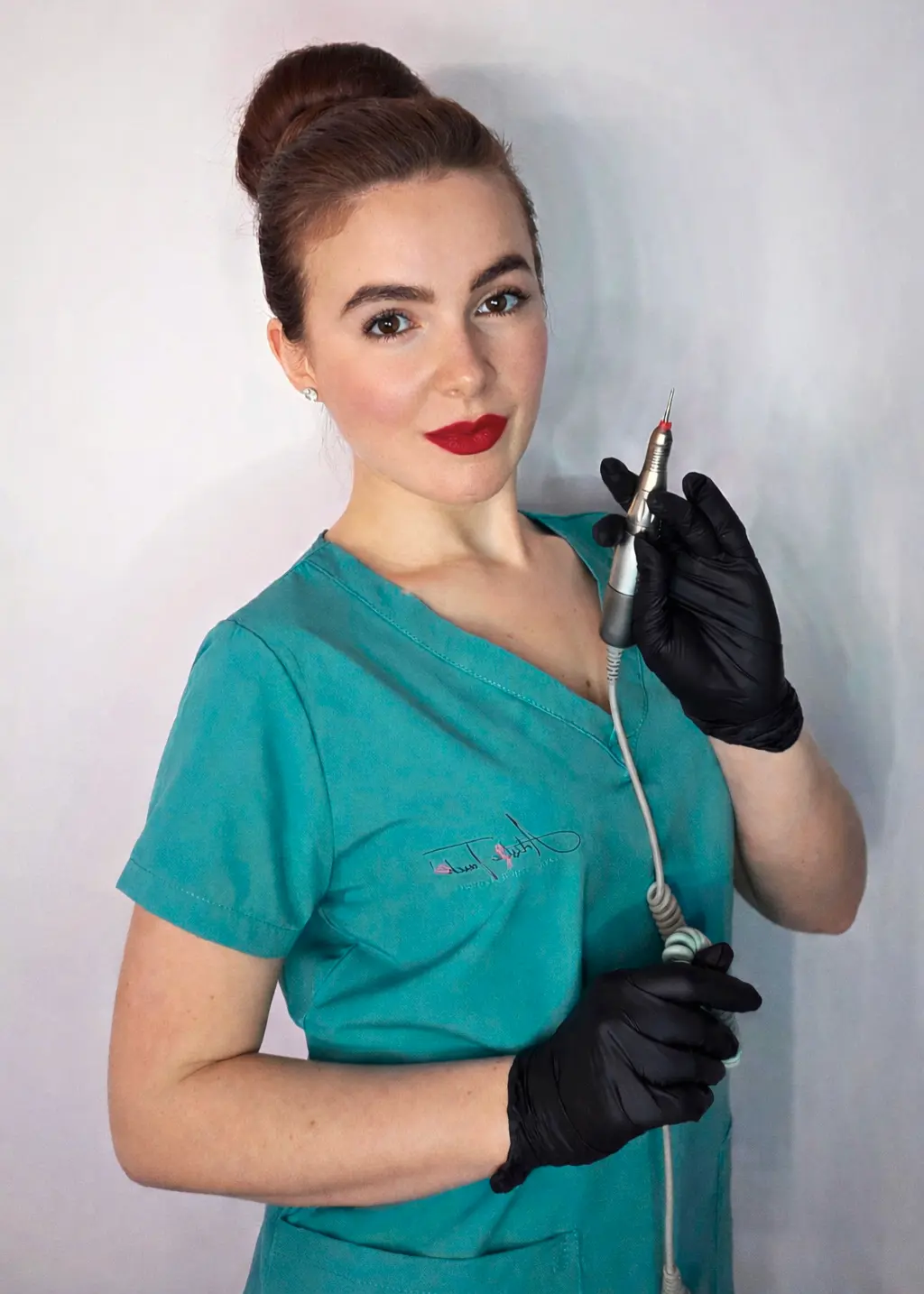
I am Radina Ignatova, a Professional Nail Expert since 2014 and International Nail Educator, based in Scotland, UK. I am the Founder of Artistic Touch – Nail Training Academy and TheNailWiki.
At Artistic Touch – Nail Training Academy, I provide structured professional online nail education specialising in dual forms, nail preparation and retention, nail structure, E-File work and Russian Manicure, with a strong focus on professional salon safety. I continue to work actively in salon practice, ensuring that all education reflects real client scenarios and current industry standards.
My teaching philosophy is simple: I show real salon challenges, real mistakes and real performance testing, not just perfect demonstrations. This is how you develop genuine technical competence and become a confident, capable nail professional.