Why This Sandwich Form Gives Cleaner Imprints Than Traditional Methods
Quick Answer: Why Do Sandwich Dual Forms Create Cleaner Imprints?
Sandwich dual forms create cleaner nail bed contact by containing product completely between two form surfaces, eliminating the cleanup work traditional forms require. You see exactly where product sits, maintain precise cuticle zone coverage and remove the forms to reveal finished structure requiring no additional filing or refinement. The contained application means cleaner process and cleaner results.
This article explains why sandwich forms eliminate the mess traditional methods create.
Watch: Why Sandwich Forms Give Cleaner Imprints
This video is published by Radina Ignatova, Professional Nail Expert and Educator, founder of Artistic Touch Nail Training Academy.
Watch more professional nail education content on the official Artistic Touch Nail Training Academy YouTube channel.
The Cleanup Problem Traditional Forms Create
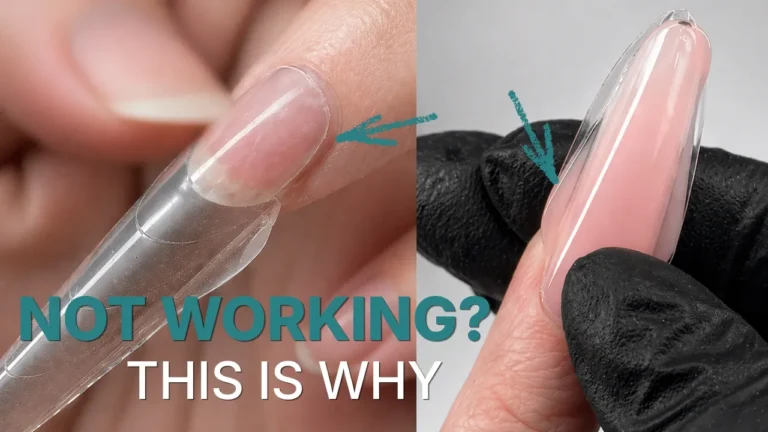
Traditional single-layer dual forms leave product exposed on the top surface during application. This exposed product inevitably spreads beyond intended boundaries. It contacts skin at sidewalls. It extends past the cuticle zone. It creates ridges at form edges requiring filing correction. The application process is messy by design because product has nowhere to go except outward when compressed.
After removal, you face substantial cleanup work. File away excess product that leaked onto skin contact zones. Smooth ridges where form edges pressed into soft product. Refine sidewall contours that were obscured by overflow. Shape the free edge that extended beyond control during application. This cleanup adds significant time to every nail and introduces opportunities for structural damage during correction filing.
The mess is not operator error. It is inherent to the method. When product sits exposed rather than contained, spreading and overflow are inevitable consequences of pressure application. Traditional forms require you to manage this mess rather than preventing it.
How Sandwich Forms Contain Product Completely
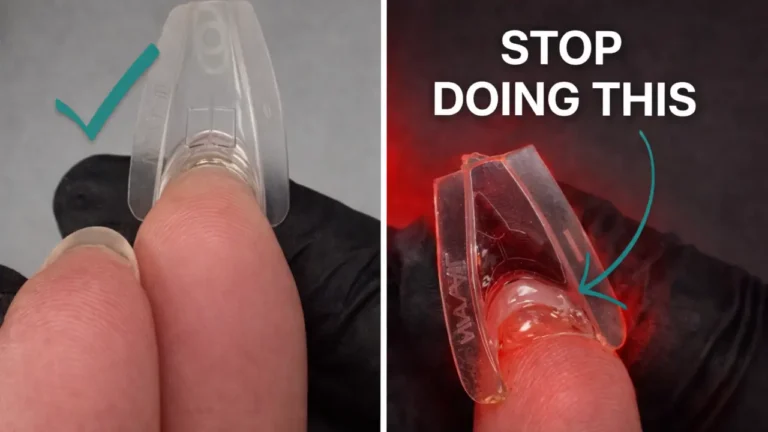
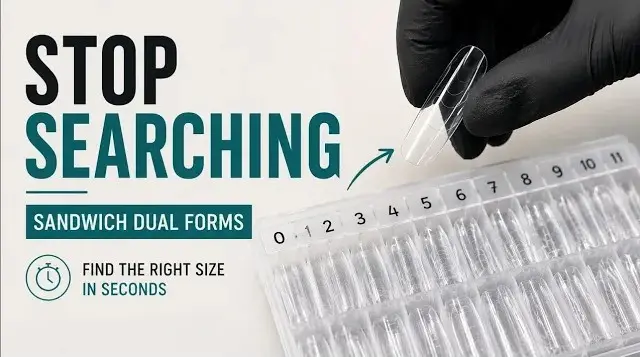
Sandwich dual forms place product between two form layers. The top layer prevents upward spreading. The bottom layer prevents downward contact with skin. Product remains completely contained within the form sandwich throughout application. This containment eliminates the spreading and overflow that traditional forms allow.
When you apply pressure to sandwich forms, product distributes within the contained space but cannot escape beyond form boundaries. It stays exactly where you placed it. No leakage onto skin. No overflow past cuticle zone. No ridge formation at edges. The contained environment means controlled product behaviour throughout the application process.
After curing and removal, the enhancement reveals clean edges requiring no correction filing. Product stayed within intended boundaries because physical containment prevented spreading. The cleanup work traditional forms require simply does not exist with proper sandwich form technique.
Visible Application Zones During Work
Traditional forms obscure your view of product placement. You press product into the form but cannot see clearly where it distributes or whether coverage is adequate at critical zones. You work partially blind, discovering product distribution only after removal when correction becomes difficult.
Sandwich forms provide clear visibility throughout application. The transparent top layer shows exactly where product sits. You see cuticle zone coverage in real time. You observe apex formation as it develops. You watch sidewall distribution while still able to adjust. This visibility allows correction during application rather than discovering problems after curing when correction requires additional work.
The ability to see product behaviour as it happens reduces failed applications. You do not commit to curing until visual confirmation shows proper distribution. This real-time assessment capability means cleaner results because problems get corrected before becoming permanent.
Precise Nail Bed Contact Every Time
Traditional forms require you to press them against the nail bed while simultaneously controlling product that wants to spread. Achieving consistent bed contact while managing product overflow challenges even experienced practitioners. The competing demands mean either bed contact suffers or product control fails.
Sandwich forms separate these concerns. The bottom layer achieves nail bed contact independently from product containment. Once positioned correctly, the form stays in contact while the top layer manages product behaviour. You do not choose between bed contact and product control because the method provides both simultaneously.
This reliable bed contact means cleaner cuticle zone coverage. The form edge sits precisely where you position it rather than being pushed out of place by product pressure. The resulting imprint shows clean proximal boundary requiring no correction filing or product addition to close gaps.
No Ridge Formation at Form Edges
Traditional forms create visible ridges where form edges press into uncured product. These ridges require filing to smooth. The filing needed to remove ridges often compromises sidewall thickness at zones requiring maximum structural strength.
Sandwich form containment prevents ridge formation. Product cures in its intended shape without form edges creating pressure lines. After removal, sidewalls show clean contours needing no correction filing. The structural thickness you built stays intact because no correction filing was needed.
Elimination of Sidewall Cleanup
Traditional form application typically results in product overflow onto skin at lateral nail folds. You must remove this excess carefully without damaging the enhancement or irritating the skin. The cleanup work is fiddly, time-consuming and risks structural compromise if you file too aggressively while removing overflow.
Sandwich forms prevent sidewall overflow entirely. The top form layer contains product laterally as well as vertically. When you remove the forms, sidewalls reveal clean edges exactly at skin boundaries. No excess product contacted skin. No cleanup filing is needed. The time saved per nail compounds across full sets into significant efficiency gain.
This clean sidewall definition also improves client comfort. Traditional methods risk product contact with skin causing irritation during or after application. Sandwich containment means zero product-skin contact at lateral zones throughout the process.
Cuticle Zone Precision Without Cleanup
Achieving clean cuticle zone coverage with traditional forms requires balancing conflicting demands. Press the form close enough for adequate coverage but not so close that product floods the proximal nail fold. This balance is difficult to achieve consistently. Results vary between barely adequate coverage and product overflow requiring cleanup.
Sandwich forms position precisely at the cuticle zone because the bottom layer sits against skin without product involved. Once positioned, product fills the contained space up to the form edge but cannot overflow beyond it. After removal, cuticle zone shows coverage exactly to the positioned boundary with clean edge requiring no refinement.
This precision means professional appearance immediately after form removal. No gap exists requiring fill-in. No overflow exists requiring cleanup. The cuticle zone is simply complete as applied.
Faster Work Through Eliminated Steps
Traditional dual form application includes these mandatory steps after removal: file sidewall overflow, smooth form edge ridges, refine free edge shape, check for and remove product that contacted skin and verify structure adequacy after correction filing potentially compromised thickness. Each step adds time. Each creates opportunity for error.
Sandwich dual form application eliminates these cleanup steps entirely. Form removal reveals finished enhancement requiring no filing correction. The time saved per nail is substantial. More importantly, structural integrity remains intact because no correction filing was needed that might compromise thickness at critical zones.
For professional nail techs working under time pressure, this efficiency gain is significant. You complete more clients with higher quality results because the method itself eliminates the cleanup work traditional approaches require. Speed and quality both improve simultaneously.
Reduced Product Waste
Traditional forms lose product to overflow that must be filed away and discarded. The product you carefully measured and placed spreads beyond intended boundaries, then gets removed as waste during cleanup. This waste increases product cost per application unnecessarily.
Sandwich containment means the product you place is the product that cures in the enhancement. No overflow occurs requiring removal and waste. Your product usage becomes more efficient because the method prevents the loss traditional approaches accept as normal.
Over hundreds of applications, the product savings compound into meaningful cost reduction. More importantly, knowing that product stays where you place it allows more precise amount control. You use exactly what the enhancement needs rather than adding extra to account for expected overflow loss.
Client Perception of Professional Technique
Clients notice the difference between messy application requiring extensive cleanup filing and clean application producing finished results immediately after form removal. The sandwich method appears more professional because it is more controlled. No product contacts their skin. No filing dust creates mess during cleanup. The process looks as controlled as the results it produces.
This professional appearance builds client confidence in your technique. They see you working cleanly and efficiently rather than managing mess and performing correction work. The perception reinforces their decision to choose your services because visible technique quality suggests outcome quality.
Traditional messy application might produce acceptable results after cleanup but the process itself creates doubt. Clients wonder why so much correction is needed if the technique was executed properly initially. Sandwich forms eliminate this concern because the clean process matches the clean results.
Cleaner Process Creates Better Results
Sandwich dual forms eliminate cleanup work not through superior skill but through superior method design. Containing product between two form layers prevents the spreading and overflow that traditional exposed application cannot avoid. The cleaner imprints are inevitable consequence of containment rather than difficult achievement requiring exceptional technique.
This is why sandwich forms allow faster work producing better results. The method itself handles product control that traditional approaches require the operator to manage through cleanup and correction.
Master Clean Sandwich Dual Form Technique
The Sandwich Dual Forms Online Course teaches you to achieve consistently clean imprints through proper containment technique, form positioning and pressure control—not just cleanup skills.
Enrol Now →Lifetime access • Start immediately • Learn at your own pace
Frequently Asked Questions
Why do sandwich dual forms create cleaner imprints than traditional forms?
Sandwich forms contain product completely between two form layers, preventing the spreading and overflow traditional exposed application cannot avoid. Product stays within intended boundaries because physical containment stops it escaping sideways, upward or beyond cuticle zone. After removal, clean edges require no correction filing because overflow never occurred.
Do sandwich forms eliminate all cleanup work?
When applied with proper technique, sandwich forms eliminate the filing cleanup traditional forms require. No sidewall overflow needs removal, no form edge ridges need smoothing and no excess at cuticle zone needs correction. Form removal reveals finished enhancement edges requiring no refinement. The cleanup steps traditional methods make mandatory simply do not apply.
Can I see product placement during sandwich form application?
Yes. The transparent top form layer provides clear visibility throughout application. You see exactly where product distributes, whether cuticle zone coverage is adequate, how apex forms and whether sidewalls have proper thickness. This real-time visibility allows correction during application rather than discovering problems after curing when correction requires additional work.
Why do traditional forms create ridge problems that sandwich forms avoid?
Traditional form edges press directly into uncured product creating visible ridges requiring filing to smooth. Sandwich containment prevents ridge formation because product cures in intended shape without form edges creating pressure lines. The structural thickness you build stays intact because no correction filing is needed to remove ridges.
Does cleaner application mean faster work?
Yes. Sandwich forms eliminate these time-consuming steps traditional forms require: filing sidewall overflow, smoothing form edge ridges, refining free edge shape, removing product that contacted skin and verifying structure after correction filing. The time saved per nail compounds across full sets into significant efficiency gain while maintaining higher quality through eliminated correction work.
How do sandwich forms achieve precise cuticle zone coverage?
The bottom form layer positions against skin without product involved, achieving precise placement. Product then fills the contained space up to form edge but cannot overflow beyond it. After removal, cuticle zone shows coverage exactly to positioned boundary with clean edge requiring no refinement. No gap exists requiring fill-in and no overflow exists requiring cleanup.
About the Author
Radina Ignatova
Professional Nail Expert | International Nail Educator
I am Radina Ignatova, a Professional Nail Expert since 2014 and International Nail Educator, based in Scotland, UK. I am the Founder of Artistic Touch Nail Training Academy and TheNailWiki.
At Artistic Touch Nail Training Academy, I provide structured professional online nail courses specialising in dual forms, gel systems, polygel application, advanced nail structure, E-File work and Russian Manicure, with a strong focus on professional salon safety. I continue to work actively in salon practice, ensuring that all education reflects real client scenarios and current industry standards.
My teaching philosophy is simple: I show real salon challenges, real mistakes and real performance testing, not just perfect demonstrations. This is how you develop genuine technical competence and become a confident, capable nail professional.
Every Artistic Touch course includes lifetime access and access to a dedicated student support group, where I provide ongoing guidance and professional feedback.
Disclaimer: This content is for educational purposes only. Nail services should be performed by trained professionals following current hygiene and safety regulations. Always carry out a full client consultation and check for contraindications before performing any nail service.
About Artistic Touch Nail Training Academy
Artistic Touch Nail Training Academy delivers structured professional online nail education focused on practical skill development, professional standards and safe salon practice. All courses are available online worldwide.