2 Most Common Sandwich Dual Forms Mistakes (And Why They Happen)
Watch the video to see exactly what happens when these mistakes occur — demonstrated in real time so you understand why results fail.
Quick Answer: What Are the Two Most Common Sandwich Dual Forms Mistakes?
Mistake 1: Using a form that does not match the natural nail structure — when the form’s C-curve does not accommodate the sidewall space, product has nowhere to go and forces the form to lift off the nail. Mistake 2: Using too much product — excessive product floods everywhere during compression, destroys structure, creates unclean results, and causes loss of control during placement.
Both mistakes happen because of misunderstanding how the sandwich compression system works structurally — not because of poor application technique.
Why Your Sandwich Dual Forms Never Look Right or Keep Failing
If your sandwich dual forms never look right or keep failing, this is usually why. The problem is not your product choice or your application speed. The problem is structural — either the form does not match the natural nail, or you are using too much product during compression.
These two mistakes account for the majority of sandwich dual forms failures. Understanding what happens when you make these mistakes — seeing the structural cause in real time — changes how you approach form selection and product placement.
This article breaks down both mistakes, shows you exactly what happens when they occur, and explains the structural reasoning behind why sandwich dual forms fail when these decisions are made incorrectly.
Mistake 1: Using a Form That Does Not Fit the Natural Nail
At first glance, a sandwich dual form might appear to fit the natural nail correctly. The width looks acceptable. The form sits on the nail plate without obvious gaps. Everything seems fine — until you add product.
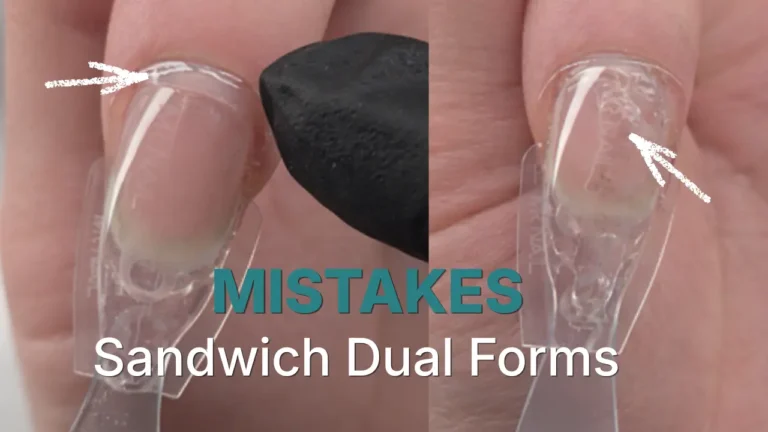
When you fill the form with polygel or builder gel and press it onto the nail, the form lifts off at the sidewalls. The product forces the form away from the natural nail instead of compressing evenly. The sidewalls pop up, creating gaps where product leaks and structure fails.
This happens because the form’s C-curve depth does not match the natural nail’s architecture. There is not enough space between the natural nail and the dual form at the sidewall zones to accommodate the product. When compression occurs, the product has nowhere to go except to push the form away from the nail surface.
Why This Happens
The sandwich system works through two-direction compression. The top form and bottom form press together, compressing product into the space between them. If that space is too narrow at the sidewalls — if the form’s arch is too deep for the natural nail’s curve — the product cannot distribute evenly.
When you press the forms together, the product pushes outward looking for space. At the sidewalls, where there is no room, the pressure forces the entire form to lift off the nail plate. The form literally pops up because the compression system cannot work within the space available.
This is not a placement error. This is not poor technique. This is a form selection error made before any product was opened. The form does not match this nail type and should not be used on this particular nail structure.
What the Final Result Looks Like
When a form does not fit correctly and lifts during compression, the cured result shows several visible problems. The sidewalls are uneven or completely separated from the nail plate. Product has leaked under the form edges. The C-curve is irregular or completely lost. The structure appears unstable because it never bonded properly to the natural nail.
No amount of filing or refinement can fix this. The structural failure happened during compression. The only solution is to remove the enhancement completely and restart with a form that matches the nail’s natural architecture.
Mistake 2: Using Too Much Product
The second common mistake is overfilling the sandwich dual form with product. Many technicians believe that more product creates stronger nails. This is incorrect. Excessive product destroys structure, creates unclean results, and causes loss of control during the most critical stage of application.
When you squeeze too much polygel or builder gel into the sandwich form and press it onto the nail, the excess product floods everywhere. It spills out at the cuticle zone. It leaks at the free edge. It squashes out at the sidewalls. You spend the application fighting to control product that should never have been there in the first place.
The Consequences of Too Much Product
Using too much product does not make nails stronger. It creates several serious problems that undermine the entire application.
Loss of control. When excess product floods everywhere during compression, you lose the ability to assess critical placement factors. You cannot see if the form is centered correctly. You cannot check if alignment is straight. You are focused entirely on scraping away product instead of ensuring structural decisions are correct.
Unclean results. Excess product creates flooding at the cuticle zone and free edge. This requires extensive filing to remove, which defeats the purpose of using dual forms. The point of the sandwich system is clean imprints that require only refinement — not heavy filing to remove flooded product.
Structural shift. When you scrape away excess product during compression, the pressure can shift how the form sits on the natural nail. The form can move off-center. The alignment can twist. The bottom form can slide out of position. These shifts destroy structural integrity even when the form selection was correct.
Heat spikes. Excessive product mass creates more exothermic heat during curing. This increases discomfort for the client and can cause the client to pull their hand away during flash curing, which disrupts the compression and ruins the structure.
What Correct Product Amount Looks Like
The correct amount of product for sandwich dual forms depends on which form type you are using — long arched forms require different amounts than short shallow forms. Understanding this relationship between form architecture and product volume is part of learning how the sandwich system works structurally.
When product amount is controlled correctly, compression is clean. The forms press together smoothly without excess flooding. The imprint is precise. Refinement requires minimal filing because structure was created during compression, not carved out during refinement.
Why Understanding Matters More Than Technique
Both of these mistakes happen because of misunderstanding how the sandwich compression system works — not because of poor hands-on technique. You can have perfect product control, excellent filing skills, and careful placement, but if you select forms that do not match the nail or use too much product, the structure will fail.
This is why the Sandwich Dual Forms Online Course focuses on structural understanding first. You learn how the compression system works, how to select forms by C-curve depth and natural nail architecture, how to control product volume based on form type, and how to troubleshoot problems by identifying their structural cause.
The course teaches you why these mistakes happen — not just what they look like. When you understand the structural reasoning, you make better decisions during form selection and product placement. You prevent failures before they occur instead of trying to fix them after the client has left.
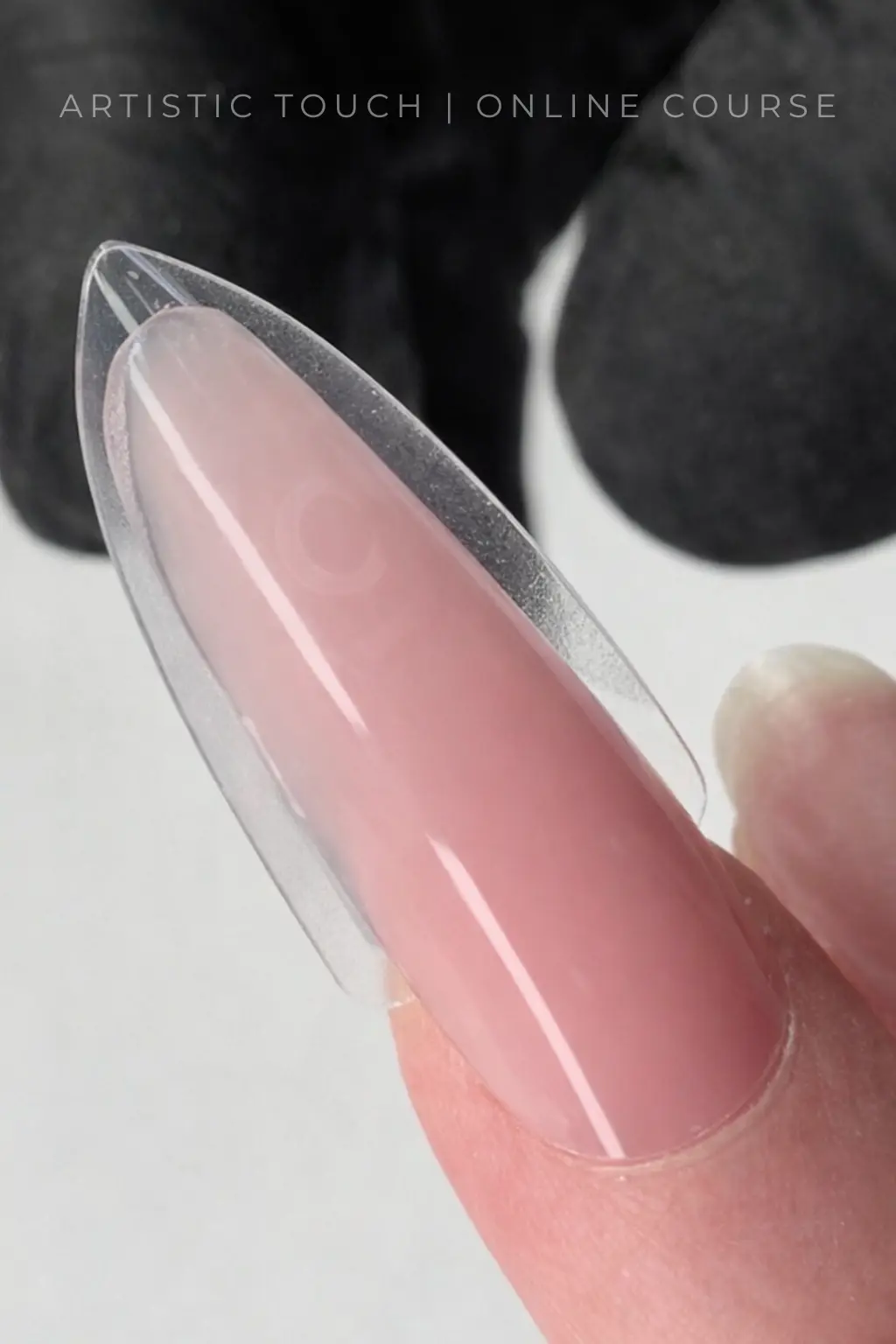
Two-direction compression — when forms match the nail and product amount is controlled, compression creates clean structure.
The sandwich system compresses product between two forms. When form selection is correct and product amount is appropriate, this compression creates controlled volume and clean structure.
When form selection is wrong or product amount is excessive, the compression system cannot work as intended — and structural failures occur regardless of how carefully you apply the technique.
How to Avoid These Mistakes
Avoiding these mistakes requires understanding the structural principles behind sandwich dual forms application — not just copying visual steps from demonstrations.
Learn form selection by structure. Select forms based on how the C-curve depth matches the natural nail’s architecture, not based on width alone. A form can fit the width perfectly whilst being completely unsuitable for the nail’s sidewall curve and arch.
Understand product volume requirements. Different form types require different product amounts. Long arched forms need more product than short shallow forms. The amount depends on the volume of space the compression system creates, not on nail length.
Assess before compression. Before you press the forms together, check that the form sits flush against the natural nail at the sidewalls. If there are gaps or if the form appears to be forcing itself onto the nail, the selection is wrong. Stop and choose a different form.
Use minimal-contact bottom placement. Control where product sits from the beginning by using a controlled bead placement method instead of flooding the bottom form with gel. This prevents product from contacting skin and gives you better control during compression.
What You Learn in the Full Course
The video above shows you what these mistakes look like and why they happen. The Sandwich Dual Forms Online Course teaches you the complete system — how to prevent these mistakes through correct form selection, controlled product placement, and structural understanding.
You learn form selection by C-curve depth and natural nail architecture. You understand how to assess which forms match which nail types before product is opened. You master product pre-build technique that creates apex and structure before compression occurs. You see troubleshooting demonstrated in real time so you recognise problems at the moment they happen — not after the client has left.
The course includes approximately 4 hours of structured professional training, 3 downloadable PDF guides (Quick Reference, Troubleshooting Checklist, Application Checklist), lifetime access, private student support group with expert feedback, and certificate of completion.
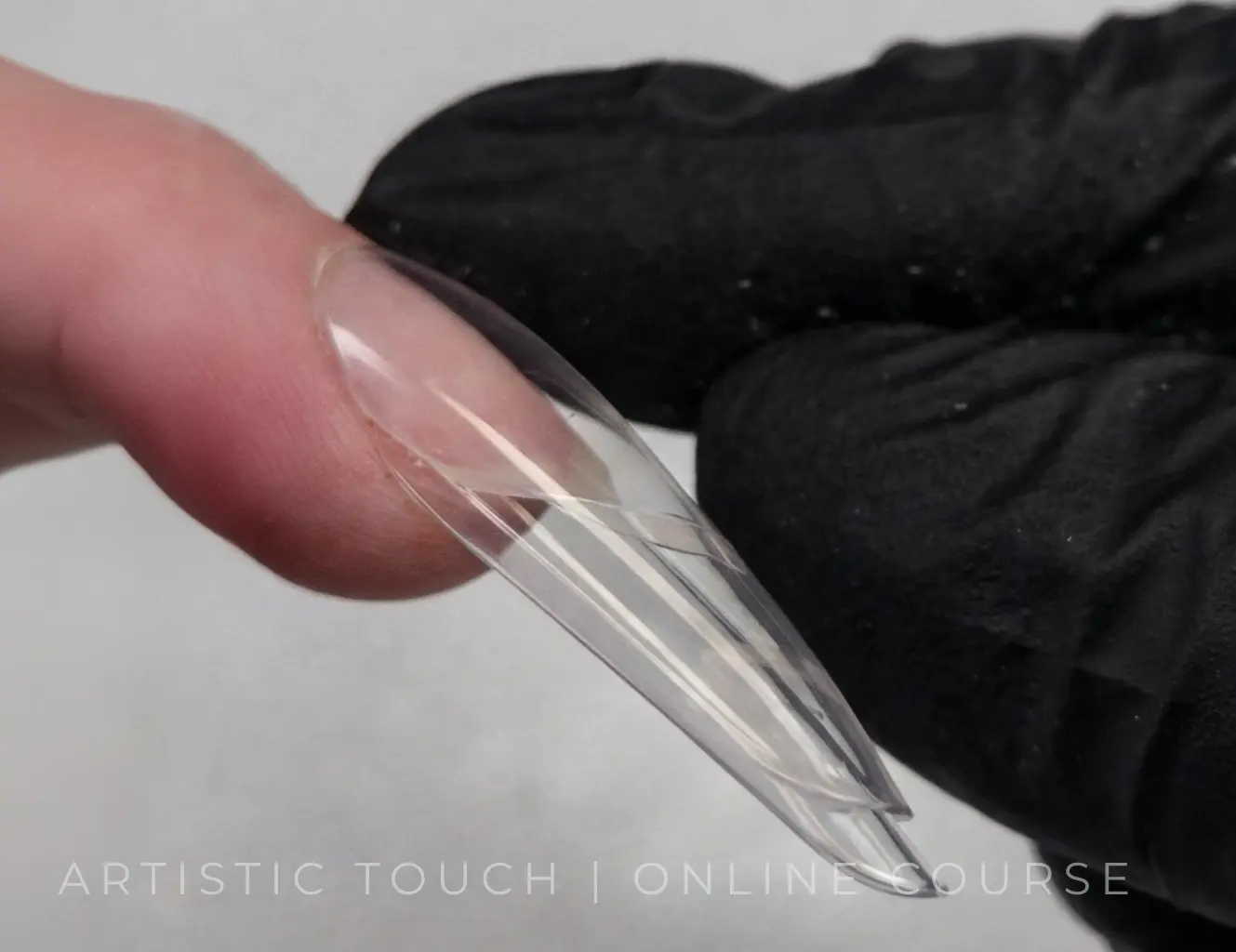
Understanding structure and volume — the foundation of correct form selection and product control.
The side profile reveals what the top view cannot show — whether form selection created controlled volume or excessive bulk, whether structure is balanced or unstable.
When you understand what correct structure looks like from every viewing angle, you can identify form selection errors and product control problems immediately — before compression locks them in.
Learn the Complete Sandwich Dual Forms System
Master form selection by C-curve depth, product control, minimal-contact placement, and troubleshooting demonstrated in real time. Includes lifetime access, 3 downloadable PDF guides, private student support group, and certificate of completion.
View Sandwich Dual Forms Course →Lifetime access • Start immediately • Expert feedback included
Frequently Asked Questions
How do I know if a form matches my client’s natural nail before adding product?
Check that the form sits flush against the natural nail at the sidewall zones without forcing or lifting. Look at the space between the form’s arch and the natural nail’s curve — if the gap is very narrow or if the form appears to be pushing against the sidewalls, the C-curve depth does not match and the form will lift when product is added.
Why does using more product not make nails stronger?
Strength comes from correct structural architecture — balanced apex placement, even C-curve, controlled volume distribution. Excessive product creates bulk without structure. It floods during compression, shifts form placement, creates heat spikes, and requires heavy filing that undermines the precision the sandwich system is designed to provide. Controlled product amount creates cleaner, stronger structure.
Can I fix a nail that lifted during compression?
No. When a form lifts during compression because it does not match the natural nail, the structural failure is locked in. The sidewalls are separated, the C-curve is lost, and the bond to the natural nail is compromised. The only solution is complete removal and reapplication with a form that matches the nail’s architecture correctly.
How much product should I use in sandwich dual forms?
The amount depends on the form type you are using. Long arched forms create more volume space and require more product than short shallow forms. The correct amount fills the form without creating excess that floods during compression. Learning this relationship between form architecture and product volume is covered in the complete sandwich dual forms training.
What is minimal-contact bottom placement?
Minimal-contact placement is a bottom form technique that uses a controlled bead of base coat instead of flooding the form with gel. This keeps product clear of the hyponychium and proximal nail fold throughout application, reduces sensitisation risk, and provides better control during compression. This method is taught in detail in the sandwich dual forms course.
About the Author

Radina Ignatova
Professional Nail Expert | International Nail Educator
I am Radina Ignatova, a Professional Nail Expert since 2014 and International Nail Educator, based in Scotland, UK. I am the Founder of Artistic Touch Nail Training Academy and TheNailWiki.
At Artistic Touch Nail Training Academy, I provide structured professional online nail courses specialising in dual forms, gel systems, polygel application, advanced nail structure, E-File work and Russian Manicure, with a strong focus on professional salon safety. I continue to work actively in salon practice, ensuring that all education reflects real client scenarios and current industry standards.
My teaching philosophy is simple: I show real salon challenges, real mistakes and real performance testing, not just perfect demonstrations. This is how you develop genuine technical competence and become a confident, capable nail professional.
Disclaimer: This content is for educational purposes only. Nail services should be performed by trained professionals following current hygiene and safety regulations. Always carry out a full client consultation and check for contraindications before performing any nail service.
About Artistic Touch Nail Training Academy
Artistic Touch Nail Training Academy delivers structured professional online nail education focused on practical skill development, professional standards and safe salon practice. All courses are available online worldwide.