Sandwich Dual Forms Online Course: Master Structure, Selection & Troubleshooting
Watch the course preview to see the teaching style, depth of explanation, and professional results you will achieve.
What Does the Sandwich Dual Forms Online Course Teach?
This online course teaches the complete sandwich dual forms system — form selection by C-curve depth and structure (not width), growth point control, minimal skin contact bottom placement, central axis alignment, product pre-build technique, troubleshooting integrated into demonstrations, and full applications with both polygel and builder gel.
Approximately 4 hours of structured professional training plus 3 downloadable PDF guides, lifetime access, and private student support group with expert feedback from Radina included.
Why Your Sandwich Dual Forms Keep Failing — Even When You Follow Every Tutorial Perfectly
If your sandwich dual forms never sit correctly or your structure always feels inconsistent, this is usually not your product. It is your understanding of the system.
Not all sandwich systems work the same way, even if they look identical. Different arches, different depths, and different shapes completely change the final structure. When you select forms based only on width — without understanding how C-curve depth affects volume, or which nail types cannot accommodate deep arched forms — you introduce structural failures before any product is opened.
Most sandwich dual forms content shows you what a finished nail looks like. It does not show you why form selection by width alone causes structural failures. It does not show you what happens when you use a deep arched long form on a flat nail bed. It does not show you what growth points look like when they are not properly closed, or what a hollow centre looks like from the side profile before it breaks.
The Sandwich Dual Forms Online Course shows you all of it.
What Makes This Course Different from Tutorial Videos
This is not a surface-level demonstration. This is structural education that teaches you the decisions, the reasoning, and the troubleshooting that create consistent professional results.
You will learn what the sandwich system does structurally — how two-direction compression changes the rules — and why you are selecting structure, not sculpting it. You will understand why long forms and short forms are chosen by C-curve depth and volume, not just length. You will see which nail types cannot accommodate sandwich forms and why forcing them creates failures.
This is honest education. You see the failures demonstrated in real time, explained in the moment they happen, so you learn to recognise them before they are locked in — not after the client has left and the enhancement has broken.
What You Learn in the Sandwich Dual Forms Course
The course is structured across four progressive modules covering approximately 4 hours of professional training, plus text lessons, downloadable resources, and lifetime access to ongoing support.
Module 1: Understanding the Sandwich System & Form Selection
Learn what the sandwich system does structurally and how to select forms correctly for different nail types.
What Is the Sandwich System? Understand how two-direction compression changes structural decisions. You learn why the sandwich system behaves differently from traditional dual forms and how this affects every selection and placement choice you make.
Length & Structure. Learn the structural differences between form types and when to use each. Long forms versus short forms is not about nail length — it is about C-curve depth, volume capacity, and nail bed architecture.
Dual Form Selection & Fit Principles. Master the sizing logic that prevents structural failures before product is opened. You understand how to match forms to natural nail structure so compression creates controlled volume rather than excessive bulk.
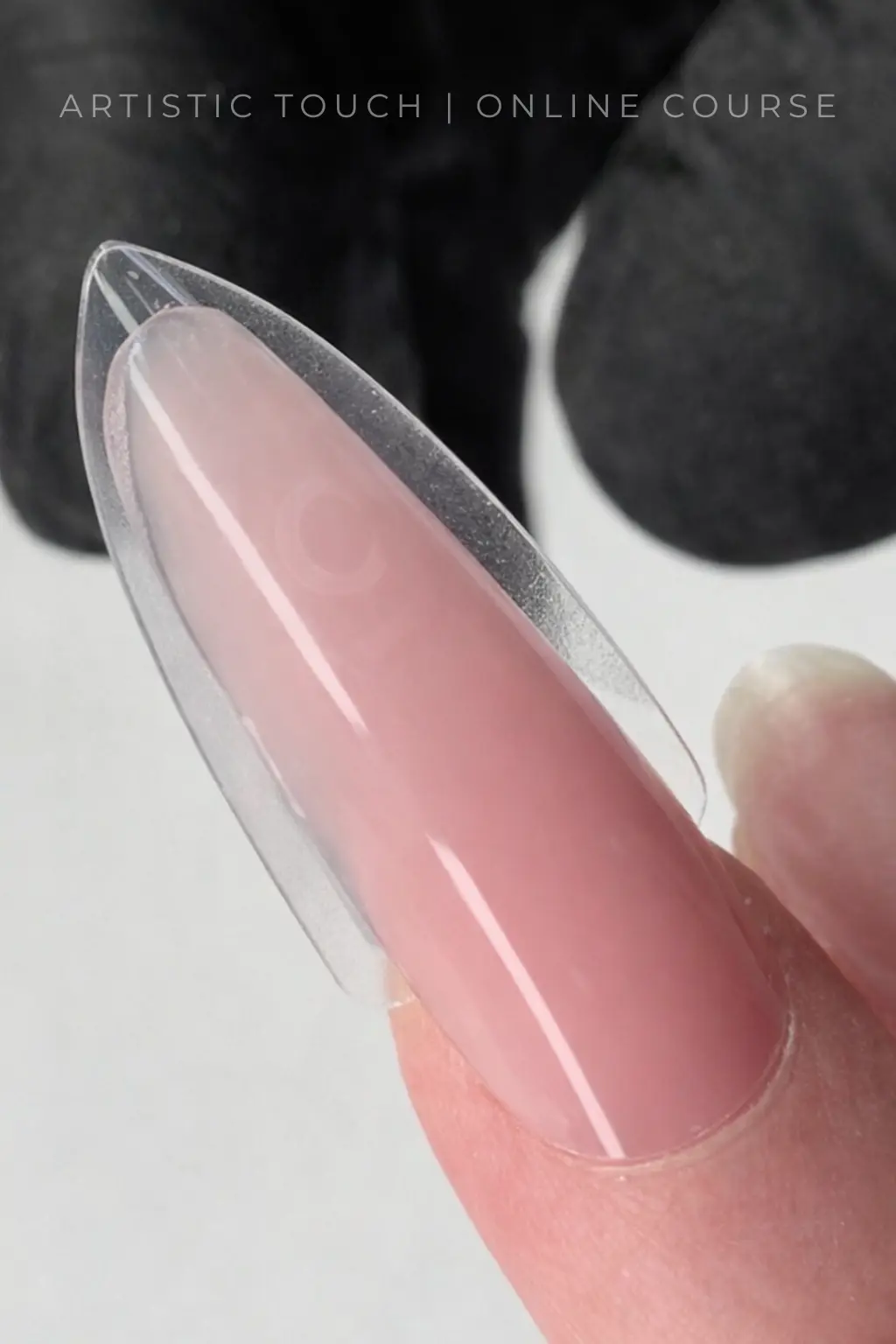
Two-direction compression — the forms press together to control volume within the defined space between them.
Understanding how the sandwich system works structurally is essential for making correct form selection decisions. The compression creates controlled volume when forms match the natural nail architecture.
This is why selecting forms by width alone fails — the C-curve depth and arch of the form determine how much volume is created during compression, not the width of the form at the free edge.
Module 2: Structure, Fit & Safe Application
Understand nail type compatibility and safe placement techniques that reduce skin contact throughout application.
Nail Types & Form Compatibility. Learn how to assess nail types and understand when the sandwich system is suitable. Not every nail can accommodate sandwich forms — you learn which nail types work, which require adaptation, and which are unsuitable.
Bottom Form Fit: When It Works and When It Fails. Understand correct bottom form fitting and how poor fit affects the final result. You see what proper bottom form placement looks like and what happens when the form does not support the structure correctly.
Safe Bottom Placement & Product Control. Learn the minimal-contact placement method for sensitisation-aware clients. This signature technique uses a controlled bead of base coat instead of flooding the form with gel, keeping product clear of the hyponychium and proximal nail fold throughout application.
Module 3: Application Control
Master product control, application technique, and troubleshooting approaches for professional results.
Gel vs Polygel Application & Control. Understand product behaviour differences and control techniques. Different products require different handling — you learn how to adapt your approach based on what you are working with.
Application Practice. Watch complete application demonstrations with real-time decision-making. You see the full process from form selection through to refinement, with every decision explained as it happens.
Troubleshooting & Common Mistakes. Recognise the most common issues and learn how to approach corrections with confidence. Hollow centres, crooked apexes, spring-back lifting, growth point failures, slip flooding — you see what each looks like and how to correct it before curing locks it in.
Cleaning Sandwich Dual Forms. Proper maintenance protocols for form longevity. You learn how to clean forms correctly so they remain usable through multiple applications.
Module 4: Professional Application
Full professional demonstrations with polygel and builder gel on multiple nail types.
Polygel Application. Complete application on arched forms with integrated troubleshooting. You watch the full process with real-time problem identification and correction demonstrated as it occurs.
Builder Gel Application. Full demonstration on short forms with refinement approach. Different product, different form type, different technique adaptation — you see how the principles apply across different scenarios.
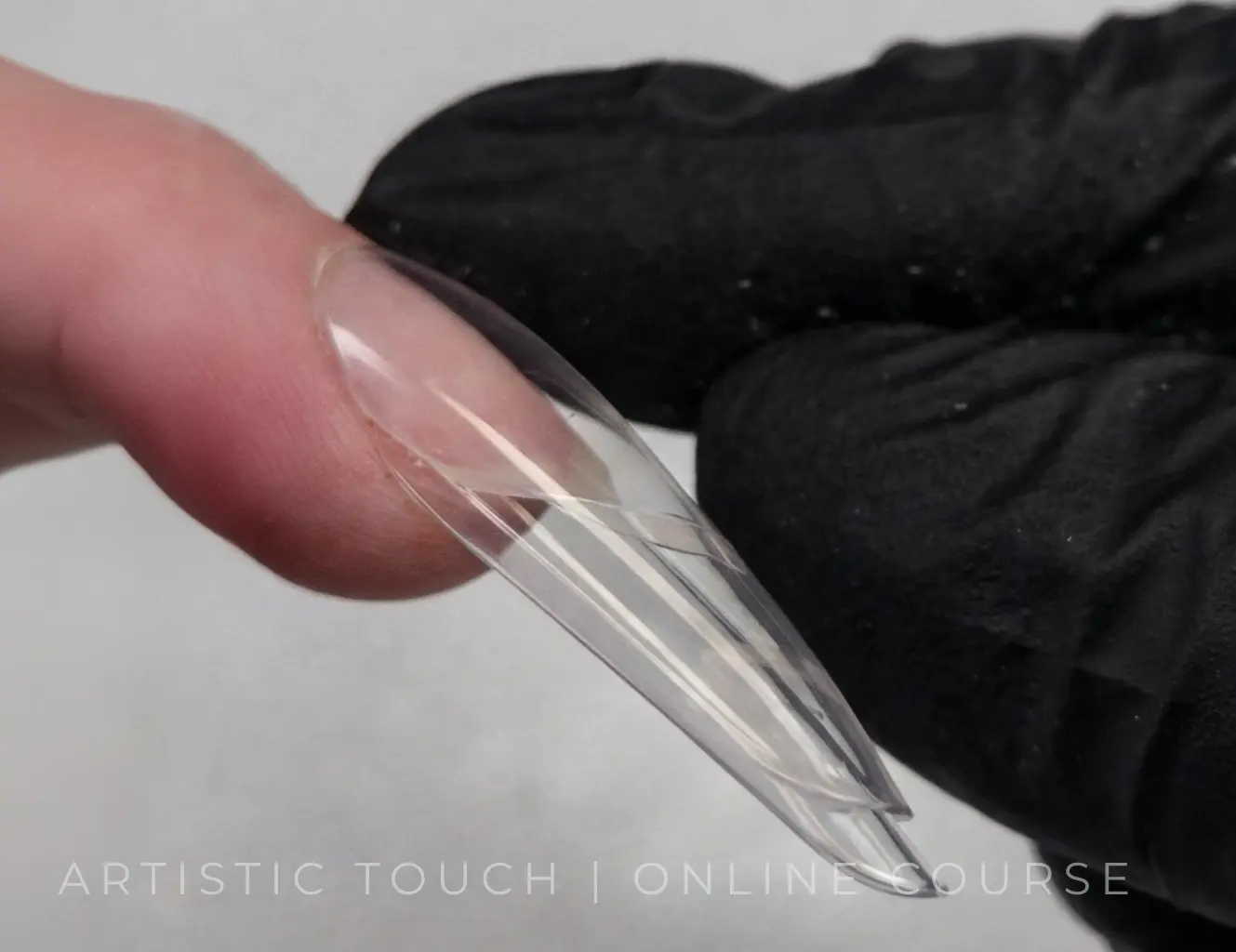
Understanding structure and volume — the foundation of correct form selection.
The side profile view reveals what the top view cannot show — volume distribution, apex placement, and structural balance. This is how you assess whether form selection was correct.
When you understand what correct structure looks like from every angle, you can identify problems immediately after removing the forms — not after the client has left and the enhancement has broken.
Signature Techniques You Will Master
This course teaches specific techniques developed through years of professional salon practice and refined through continuous student feedback.
Form Selection by Structure. You learn to select forms based on C-curve depth and natural nail architecture — not width alone. This prevents the bulk, thickness, and structural failures that result from form mismatch.
Central Axis Alignment. Learn how to control alignment using a central axis so your nail sits straight, balanced, and consistent every time — not corrected later through filing. This technique ensures symmetry is built in during application, not filed in during refinement.
Minimal Skin Contact Bottom Placement. My signature method for placing the bottom sandwich dual form uses a controlled bead technique that keeps product clear of skin throughout application. This is essential for sensitisation-aware clients and creates cleaner professional results.
Product Pre-Build Technique. Product placement inside the form is not random. You learn how to pre-build the structure so the apex and strength are already created before the imprint. This is what creates correct structure — clean imprint, controlled thickness, and consistent C-curve whether you are working with long or short forms.
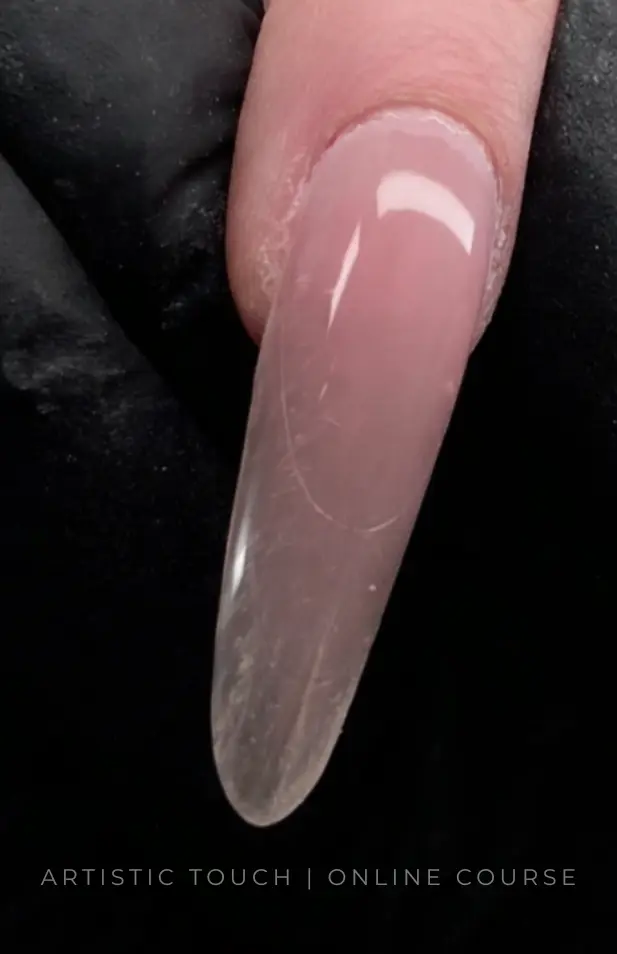
Clean professional results achieved through correct form selection and structural understanding.
This is what correct sandwich dual forms structure looks like — smooth surface, even sidewalls, balanced apex placement, and consistent C-curve from all viewing angles.
When form selection, product pre-build, and structural understanding work together, you achieve results that last through normal client wear without lifting, cracking, or breaking at stress points.
3 Downloadable PDF Guides Included
Every student receives three professional reference guides designed to support confident application during practice and client work. Keep them at your nail desk — printed or on device — so the information is available when you need it most.
PDF 1 — Sandwich Dual Forms: Quick Reference Guide
Structured reference covering key selection rules, unsuitable nail types list, C-curve compatibility chart, and placement sequence checklist. Use this to consolidate what you have learned and refer back during client work.
PDF 2 — Sandwich Dual Forms: Troubleshooting Checklist
Problem identification guide with visual symptoms and quick fixes. Hollow centre, crooked apex, spring-back, growth point failure, slip flooding — what each looks like and how to correct it before curing.
PDF 3 — Sandwich Dual Forms: Application Checklist
Step-by-step checklist covering bottom form selection and fit, product amount guidance, central axis alignment, growth point closure verification, flash curing sequence, and refinement approach. Follow this during practice until the sequence becomes automatic.
What You Get When You Enrol
Complete Course Package
- ✓ Complete sandwich dual form system — structure, selection, application
- ✓ Lifetime access — learn at your own pace, revisit any time
- ✓ Start immediately — instant access after enrolment
- ✓ Certificate of completion — non-accredited professional development
- ✓ Private student support group — expert feedback from Radina included
- ✓ 3 Downloadable PDF Guides — Quick Reference, Troubleshooting Checklist, Application Checklist
- ✓ Premium 1-to-1 personalised feedback — available as add-on
Flexible payment options available | Pay in full or split into 3 interest-free payments with PayPal Pay in 3
Who This Course Is For
This course is designed for nail technicians and serious learners who want to understand structure properly. Whether you are already working with dual forms or learning sandwich systems for the first time, this course teaches the mechanics, the decisions, and the corrections that produce consistent professional results.
Nail technicians already using dual forms who are frustrated with inconsistent results and want to understand the structural cause of failures.
Technicians struggling with hollow centres, crooked apexes or cuticle pop-offs who have not been able to identify the source of the problem.
Professionals who work with sensitisation-aware or skin-conscious clients and need a minimal-contact placement method that keeps product clear of skin throughout application.
Technicians unsure how to select between long and short forms or how to match C-curve depth to different nail shapes.
Why This Course Works
This course is built on the principle that understanding why techniques work is more valuable than copying what they look like. You learn the structural reasoning behind every decision, so you can adapt confidently when working on different nail types rather than hoping the standard approach will work on every client.
Troubleshooting is integrated into demonstrations — not presented as a separate section after the fact. When a hollow centre forms, you see it happen in real time, hear the explanation of why it occurred, and watch the correction before the mistake is locked in by curing. This is far more effective than watching perfect demonstrations and then trying to troubleshoot problems on your own.
The teaching style is continuous voice-led explanation throughout every lesson. You hear the reasoning behind each movement, each decision, each assessment. This builds your decision-making ability so you understand what to do when faced with situations that differ from the demonstrations.
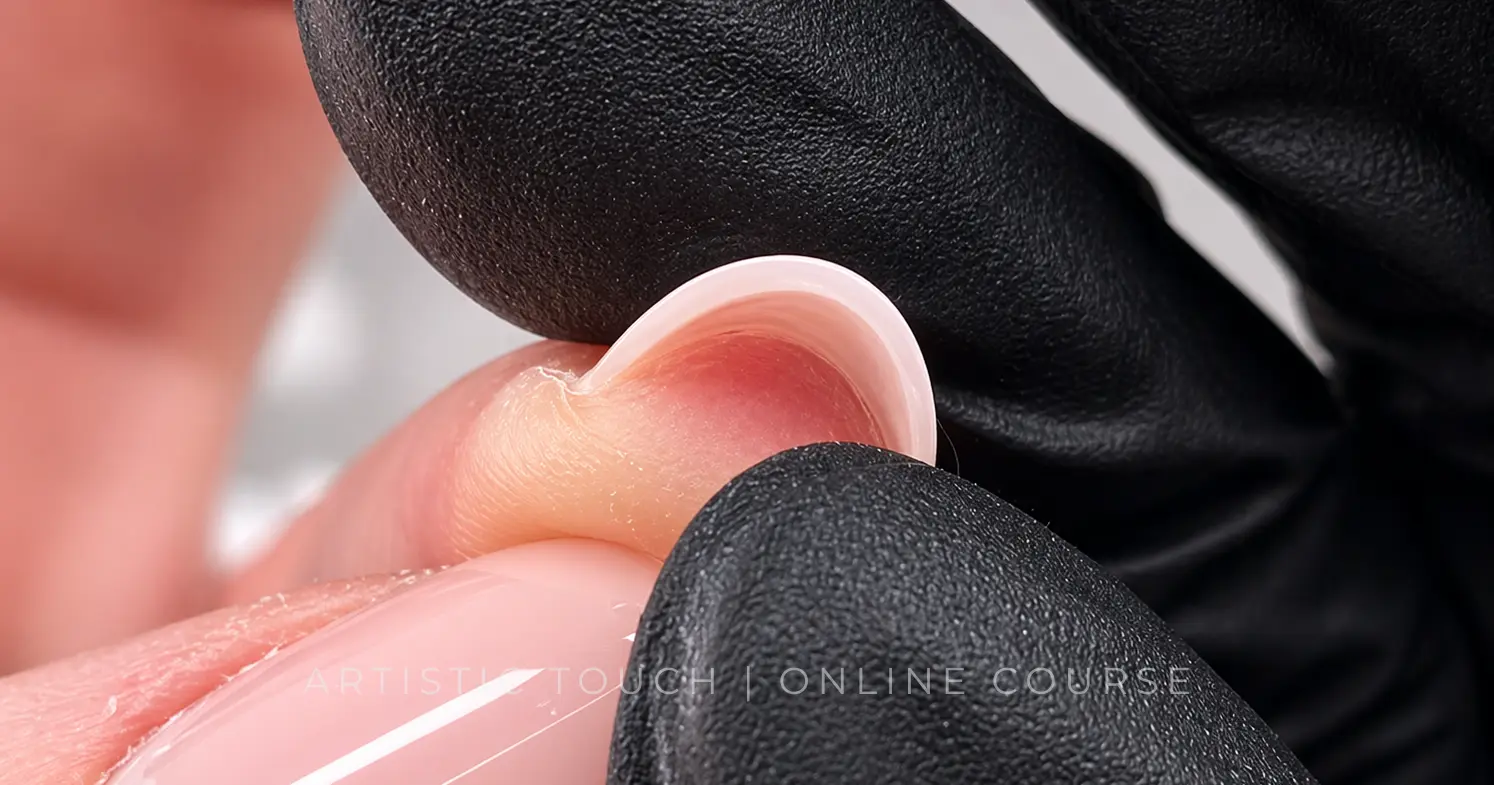
Master Sandwich Dual Forms Correctly
Learn the complete sandwich dual forms system — form selection by C-curve depth, growth point control, minimal skin contact placement, troubleshooting demonstrated in real time. Includes lifetime access, 3 downloadable PDF guides, private student support group, and certificate of completion.
Enrol in Sandwich Dual Forms Course →Lifetime access • Start immediately • Pay in full or split into 3 payments
Frequently Asked Questions
What experience level do I need for this course?
This course is suitable for nail technicians and serious learners at any stage. You do not need prior experience with dual forms — the course teaches sandwich systems from structural foundation up. Some familiarity with gel or builder gel application will help you follow the product control sections, but the course is designed to be accessible to anyone committed to understanding the technique properly.
How long is the course?
Approximately 4 hours of structured professional training plus text lessons covering products, student community support, important notice and disclaimer, and bonus resources. You have lifetime access, so you can work through the content at your own pace and revisit lessons any time you need to review specific techniques.
What is the minimal-contact placement method?
The minimal-contact method is a bottom form placement technique using a small controlled bead of base coat instead of flooding the form with gel. It keeps product clear of the hyponychium and proximal nail fold throughout application. This approach is relevant for sensitisation-aware clients and for clients who prefer gel not to touch their skin.
Can I get dedicated 1-to-1 personalised feedback on my work?
Yes. Premium Personalised Feedback is available as a course add-on at checkout. Three options: Single Review (£47), Two Rounds (£77 — popular), or Unlimited Support (£97). Submit your work to Radina for detailed guidance delivered via private message. Read full description.
Will I receive a certificate after completing this course?
Yes. You will receive a downloadable, non-accredited certificate of completion to showcase your professional development — suitable for your portfolio and continuing professional development records. This certificate is non-accredited and cannot be used for insurance or licensing purposes.
Can I get a refund if I change my mind?
Because courses provide instant digital access, all sales are final in accordance with our Refund Policy and Terms & Conditions. If you experience a technical issue or cannot access your materials, contact our support team and we will ensure you regain full access.
About the Author

Radina Ignatova
Professional Nail Expert | International Nail Educator
I am Radina Ignatova, a Professional Nail Expert since 2014 and International Nail Educator, based in Scotland, UK. I am the Founder of Artistic Touch Nail Training Academy and TheNailWiki.
At Artistic Touch Nail Training Academy, I provide structured professional online nail courses specialising in dual forms, gel systems, polygel application, advanced nail structure, E-File work and Russian Manicure, with a strong focus on professional salon safety. I continue to work actively in salon practice, ensuring that all education reflects real client scenarios and current industry standards.
My teaching philosophy is simple: I show real salon challenges, real mistakes and real performance testing, not just perfect demonstrations. This is how you develop genuine technical competence and become a confident, capable nail professional.
Disclaimer: This content is for educational purposes only. Nail services should be performed by trained professionals following current hygiene and safety regulations. Always carry out a full client consultation and check for contraindications before performing any nail service.
About Artistic Touch Nail Training Academy
Artistic Touch Nail Training Academy delivers structured professional online nail education focused on practical skill development, professional standards and safe salon practice. All courses are available online worldwide.