Russian Manicure Certification: What Does a Certificate Actually Mean?
Search for Russian Manicure training and you will find the same promise repeated: complete the course and receive a certificate. Very few pages ask the more important question. What will you actually understand, and be able to do, when the course is over?
This article is about that difference. It explains what a certificate does and does not show, when formal qualifications genuinely matter, and why I believe the knowledge, practical ability and support you receive are worth more than the document at the end.
Quick Answer: Does a Russian Manicure Certificate Make You a Better Nail Technician?
No. A certificate records that a course was completed. It does not show that you can assess tissue, control an e-file, choose the right tool or adapt to a different client. Recognised qualifications may be necessary for licensing, employment or insurance, and that is a separate question from how deep the education is. Judge any training by what you will understand and be able to do afterwards.
Another Certificate Will Not Automatically Make You a Better Nail Technician
I have seen how much importance the nail industry places on certificates. Technicians attend training after training, collect another certificate and hope that the next course will finally give them the confidence they are looking for.
But I believe we are asking the wrong question.
Instead of asking, “What certificate will I receive?”, we should be asking, “What will I actually understand and be able to do after completing this training?”
A certificate cannot tell you why a particular flame bit is catching. It cannot assess the skin in front of you, recognise when you have done enough, or help you understand why a technique that worked perfectly on one client is causing problems on another.
Those abilities come from education, understanding, deliberate practice and meaningful feedback. A certificate can be given for attending. Competence has to be built.
Marketing a certificate as proof of expertise, without meaningful education or assessment behind it, can mislead the person buying it. That is why I think the education behind the certificate matters more than the certificate itself.
The Document and the Education Behind It
The paper you receive and the education you experience are two different things.
| A certificate can show | A certificate cannot show |
|---|---|
| That a course was completed | Whether you understood it |
| The name of the provider | How much anatomy was taught, and how it was applied |
| A date | Whether e-file control was explained as decisions or as settings to copy |
| How many different clients and skin conditions you saw | |
| Whether anyone reviewed your own work | |
| Whether you can return when something goes wrong |
If you have collected several certificates and still hesitate with a new client, the problem is probably not a missing document. It is a missing piece of understanding. Our learning pathway article sets out the stages in which that understanding develops.
Why I Created Russian Manicure – Beyond Technique
I did not want to create another course that simply demonstrates the movements and awards a certificate at the end.
I wanted to teach the knowledge behind the technique. That means anatomy, tissue assessment, e-file control beyond RPM, tool selection, adaptation to different clients and recognising when to stop. It also means developing Russian Manicure into a professional salon service.
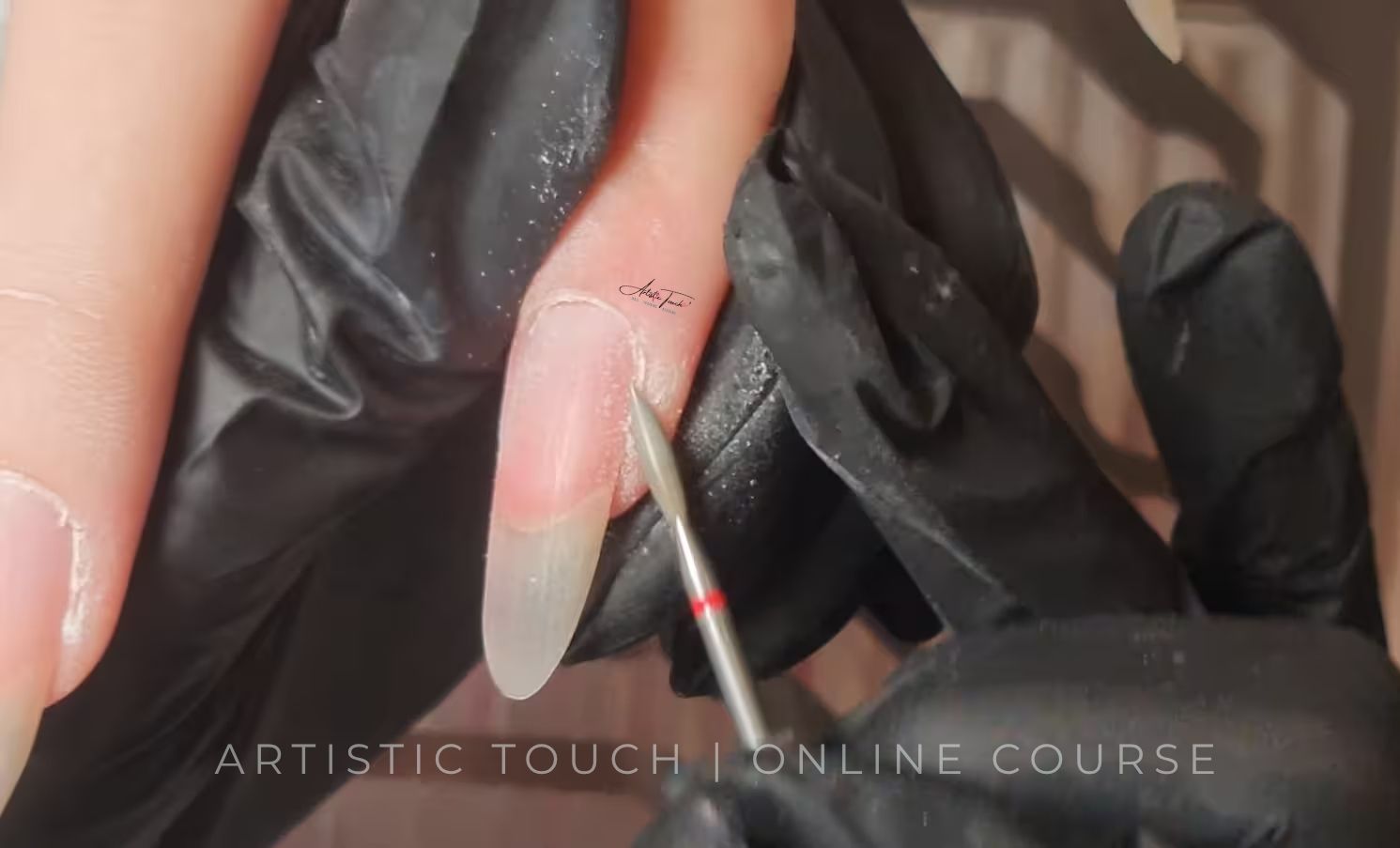
Russian Manicure – Beyond Technique includes:
- Nearly 12 hours of training.
- Anatomy and tissue assessment, so decisions are based on what you can observe.
- E-file control beyond simply choosing RPM.
- Understanding why tools and techniques are selected, not only which ones.
- Real-client demonstrations across different skin conditions, including normal skin, dry overgrown cuticles, thin skin and sensitive skin.
- Professional judgement, adaptation and recognising when to stop.
- Aftercare, marketing, service positioning and pricing.
- Lifetime lesson access.
- Lifetime individual feedback on your practical work.
Life does not always allow you to practise immediately. Your feedback is part of your lifetime access, so you can return months or years later, ask questions and submit your practical work for review when you are ready.
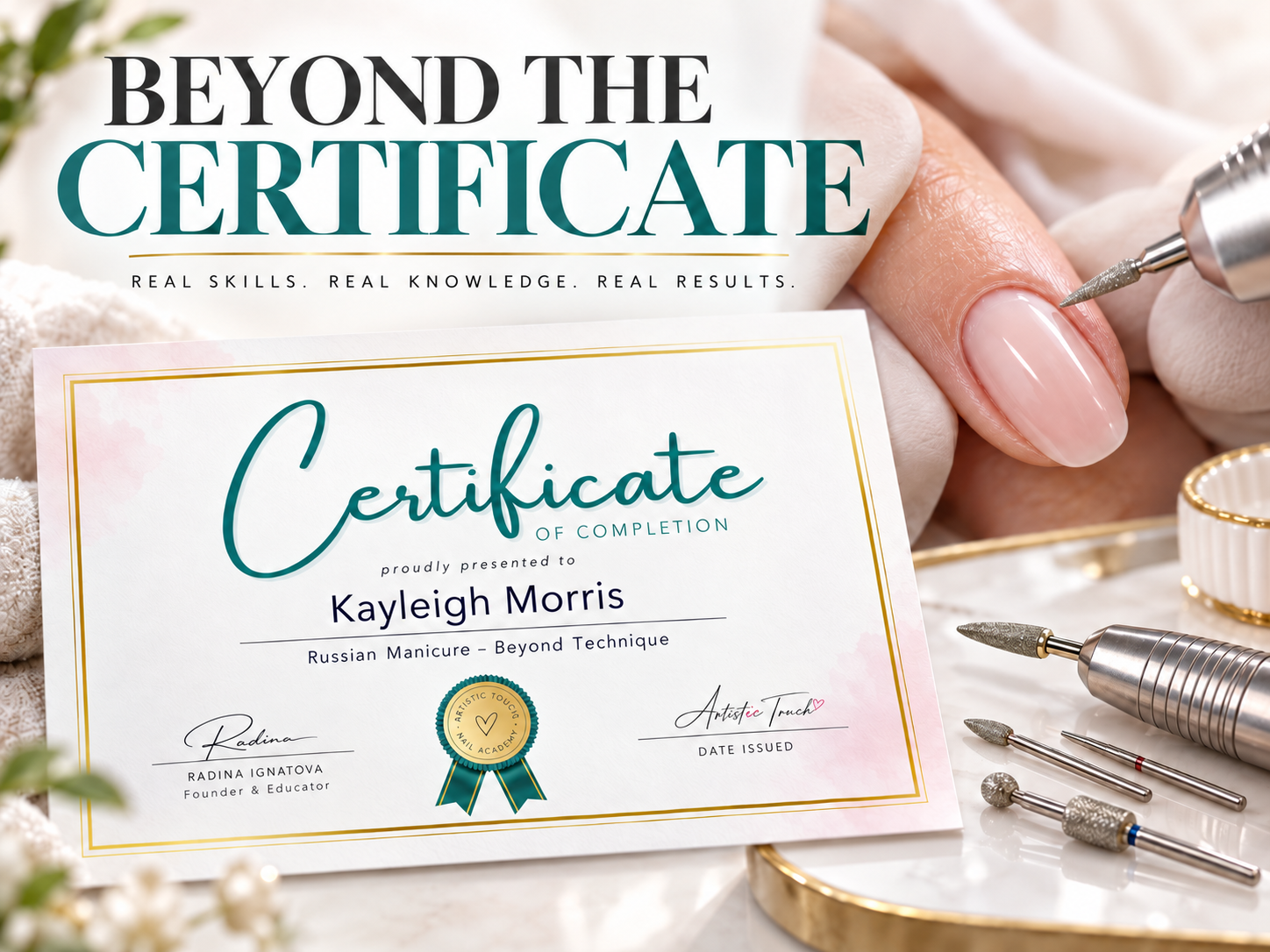
My students receive a non-accredited Certificate of Completion. I am completely transparent about that. But the certificate is not the main value of this course. The education, understanding and support behind it are.
Does an Accredited Certificate Always Mean Better Training?
Not by itself. Accreditation of a school, or regulation of a qualification, tells you that an outside body has recognised it. That can matter for licensing, employment and insurance.
It does not, on its own, tell you how extensively a particular course teaches anatomy, tissue assessment, e-file control, adaptation or professional judgement. Accredited programmes can teach these subjects well, and many do. The point is that the label does not answer the question for you, so ask the same questions of every course, whatever it awards at the end:
- How is anatomy taught, and how is it applied to assessment?
- How many different client conditions are demonstrated?
- Is e-file control explained as decisions rather than settings?
- Do students receive individual feedback on their practical work, and for how long?
When Formal Qualifications and Regulatory Recognition Matter
A certificate of completion is not a professional license, and no course certificate replaces one. Whether you need a formal qualification depends on where you work, your insurer and your circumstances.
- United States: the state license comes first, and each state sets its own rules. For example, California requires at least 400 hours at a board-approved school (or the board’s apprenticeship or equivalent practice), Texas requires a 600-hour course plus exams, and New York offers more than one route, with a 250-hour approved course and exams as one standard route. Check your own state board.
- Scope of practice is separate. Holding a license does not mean every technique is permitted. California’s Barbering and Cosmetology Act and Regulations define nail care in Business and Professions Code section 7316, and regulation section 991 says no licensee may use a technique that results in “the removal, destruction, incision, or piercing of a client’s skin beyond the epidermis”. Other states differ, so check what your board allows.
- United Kingdom: there is no single national license for nail technicians. In some areas councils license nail treatments, for example Wandsworth in London and Dundee City Council in Scotland, and may set training conditions.
- Elsewhere: national, regional and local rules differ. Check the relevant authority.
- Accreditation and regulation are different systems. In the US, NACCAS provides institutional accreditation for cosmetology schools. In England, Ofqual regulates qualifications, which are listed on the Ofqual Register.
- Insurers set their own requirements. Confirm yours in writing before you pay for any training.
If you need an accredited or regulated qualification for employment, licensing or insurance, get it. Then judge your further education on its depth.
What to Check Before Paying for Any Training
- What will I understand and be able to do afterwards? Ask for specifics, not a promise.
- The curriculum: what is taught, in what depth, and at what experience level.
- Client variety: more than one client and condition shown.
- Support: is feedback offered after the videos end, and for how long?
- Your license and scope of practice, and what your insurer requires, in writing.
- Continuing education: if your state requires it for renewal, ask your board whether the course counts. Do not assume it does.
- Honesty about the certificate: does the provider say plainly what its certificate is and is not?
Our guide on how to choose a Russian Manicure course goes further into the curriculum questions.
Is This Right for You?
Russian Manicure – Beyond Technique suits you if you are already licensed or qualified, you want to understand why a technique works as well as how it is performed, and you value feedback on your own work. It is not the right starting point if you are new to the e-file and need foundations first. Basic e-file experience is recommended, and previous Russian Manicure training is not required.
The Certificate of Completion is non-accredited. It does not replace a professional license, a qualification or your insurer’s requirements, and we do not offer it as state-approved continuing education.
Russian Manicure – Beyond Technique
Nearly 12 hours of professional training, anatomy and tissue assessment, e-file control beyond RPM, real-client demonstrations, lifetime lesson access and lifetime individual feedback on your practical work.
Includes a non-accredited Certificate of Completion
View the Course Details →Frequently Asked Questions
Does a certificate make me a better nail technician?
No. A certificate records that a course was completed. Skill comes from understanding, deliberate practice and feedback on your own work.
Is a Russian manicure certificate a license?
No. A license is legal permission to work, issued by a government authority.
Do I need an accredited qualification to offer Russian Manicure?
It depends on your location, insurer and circumstances. Check your state board or local authority, and confirm your insurer’s requirements in writing.
Does your certificate count as continuing education?
We do not offer it as state-approved continuing education credit. If you need credit for license renewal, ask your board whether a course counts.
Key Takeaway
A certificate does not automatically mean better training, greater knowledge or professional competence. Ask what you will understand and be able to do afterwards. The education, understanding and support behind a certificate are what make it worth anything.
About the Author
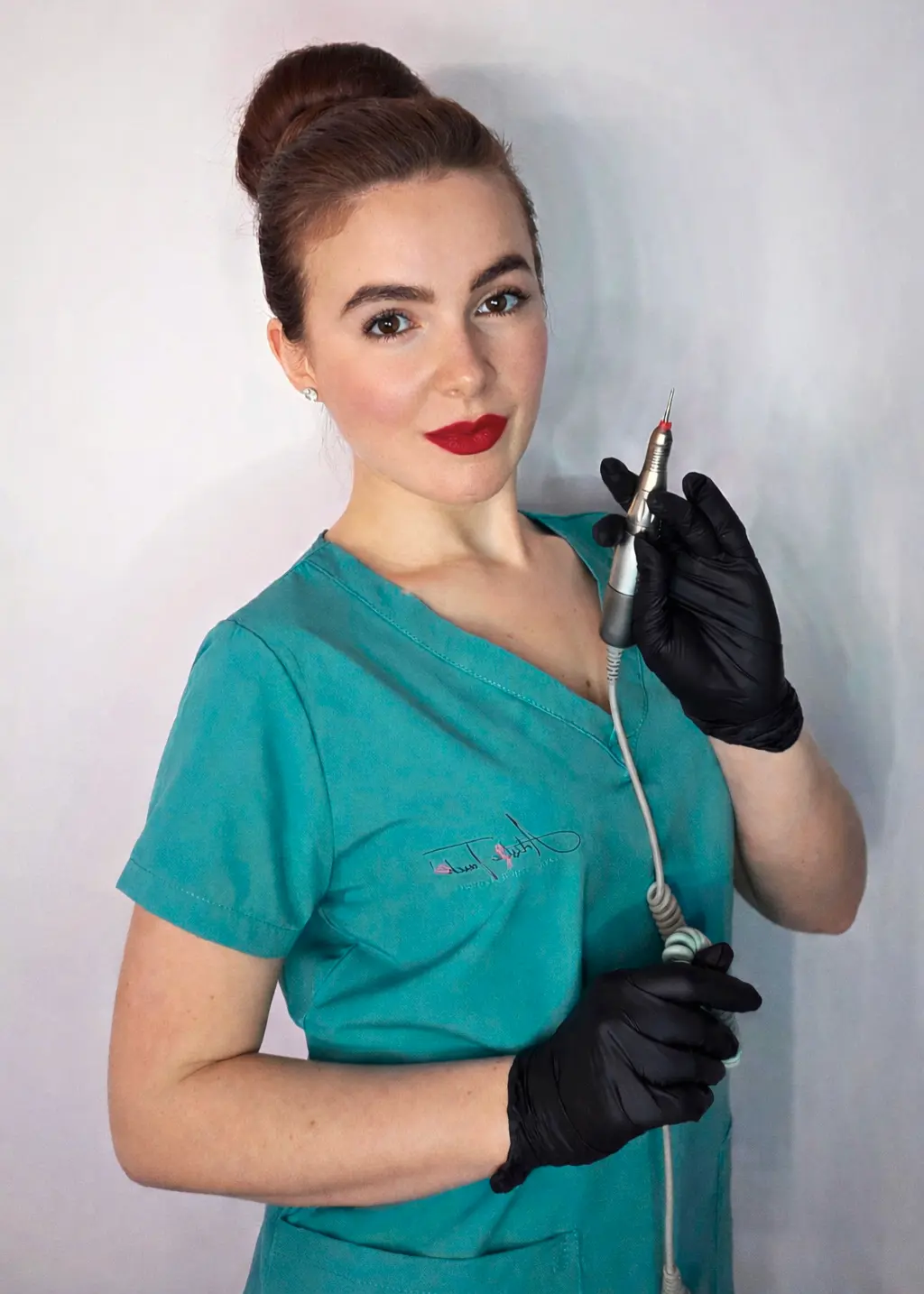
Professional Nail Expert | International Nail Educator
I am Radina Ignatova, a Professional Nail Expert since 2014 and International Nail Educator, based in Scotland, UK. I am the Founder of Artistic Touch Nail Training Academy and TheNailWiki.
At Artistic Touch Nail Training Academy, I provide structured professional online nail education specialising in dual forms, nail preparation and retention, nail structure, E-File work and Russian Manicure, with a strong focus on professional salon safety. I continue to work actively in salon practice, ensuring that all education reflects real client scenarios and current industry standards.
My teaching philosophy is simple: I show real salon challenges, real mistakes and real performance testing, not just perfect demonstrations. This is how you develop genuine technical competence and become a confident, capable nail professional.