How to Control C-Curve and Apex with Sandwich Dual Forms (Without Filing for Hours)
By Radina Ignatova | Last Updated: 2 April 2026 | Nail Techniques
How Do You Control C-Curve and Apex with Sandwich Dual Forms?
C-curve is controlled by bottom form selection (matching natural nail bed curve) and product amount in the apex zone. Apex position is determined by gel placement before sandwiching — concentrate product 1-2mm back from where natural nail meets extension, creating the stress point reinforcement without excessive filing.
Sandwich dual forms create natural C-curve through the mould shape itself, whilst apex control requires understanding where to place product before pressing forms together. This prevents weak flat extensions that break easily or bulky over-structured nails requiring hours of filing.
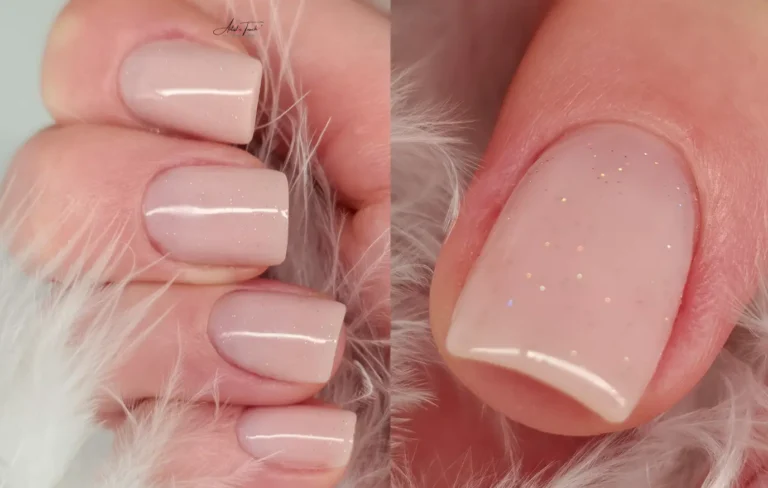
Your sandwich dual form extensions look clean after removal. The imprint is smooth, sidewalls are even, and length is perfect. Then your client returns three days later with two broken nails. Both snapped at exactly the same point — where the natural nail ends and the extension begins.
This breakage pattern signals incorrect apex placement and weak C-curve structure. The forms created a beautiful surface finish, but the internal structure cannot support normal wear. Clean imprints mean nothing if extensions break within a week.
This article explains how to control C-curve and apex with sandwich dual forms, creating extensions that look professional and withstand client wear without requiring excessive filing or product buildup.
Understanding C-Curve in Sandwich Dual Forms
What C-Curve Actually Does
C-curve is the sideways arch of the nail when viewed from the free edge. This curve distributes stress across the nail structure rather than concentrating pressure in the centre. Without proper C-curve, nails flex excessively under pressure and crack at weak points.
Natural nails have inherent C-curve from the nail bed shape. Extensions must replicate this curve to maintain structural integrity. Too flat creates weak nails that bend and break. Too curved creates uncomfortable pressure and lifting at sidewalls.
How Sandwich Forms Control C-Curve
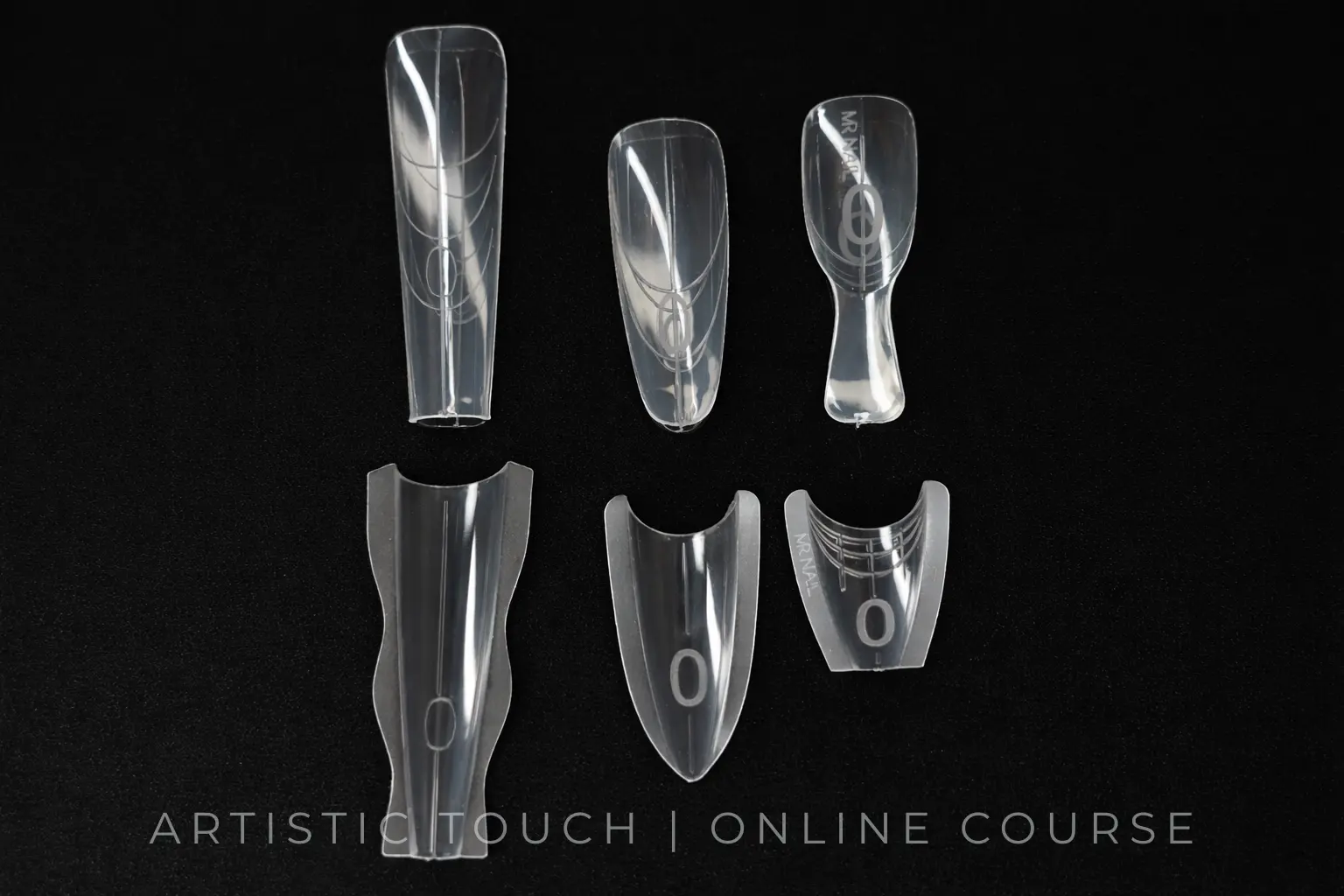
Unlike traditional dual forms where you create C-curve through pressure technique alone, sandwich forms build curve through the interaction of three elements working together: top form, bottom form, and compression between them.
1. Top Form (Primary Control):
- Defines apex height — where the highest point sits on the nail
- Defines tunnel (C-curve) — the sideways arch structure
- Defines overall architecture — the complete nail profile and shape
The top form is the main structure controller. Its internal curve and tunnel design create the foundation of your C-curve.
2. Bottom Form (Secondary Control):
- Defines underside shape — how the extension sits against the nail bed
- Provides support — holds product in correct position during curing
- Controls compression — how product sits and compresses between both forms
The bottom form supports and refines the structure created by the top form. It does not replace the top form’s structural control — it works with it.
3. Compression Between Both Forms:
This is what most educators do not explain properly: the final C-curve emerges from the relationship between top form + bottom form + pressure applied when sandwiching them together. The top form creates the tunnel structure, the bottom form supports it from underneath, and the compression between both moulds locks the gel into the correct curved shape.
Critical Understanding: Top Form = Main Controller
The top form tunnel architecture determines your C-curve structure. The bottom form must match the natural nail bed curve to support this structure correctly, but it does not create the curve itself. Both forms working together through compression create the final result — this is the key principle most tutorials skip.
Professional Tip: Test Both Forms Together
Place bottom form under natural nail, then position top form above (without gel) to assess how both interact. The top form tunnel should align with the bottom form curve when compressed together. Gaps or misalignment indicate wrong pairing — choose different sizes before applying product.
Apex Placement: Where Structure Meets Aesthetics
What Apex Is and Why Position Matters
Apex is the highest point of product thickness when viewing the nail from the side. This reinforcement point sits where maximum stress occurs during normal hand use — typically where the natural nail ends and extension begins (the stress point).
Incorrect apex placement creates predictable failures:
- Apex too far forward (toward free edge) = excessive stress at point of growth, early breakage
- Apex too far back (toward cuticle) = weak free edge, bending and cracking
- No apex (flat profile) = weak structure throughout, cannot support wear
- Apex too high (bulky) = unnatural appearance, requires excessive filing
Correct Apex Position
For most extension lengths, apex should sit approximately 1-2mm back from where the natural nail free edge would be if not filed down. This positions reinforcement directly at the stress point where natural nail meets extension.
Length adjustments:
- Short extensions (natural length) — apex at nail bed centre
- Medium extensions (1-2mm past fingertip) — apex 1-2mm behind stress point
- Long extensions (3mm+ past fingertip) — apex 2-3mm behind stress point with gradual taper
Master Professional Nail Structure
Learn proper C-curve selection, apex placement for different lengths, and structural techniques that create extensions lasting 3+ weeks without breakage or excessive filing.
- ✓ Bottom form selection for correct C-curve matching
- ✓ Apex placement techniques for short, medium, and long extensions
- ✓ Product distribution methods that reduce filing time
- ✓ Lifetime access with expert structural guidance
How to Create Apex with Sandwich Dual Forms
Product Placement Before Sandwiching
Unlike traditional forms where you can manipulate gel after placement, sandwich forms lock product position when you press forms together. This means apex must be created through initial gel placement, not post-application adjustment.
Technique:
- Apply gel to top form — place slightly more product in the zone where apex should sit
- Create gentle mound — build up centre slightly higher than edges (not dramatic peak)
- Position top form — align mound over stress point (1-2mm back from natural nail end)
- Press forms together — gel spreads but maintains highest point at mound position
- Check profile before curing — view from side to confirm apex position
⚠️ Common Mistake: Creating Apex Through Filing
Some technicians apply gel evenly, then try to create apex by filing away excess product. This wastes gel, creates dust, and takes excessive time. Proper technique creates apex during application, requiring only light refinement filing after removal.
Balancing Structure and Natural Appearance
The challenge with C-curve and apex is creating enough structure for strength without building excessive bulk that looks unnatural or requires hours of filing.
Structural Strength vs Visual Appeal
Too much structure:
- Extensions look thick and bulky from the side
- Requires 20-30 minutes of filing to refine profile
- Creates heat and discomfort during filing process
- Wastes product and generates excessive dust
Too little structure:
- Extensions flex excessively under normal pressure
- Breakage occurs within days at stress point
- Client perceives quality as poor despite clean application
- Requires product reapplication or full restart
The Balance Point
Proper structure creates apex height approximately 1.5-2mm at the stress point for average length extensions. This provides strength without bulk. You should be able to view the nail from the side and see gentle curve from cuticle area rising to apex, then tapering down to free edge — not a flat profile or dramatic peak.
Troubleshooting Common Structure Problems
❌ Problem: Extensions Break at Stress Point
Cause: Apex positioned too far forward or insufficient product at stress point
Fix: Move apex 1-2mm back from current position and increase product slightly in that zone
✓ Solution
Concentrate gel placement at correct apex zone before pressing forms together, creating natural reinforcement without excessive filing
❌ Problem: Flat Profile, No C-Curve
Cause: Bottom form curve does not match natural nail bed shape
Fix: Select bottom form with appropriate curve for nail bed type before product application
✓ Solution
Test multiple bottom form curves without gel to find best match for each nail bed, ensuring proper C-curve replication
Frequently Asked Questions About C-Curve and Apex
Can I create apex by filing after sandwich dual forms are cured?
You can refine apex through filing, but creating apex entirely through filing wastes product and takes excessive time. Proper technique creates apex during gel placement before pressing forms together, then requires only light refinement filing. This saves time, reduces dust, and conserves product.
How do I know if my C-curve is correct?
View the cured extension from the free edge. You should see gentle sideways arch similar to the natural nail bed curve. Form should have sat flush against nail bed during application without gaps at centre or edges. If gaps existed, C-curve does not match natural nail shape.
Does apex position change for different nail lengths?
Yes. Short extensions need apex at nail bed centre. Medium extensions require apex 1-2mm behind stress point. Long extensions need apex 2-3mm behind stress point with gradual taper to free edge. Position adjusts to maintain reinforcement at maximum stress zone whilst avoiding bulky appearance.
Why do my extensions look bulky despite following tutorials?
Tutorials often show exaggerated apex for teaching clarity, not realistic client work. Professional apex height is subtle — approximately 1.5-2mm at stress point for average extensions. If extensions look thick from the side, reduce product amount in apex zone during next application.
Can I use the same bottom form curve for all fingers?
No. Nail bed curves vary between fingers on the same hand. Thumbs typically have flatter curve than other fingers. Test each finger independently to find correct bottom form curve, ensuring proper C-curve replication across entire set.
Radina Ignatova
Professional Nail Expert | International Nail Educator

I am Radina Ignatova, a Professional Nail Expert since 2014 and International Nail Educator, based in Scotland, UK. I am the Founder of Artistic Touch Nail Training Academy and TheNailWiki.
At Artistic Touch Nail Training Academy, I provide structured professional online nail courses specialising in dual forms, gel systems, polygel application, advanced nail structure, e-file work and Russian manicure, with a strong focus on professional salon safety. I continue to work actively in salon practice, ensuring that all education reflects real client scenarios and current industry standards.
My teaching philosophy is simple: I show real salon challenges, real mistakes and real performance testing, not just perfect demonstrations. This is how you develop genuine technical competence and become a confident, capable nail professional.
Every Artistic Touch course includes lifetime access, a certificate of completion and access to a dedicated student support community (Discord), where I actively participate and provide ongoing guidance and expert feedback.
About Artistic Touch Nail Training Academy
Artistic Touch Nail Training Academy delivers structured professional online nail education focused on practical skill development, professional standards and safe salon practice. All courses are available online worldwide.
Master Professional Nail Structure
Understanding C-curve and apex theory helps, but professional mastery requires practical training in bottom form selection, product placement techniques, and structural assessment methods that create extensions lasting weeks without breakage.
What You Will Learn in the Sandwich Dual Forms Course:
- ✓ Bottom form curve selection for correct C-curve matching
- ✓ Apex placement for short, medium, and long extensions
- ✓ Product distribution that reduces filing without sacrificing strength
- ✓ Lifetime access with structural troubleshooting support
Create Extensions That Last
Learn C-curve and apex control for professional strength and appearance
Enrol Now — £97 →Lifetime access • Certificate included • Start immediately
Master C-curve and apex control with sandwich dual forms for extensions that combine professional strength with natural appearance at Artistic Touch Nail Training Academy.