How to Choose a Russian Manicure Course That Teaches Safety, Not Just Steps

A worthwhile Russian Manicure course teaches more than the correct order of bit movements. It should explain the anatomy involved, the reasoning behind each decision, and how the technique must adapt across different clients. A course built only around one polished demonstration teaches imitation, not judgement.
Choosing between courses is difficult because most marketing pages look similar, and a short promotional clip cannot show what a full curriculum actually contains. This article outlines what to look for beyond the demonstration.
Why Choosing a Russian Manicure Course Is Difficult
Nail technicians researching Russian Manicure training are often presented with course previews built around a single flawless result. The nail looks clean. The movements look confident. It is reasonable to assume that the training itself must be equally thorough.
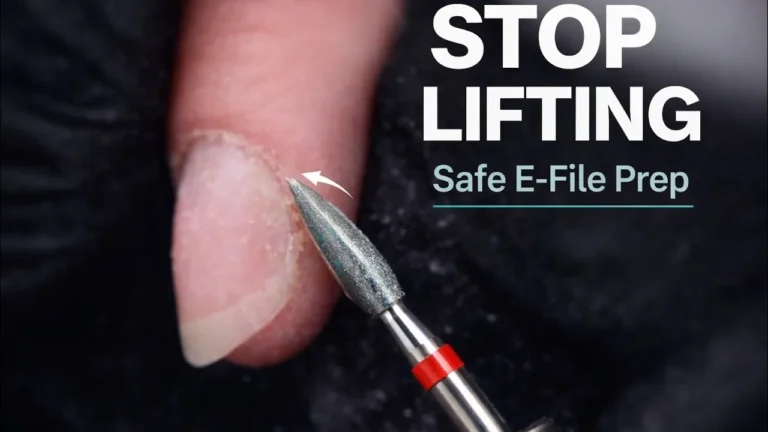
However, a preview clip is marketing material, not curriculum content. It shows what the finished technique can achieve, not what the course actually teaches about anatomy, adaptation, or troubleshooting. Two courses can have very similar preview footage while offering entirely different depth of instruction.
The Limitations of Movement-Only Training
A course that focuses exclusively on demonstrating one sequence of movements, from opening the pocket to final polishing, teaches a technician what to do when the model’s anatomy matches the demonstration. It does not prepare the technician for the client whose pocket is shallower, whose fold is firmer, or whose skin is more sensitive.
Movement-only training produces technicians who can repeat a sequence accurately but struggle when a real client’s anatomy does not resemble the training model. This is a common source of uncertainty reported by technicians who have completed short courses but still feel unprepared in the salon.
Anatomy Should Come Before Tool Movements
Before a course teaches how to move a bit, it should teach what the bit is moving across. This includes the distinction between true cuticle and the surrounding living tissue, along with the structures involved: the proximal nail fold, the eponychium, the nail sinuses, the lateral nail folds, and the grooves at the sides of the nail.
Without this foundation, a technician is following a visual pattern rather than making an informed decision about what tissue is being addressed at each stage. Anatomy explains why a movement is appropriate. A demonstration alone only shows that the movement was performed.
A Course Should Explain Why the Technique Changes
Russian Manicure cannot be reduced to one fixed routine, because client anatomy varies. Pocket depth differs. Fold flexibility differs. Skin sensitivity differs. A course that only shows one model with favourable anatomy does not prepare a technician to recognise when the same approach is inappropriate for a different client.
A comprehensive course should explain the reasoning behind adaptation: why speed, direction, angle, and pressure change according to what the technician observes, rather than presenting a single sequence as universally applicable.
What to Look for in a Russian Manicure Course
Before enrolling in any course, consider whether the curriculum includes the following areas:
What to Look for in a Russian Manicure Course
✓ Relevant nail-unit anatomy, taught before tool technique
✓ The distinction between true cuticle and living surrounding tissue
✓ Coverage of the proximal nail fold, eponychium, nail sinuses, grooves and lateral nail folds
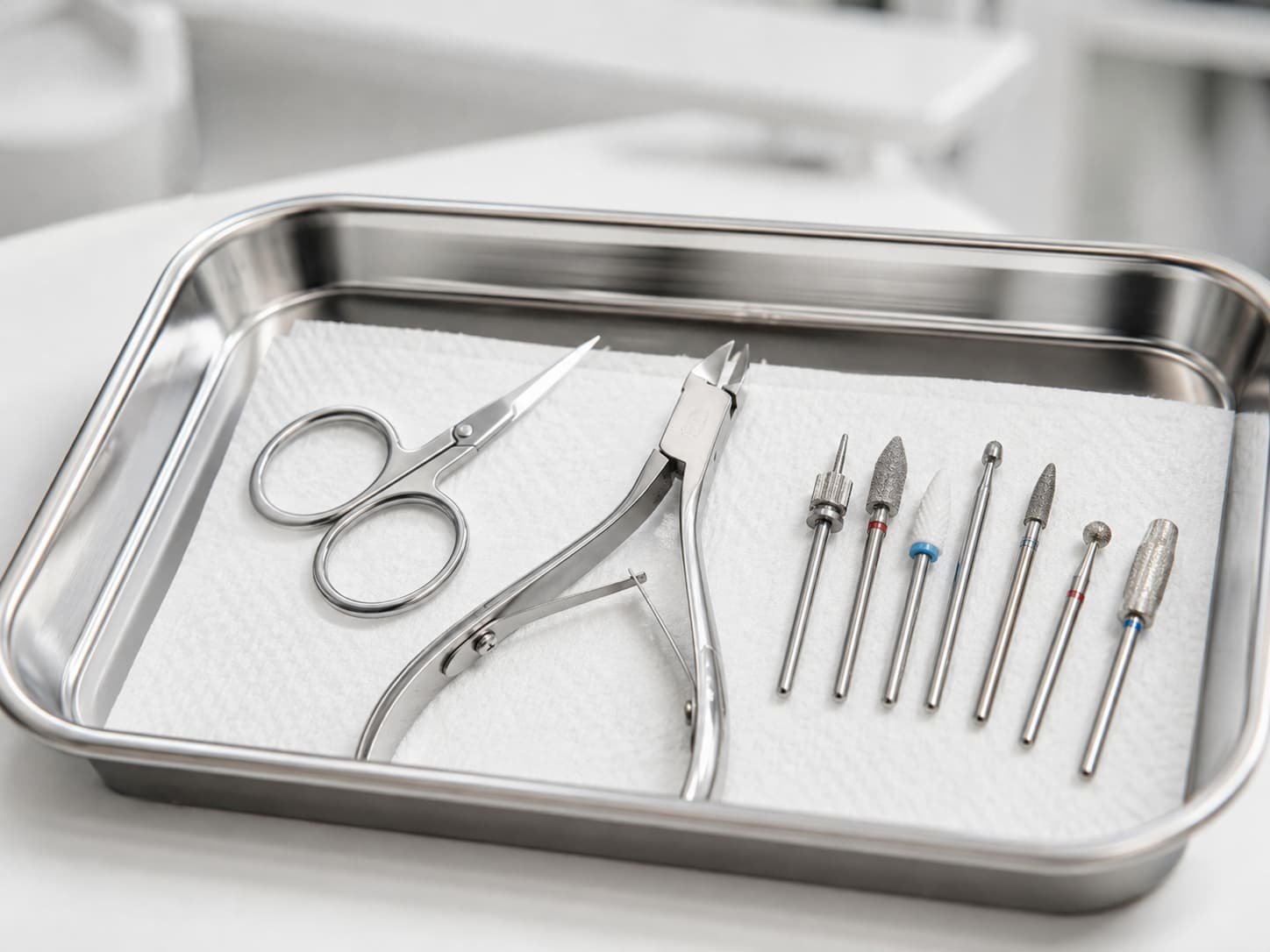
✓ E-file bit shape, diameter, abrasiveness and condition
✓ Speed, direction, angle and pressure, explained rather than only demonstrated
✓ Explanation of why pocket depth varies between clients
✓ Safe positioning and hand control
✓ Scissor or nipper control where applicable
✓ Different skin conditions and levels of sensitivity
✓ Recognising contraindications and situations requiring adaptation
✓ Common mistakes, such as catching the sinus or repeatedly passing over the same area
✓ Troubleshooting and reasoning, not only ideal demonstrations
This checklist reflects the approach behind Russian Manicure – Beyond Technique.
Why Multiple Client Examples Matter
A course built around a single model, however skilled the technician performing it, shows one anatomy and one outcome. A course that includes multiple client examples, with different pocket depths, fold characteristics, and skin conditions, demonstrates how the same underlying principles apply differently across real anatomy.
This matters because the salon rarely presents the same anatomy twice. Training that only shows the ideal case leaves a gap between what was taught and what the technician encounters in practice.
The Importance of Troubleshooting and Self-Assessment
A course that only presents correct execution does not prepare a technician for the moments when something does not go as expected: a fold that will not lift easily, a sinus that is difficult to access safely, or tissue that responds with more sensitivity than anticipated.
Troubleshooting content, explaining common mistakes and how to recognise and correct them, is often what separates a technician who can perform Russian Manicure under ideal conditions from one who can adapt confidently when conditions are not ideal.
Questions to Ask Before Enrolling
Does the course explain anatomy before demonstrating tool movements? Does it address more than one type of client anatomy? Does it include troubleshooting content, or only correct demonstrations? Does it explain the reasoning behind technical decisions, or only the sequence of steps? These questions help distinguish between training built around imitation and training built around understanding.
Are You Comparing Demonstrations or Comparing Curriculums?
Russian Manicure – Beyond Technique is built for technicians who want to understand what they are seeing, why common problems occur, and when the technique needs to be adapted rather than repeated.
View the Course Curriculum →How Russian Manicure – Beyond Technique Approaches the Subject
The Russian Manicure – Beyond Technique Online Course is built on the principle that anatomy and reasoning come before movement. Rather than presenting one demonstration as a template to copy, the course examines how pocket depth, fold flexibility, skin condition, and tool selection interact, and how these factors should influence a technician’s decisions during the service.
The course covers the anatomical structures referenced throughout this article, along with tool purpose, common technical mistakes, and how to adapt an approach when a client’s anatomy does not match the ideal case. The aim is to develop observation, control, and professional judgement, rather than a single memorised sequence.
Key Takeaway
A short course is not automatically inadequate, and a long course is not automatically thorough. The relevant measure is depth, scope, and adaptability. Look for training that teaches anatomy before movement, includes multiple client examples, and addresses troubleshooting rather than only ideal demonstrations.
Russian Manicure – Beyond Technique
Training for technicians who want to understand what they are seeing and why each technical decision is made, not only how to repeat a demonstration.
Explore Russian Manicure – Beyond Technique →Planned launch: 30 September 2026
About Radina Ignatova and Her Teaching Philosophy
About the Author
Radina Ignatova
Professional Nail Expert | International Nail Educator
I am Radina Ignatova, a Professional Nail Expert since 2014 and International Nail Educator, based in Scotland, UK. I am the Founder of Artistic Touch Nail Training Academy and TheNailWiki.
At Artistic Touch Nail Training Academy, I provide professional online nail courses specialising in dual forms, gel systems, polygel application, advanced nail structure, E-File work and Russian Manicure, with a strong focus on professional salon safety. I continue to work actively in salon practice, ensuring that all education reflects real client scenarios and current industry standards.
My teaching philosophy is simple: I show real salon challenges, real mistakes and real performance testing, not just perfect demonstrations. This is how you develop genuine technical competence and become a confident, capable nail professional.
Frequently Asked Questions
Does a longer course automatically mean better training?
Not necessarily. Length alone does not indicate quality. A shorter course with clear anatomy instruction and troubleshooting content can be more valuable than a longer course built mainly around repeated demonstrations.
Is it reasonable for a course to show only one model throughout?
A single model can be useful for demonstrating the core sequence clearly. However, a course limited to one anatomy type does not prepare a technician for the variation encountered with real clients.
What if a course does not mention troubleshooting at all?
This is worth asking about directly before enrolling. Training limited to ideal demonstrations may not prepare a technician for situations where a client’s anatomy or tissue response differs from the model shown.
Why does anatomy knowledge matter if the movements can simply be copied?
Movements copied without anatomical understanding may be appropriate for one client’s structure and inappropriate for another. Anatomy knowledge allows a technician to recognise when a movement needs to be adapted rather than repeated identically.
Learn to Assess the Technique, Not Just Copy It
Working confidently across different clients means understanding anatomy, maintaining technical control, and adapting the service to what the tissue in front of you actually requires, rather than repeating one routine regardless of who is in the chair.
View the Course Details →Disclaimer: This content is for professional nail technician education purposes only. Russian Manicure is not risk-free and should be performed only by trained professionals following current hygiene and safety regulations. Always carry out a full client consultation and check for contraindications before performing any nail service.
About Artistic Touch Nail Training Academy
Artistic Touch Nail Training Academy delivers professional online nail education focused on practical skill development, professional standards and safe salon practice. All courses are available online worldwide with lifetime access.