Nail Dehydrator vs Nail Primer – Which Do You Actually Need?
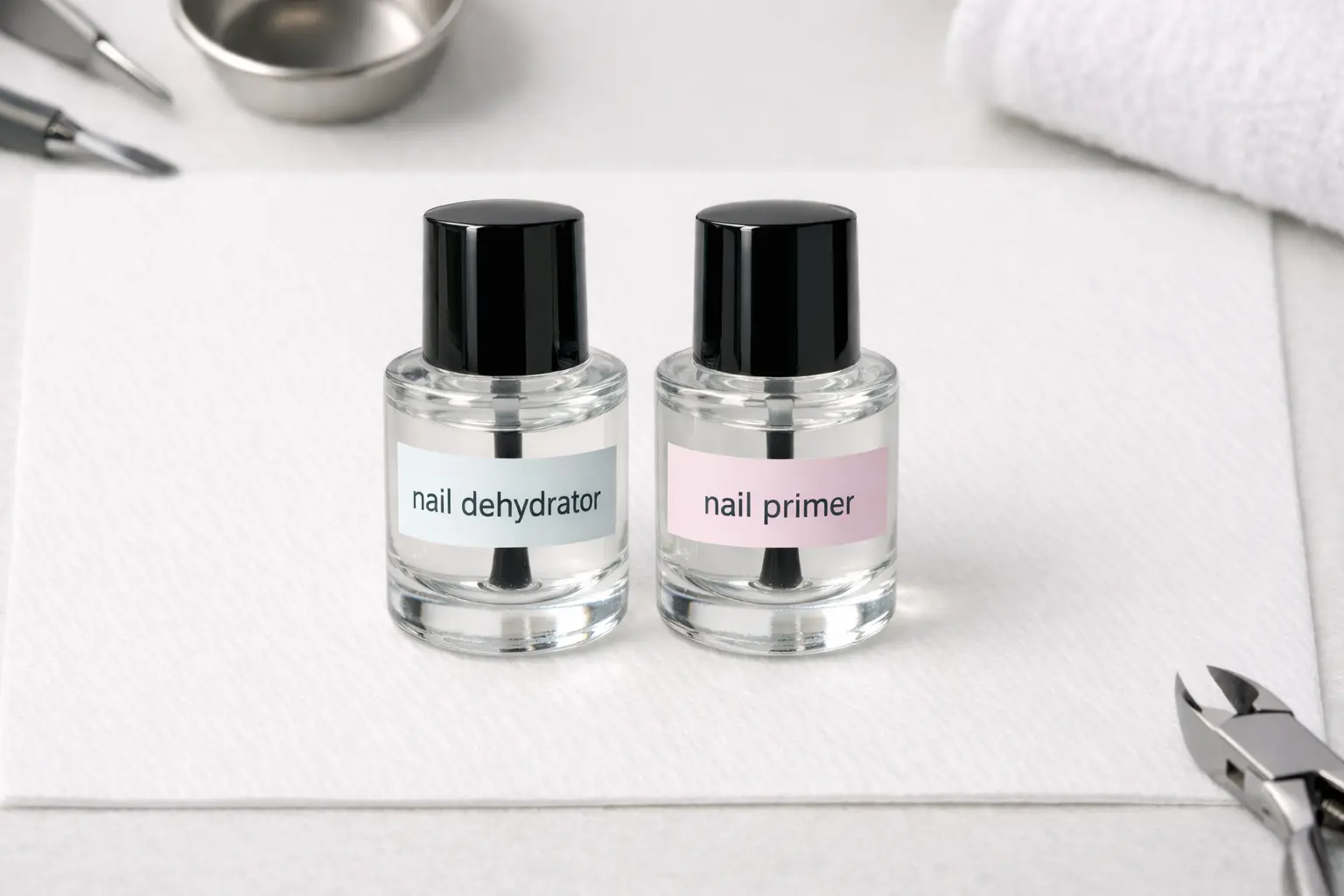
Quick Answer: Dehydrator vs Primer — Do You Need Both?
Nail dehydrator removes moisture and oils from the natural nail plate, whilst nail primer creates a chemical bond between the natural nail and gel product. Both products serve different functions and most gel systems require both for reliable adhesion.
The Nail Prep Course walks you through the exact application sequence for dehydrator, primer and base coat to prevent lifting and maximise wear time across all gel systems.
Why Gel Services Lift When You Skip One Product
Gel services lift within three to five days when nail technicians skip dehydrator or primer, or apply them in the wrong sequence. Many technicians believe these products perform the same function and only one is necessary. This misunderstanding leads to premature service failure and client dissatisfaction.
The confusion stems from product marketing that uses vague terms such as “nail prep” or “bonding agent” without specifying the chemical action each product performs. When technicians do not understand the distinct role of dehydrator versus primer, they cannot identify which product is missing when lifting occurs.
Dehydrator and primer are not interchangeable. They address different barriers to adhesion and must be applied in the correct sequence to achieve reliable gel wear time. Using only one product leaves the nail plate either insufficiently dry or lacking chemical adhesion, regardless of how well the remaining steps are executed.
What Dehydrator Actually Does to the Nail Plate
Nail dehydrator temporarily removes water and natural oils from the surface layers of the nail plate. The natural nail plate contains approximately 10–18% water content, and this moisture prevents gel base coat from achieving full contact with the keratin surface. Dehydrator creates a temporarily dry surface that allows the base coat to flow into microscopic ridges and irregularities without water repelling the product.
The dehydrating effect is not permanent. Water from the deeper layers of the nail plate and from the nail bed beneath begins migrating back toward the surface within minutes after dehydrator application. This is why dehydrator must be applied immediately before base coat, not earlier in the appointment whilst the cuticle work is being completed.
Common dehydrator formulations include isopropyl alcohol, acetone, or ethyl acetate. These solvents evaporate quickly after application, taking surface moisture with them. The nail plate will feel noticeably dry and may appear slightly chalky after dehydrator application. This visual confirmation helps technicians identify whether the product has been applied correctly.
Dehydrator does not create chemical adhesion. It only removes the water barrier. Without primer to follow, gel base coat may flow smoothly across the dried surface but will not form the molecular bonds required to resist wear, flexing, and exposure to water during the service life.
What Primer Does That Dehydrator Cannot
Nail primer creates a chemical bond between the natural keratin of the nail plate and the polymer chains in gel base coat. Primers contain monomers or oligomers that partially penetrate the nail plate surface and also bond with the uncured gel base coat when it is applied on top. This creates an adhesive bridge that dehydrator alone cannot provide.
There are two categories of nail primer: acid-based primers and non-acid primers. Acid-based primers contain methacrylic acid, which etches the nail plate surface to create microscopic texture for mechanical adhesion as well as chemical bonding. Non-acid primers rely purely on chemical bonding without etching. Most modern gel systems specify non-acid primer to reduce the risk of over-etching and nail plate damage.
Primer must be applied to a dehydrated nail surface. If primer is applied over moisture or oils, the bonding agents cannot reach the keratin surface and adhesion fails. This is why dehydrator is always applied first in the prep sequence, followed by primer, then base coat whilst the primer is still active on the surface.
Skipping primer results in gel product that may appear well-adhered immediately after curing but begins lifting at the free edge or sidewalls within days. The base coat has contacted the nail plate but has not bonded to it. Water exposure, flexing, and minor impacts break this weak contact layer, and lifting spreads rapidly once it begins.
Application Sequence and Timing
The correct application sequence is dehydrator first, primer second, base coat third. Each product must be applied in rapid succession to maintain the surface conditions the next product requires. Dehydrator evaporates within 30–60 seconds. Primer begins losing effectiveness after approximately two minutes of air exposure. Base coat must be applied whilst primer is still active to achieve the intended bond strength.
Dehydrator should be applied across the entire nail plate using a lint-free wipe or disposable applicator. The product should not pool at the cuticle area or sidewalls. Excess dehydrator that remains liquid on the skin can cause irritation. Allow the dehydrator to evaporate completely before moving to the primer step. The nail surface should feel dry to the touch and appear slightly matte.
Primer is applied in a very thin layer using the product’s own applicator brush. Most primers require only one coat. Over-application does not improve adhesion and may cause the primer layer to remain tacky or interfere with base coat curing. Primer should cover the entire nail plate from cuticle to free edge, including the sidewall areas where lifting frequently begins.
Base coat is applied immediately after primer, before the primer has fully dried. The base coat bonds with the active primer surface to complete the adhesive bridge between natural nail and gel product. If the primer has dried completely before base coat application, the bonding opportunity is reduced and lifting becomes more likely during the service life.
⚠️ Acid Primer Safety
Acid-based primers containing methacrylic acid can cause chemical burns if applied to skin or allowed to pool on the cuticle area. These products must be applied only to the nail plate and must not touch living tissue. Non-acid primers are safer for technicians still developing precise brush control. Most modern gel systems perform reliably with non-acid primers and do not require acid etching for adhesion. Check your contraindications before selecting primer strength for clients with nail plate damage or sensitivity conditions.
Systems That Skip One Product
Some gel systems market themselves as “one-step prep” or “no primer needed” formulations. These products typically contain dehydrating agents and bonding monomers within the base coat itself, eliminating the need for separate dehydrator and primer bottles. The chemical functions are still present, but they have been combined into fewer product layers.
One-step systems can perform reliably when formulated correctly, but they require more precise base coat application. The base coat must remain on the nail plate long enough for the dehydrating agents to evaporate and the bonding agents to activate before curing begins. Rushing the application or applying base coat too thinly reduces the effectiveness of the combined prep chemistry.
Technicians switching from traditional two-product prep to a one-step system sometimes experience increased lifting because they apply the base coat using the same rapid technique that worked with separate dehydrator and primer. The one-step base requires a slightly longer dwell time on the nail before curing. Product manufacturers provide specific timing instructions that must be followed for the system to perform as intended.
If you are experiencing lifting with a one-step system, verify that you are allowing adequate time between base coat application and curing. If lifting persists, consider whether your natural nail prep (buffing, cuticle removal, oil contamination) is creating adhesion barriers that the one-step chemistry cannot overcome. Some nail conditions require traditional two-product prep for reliable results.
Product Compatibility and Brand Mixing
Dehydrator and primer do not need to be from the same brand as your gel system, but they must be chemically compatible with the base coat you are using. Compatibility issues arise when the primer contains ingredients that interfere with base coat curing or when the dehydrator leaves a residue that prevents primer adhesion.
Most professional dehydrators use similar solvent formulations and are interchangeable across brands. Primers vary more significantly. Acid-based primers and non-acid primers are not interchangeable, and using the wrong type for your gel system causes adhesion failure. Always verify whether your gel brand specifies acid or non-acid primer in its technical documentation.
When troubleshooting lifting issues, isolate your variables by using the dehydrator, primer, and base coat recommended by your gel system manufacturer first. Once you have confirmed that the recommended combination performs reliably, you can test alternative dehydrator or primer brands to identify cost-effective substitutes. Testing one variable at a time prevents confusion about which product caused a compatibility issue.
If you are using a gel system that does not specify primer type, begin with a non-acid primer. Non-acid formulations are compatible with most modern gel chemistries and present lower risk of nail damage if application errors occur. Monitor your lifting rates over several weeks before deciding whether the primer is performing adequately for your client base and service conditions.
Why Prep Sequence Determines Wear Time
Dehydrator and primer each address one specific barrier to gel adhesion. Dehydrator removes water and oils that prevent base coat contact. Primer creates chemical bonds that resist separation during wear. Neither product can compensate for the absence of the other, and applying them in the wrong sequence eliminates their effectiveness entirely.
The Nail Prep Course demonstrates the complete application sequence for dehydrator, primer, and base coat across different gel systems, including timing intervals, application techniques, and troubleshooting methods when lifting occurs despite correct product use. The course also covers how to identify whether lifting is caused by prep product failure versus mechanical damage, contamination, or base coat application errors.
Master Professional Nail Prep
The Nail Prep Course teaches the complete nail preparation sequence for reliable gel adhesion, including dehydrator and primer application, timing protocols, and troubleshooting common lifting patterns. Suitable for nail technicians working with any gel system.
Nail Prep Course →Lifetime access • Self-paced learning • Start immediately • Access from anywhere
Frequently Asked Questions
Can I use dehydrator without primer?
Dehydrator alone removes moisture but does not create chemical adhesion between the natural nail and gel base coat. Skipping primer typically results in lifting within three to seven days, particularly at the free edge and sidewalls where mechanical stress is greatest. Most gel systems require both products for reliable wear time.
Can I use primer without dehydrator?
Primer applied to an oily or moist nail surface cannot bond effectively to the keratin. The bonding monomers require direct contact with clean, dry nail plate to create adhesion. Without dehydrator, the primer sits on top of the moisture barrier rather than penetrating to the nail surface. This reduces bond strength and causes premature lifting.
What is the difference between acid and non-acid primer?
Acid-based primers contain methacrylic acid that etches the nail plate to create mechanical texture in addition to chemical bonding. Non-acid primers rely only on chemical bonding without etching. Non-acid primers are safer for nail health and are compatible with most modern gel systems. Acid primers are typically reserved for clients with historically poor adhesion or very oily nail plates.
How long should I wait between dehydrator and primer?
Apply primer immediately after dehydrator has fully evaporated, typically 30–60 seconds after application. The nail surface should feel dry and appear slightly matte. Waiting longer than two minutes allows moisture from deeper nail layers to migrate back to the surface, reducing the effectiveness of both products. The entire prep sequence should be completed rapidly to maintain optimal surface conditions.
Do I need primer for gel services on natural nails?
Yes. Gel services on natural nails require the same adhesion chemistry as gel enhancements. Primer creates the chemical bond between natural keratin and gel base coat regardless of whether you are applying gel polish, BIAB, builder gel, or extension products. Skipping primer on natural nail services causes the same lifting patterns as skipping it on enhancement services.
About the Author
Radina Ignatova
Professional Nail Expert | International Nail Educator
I am Radina Ignatova, a Professional Nail Expert since 2014 and International Nail Educator, based in Scotland, UK. I am the Founder of Artistic Touch Nail Training Academy and TheNailWiki.
At Artistic Touch Nail Training Academy, I provide structured professional online nail courses specialising in dual forms, gel systems, polygel application, advanced nail structure, E-File work and Russian Manicure, with a strong focus on professional salon safety. I continue to work actively in salon practice, ensuring that all education reflects real client scenarios and current industry standards.
My teaching philosophy is simple: I show real salon challenges, real mistakes and real performance testing, not just perfect demonstrations. This is how you develop genuine technical competence and become a confident, capable nail professional.
Every Artistic Touch course includes lifetime access, where I provide ongoing guidance and professional feedback.
Disclaimer: This content is for educational purposes only. Nail services should be performed by trained professionals following current hygiene and safety regulations. Always carry out a full client consultation and check for contraindications before performing any nail service.
About Artistic Touch Nail Training Academy
Artistic Touch Nail Training Academy delivers structured professional online nail education focused on practical skill development, professional standards and safe salon practice. All courses are available online worldwide.