Why Your BIAB Still Lifts (Even After Training)
Quick Answer: Why Does BIAB Lift After Training?
BIAB lifts after training because most courses teach application steps but not preparation standards or diagnostic assessment. Lifting indicates incomplete oil removal, inadequate surface preparation, moisture exposure or missed contamination in lateral folds—preparation gaps that basic training does not teach you to identify or correct.
This article diagnoses the specific preparation failures that cause BIAB lifting and explains the professional assessment protocol that prevents it.
When Training Teaches Steps But Not Standards
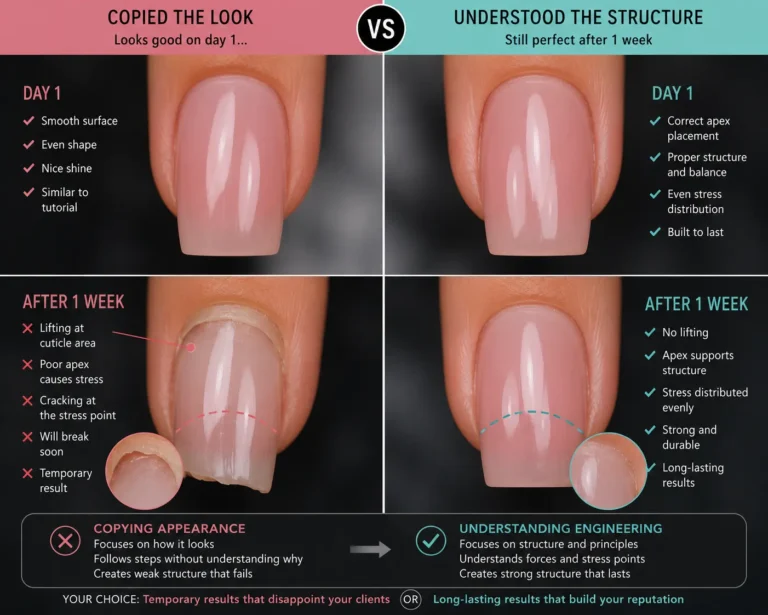
You completed BIAB training. You followed every application step exactly as demonstrated: buffed the nail plate, applied dehydrator, placed the builder gel carefully, cured properly. Your applications still lift within days. You blame the product, the lamp, the client’s lifestyle. The actual cause is preparation gaps that your training never taught you to identify.
This is the most common problem nail technicians face after BIAB courses. The training showed you what to do—buff, dehydrate, apply, cure. It did not show you what professional preparation looks like, what inadequate preparation looks like or how to verify that your preparation meets the standard required for reliable adhesion.
BIAB lifting after training is a diagnostic problem, not a product problem. Professional nail preparation courses teach you the assessment protocol that identifies preparation failures before they cause lifting.
Why “Buff the Nail” Is Not a Preparation Standard
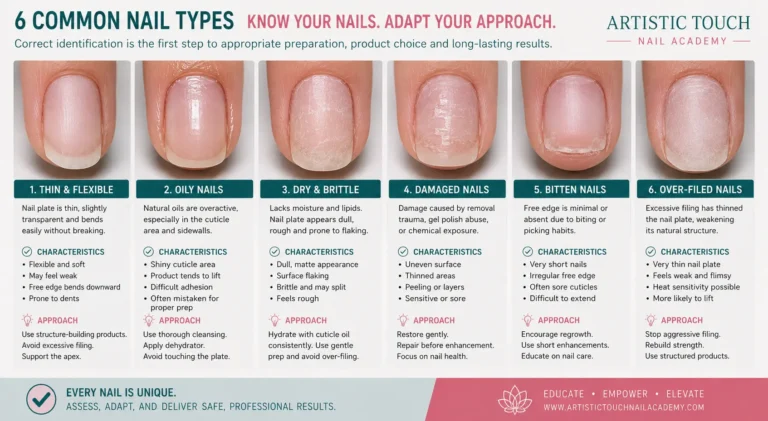
Basic BIAB training tells you to “buff the nail plate to remove shine.” This is an instruction, not a standard. Professional preparation requires complete natural oil removal, appropriate surface texture for mechanical bond and elimination of all contamination that could prevent adhesion.
You buffed the nail. But you do not know whether your buffing removed all natural oil, whether it created sufficient surface texture, whether contamination remains in areas you cannot easily see or whether previous product residue is still present. You proceeded to product application without verification because your training did not teach you the assessment checks required.
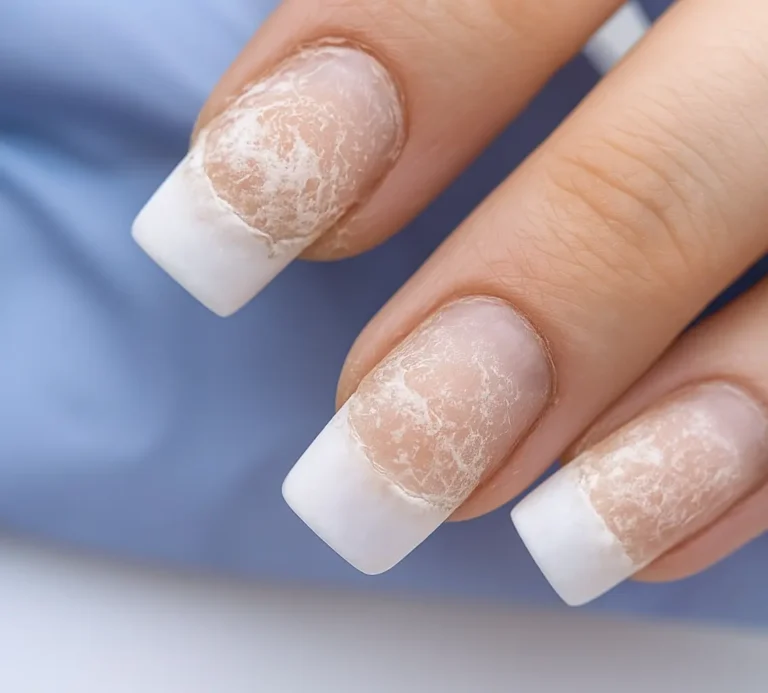
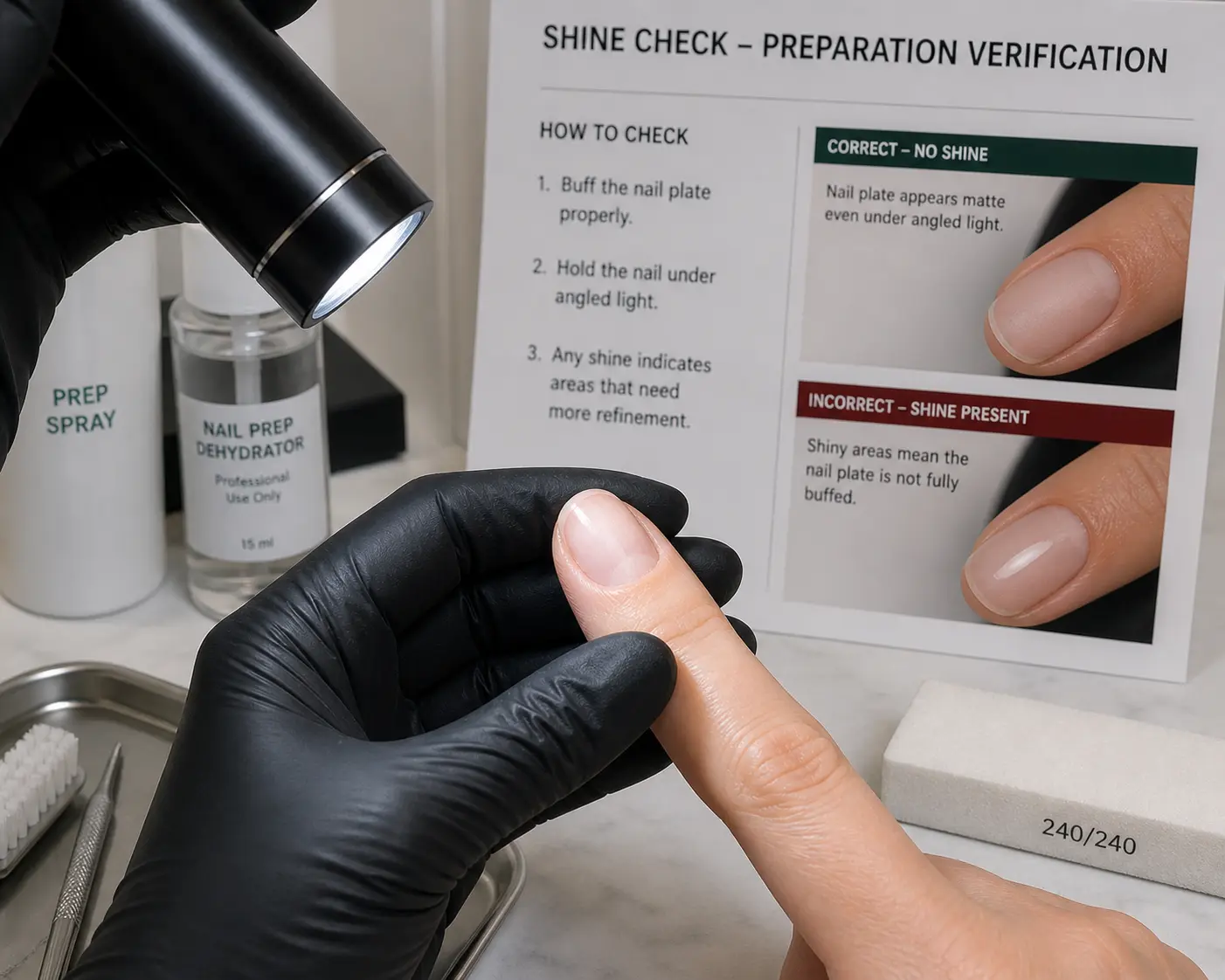
Professional preparation standards specify what complete oil removal looks like (uniform matte surface with zero shine under direct light), what appropriate texture feels like (slight roughness without visible scratches), what clean lateral folds look like (no debris, no moisture, no product residue) and how to verify each element before proceeding.
The Dehydrator Application Gap
Your training told you to apply nail dehydrator. It probably did not tell you that dehydrator must reach every surface area where builder gel will contact the nail plate, that pooling in the centre while lateral folds remain untreated is a common error, or that visible moisture in lateral folds after dehydrator application indicates incomplete preparation.
You applied dehydrator to the visible nail plate. You did not ensure coverage extended fully into the lateral folds where moisture commonly remains. You did not check under the free edge where water can be trapped. You did not verify that the eponychium fold was dry before product application. Any moisture remaining in these areas will cause lifting, regardless of how well you executed the other steps.
Professional preparation includes systematic moisture checks: lateral fold inspection under magnification, free edge underside verification, eponychium area assessment. If moisture is visible in any location, preparation is not complete. This is what prevents lifting rather than hoping the dehydrator “worked.”
What Lifting Patterns Reveal About Preparation Failures
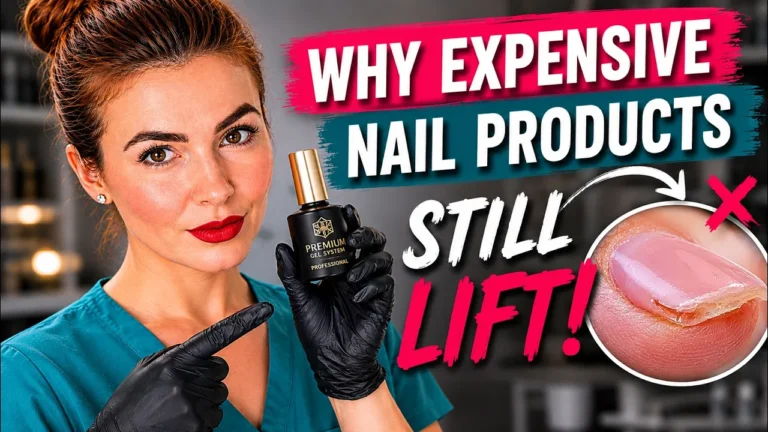
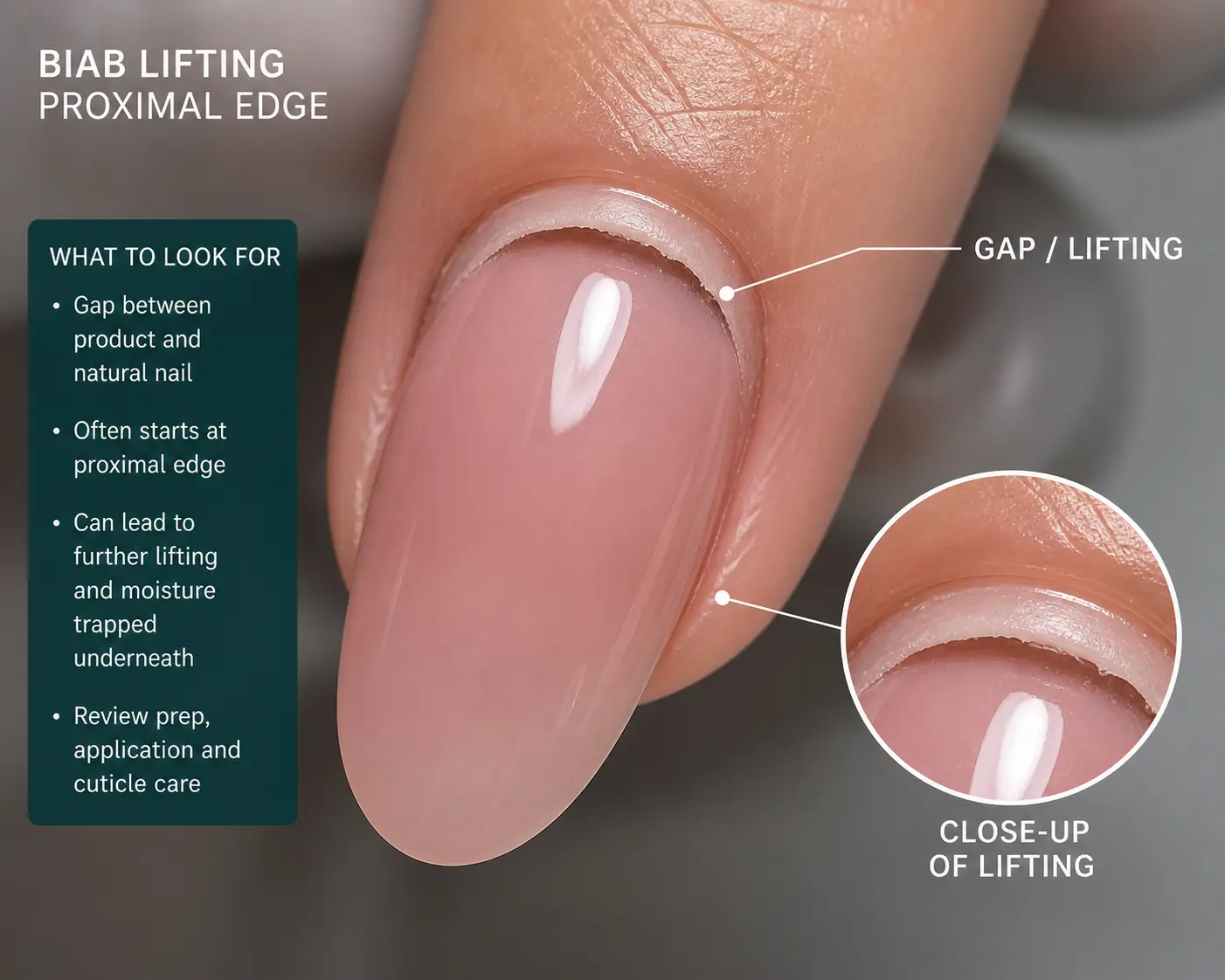
BIAB does not lift randomly. Each lifting pattern indicates a specific preparation failure. Proximal lifting (near the cuticle) indicates inadequate eponychium preparation or moisture exposure during application. Lateral lifting (at the sides) reveals incomplete lateral fold preparation or oil residue at the nail margin. Edge lifting shows incomplete free edge preparation or contamination during application.
When you understand what each pattern reveals, you can identify your specific preparation gap and correct it. When you do not, you repeat the same preparation error on every client and experience the same lifting pattern repeatedly without understanding why.
Professional diagnostic training teaches you to read lifting patterns, trace them back to the preparation step that failed and implement the specific correction that prevents recurrence. This is what stops persistent BIAB lifting.
The Surface Contamination You Cannot See
Natural nail oils are not the only contamination that prevents BIAB adhesion. Skincare product residue, hand lotion transferred from the client’s hands, dust from filing, moisture from washing hands before the appointment and previous enhancement residue all create barriers between the nail plate and your builder gel.
Basic preparation protocols assume the nail arrives clean. Professional protocols verify cleanliness rather than assuming it. This means checking for lotion residue around the cuticle area, confirming complete previous product removal from lateral folds, ensuring no filing dust remains embedded in natural nail texture and verifying that the client has not applied hand cream immediately before the appointment.
These contamination sources are often invisible to casual inspection. Professional preparation uses specific assessment techniques: inspecting lateral folds under magnification, checking for residue shine under angled light, verifying complete debris removal before dehydrator application. Without these checks, contamination remains and causes lifting.
Why Your Preparation Looks Adequate But Is Not
The most difficult preparation failures to identify are the ones that appear adequate to you but do not meet professional standards. Your buffed surface looks matte. Professional standard requires complete oil removal verified by zero shine under direct light at multiple angles. Your lateral folds look clean. Professional standard requires magnified inspection confirming no debris, no product residue and no visible moisture.
This gap between “looks adequate” and “meets standard” is why BIAB lifts despite your belief that preparation was thorough. Your assessment ability has not yet developed to the level required to identify subtle preparation failures that will cause lifting days later.
Professional nail preparation training teaches you what professional standard looks like at each verification point, what common errors appear like when they seem adequate and how to assess your work objectively against measurable criteria rather than subjective impressions.
The Preparation Protocol Professional Courses Teach
Professional BIAB application does not start with buffing. It starts with contamination assessment: checking for lotion residue, identifying areas of previous product remaining, noting moisture in lateral folds or under free edges. Only after contamination is identified and removed does preparation begin.
Preparation follows verification protocol: buff to appropriate texture, verify complete oil removal through shine check, apply dehydrator ensuring lateral fold coverage, confirm moisture elimination through visual inspection, check for any remaining contamination before product application. Each step includes verification before progression.
This is not slower than basic preparation. It is more reliable. You catch preparation failures at the stage where correction is still possible rather than discovering them when the client returns with lifting three days later.
What Prevents BIAB Lifting Consistently
BIAB lifting after training reveals that your training taught you application procedure but not preparation standards or diagnostic assessment. The solution is not better products, stronger primers or thicker application. The solution is learning professional preparation protocol that verifies adhesion readiness before product touches the nail plate.
When you can assess preparation objectively against professional standards, identify contamination that basic inspection misses and verify complete preparation before application, BIAB lifting becomes rare rather than routine.
Master Professional Nail Preparation Standards
The Nail Preparation Course teaches professional assessment protocol, contamination identification and verification standards that prevent BIAB lifting. Learn what adequate preparation actually looks like and how to verify it before product application.
View Nail Preparation Course →Lifetime access • Private student community • Start immediately
Frequently Asked Questions
Why does my BIAB lift at the cuticle area?
Proximal lifting near the cuticle indicates inadequate eponychium area preparation or moisture exposure during application. This area commonly retains natural oils, skincare product residue or moisture that prevents proper adhesion. Professional preparation requires specific eponychium cleaning and moisture verification before BIAB application.
Is BIAB more prone to lifting than other gel systems?
BIAB is not inherently more prone to lifting when preparation meets professional standards. However, because BIAB is often marketed as a simpler system, many nail technicians attempt it without learning professional preparation protocol. The lifting results from preparation gaps, not product limitations.
Should I use primer with BIAB to prevent lifting?
Primer use depends on your specific BIAB product system—some require it, others do not. However, primer cannot compensate for inadequate nail plate preparation. If your preparation protocol has gaps, adding primer will not prevent lifting. Correct the preparation first, then follow your product system’s primer guidelines.
How can I tell if my nail preparation is adequate?
Adequate preparation shows uniform matte surface with zero shine under direct light, complete previous product removal verified by magnified inspection, no visible moisture in lateral folds or under free edges and appropriate surface texture without visible scratching. If you cannot verify these elements objectively, your preparation assessment ability requires development.
What causes BIAB to lift on some clients but not others?
Inconsistent lifting across clients typically indicates that your preparation protocol works adequately for some nail conditions but has gaps that cause failures on others. Clients with oilier nail plates, regular lotion use or challenging nail geometry require more thorough preparation verification than clients with naturally dry, clean nails.
Can I fix BIAB lifting without removing the enhancement?
Once lifting has begun, attempting to fix it without removal typically fails because the adhesion barrier (oil, moisture, contamination) remains present. The lifted area will continue to expand. Professional protocol requires removal, identification of the preparation failure that caused lifting, correction of that specific failure and complete reapplication.
About the Author
Radina Ignatova
Professional Nail Expert | International Nail Educator
I am Radina Ignatova, a Professional Nail Expert since 2014 and International Nail Educator, based in Scotland, UK. I am the Founder of Artistic Touch Nail Training Academy and TheNailWiki.
At Artistic Touch Nail Training Academy, I provide structured professional online nail courses specialising in dual forms, gel systems, polygel application, advanced nail structure, E-File work and Russian Manicure, with a strong focus on professional salon safety. I continue to work actively in salon practice, ensuring that all education reflects real client scenarios and current industry standards.
My teaching philosophy is simple: I show real salon challenges, real mistakes and real performance testing, not just perfect demonstrations. This is how you develop genuine technical competence and become a confident, capable nail professional.
Every Artistic Touch course includes lifetime access and access to a dedicated student support group, where I provide ongoing guidance and professional feedback.
Disclaimer: This content is for educational purposes only. Nail services should be performed by trained professionals following current hygiene and safety regulations. Always carry out a full client consultation and check for contraindications before performing any nail service.
About Artistic Touch Nail Training Academy
Artistic Touch Nail Training Academy delivers structured professional online nail education focused on practical skill development, professional standards and safe salon practice. All courses are available online worldwide.