Why Your BIAB Dual Forms Come Out Thick and Bulky (And How to Fix It)
By Radina Ignatova | Last Updated: 5 April 2026 | Nail Techniques
Why Do BIAB Dual Forms Come Out Thick and Bulky?
BIAB dual forms create thick, bulky results when you select forms that are too big (allowing product to pool in excess space), apply excessive product, skip the flash curing sequence (causing forms to lift and shift), or fail to leave the flush cuticle gap. These factors force heavy filing to achieve acceptable shape, defeating the purpose of the no-file technique.
Professional no-file BIAB dual form technique requires correct form selection before product touches the nail, strategic flash curing to prevent form movement, and leaving a precise gap at the cuticle zone that cures flush without filing.
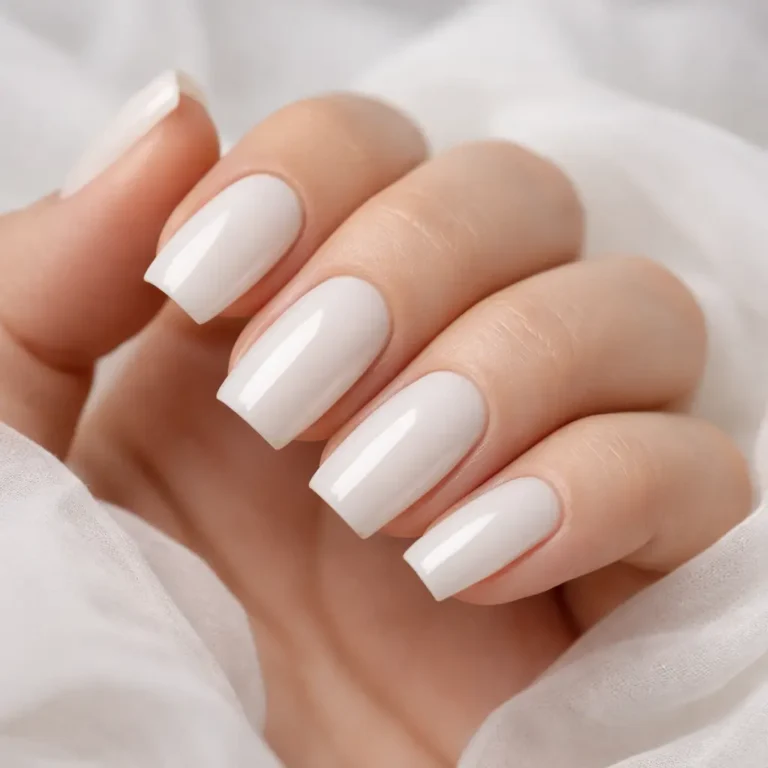
You remove the dual forms expecting clean, professional square nails. Instead, you find thick, bulky extensions with product pooled at the cuticle area, lumpy sidewalls, and an underside requiring 30 minutes of aggressive filing just to look acceptable.
This is not a BIAB product problem. This is not a dual form quality problem. This is a technique problem — specifically, wrong form selection, excessive product application, missing flash curing steps, or incorrect cuticle zone placement working together to create results that require excessive filing.
This article explains the four main reasons BIAB dual forms create thick, bulky results, how to diagnose which problem you are experiencing, and why the no-file technique solves these issues through proper form selection and strategic curing sequence.
Reason 1: Wrong Dual Form Selection (Too Big = Thick Build-Up)
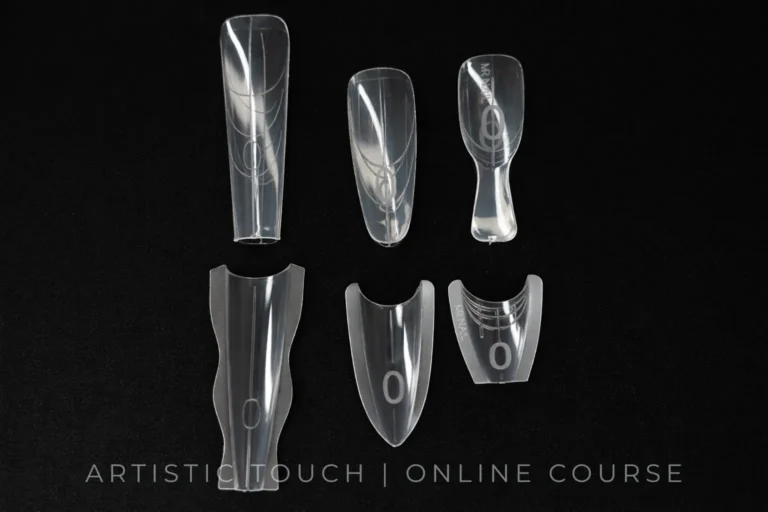
The most common cause of thick, bulky BIAB dual forms is selecting forms that are too big for the nail bed. When forms are oversized, product has excessive space to fill, creating concentrated build-up in the centre, thick sidewalls, and uncontrolled product spread that requires heavy filing.
How Wrong Form Size Creates Thickness
When dual forms are too big:
- Product pools in centre and sidewalls — excess space allows gel to accumulate unevenly
- Form does not contain properly — oversized forms create pockets where BIAB builds thickness
- Cuticle zone becomes bulky — too much space near eponychium fills with product
- Sidewalls thicken dramatically — form extends beyond natural nail width
Conversely, when forms are too small, they expose sidewalls and growth points, forcing you to overfill gaps with product — which also creates thickness problems but from different cause.
⚠️ Critical Mistake: “Just Add More Product”
When dual forms do not fit correctly, adding more BIAB to compensate makes thickness worse. The solution is not more product — it is correct form selection before product application. Professional technique starts with form fit assessment, not product placement.
How to Select Correct Form Size
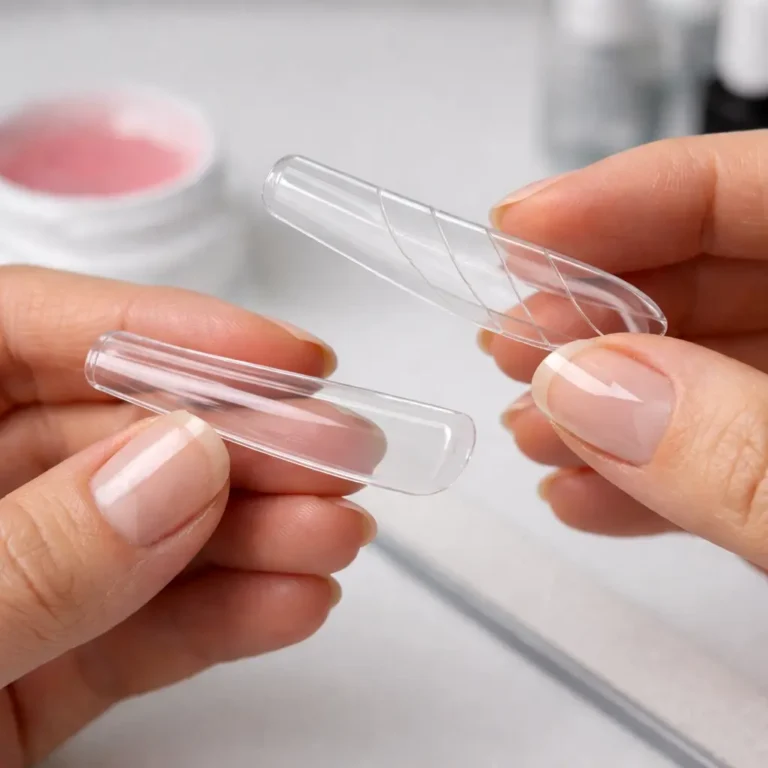
Correct dual form selection requires testing fit before product application:
- Form should sit flush under cuticle zone without gaps or lifting
- Growth points should close completely at sidewall corners without exposing nail edges
- Form should match nail width precisely — not extend beyond sidewalls
- Snug fit without pinching — form contains without squeezing nail bed
Reason 2: Excessive Product Amount (Fear of Thin Coverage)
Many technicians apply too much BIAB when using dual forms, fearing that thin coverage will create weak results. This fear leads to overfilling, which creates the thick, bulky nails that require heavy filing to correct.
Why Less Product Creates Better Results
BIAB dual form technique relies on product spreading between two surfaces (nail plate and dual form). When you apply excessive product:
- Product pools in cuticle zone instead of spreading evenly
- Sidewalls become thick and unnatural from excess gel
- Flash curing cannot control movement because too much product resists positioning
- Air bubbles trap more easily in thick gel layers
Professional Tip: Product Amount Control
Start with less BIAB than you think you need. Dual forms contain and spread product efficiently — what looks like insufficient coverage before pressing becomes perfectly adequate after form application. You can always add more in problem areas, but removing excess creates filing work that defeats the no-file technique.
Master No-File BIAB Dual Forms Professionally
Learn exact form selection criteria, product amount guidance for different nail types, flash curing sequence that prevents product movement, and flush cuticle placement technique that creates clean results without filing.
- ✓ Dual form selection mastery for flush cuticle fit
- ✓ Flash curing sequence that controls product placement
- ✓ Product amount guidance for clean, non-bulky results
- ✓ Lifetime access with expert troubleshooting support
Reason 3: Missing Flash Curing Sequence (Form Lifts and Shifts)
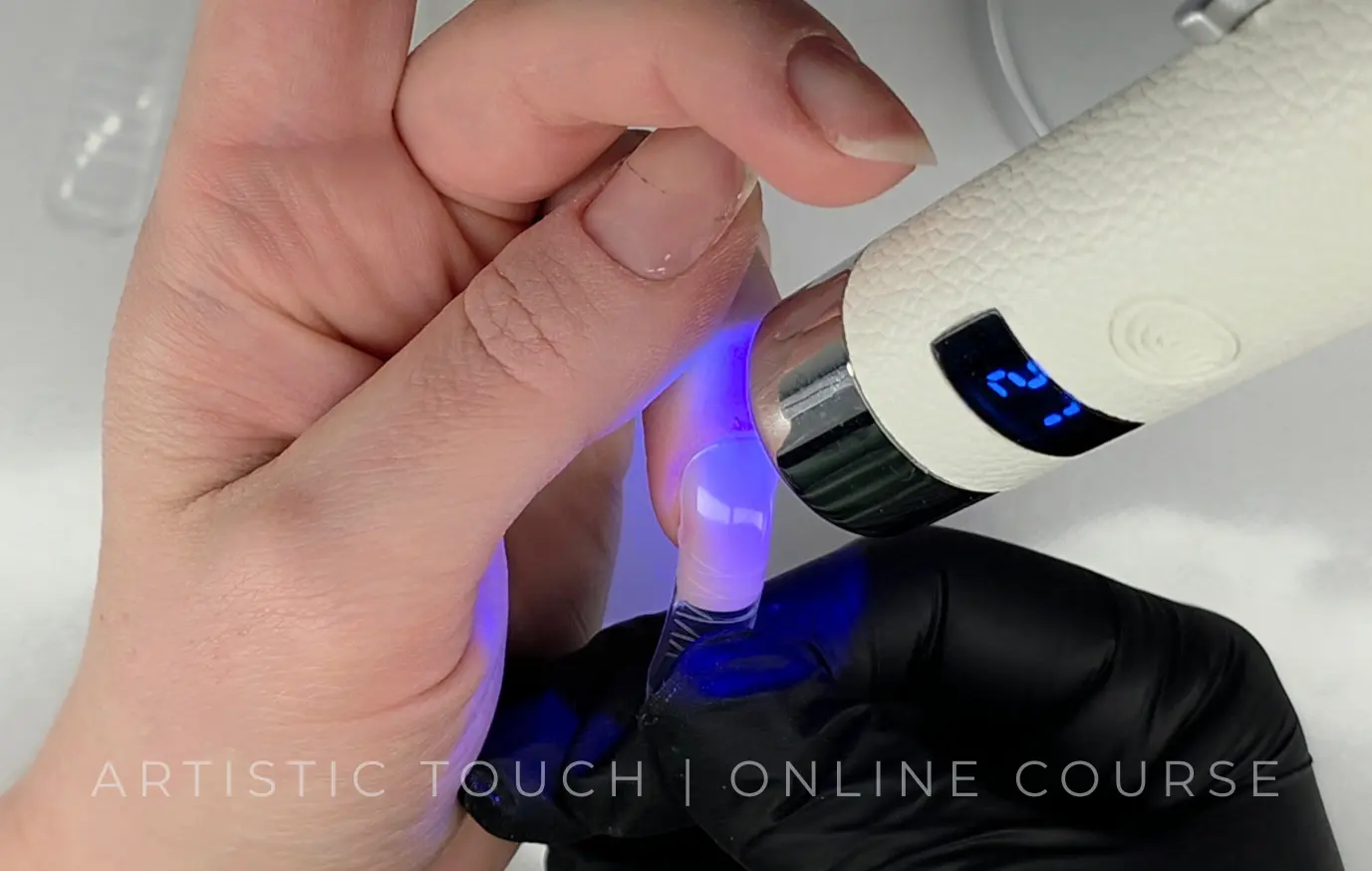
Flash curing is the strategic partial curing of specific zones before full cure. When you skip this step or cure incorrectly, the dual form can lift or shift during final curing, allowing BIAB to slide toward the cuticle area or pool in unwanted zones, creating thick build-up that requires filing to correct.
What Happens Without Flash Curing
BIAB is self-leveling, which means it continues moving until cured. Without strategic flash curing to lock the dual form in position:
- Dual form lifts at cuticle zone — allowing product to pool underneath
- Form shifts during final cure — moving product into wrong positions
- Product flows toward cuticle area — gravity pulls uncured gel downward when form moves
- Flush gap disappears — gel fills the space meant to remain product-free
- Sidewalls thicken unevenly — product pools where you do not want thickness
Why Flash Curing Sequence Prevents Form Movement
Professional no-file technique uses strategic flash curing to lock the dual form in correct position before final cure. This prevents the lifting and shifting that creates thick, uneven results requiring heavy filing. By partially curing specific zones first, you stabilise form placement whilst product is still malleable enough to achieve flush finish.
The specific flash curing sequence — which zones to cure, in what order, for how long — is taught in professional training courses. This technique cannot be learned through trial and error without wasting significant product and time on forms that lift and shift during curing.
Reason 4: Missing Flush Cuticle Gap (Filing Nightmare Zone)
The flush cuticle gap is a precise space left between BIAB product and the cuticle area during application. When this gap is missing or incorrect, product pools at the cuticle zone, creating thick build-up that requires aggressive filing — often damaging the natural nail in the process.
Why This Gap Is Critical
When BIAB fills the cuticle zone completely:
- Filing becomes mandatory to remove excess product near skin
- Natural nail damage risk increases from aggressive cuticle zone filing
- Flush finish becomes impossible without professional e-file control
- Product touches skin — increasing sensitisation risk
Professional technique leaves this gap intentionally, allowing BIAB to cure with a clean, flush finish at the cuticle area without filing. The gap size, placement, and management during application require proper nail preparation — specifically, Russian manicure technique that creates the clean eponychium zone needed for flush cuticle placement.
Nail Prep Matters for Flush Cuticle Results
You cannot achieve flush cuticle placement without proper nail preparation. Traditional nail prep leaves cuticle residue and eponychium bulk that prevent dual forms from sitting correctly. Russian manicure technique creates the clean cuticle zone required for professional BIAB dual form application with flush finish.
How No-File Technique Solves These Problems
The no-file BIAB dual form technique addresses all four thickness causes through systematic application method:
Form Selection Before Product
Test dual form fit on every nail before applying BIAB. Correct selection eliminates thickness from wrong form size, whilst proper fit allows product to spread naturally without concentration in wrong zones.
Controlled Product Amount
Apply less BIAB than instinct suggests. The dual form containment system spreads product efficiently — what appears insufficient becomes adequate after form placement. This prevents the excess that creates bulky results.
Strategic Flash Curing Sequence
Cure specific zones in precise order to lock product position before final cure. This prevents the sliding and pooling that creates thick cuticle zones requiring filing.
Flush Cuticle Gap Placement
Leave precise gap at cuticle zone during application. Combined with proper nail prep, this creates flush finish without filing, protecting natural nail health whilst achieving professional appearance.
Frequently Asked Questions About Thick BIAB Dual Forms
Can I fix thick BIAB dual forms after they are cured?
Yes, through filing, but this defeats the purpose of no-file technique and risks natural nail damage. Prevention through correct form selection, product control, and flash curing is more effective than post-cure correction. Learning proper technique from the beginning saves time, product, and protects client nail health.
Why do my BIAB dual forms look thick even with small product amounts?
Thickness from small product amounts indicates wrong dual form selection. When forms are too big, even minimal BIAB pools in the excess space created between form and nail. When forms are too small, exposed sidewalls and growth points force you to overfill gaps. The solution is proper form fit assessment before product application.
Does flash curing weaken BIAB structure?
No. Flash curing is partial curing of specific zones before final full cure. This technique controls product placement without compromising structural integrity. When done correctly using proper timing and zone selection, flash curing creates stronger results than single full cure because product stays in optimal positions.
Can I learn flash curing sequence through trial and error?
Trial and error wastes significant product, time, and potentially damages client nails whilst you experiment. The flash curing sequence involves specific zones, timing, and order that interact with BIAB flow behaviour. Professional training provides this sequence immediately, preventing the £100-150 in wasted materials that self-teaching typically costs.
Do I need Russian manicure training to do BIAB dual forms?
For basic BIAB dual form application, no. For flush cuticle placement with no filing, yes. Russian manicure creates the clean eponychium zone required for dual forms to sit flush at the cuticle area. Without this preparation, you will need to file the cuticle zone after application, increasing natural nail damage risk.
Radina Ignatova
Professional Nail Expert | International Nail Educator
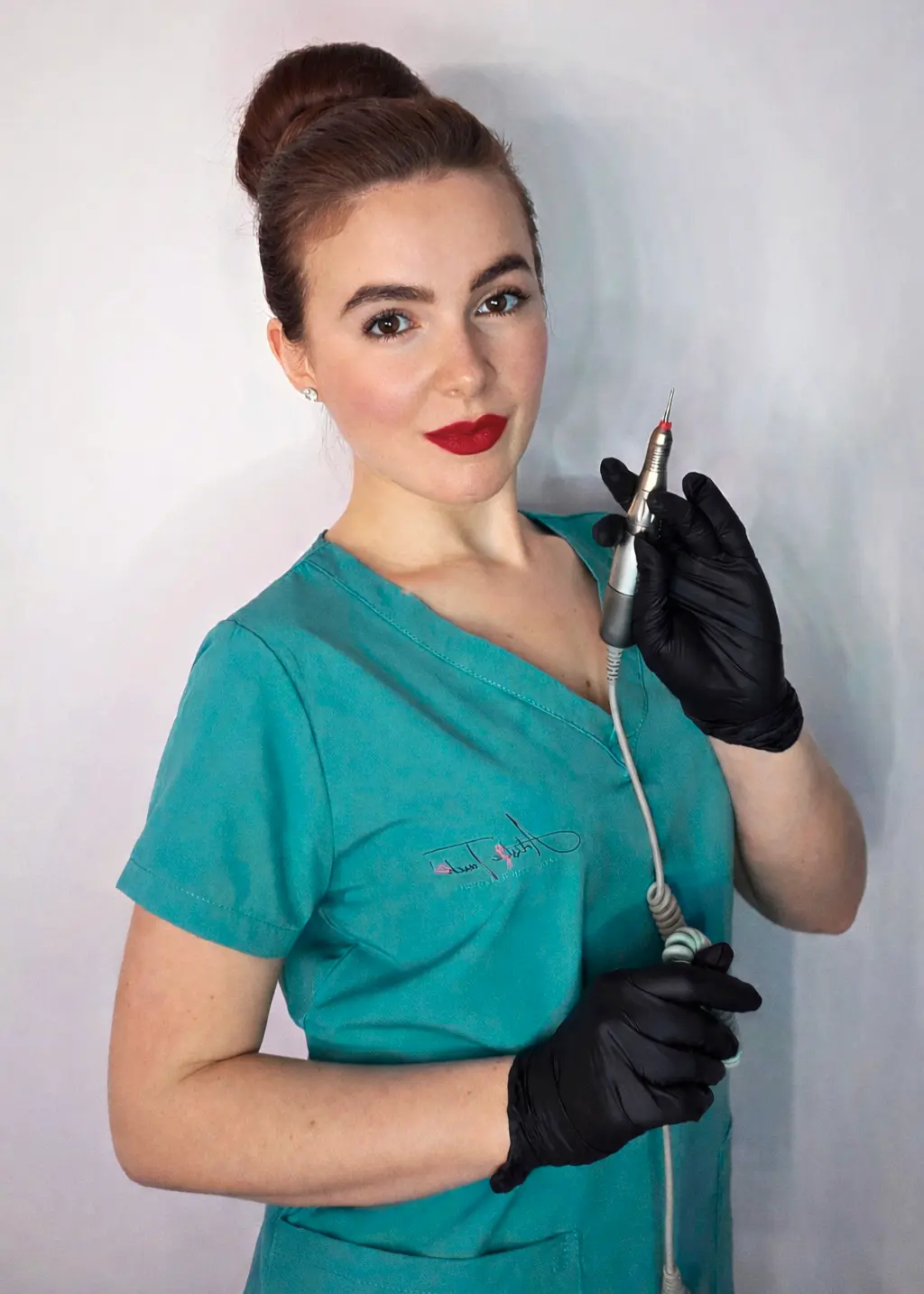
I am Radina Ignatova, a Professional Nail Expert since 2014 and International Nail Educator, based in Scotland, UK. I am the Founder of Artistic Touch Nail Training Academy and TheNailWiki.
At Artistic Touch Nail Training Academy, I provide structured professional online nail courses specialising in dual forms, gel systems, BIAB application, advanced nail structure, e-file work and Russian manicure, with a strong focus on professional salon safety. I continue to work actively in salon practice, ensuring that all education reflects real client scenarios and current industry standards.
My teaching philosophy is simple: I show real salon challenges, real mistakes and real performance testing, not just perfect demonstrations. This is how you develop genuine technical competence and become a confident, capable nail professional.
About Artistic Touch Nail Training Academy
Artistic Touch Nail Training Academy delivers structured professional online nail education focused on practical skill development, professional standards and safe salon practice. All courses are available online worldwide.
Master No-File BIAB Dual Forms Professionally
Understanding why BIAB dual forms create thick results helps, but professional mastery requires proper training in form selection criteria, flash curing sequence, product control techniques, and flush cuticle placement methods.
What You Will Learn in the No-File BIAB Dual Forms Course:
- ✓ Dual form selection mastery for flush cuticle fit without thickness
- ✓ Flash curing sequence that prevents product movement and pooling
- ✓ Product amount control for clean results without bulk
- ✓ Lifetime access with troubleshooting support and expert feedback
Create Clean BIAB Square Nails Without Filing
Master form selection, flash curing, and flush cuticle technique
View the Ultimate Dual Forms Course →Lifetime access • Certificate included • Start immediately
Discover why BIAB dual forms create thick bulky results and learn professional form selection, flash curing technique, and flush cuticle placement at Artistic Touch Nail Training Academy.