Why Over-Prepping Causes Retention Problems: The False Confidence of Aggressive Technique
The Paradox
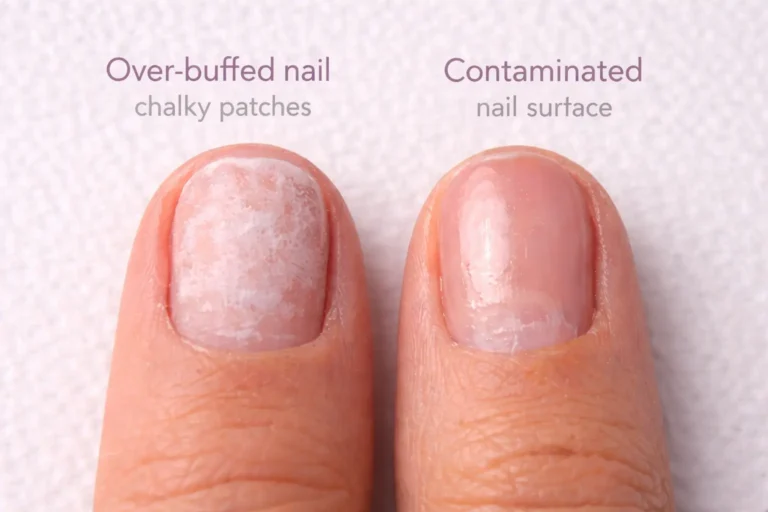
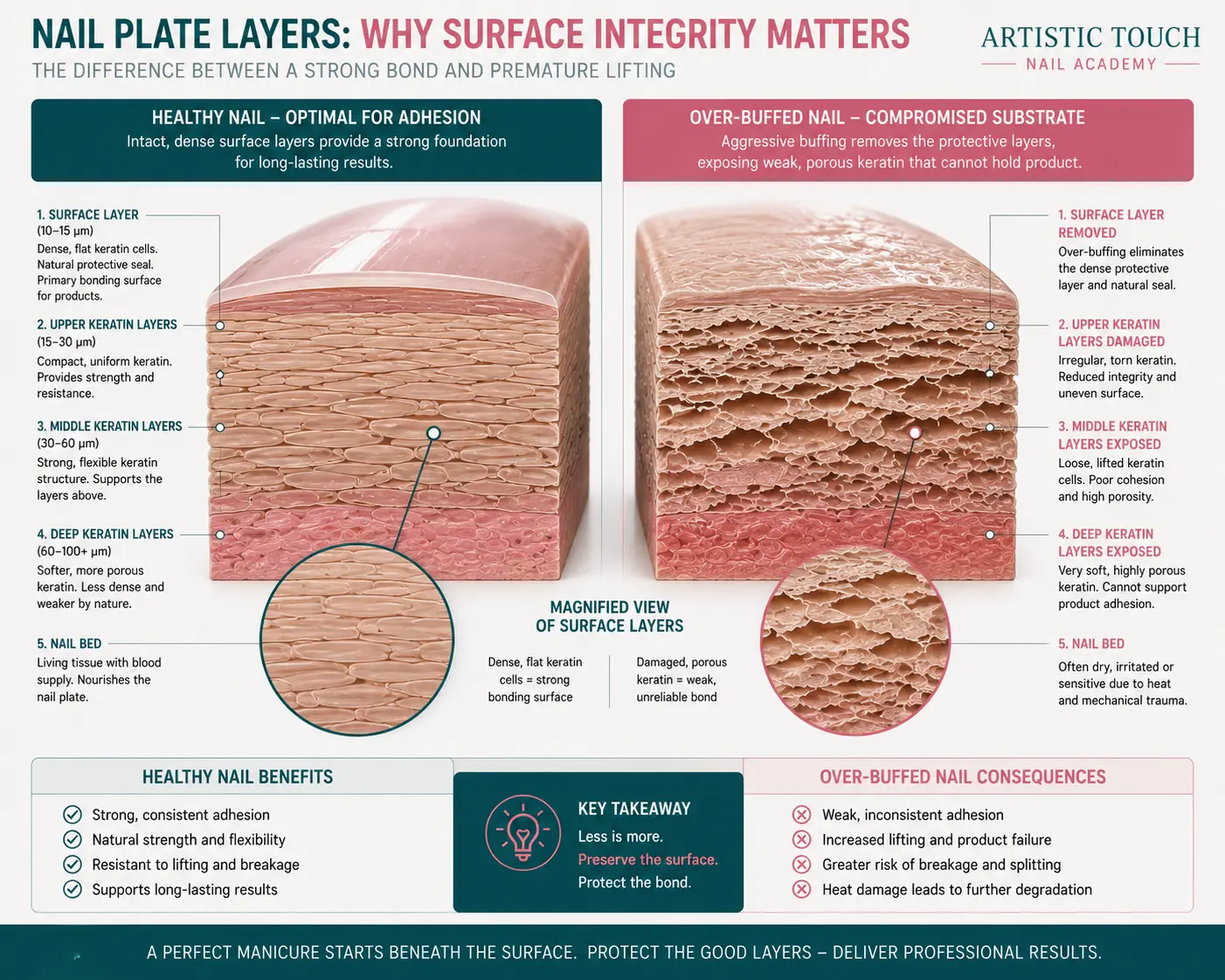
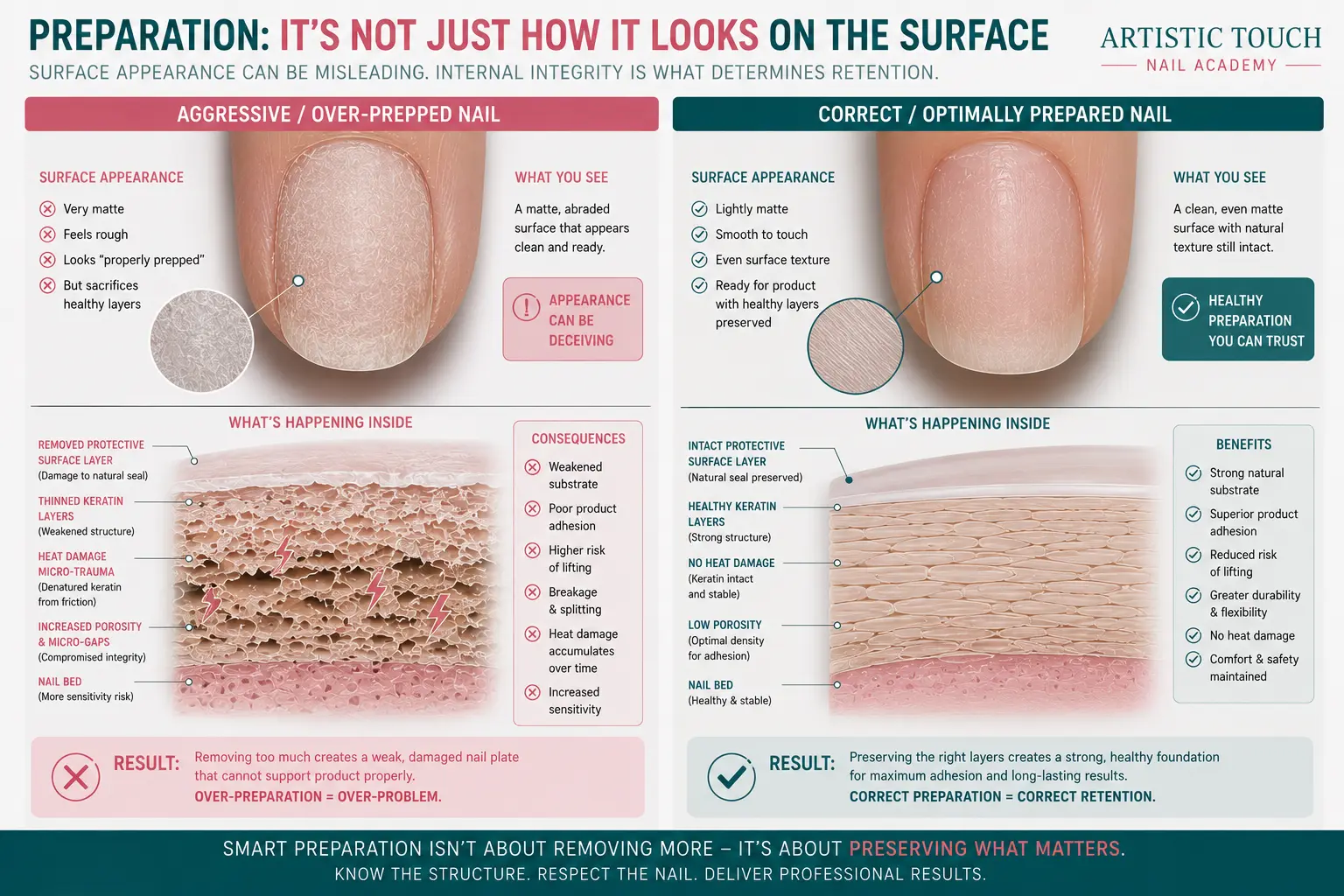
Aggressive preparation feels and looks like thorough work. The nail has obvious matte texture. The surface feels appropriately prepared. You feel confident you did everything possible. You actually weakened adhesion. The aggressive approach removes the dense healthy keratin layers providing strongest bonding while exposing weaker substrate beneath. But you cannot detect this damage visually. So the false confidence persists until product lifts days later.
Why Visible Success Creates False Confidence
You buff vigorously. Shine disappears visibly. The surface becomes increasingly matte and textured. This visible progress feels like success. You feel confident the nail is thoroughly prepared. The confidence is justified for visible tasks—removing shine is complete. The confidence is misplaced for adhesion outcome—you may have actually weakened it through aggressive technique.
Nail keratin layers are not uniform. Surface layers are dense and provide strongest adhesion. Deeper layers are progressively more porous and weaker. When you buff aggressively, you remove dense protective surface layers exposing weaker substrate. The surface looks properly prepared. Structurally, you replaced good bonding surface with inadequate bonding surface.
Heat Damage From Friction: The Invisible Problem
Vigorous buffing and extended e-file use generate heat through friction. Heat damages keratin creating brittleness and microscopic structural cracks. These cracks are invisible during preparation but cause failure under product stress. You feel the heat sometimes but interpret it as evidence of thorough work. Actually, you generated enough friction to damage the very material you were preparing.
Professional preparation generates minimal heat through controlled pressure and moderate technique. The nail should feel cool during work. Warmth indicates excessive friction and heat damage occurring.
Over-Dehydration: The Brittleness That Appears as Proper Prep
Extended dehydration removes surface moisture. It also removes the biological moisture nails need for flexibility and receptivity to adhesion. Over-dehydrated nails become brittle and non-receptive despite looking perfectly prepared. The surface is appropriately matte. Chemically, it is too dry for reliable adhesion.
Why More Work Creates Different Problems
You encounter consistent lifting. You assume you did not work hard enough. So you buff more aggressively next time. You extend dehydration. You apply more primer. You press harder throughout. More work creates different problems: over-buffing removes good bonding surface, over-dehydration creates brittleness, over-applying products traps solvents. These problems look identical to inadequate work when product fails. You cannot distinguish between “not enough” and “too much” without understanding what each step actually accomplishes.
Learn Strategic Controlled Preparation
The E-File Manicure and Gel Polish Online Course teaches pressure control and strategic decision-making—not aggressive maximum-effort preparation.
Enrol Now →Lifetime access • Start immediately • Learn at your own pace
FAQ
Can too much buffing cause lifting?
Yes. Aggressive buffing removes dense healthy keratin layers providing strongest bonding, exposing weaker porous substrate. The surface looks perfectly prepared. Structurally it is compromised. Professional pressure is moderate and controlled. The nail should feel cool during preparation, not warm from friction heat.
Why do I feel confident about over-prepared nails?
Aggressive preparation creates obvious visible results—obvious matte texture, rough surface—that feel like thorough work. This visible success creates psychological confidence. But structural damage is invisible. The confidence persists until product performance reveals the adhesion failure.
What is the difference between controlled and aggressive prep?
Controlled preparation removes exactly what needs removing using appropriate pressure for required time. You observe response and adjust. You stop when adequate texture exists. Aggressive preparation removes as much as possible using maximum pressure for extended time. Both create matte surfaces. Controlled prep protects structural integrity. Aggressive prep undermines it.
About Radina
Radina Ignatova — Professional Nail Expert | International Nail Educator. Founder of Artistic Touch Nail Training Academy and TheNailWiki. Teaching honest professional nail education since 2014.
Disclaimer: This content is for educational purposes only. Always perform nail services following professional regulations.