Sandwich Dual Forms With Builder Gel or Polygel: What Changes?
Can you use the same technique with builder gel and with polygel inside sandwich dual forms? Not quite. The product changes how the form behaves, and this is the part most short tutorials skip.
This is a deeper understanding of dual forms, with the reasons behind it, not another general tutorial. I explain what changes and why, so that you can choose a product that suits your level. The exact amounts, order and timing I teach step by step, on real nails, in my Sandwich Dual Forms course.
Quick Answer: Builder Gel or Polygel in Sandwich Dual Forms?
The product changes how the form behaves. Builder gel flows, so it travels inside the form and you have less time as the viscosity gets lower. Polygel is a paste that stays where you place it. Medium viscosity gels are the least forgiving, which is why I suggest a high viscosity gel or polygel to beginners. With polygel, overfilling the form can make the sandwich system harder to compress.
Why the Product Changes the Form
A sandwich system shapes both the top and the underside of the nail, with the product between the two forms. I explain the system itself in What Are Sandwich Dual Forms?. What goes inside it matters just as much as the forms. A product that flows will travel on its own. A product that stays where you put it will not. That difference changes how much time you have and how forgiving the application is.
Builder Gel: Viscosity Decides Your Working Time
Builder gels are not all the same thickness. A medium viscosity gel runs faster, so you have less time to work, and it is not beginner friendly. A high viscosity gel travels less and gives you more time. Look at the viscosity, not the name on the label, because companies name these products differently.
If a gel runs away from the part of the form where you wanted it, the problem is often the viscosity and your speed, not the form.
Polygel: A Paste That Stays Where You Put It
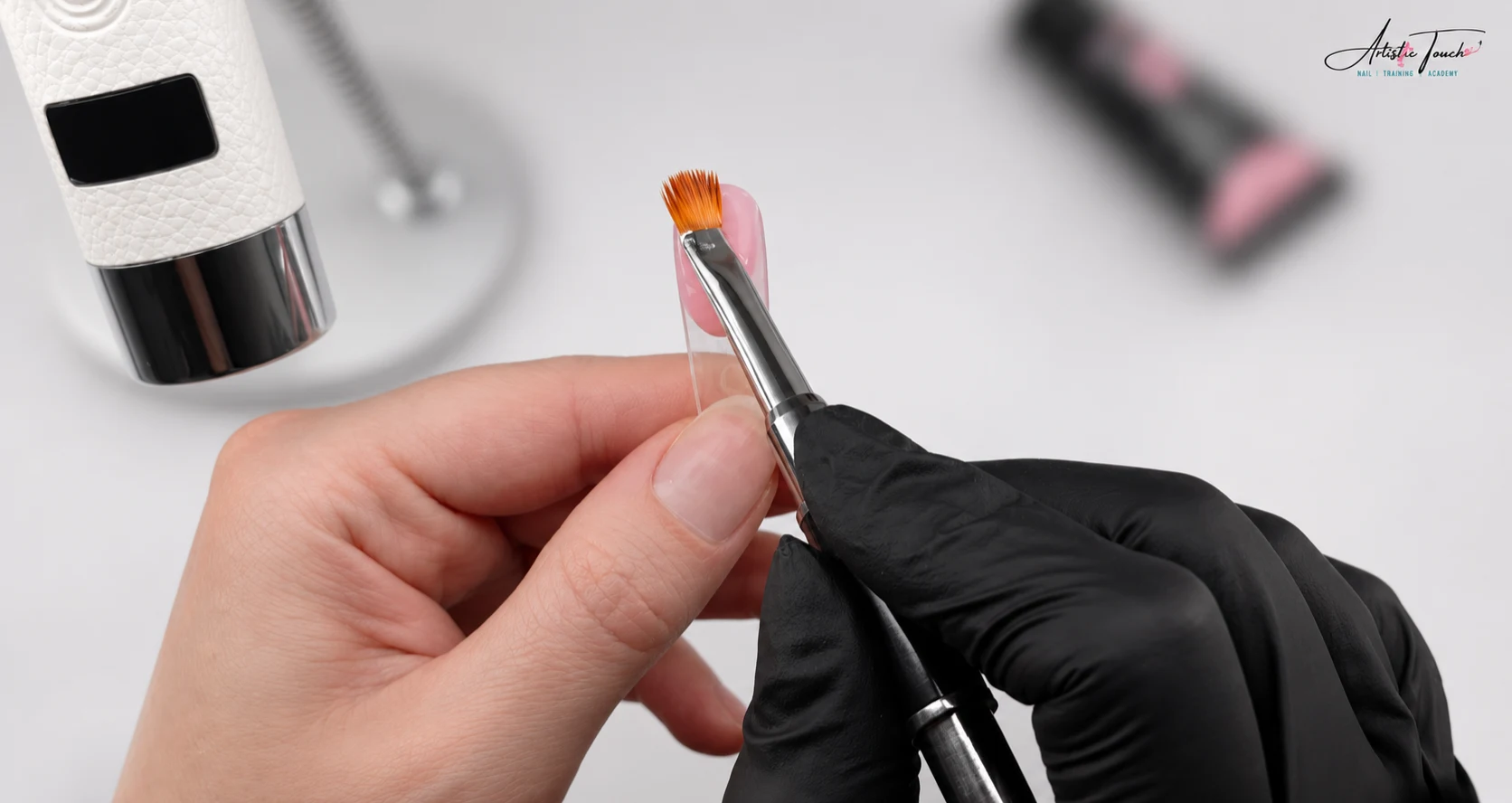
Polygel behaves like a paste. It stays where you place it and does not travel the way a gel does, so you decide where it goes. It also sticks to the brush, which is why it needs a slip solution to move easily. Be careful not to overfill the form, because too much polygel can resist you when you compress the sandwich system.
Which Should a Beginner Start With?
I suggest starting with a high viscosity gel or with polygel. Both give you more time than a medium viscosity gel, so you can learn where the product should sit without racing against it. When you are more confident, you can move to faster products.
| Product | How it behaves | Working time | Good to know |
|---|---|---|---|
| Medium viscosity gel | Flows and travels | Less time | Not beginner friendly |
| High viscosity gel | Travels less | More time | A good place to start |
| Polygel | Paste that stays where placed | More time | Needs a slip solution; do not overfill |
The Form Matters Too
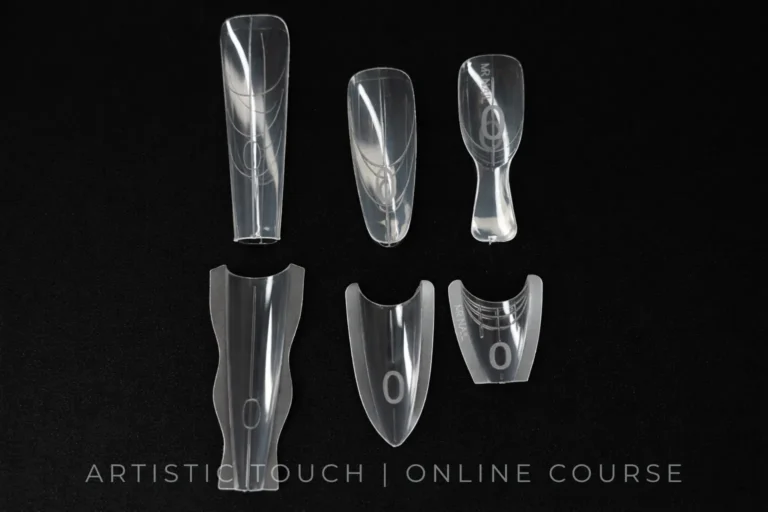
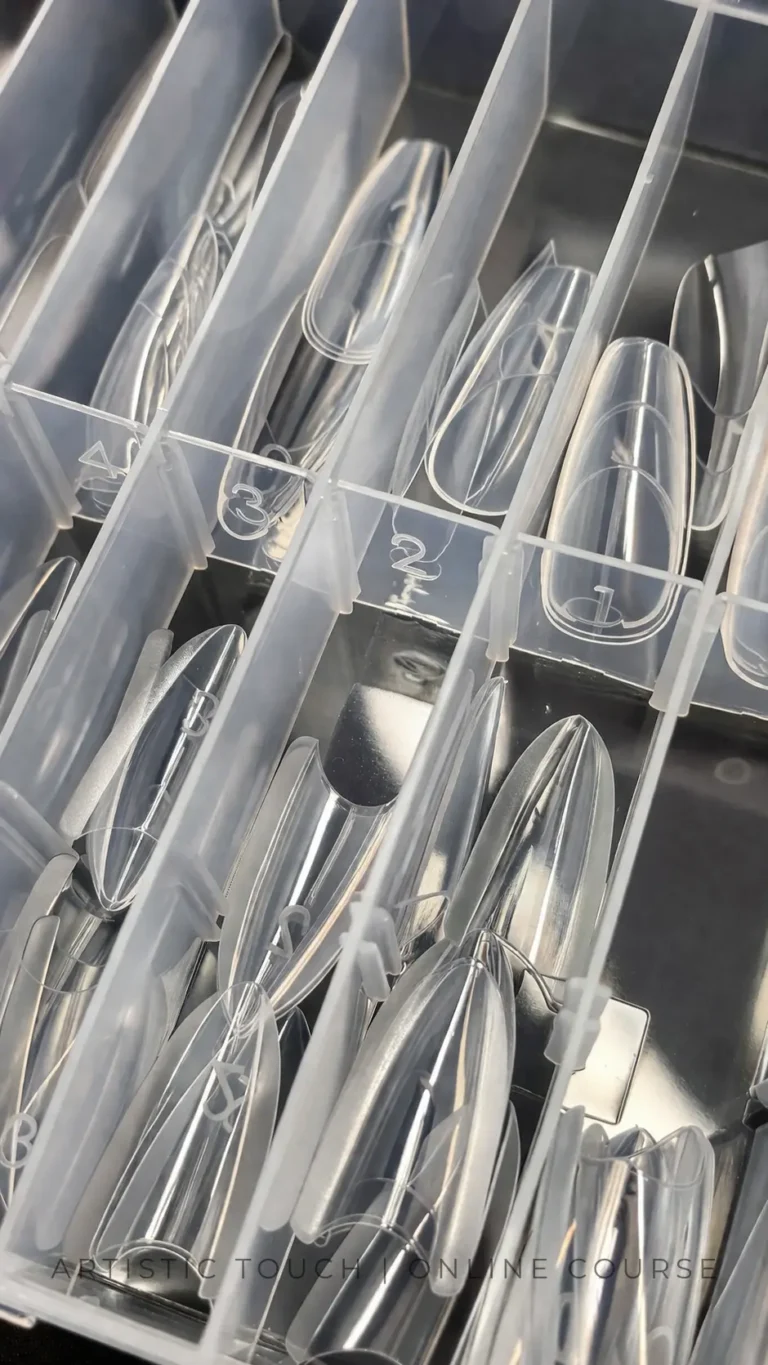
The shape of the form changes how much product it holds. An arched form has more volume than a flatter one, so the same technique does not fit every form. This is another reason I teach choosing the form by what it is designed to create, not only by its shape. You can read more in the beginners guide and the most common mistakes.
What I Keep for the Course
In an article I can explain what changes and why. The exact amounts, where to place the product and how long you have with each type are easier to learn when you can watch them on real nails, so I teach them in the course, lesson by lesson.
Learn the Application Step by Step
The Sandwich Dual Forms course shows the product amounts, placement and timing on real nails, so you understand why each step works.
View the Sandwich Dual Forms Course →Frequently Asked Questions
Can I use polygel in sandwich dual forms?
Yes. Polygel is a paste that stays where you place it, so it behaves differently from gel. It needs a slip solution so the brush does not stick, and you should be careful not to overfill the form.
Can I use builder gel in sandwich dual forms?
Yes. The viscosity decides how the gel behaves. A medium viscosity gel runs faster and leaves less working time, while a high viscosity gel travels less and gives you more time.
Is builder gel or polygel better for beginners?
I suggest starting with a high viscosity gel or with polygel. Both give you more working time than a medium viscosity gel.
Why does my gel run out of the form?
A lower viscosity gel travels more, so it can move away from where you wanted it before you finish. A higher viscosity gel or polygel gives you more control.
Why is polygel hard to compress in a sandwich system?
Because it stays where it is placed, too much polygel can resist you when you compress the system. Do not overfill the form.
Does the brand of gel matter?
The viscosity matters more than the label. Companies name their products differently, so judge the product by how it behaves.
Where can I learn the exact application?
In my Sandwich Dual Forms online course, where I show the amounts, placement and timing on real nails.
Key Takeaway
Choose the product to match your level. A high viscosity gel or polygel gives a beginner more time than a medium viscosity gel, and polygel stays where you place it, so do not overfill the form.
About the Author

Professional Nail Expert | International Nail Educator
I am Radina Ignatova, a Professional Nail Expert since 2014 and International Nail Educator, based in Scotland, UK. I am the Founder of Artistic Touch – Nail Training Academy and TheNailWiki.
At Artistic Touch – Nail Training Academy, I provide structured professional online nail education specialising in dual forms, nail preparation and retention, nail structure, E-File work and Russian Manicure, with a strong focus on professional salon safety. I continue to work actively in salon practice, ensuring that all education reflects real client scenarios and current industry standards.
My teaching philosophy is simple: I show real salon challenges, real mistakes and real performance testing, not just perfect demonstrations. This is how you develop genuine technical competence and become a confident, capable nail professional.