What Makes a Good Sandwich Dual Form? Brand Comparison
Quick Answer: What Defines Quality in Sandwich Dual Forms?
Good sandwich dual forms have flexible cuticle zones for clean imprints, rigid body structure to hold product architecture, accurate margin guides for length and alignment control, and clear central axis markings. Forms lacking these qualities require more experience to produce consistent results and may have structural design flaws.
This article compares sandwich dual form quality across price points and explains what to assess before purchasing.
Watch: Brand Comparison and Quality Assessment
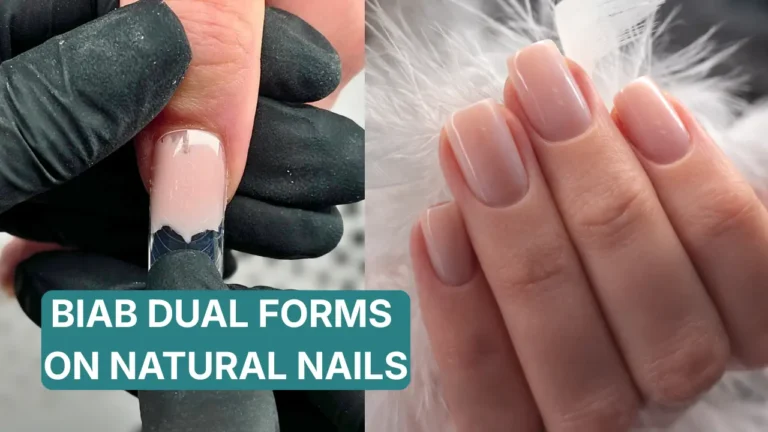
This demonstration compares sandwich dual forms across different price points, testing cuticle zone flexibility, body rigidity, margin quality and structural design to identify what separates reliable forms from problematic ones.
Why Sandwich Dual Forms Look Identical But Perform Differently
You purchase sandwich dual forms based on shape and price. At first glance, budget forms and premium forms appear nearly identical. Both show the same shape profile. Both claim the same sizing system. Both look like they will perform the same job. Your results tell a different story.
Premium forms produce clean cuticle imprints with minimal filing. Budget forms require extensive refinement work. Premium forms hold structural integrity consistently. Budget forms create sidewall problems or architectural issues you cannot identify. The difference is not obvious from packaging photos or product descriptions. It becomes apparent only during actual use.
Quality sandwich dual forms have specific structural characteristics that affect performance: cuticle zone flexibility, body rigidity, margin accuracy and architectural design. Understanding these quality indicators allows you to assess forms before purchase rather than discovering problems after application failures.
Cuticle Zone Flexibility Determines Clean Imprints
All modern sandwich dual forms should have flexible cuticle zones. This soft proximal area allows the form to conform to the natural cuticle contour and eponychium shape, creating clean product edges that require minimal or no filing for refinement.
The degree of flexibility varies significantly between brands and price points. Higher-quality forms use softer material at the cuticle zone while maintaining rigid body structure. Budget forms may have minimal flexibility or use material that becomes too soft, collapsing during product application rather than maintaining structural guidance.
Test cuticle zone flexibility by gently pressing the proximal area. Quality forms flex easily without resistance but return to original shape when pressure releases. The soft zone should extend approximately three to five millimetres from the cuticle edge. Forms with rigid cuticle zones will not conform properly to natural contours and will require extensive filing to achieve clean margins.
Body Rigidity Holds Product Architecture
While cuticle zones must be flexible, the form body—from the cuticle zone through the apex area to the free edge—must be rigid enough to resist product compression during application. This rigidity holds the structural architecture you are building and prevents the form from collapsing under product weight or application pressure.
Budget forms often use material that flexes too easily throughout the entire structure. When product is placed and the form is pinched or adjusted, the body compresses. This compression changes the intended arch structure, alters apex placement and compromises the enhancement’s structural integrity before curing even begins.
Quality forms balance cuticle flexibility with body rigidity. The transition from soft cuticle zone to rigid body should be gradual rather than abrupt. Test body rigidity by gently squeezing the form’s midsection. It should resist compression and maintain its arch structure. Forms that flex easily throughout indicate insufficient structural support.
Margin Guides Control Length and Alignment
Professional sandwich dual forms include visible margin guides—typically embossed lines that run perpendicular to the central axis at specified intervals. These margins serve multiple functions: they indicate length increments, guide product placement and help verify proper form alignment on the natural nail.
Quality margin systems extend far enough to accommodate short enhancement lengths without the first margin overlapping the natural nail’s stress point. Budget forms sometimes have margin systems that begin too far from the cuticle edge, making them impractical for clients requesting shorter lengths.
The margins should be clearly visible but not so deeply embossed that they transfer visible lines to the cured enhancement. Assess whether margin spacing is realistic for actual client length requests. Forms with only two or three margins may not provide adequate guidance for varied length preferences.
Central Axis Guides Form Placement
The central axis—a line running from proximal to distal through the form’s centre—guides proper form alignment on the natural nail. This marking should be clearly visible and positioned accurately at the true structural centre, not just the visual centre.
Budget forms sometimes omit central axis markings entirely or place them incorrectly relative to the form’s actual structural centre. Without accurate central axis guidance, form placement becomes guesswork. The enhancement may appear centred from above but sits off-axis relative to the nail’s stress distribution, creating structural weakness.
Quality forms have clearly marked central axes that align with both the form’s architectural centre and the intended apex position. This guidance is particularly important for nail technicians still developing visual assessment ability for structural placement.
Architectural Design Affects Sidewall Coverage
Some sandwich dual forms have structural design flaws that create consistent problems regardless of application technique quality. These flaws are not obvious from visual inspection but become apparent during use when sidewall coverage is inadequate, product distribution is uneven or specific zones consistently require excessive refinement.
Forms with architectural problems may have incorrectly calculated sidewall curves that do not accommodate typical nail geometries, insufficient width at specific size points or stress concentration areas that create structural weak points. These design issues affect all applications using that form, not just occasional failures.
If you consistently experience the same problem with a specific form brand or style—such as inadequate product at sidewalls, tension at lateral margins or difficulty achieving clean cuticle imprints—the issue may be architectural design rather than your technique. Quality forms should accommodate typical nail geometries without creating recurring structural challenges.
Price vs Quality Considerations
Higher price does not guarantee superior quality, but extremely low prices often indicate material or design compromises. Sandwich dual forms priced at a few pounds per box typically use harder plastic throughout, lack adequate cuticle zone flexibility or have minimal margin guidance systems.
Mid-range forms—typically £10 to £15 per box—generally provide better material quality, proper cuticle zone flexibility and adequate margin systems. Premium forms above £15 per box may offer superior flexibility-rigidity balance and more precise architectural design but do not always justify the price difference for every nail technician’s needs.
For nail technicians developing sandwich skills, investing in mid-range quality forms provides better learning conditions than budget options. The improved cuticle zone flexibility and structural guidance reduce variables during skill development. Once competence is established, you can assess whether premium forms offer meaningful advantages for your specific client base and technique preferences.
What Beginners vs Experienced Technicians Need
Budget forms with minimal flexibility and basic margin systems require more technical experience to produce consistent results. An experienced nail technician can compensate for form limitations through refined placement technique and structural assessment ability. A beginner cannot.
If you are learning sandwich dual form technique, choose forms with clear quality indicators: soft cuticle zones, rigid bodies, comprehensive margin systems and visible central axes. These features provide structural guidance that supports skill development. Attempting to learn with budget forms that lack these qualities adds unnecessary difficulty to an already challenging technique.
Experienced technicians may find that budget forms work adequately for their needs if they can visually assess placement without margin guidance and compensate for cuticle zone rigidity through technique adjustments. However, quality forms still reduce refinement time and improve consistency even for experienced professionals.
How to Choose Sandwich Dual Forms
Sandwich dual forms that look identical from product photos can perform very differently due to cuticle zone flexibility, body rigidity, margin quality and architectural design variations. Understanding these quality indicators allows you to assess forms before purchase rather than discovering limitations through application failures.
Quality forms reduce variables during application, provide structural guidance for consistent placement and create clean imprints that minimize refinement work. These advantages benefit both developing technicians and experienced professionals.
Master Sandwich Dual Form Selection and Technique
The Sandwich Dual Forms Online Course teaches form quality assessment, architectural evaluation, proper placement technique and product control for reliable results across all client nail types.
Sandwich Dual Forms Course — £97 →Lifetime access • Private student community • Start immediately
Frequently Asked Questions
What should I look for when buying sandwich dual forms?
Look for flexible cuticle zones that compress easily, rigid body structure that resists compression, clear margin guides at realistic intervals and visible central axis markings. Test cuticle zone flexibility by gentle pressure—it should flex without resistance. Assess body rigidity by squeezing the midsection—it should maintain structure.
Are expensive sandwich dual forms worth the cost?
Mid-range forms (£10-15 per box) generally provide adequate quality for most professional needs. Premium forms above £15 may offer superior flexibility-rigidity balance but do not always justify the price difference. Extremely cheap forms (under £5) typically have material or design compromises that affect results.
Why do my sandwich dual forms require excessive filing at the cuticle?
Excessive cuticle filing requirements indicate rigid cuticle zones that cannot conform to natural nail contours. Quality forms have flexible proximal areas that create clean imprints requiring minimal refinement. If your forms consistently need heavy filing at cuticle areas, the cuticle zone flexibility is inadequate.
Can I use cheap sandwich dual forms if I am experienced?
Experienced technicians can sometimes compensate for lower-quality forms through refined placement technique and visual assessment ability. However, quality forms still reduce refinement time and improve consistency even for experienced professionals. The time saved on filing and adjustment often justifies the modest price increase.
How can I tell if a sandwich dual form has good architecture?
Good architecture produces consistent sidewall coverage without creating tension, accommodates typical nail geometries without recurring problems and creates structural integrity that lasts 2-3 weeks minimum. If you consistently experience the same failure pattern with a specific form brand, the issue may be architectural design rather than your technique.
What are margin guides on sandwich dual forms used for?
Margin guides indicate length increments, guide product placement and help verify proper form alignment. Quality margin systems extend close enough to the cuticle edge to accommodate short lengths and provide multiple length options. Forms with minimal or poorly positioned margins make length control and alignment verification difficult.
About the Author

Radina Ignatova
Professional Nail Expert | International Nail Educator
I am Radina Ignatova, a Professional Nail Expert since 2014 and International Nail Educator, based in Scotland, UK. I am the Founder of Artistic Touch Nail Training Academy and TheNailWiki.
At Artistic Touch Nail Training Academy, I provide structured professional online nail courses specialising in dual forms, gel systems, polygel application, advanced nail structure, E-File work and Russian Manicure, with a strong focus on professional salon safety. I continue to work actively in salon practice, ensuring that all education reflects real client scenarios and current industry standards.
My teaching philosophy is simple: I show real salon challenges, real mistakes and real performance testing, not just perfect demonstrations. This is how you develop genuine technical competence and become a confident, capable nail professional.
Every Artistic Touch course includes lifetime access and access to a dedicated student support group, where I provide ongoing guidance and professional feedback.
Disclaimer: This content is for educational purposes only. Nail services should be performed by trained professionals following current hygiene and safety regulations. Always carry out a full client consultation and check for contraindications before performing any nail service.
About Artistic Touch Nail Training Academy
Artistic Touch Nail Training Academy delivers structured professional online nail education focused on practical skill development, professional standards and safe salon practice. All courses are available online worldwide.