BIAB Dual Forms vs Brush Application: Which Method Works Better for Square Nails?
By Radina Ignatova | Last Updated: 5 April 2026 | Nail Techniques
BIAB Dual Forms vs Brush Application: Which Is Better?
BIAB dual forms use containment between two surfaces to create clean underside imprints with minimal filing, whilst brush application requires manual product control and shaping. Dual forms suit technicians wanting consistent results with lower skill ceiling, whilst brush application offers experienced technicians maximum control over product placement and structure.
Both methods take similar time when mastered. The difference is not speed — it is where you spend your technical effort (form selection and flash curing vs brush control and product manipulation) and which technique matches your skill level and client requirements.
You can create professional BIAB square nails using dual forms or traditional brush application. Both techniques work. Both can produce identical finished results. The question is not which creates better nails — the question is which technique suits your skill level, working style, and client base.
Dual forms contain BIAB between two surfaces, creating clean underside imprints through containment rather than manual shaping. Brush application requires you to control product flow, build apex structure, and shape underside finish through technique alone. Different skills, different challenges, similar results when done correctly.
This comparison explains exactly what separates these two application methods, which works better for different skill levels and client types, and how to choose the right technique for your nail business.
How Each Method Works
BIAB Dual Forms: Containment System
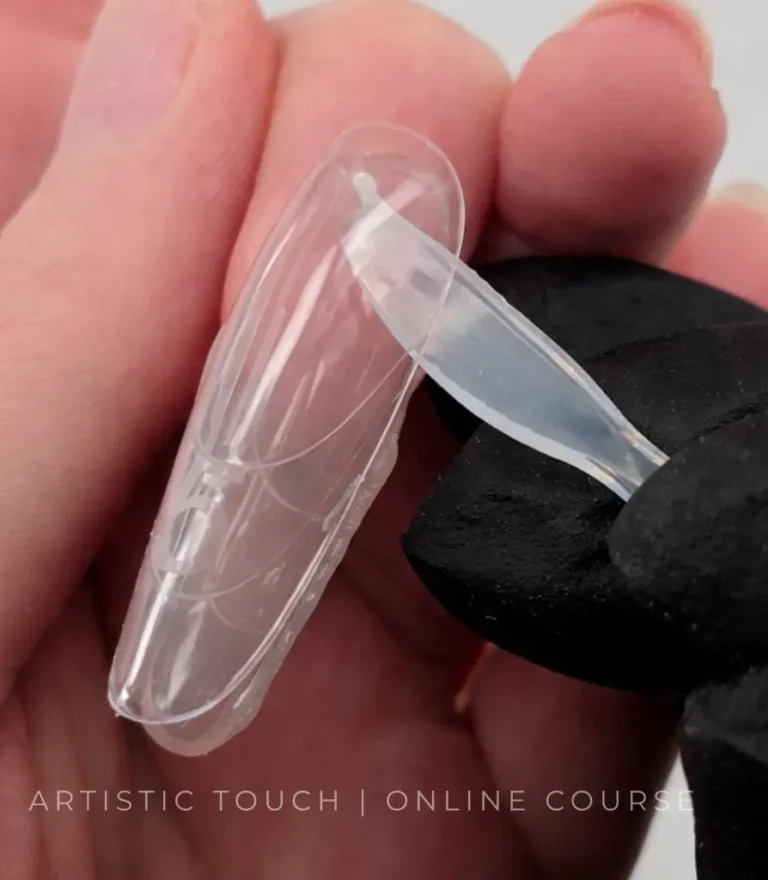
BIAB dual forms work through containment. You apply builder gel inside the dual form, position it over the prepared nail, and press to spread product between the form and nail plate. The dual form creates both the top surface shape and underside contour through physical containment rather than manual control.
This containment system means BIAB cannot overflow sideways (the form blocks it) and cannot create uneven underside texture (the form shapes it). Your technical challenge becomes form selection, product amount control, and flash curing sequence — not brush manipulation skills.
Brush Application: Manual Control System
Traditional BIAB brush application requires you to control product flow through brush technique. You place builder gel on the nail plate and use brush strokes to spread product, build apex structure, shape sidewalls, and create smooth underside finish. No containment exists — product goes where your brush technique directs it.
This manual control system means experienced technicians achieve maximum precision over product placement and structure. Your technical challenge becomes brush control, product manipulation, self-leveling management, and building consistent apex without physical guides.
Direct Comparison: Key Differences
Master BIAB Dual Forms Professionally
Learn professional dual form selection, flash curing sequence, product control techniques, and flush cuticle placement that create clean square nails with minimal filing.
- ✓ Form selection mastery for different nail bed types
- ✓ Flash curing sequence that prevents product movement
- ✓ No-file technique for flush cuticle results
- ✓ Lifetime access with expert troubleshooting support
Filing Work: Where You Spend Your Time
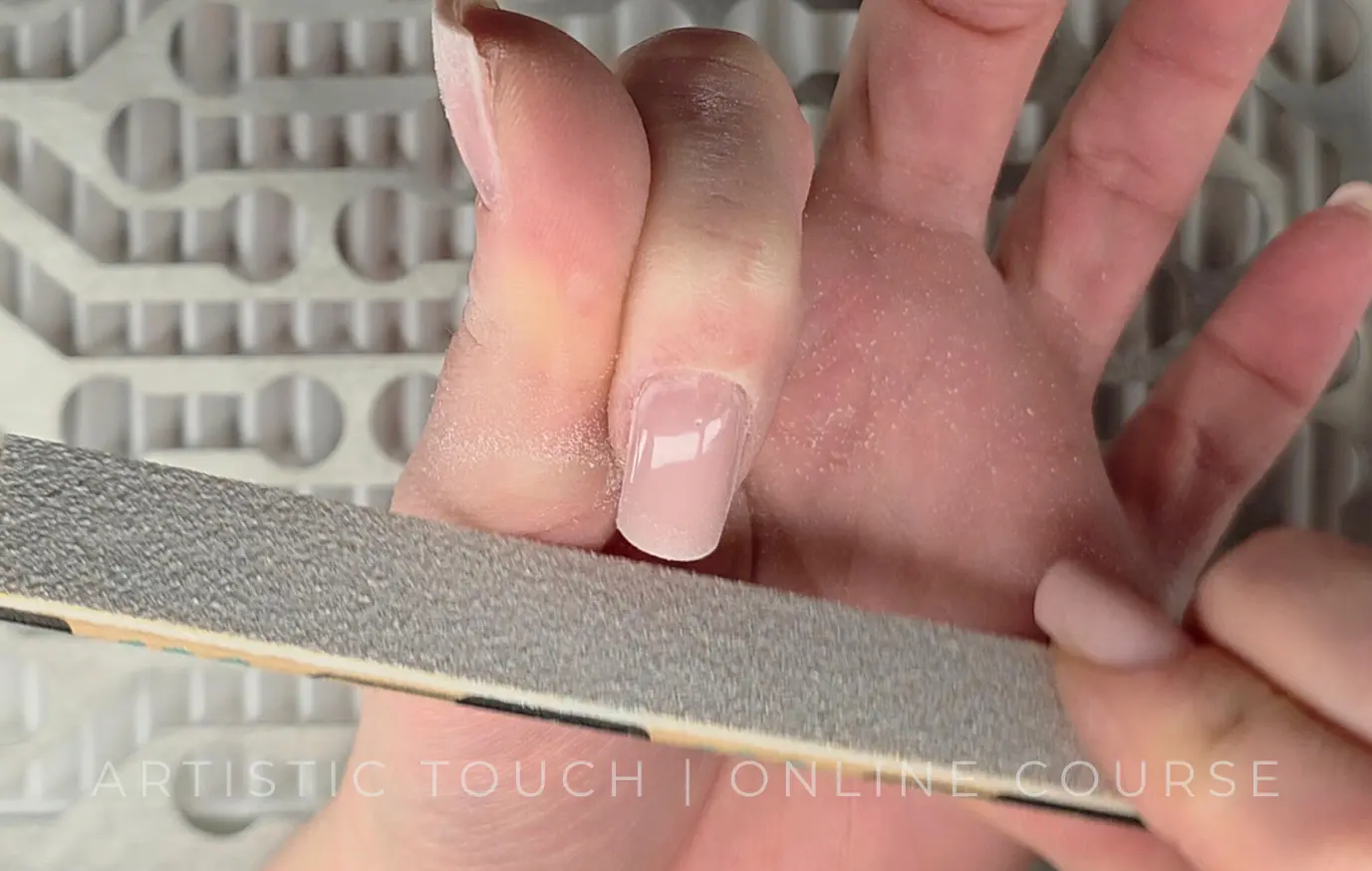
Both methods require filing to achieve professional square nail finish. The difference is not total filing time — the difference is where you file and why.
BIAB Dual Forms Filing Requirements
With dual forms, filing focuses on:
- Top surface refinement — smoothing product texture and blend zones
- Length shaping — creating precise square free edge
- Corner definition — refining sharp square corners
- Minimal underside work — clean imprint requires light smoothing only
The dual form creates underside shape during application. You file surface details, not structural form.
Brush Application Filing Requirements
With brush application, filing includes:
- Top surface refinement — same as dual forms
- Length shaping — same as dual forms
- Corner definition — same as dual forms
- Underside shaping — creating smooth contour from brush-applied product
- Sidewall refinement — correcting uneven product placement
Brush application requires you to file structural shape, not just surface details. This is not slower when mastered — it is simply different technical focus.
Both Methods Take Similar Time When Mastered
Experienced technicians work at similar speeds regardless of method. Dual forms save filing time on underside but require form selection and positioning time. Brush application skips form prep but requires underside filing work. Total service time balances out — the difference is which skills you prefer developing.
Natural Nail Protection Differences
Both methods strengthen natural nails when applied correctly. The protection differences come from product contact and removal considerations, not inherent method superiority.
BIAB Dual Forms and Nail Health
Dual forms create overlay structure with product applied inside the form rather than directly on the cuticle zone. When using proper technique, this application method minimises product contact with skin during the process.
This containment system also means less filing around cuticle zone during application, protecting the delicate nail plate area near matrix.
Brush Application and Nail Health
Traditional brush application requires careful product control during placement. Experienced technicians achieve precise application through brush technique, controlling product flow and placement throughout the process.
Both methods protect natural nail integrity when applied correctly. The difference is dual forms provide physical containment that controls product spread, whilst brush application relies on manual technique alone.
Which Method Should You Choose?
Choose BIAB Dual Forms If:
- You want consistent results faster — dual forms reduce variables through containment
- You prefer structural guides — forms create shape automatically
- You want clean underside imprints without extensive filing practice
- You value lower skill ceiling for team training consistency
Choose Brush Application If:
- You want maximum product control — no form limitations on placement
- You have developed brush technique skills through extensive practice
- You work on unusual nail shapes — brush adapts to any contour
- You prefer traditional application methods you already know
- You enjoy manual structural control over every product placement decision
Professional Recommendation
Learn both methods. Start with dual forms for consistent results whilst developing your BIAB product knowledge, then expand to brush application when you want maximum creative control. Many experienced technicians use dual forms for standard square nails and brush application for custom shapes or artistic work.
Frequently Asked Questions About BIAB Application Methods
Do BIAB dual forms create stronger nails than brush application?
No. Strength comes from proper apex placement, appropriate product thickness, and correct curing — not application method. Both dual forms and brush application can create identically strong results when technique is correct. The method affects application ease and filing requirements, not structural durability.
Can I switch between dual forms and brush application for different clients?
Yes. Many technicians use dual forms for standard square nail services and brush application for custom shapes or nail art requiring precise product placement. Both methods use the same BIAB products — only application technique differs.
Which method is faster for experienced technicians?
Similar timing when fully mastered. Dual forms save underside filing time but require form selection and positioning time. Brush application skips form prep but requires underside shaping work. Total service time balances out at professional skill level.
Do I need different BIAB products for dual forms vs brush application?
No. The same BIAB products work with both methods. Product viscosity affects technique slightly — thicker BIAB works better for brush control, whilst thinner BIAB spreads more easily in dual forms — but most builder gels perform well with either application method.
Which method is easier to learn for beginners?
BIAB dual forms typically produce acceptable results faster for beginners because the form handles structural shaping automatically. Brush application requires developing manual control skills through extensive practice. However, dual forms have steeper initial learning curve for form selection mastery.
Radina Ignatova
Professional Nail Expert | International Nail Educator
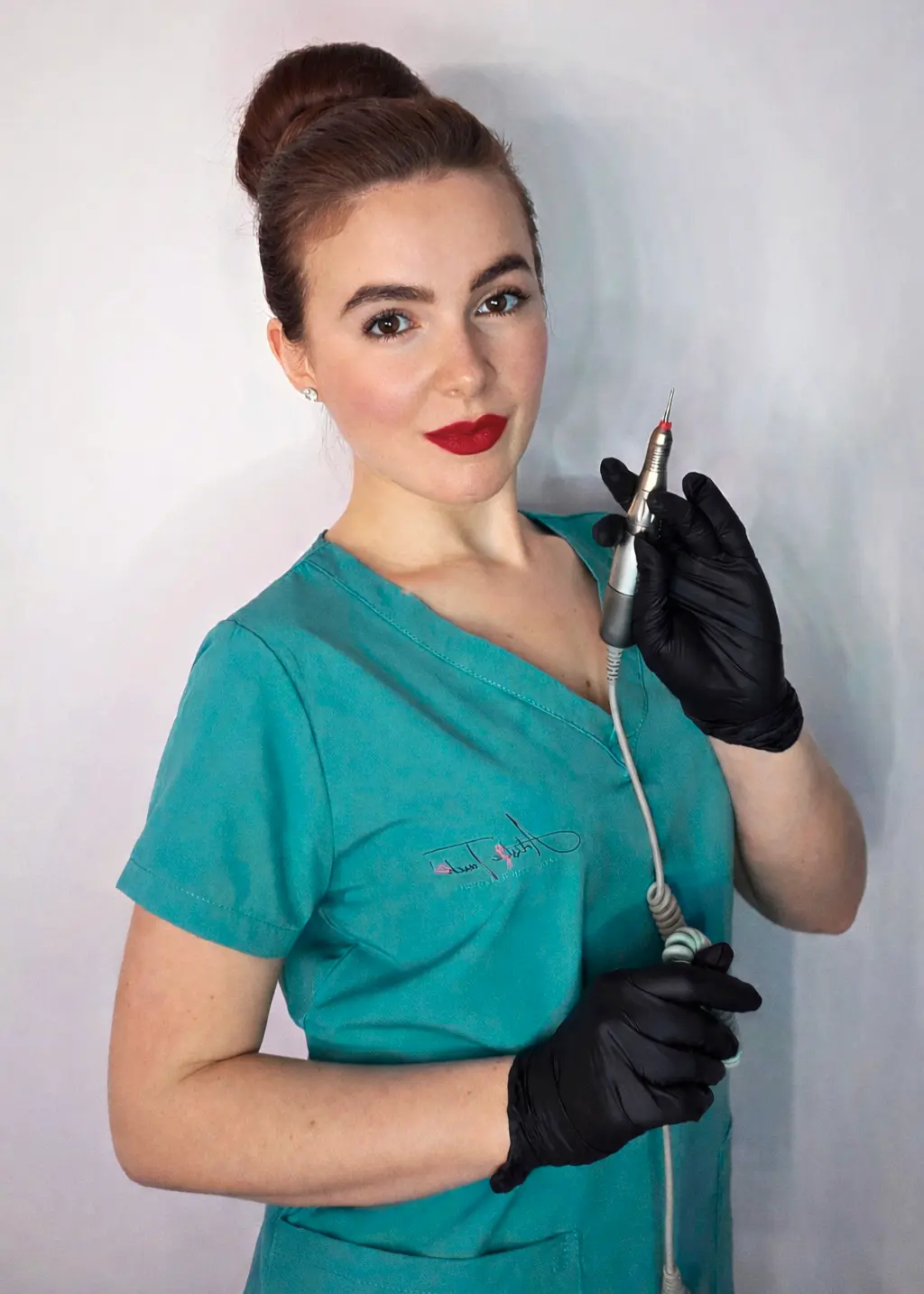
I am Radina Ignatova, a Professional Nail Expert since 2014 and International Nail Educator, based in Scotland, UK. I am the Founder of Artistic Touch Nail Training Academy and TheNailWiki.
At Artistic Touch Nail Training Academy, I provide structured professional online nail courses specialising in dual forms, gel systems, BIAB application, advanced nail structure, e-file work and Russian manicure, with a strong focus on professional salon safety. I continue to work actively in salon practice, ensuring that all education reflects real client scenarios and current industry standards.
My teaching philosophy is simple: I show real salon challenges, real mistakes and real performance testing, not just perfect demonstrations. This is how you develop genuine technical competence and become a confident, capable nail professional.
About Artistic Touch Nail Training Academy
Artistic Touch Nail Training Academy delivers structured professional online nail education focused on practical skill development, professional standards and safe salon practice. All courses are available online worldwide.
Ready to Master BIAB Dual Forms?
Understanding the differences between BIAB dual forms and brush application helps you choose wisely, but professional mastery requires proper training in form selection, flash curing sequence, and flush cuticle technique.
What You Will Learn in the BIAB Dual Forms Course:
- ✓ Dual form selection mastery for flush cuticle fit
- ✓ Flash curing sequence that controls product placement
- ✓ No-file technique for clean square nails
- ✓ Lifetime access with expert troubleshooting support
Master BIAB Dual Forms Professionally
Learn form selection, flash curing, and no-file technique for square nails
Enrol Now — £97 →Lifetime access • Certificate included • Start immediately
Compare BIAB dual forms and brush application methods to choose the right technique for your skill level and client needs at Artistic Touch Nail Training Academy.