Why You Start Noticing More Mistakes as Your Nail Skills Improve

You can finish a set, look at it and be quite happy. Then you look at the photographs afterwards and see things you did not notice during the appointment: the shape, the structure, the way you worked around the cuticle. That can feel like a step backwards. I think it is the opposite.
I still work with clients in the salon, and my own standards have changed a great deal since I started. This article is about why that happens and how to use it instead of letting it wear you down.
Quick Answer: Why Do I See More Mistakes as I Improve?
Because knowledge changes what you can see. Before you understand structure, preparation and fit, a set can look fine. Once you do, the same set shows you an uneven apex, a thick side profile or a rushed cuticle area. The work has not necessarily got worse. You are assessing it with more information. The skill is to sort what you notice into what matters, what to fix next time and what is only preference.
Being Happy With a Set Is Not the Same as Assessing It
A good-looking finish can hide problems. Colour, shine and a pleasing shape draw the eye away from what is underneath: where the product sits, how the free edge points and whether the cuticle area was prepared with control. A set can please the client and still deserve a closer look. Plain finishes show this quickly, which is why I wrote Why Plain Nails Demand Better Technique.
Producing a result and being able to assess it critically are two different skills. The first comes from practice. The second comes from knowing what you are looking at.
Why Your Standards Move as Your Knowledge Grows
Looking at a nail and understanding its architecture are not the same thing. When you do not know that an apex can sit too far forward, or that a free edge can point upwards, you cannot see either. Once you know, you cannot stop seeing them.
I have experienced this myself, and I show it on camera. In one of my dual forms videos I show a set I made while I was still learning, when I used an arched form on flat nail beds at a very short length. The nails pointed upwards and the free edge was very thick. I also show my old work and my old prices. I explain these in Why I Show My Own Mistakes in My Teaching. I could only explain that set because I now understand why it happened, and I could not have seen it that way then.
What You Start to Notice
These are typical things that become visible with experience:
- uneven structure from one nail to the next;
- thickness that you did not intend, especially in the side profile;
- the direction of the free edge and balance between the sidewalls;
- product too close to the cuticle, or an untidy cuticle area;
- a result that looks fine but was done with more pressure or more passes than it needed;
- a method that did not suit that client’s nails, even though it worked on someone else.
Not all of this is equal. A preference about shape is different from a structural weakness, and both are different from something that affects the client’s safety. Learn to sort what you see.
Repeating Appointments Does Not Guarantee Improvement
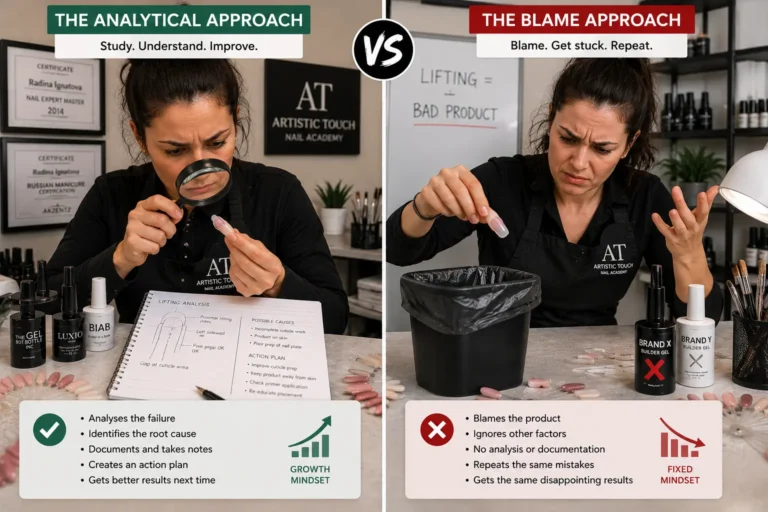
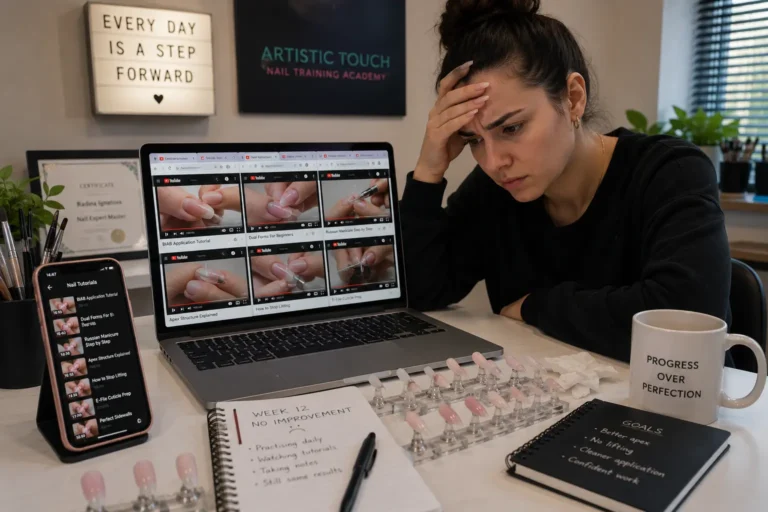
You can do hundreds of appointments and repeat the same small mistake in all of them if you never assess the result or have someone who can show you what you are missing. Experience gives you repetition. It does not automatically give you feedback. That is why I wrote The Nail Prep Step Most Nail Techs Rush: Assessment Before Application: the looking and thinking before you start is work, even though it does not feel like it. And if your structure is not working even though you follow tutorials, this article explains what a tutorial leaves out.
A clean photograph also tells you less than you might think about how a set was done. I wrote about that for Russian manicure in Why a Perfect-Looking Russian Manicure Can Still Be Done Wrong.
Using What You Notice Without Being Consumed by It
The aim is not to become obsessed with every small detail. It is to understand what needs correcting, decide what matters most and make a better decision next time. A useful way to treat a flaw you spot is to ask three questions:
- What exactly is wrong, and where did it start?
- Does it affect the structure, the longevity or the client, or is it a preference?
- What would I do differently at the earlier decision, not only at the end?
If you can answer those, noticing a mistake becomes information instead of a judgement on you.
What This Means When You Choose More Training
When you start seeing more, it is tempting to look for another technique or another demonstration. A better question is whether the training helps you understand what you are doing, recognise a problem when it appears and adapt without someone telling you what to copy. I explain the difference in The Difference Between Copying and Understanding in Nail Education, and how to choose in How to Choose the Next Nail Course After Qualifying.
Find Training That Teaches You to Assess Your Own Work
See which Artistic Touch course fits the problem you keep noticing, from nail preparation and retention to Russian Manicure and dual forms. Each is built around understanding what you are doing and why.
Explore the Online Nail Courses →Frequently Asked Questions
Why do I notice more flaws in my own work now?
Because your knowledge has increased. You can see structure, balance and preparation details you could not recognise before. The work has not necessarily got worse.
Does noticing mistakes mean I am getting worse?
Not usually. It more often means you are assessing with more information. What matters is sorting what you notice into structure, longevity, client safety and preference.
How do I stop being too hard on myself?
Do not try to fix every detail. Identify what affects structure, longevity or the client, and decide what to change at the earlier decision next time.
How do I improve if I only repeat appointments?
Assess the result, and get feedback from someone who can show you what you are missing. Repetition on its own can repeat the same small mistakes.
Key Takeaway
If you see more mistakes than you used to, you are probably assessing with more knowledge, not producing worse work. Sort what you notice, fix the earlier decision and choose training that teaches you to assess.
About the Author
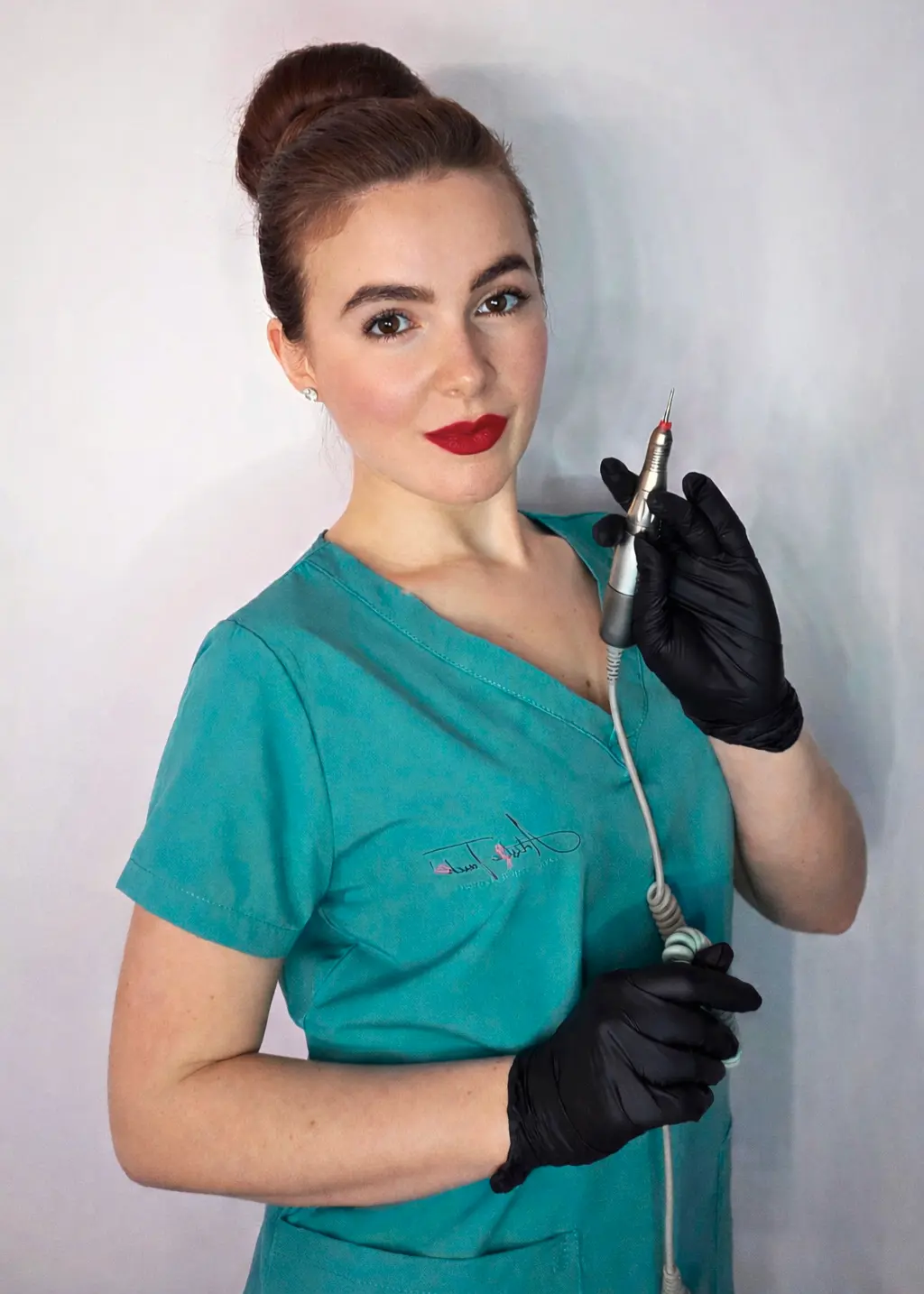
Professional Nail Expert | International Nail Educator
I am Radina Ignatova, a Professional Nail Expert since 2014 and International Nail Educator, based in Scotland, UK. I am the Founder of Artistic Touch – Nail Training Academy and TheNailWiki.
At Artistic Touch – Nail Training Academy, I provide structured professional online nail education specialising in dual forms, nail preparation and retention, nail structure, E-File work and Russian Manicure, with a strong focus on professional salon safety. I continue to work actively in salon practice, ensuring that all education reflects real client scenarios and current industry standards.
My teaching philosophy is simple: I show real salon challenges, real mistakes and real performance testing, not just perfect demonstrations. This is how you develop genuine technical competence and become a confident, capable nail professional.