Why Better Nail Products Will Not Automatically Make You a Better Nail Technician
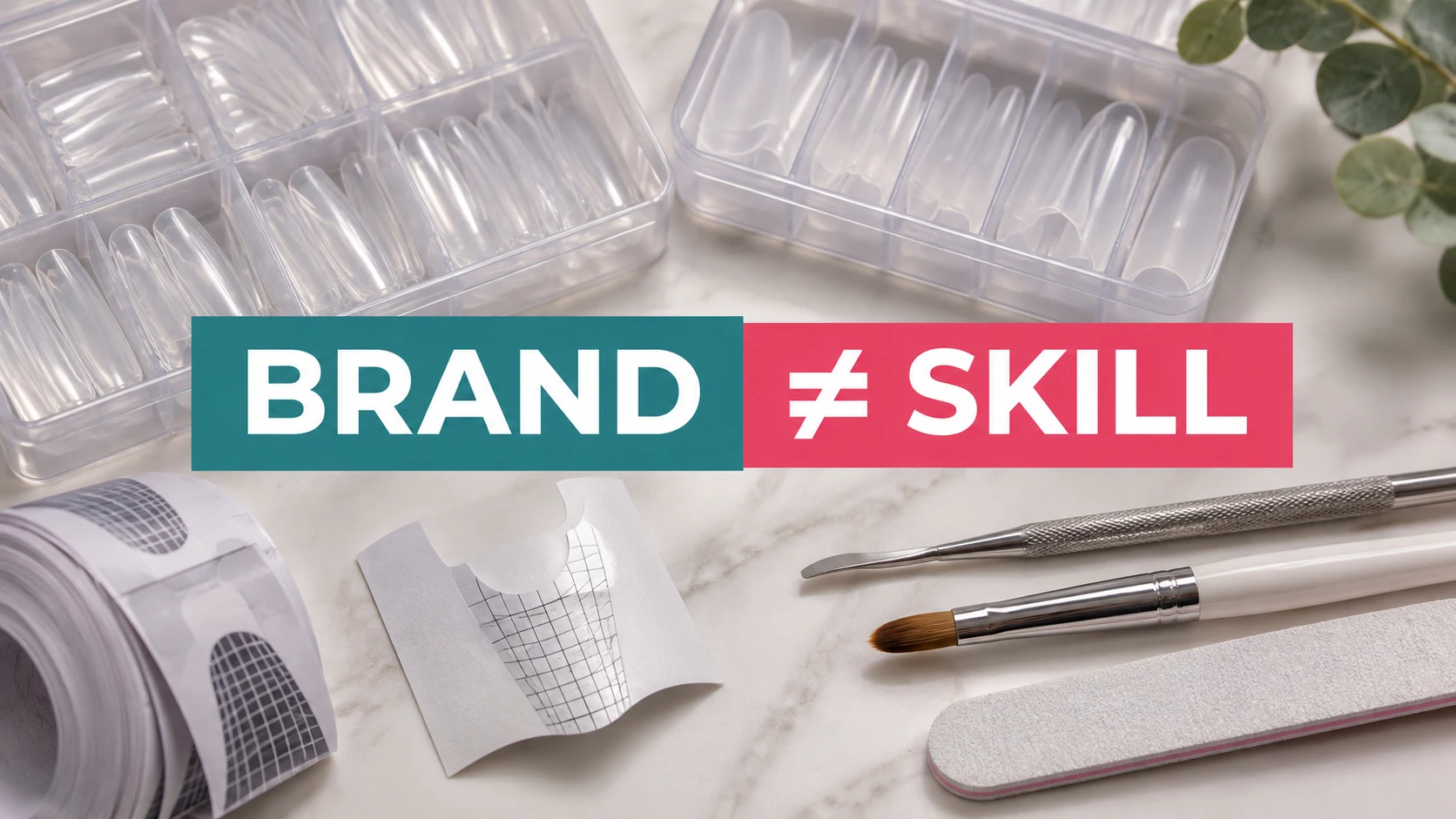
It is easy to pay more attention to which products other technicians use than to why they use them. A form that gives one person beautiful results can behave very differently in your hands, especially with dual forms, where the architecture of one form can be completely different from another.
I still work with clients in the salon, and that is where I test whether a product makes sense in practice. This article is about how I judge products, and why I think that matters more than which brand is on your table.
Quick Answer: Do Better Products Make a Better Technician?
Good products matter, but owning them is not the same as understanding them. A form that works well for another technician may not suit your hands, your clients’ nails or your method. Before you switch brands, find out what is causing the problem, then judge any product by its architecture, behaviour and purpose, not by its label or who recommends it.
Switching Products Does Not Fix a Problem You Have Not Identified
When something goes wrong, the first instinct is often to change the product. Lifting is the usual example. Proper preparation is important, but it is only one part of adhesion. You also need to consider the product, the application, the structure and the natural nail. Changing brands without understanding what is causing the problem may not make any difference, and a primer or a stronger product does not rescue poor preparation.
Judge a Form by What It Does, Not by Its Name
Labels often say less than people expect. In one range I reviewed, Size S does not mean small nails: it refers to a flatter nail plate with less pronounced C-curve. Size XL does not mean larger nails either: it is intended mainly for hooked nails and corrective work. Reading the label and assuming leads to the wrong form on the wrong nail. Companies name gel viscosities differently too, so I judge a gel by how it behaves, not by the words on the bottle.
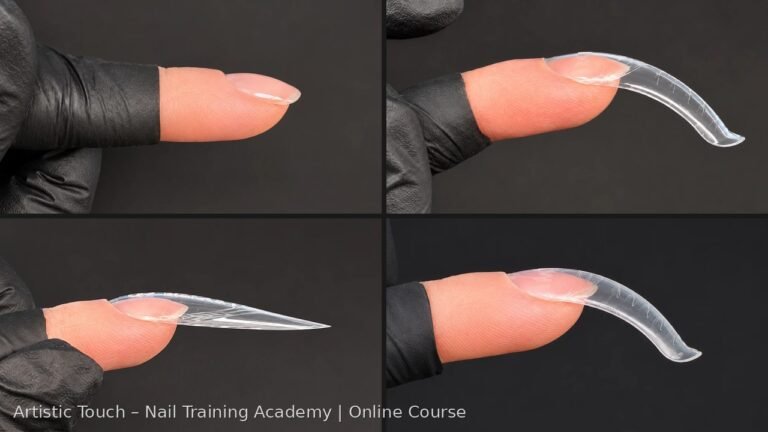
When I look at a dual form I look at:
- the shape and architecture, including how arched or flat it is;
- the curvature and the side profile;
- how rigid or flexible the plastic is, especially around the cuticle zone;
- whether the cuticle area gives a clean imprint or leaves a ridge to file;
- how much correction and filing it is likely to need afterwards;
- whether it suits the nail type and the length you want.
You cannot judge all of that simply by reading the label. You need to understand how the form is designed and how it actually behaves during application. Learning to read a form this way is the difference between copying someone else’s favourites and choosing for the nail in front of you, and it is what The Ultimate Dual Forms teaches: architecture, internal space, fit and intended length, not just what to do. If you want to start with matching a form to a nail, read How to Check if a Dual Form Fits Your Natural Nail.
A New Version Is Not Automatically Better for Everyone
When a range changes, packaging, sizing numbers and plastic can all change together. In my Size S comparison I found that the newer version suited me better: more flexible plastic around the cuticle gave a clean imprint without filing, while the older, more rigid plastic with built-in cuticle structure could leave a visible ridge. That was my conclusion from using them, not a rule for every range or every technician.
First impressions are not wear tests. In my review of the full newer range I bought every box myself and said openly that some forms needed a full set on a real nail before I could form a fair opinion. I try to say what I have tested and what I have not, and I would ask the same of any review you read.
Owning More Does Not Make You More Capable
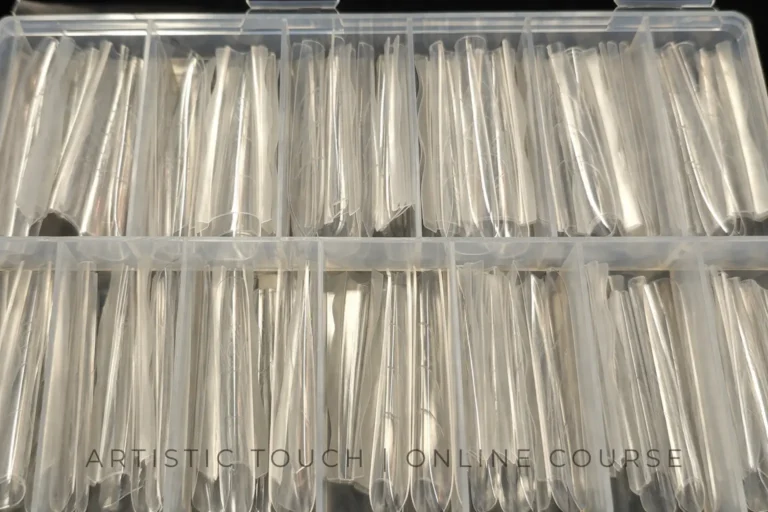
I own 46 boxes of dual forms and use only a small part of them. I do not believe you need a huge collection, and the cheaper forms I bought have mostly stayed unused. I wrote about the ones I actually reach for in The Dual Forms I Actually Use From My 46-Box Collection.
The same is true of e-file bits. Changing ten different bits during one manicure does not make you a better professional. Every bit needs a purpose.
Popularity, Sponsorship and Competence Are Separate Things
There is nothing wrong with brand collaborations, free products or earning income from recommendations. But popularity, sponsorship and technical competence are three different things. A recommendation is worth more when it comes from testing and is open about what was bought and what was received, which is why I say so in my reviews. In my full review of the newer Imenka range, for example, I state that I bought every box myself.
What I Want You to Take From This
I want you to understand why a product works, when it is suitable and what its limitations are. If something is not working, changing brands should not automatically be your first solution. Start by understanding the problem, then test on real nails.
Learn to Choose Dual Forms for Yourself
Understand form architecture, internal space, fit and intended length, so you can choose and adapt for each nail instead of copying one educator’s favourites. Previous gel-product and nail application experience is recommended.
Explore The Ultimate Dual Forms →Frequently Asked Questions
Do better products give better results?
Good products help, but results also depend on preparation, application, structure and the client’s nails. Switching products without finding the cause of a problem may not change anything.
How do I judge a dual form?
Look at its shape and architecture, curvature, plastic flexibility, how clean the cuticle imprint is, how much filing it will need and whether it suits the nail type and length you want.
Is a new version of a product always better?
Not automatically. Changes can improve one aspect and make another less suitable, so judge a new version by using it on real nails.
How many dual forms do I need?
Not a huge collection. I own 46 boxes and use only a small part of them.
Key Takeaway
A better product does not make you a better technician. Understand the problem first, then judge any product by its architecture, behaviour and purpose, tested on real nails.
About the Author

Professional Nail Expert | International Nail Educator
I am Radina Ignatova, a Professional Nail Expert since 2014 and International Nail Educator, based in Scotland, UK. I am the Founder of Artistic Touch – Nail Training Academy and TheNailWiki.
At Artistic Touch – Nail Training Academy, I provide structured professional online nail education specialising in dual forms, nail preparation and retention, nail structure, E-File work and Russian Manicure, with a strong focus on professional salon safety. I continue to work actively in salon practice, ensuring that all education reflects real client scenarios and current industry standards.
My teaching philosophy is simple: I show real salon challenges, real mistakes and real performance testing, not just perfect demonstrations. This is how you develop genuine technical competence and become a confident, capable nail professional.