Russian Manicure on Overgrown, Dry Cuticles: A Real Client Case
This is a real salon client with genuinely overgrown, very dry skin and cuticles, a considerably more challenging case than a well-maintained regular client. What follows shows how the approach changes when the tissue in front of you is unpredictable, and why patience over a single session matters more than chasing a perfect result in one visit.
Working Safely on Genuinely Challenging Cuticles
With very dry, overgrown skin, cutting less and exfoliating more is often the safer choice, since dry tissue can separate unpredictably and hide what is underneath. A realistic first-session result, improved gradually over regular future appointments with proper aftercare, is a more honest goal than chasing perfection in one visit.
A Genuinely Challenging Real Client Case
Opening the nail fold with an orange wood stick before any flame drill work begins is the same safety step regardless of how straightforward or challenging the case is. This client’s skin was notably rough and dry, but the fundamentals of safe access still apply first.
Taking Down Thick, Overgrown Nails Safely
This client’s natural nails were unusually thick and strong, healthy in themselves, but genuinely difficult to shorten with a standard nail clipper. Rather than struggling through with clippers, a carbide drill bit was used to cut through the length efficiently. Strong, thick nails are a good sign, but they still need an appropriate tool for the job when length needs to come down quickly and safely.
Small Habits That Make a Real Difference
Asking a client to relax their finger, repeatedly if necessary, solves a very common practical problem: clients unconsciously tensing or angling a finger away, which blocks visibility. A small disposable brush kept attached to the glove for clearing dust as you work is another simple habit that keeps the working area visible without breaking flow to reach for a separate tool each time.
Working Around an Old Scar Safely
One finger on this client had an old injury, healed for many years after an accident, requiring slightly more care and a more cautious approach in that specific area, without treating it as anything to be alarmed by. Healed scar tissue can behave differently to the surrounding skin, and working more conservatively around it, rather than treating every finger identically, is the safer approach.
Managing Expectations: Improvement Over Time, Not Perfection in One Visit
Some dry, slightly rough tissue remained even after the manicure was complete, and that is a reasonable outcome for a first session on cuticles this overgrown. With regular appointments every three to four weeks, alongside proper aftercare including cuticle oil, this kind of tissue typically improves progressively. Setting this expectation honestly, both for yourself and the client, is part of professional practice.
Why Less Cutting, More Exfoliation Was the Safer Choice
Very dry cuticles can separate and break unpredictably, including in the middle of a single piece, because the tissue itself is compromised by dryness. Rather than cutting deeper to try to remove all of it in one pass, trimming only the clearly dry sections and planning to exfoliate more thoroughly in later steps reduces the risk of cutting into tissue whose condition underneath is not fully clear.
Cuticle powder was also used during this process, both to help preserve the tissue and to improve visibility of what was actually being worked on underneath.
Cut Less, Exfoliate More
On unpredictable, dry tissue, minimal cutting followed by careful exfoliation is generally the safer sequence than attempting to remove everything with scissors in one pass.
Adjusting Exfoliation for Unusually Tough Skin — But Not as a Default
Because this client’s skin was unusually tough and resilient, additional passes of exfoliation with a medium diamond bit were used, more than would typically be applied. This was a deliberate adjustment for this specific tissue, not a general recommendation.
Not every client can tolerate this level of exfoliation, even with a medium-abrasive bit. Over-exfoliating remains a genuine risk regardless of grit level, and this kind of adjustment should be based on how the individual client’s skin is actually responding, not applied as a routine step.
Learning to Read the Tissue, Not Just Follow Steps
Cases like this one, alongside more straightforward, well-maintained clients, show why Russian Manicure cannot be reduced to a single fixed sequence. Russian Manicure – Beyond Technique covers anatomy, decision-making based on what is actually in front of you, adaptation across different client conditions, safety technique, ergonomics, and the business and marketing knowledge needed to position the service properly afterwards, rather than leaving students to guess once the demonstrations end.
For a contrasting case, a straightforward, regular client with a shallow cuticle pocket, see Shallow Cuticle Pocket? This Changes Your Russian Manicure.
Key Takeaway
Overgrown, dry cuticles call for restraint, not aggression. Cutting less, exfoliating more thoughtfully, and being honest that a first session may not achieve a perfect result are all part of working safely on genuinely challenging real-client tissue.
Ready to Handle Challenging Cases With Confidence?
Russian Manicure – Beyond Technique covers real client cases across different skin conditions, from straightforward to genuinely challenging.
See Full Course Details →About Radina Ignatova and Her Teaching Philosophy
About the Author
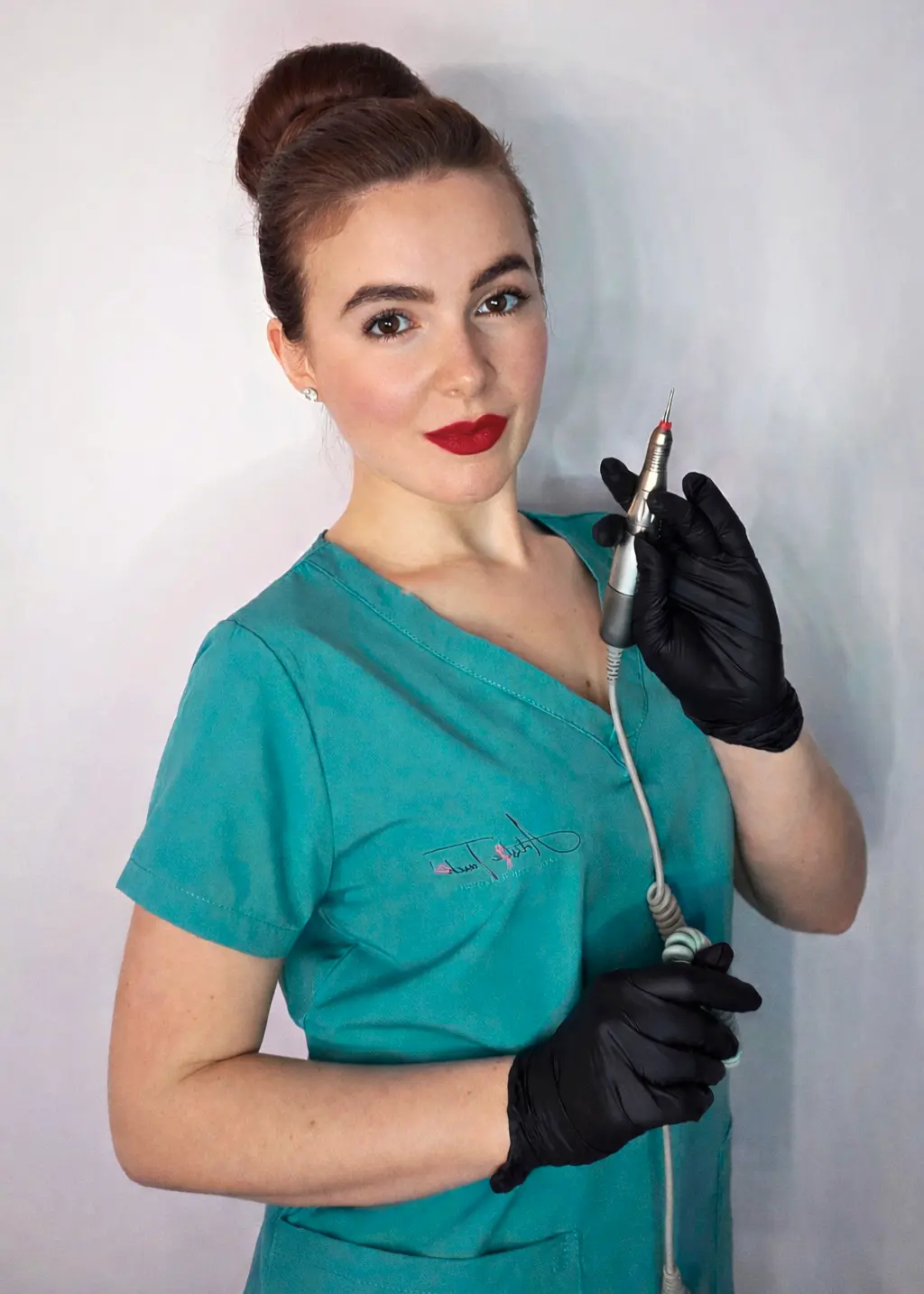
Radina Ignatova
Professional Nail Expert | International Nail Educator
I am Radina Ignatova, a Professional Nail Expert since 2014 and International Nail Educator, based in Scotland, UK. I am the Founder of Artistic Touch Nail Training Academy and TheNailWiki.
At Artistic Touch Nail Training Academy, I provide professional online nail courses specialising in dual forms, gel systems, polygel application, advanced nail structure, E-File work and Russian Manicure, with a strong focus on professional salon safety. I continue to work actively in salon practice, ensuring that all education reflects real client scenarios and current industry standards.
My teaching philosophy is simple: I show real salon challenges, real mistakes and real performance testing, not just perfect demonstrations. This is how you develop genuine technical competence and become a confident, capable nail professional.
Frequently Asked Questions
Is it normal for dry skin to remain after a first Russian Manicure on overgrown cuticles?
Yes, particularly on genuinely overgrown, very dry cuticles. This typically improves with regular future appointments and consistent aftercare, rather than being fully resolved in a single visit.
Should I cut more aggressively to remove all dry cuticle in one session?
Not necessarily. Very dry tissue can separate unpredictably, and cutting deeper to remove it all at once increases risk. Trimming conservatively and exfoliating more over subsequent steps or appointments is often the safer approach.
How should I approach old scar tissue near the cuticle?
With extra caution rather than the same approach used elsewhere on the hand. Healed scar tissue can behave unpredictably, so working more conservatively in that specific area is the safer choice.
Can I always increase exfoliation passes if a client’s skin is tough?
Not as a default. Additional exfoliation may be appropriate for genuinely tough, resilient skin, but over-exfoliating remains a real risk even with a medium-abrasive bit. This should be judged per client, not applied routinely.
Is a carbide bit necessary for thick, healthy nails?
It can make removing significant length considerably more efficient than a standard clipper when nails are unusually thick, saving time without adding unnecessary strain to the client’s nail during filing.
Want the judgement to handle genuinely difficult cases safely? View the course details →
Coming Soon: Russian Manicure Free Course
A foundational free course on Russian Manicure basics and anatomy understanding is coming to Artistic Touch Nail Training Academy. Check back soon.
Disclaimer: This content is for professional nail technician education purposes only. Nail services should be performed by trained professionals following current hygiene and safety regulations. Always carry out a full client consultation and check for contraindications, including any past injuries or scar tissue, before performing any nail service.
About Artistic Touch Nail Training Academy
Artistic Touch Nail Training Academy delivers professional online nail education focused on practical skill development, professional standards and safe salon practice. All courses are available online worldwide with lifetime access.