What to Do If You Cut a Client During Russian Manicure
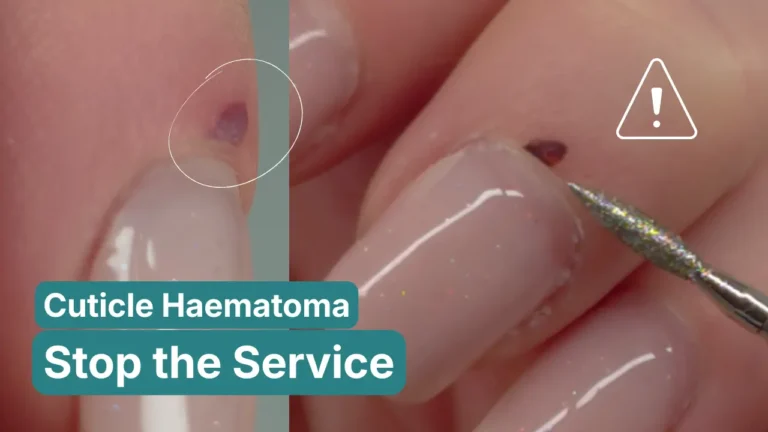
Minor cuts happen in Russian Manicure. They happen to every technician, no matter how experienced, because this is close, precise work on living tissue. What matters is what you keep on hand, how you use it, how you respond in that moment, and just as importantly, understanding why cuts happen in the first place so they become less frequent over time.
The Short Version
Infa-Lab Liquid Styptic, applied with a single-use micro-brush, is what I keep on hand for very minor nicks. Act immediately rather than waiting, since dried blood is far harder to clean. Change gloves after any blood contact, sterilise anything reusable, and dispose of everything else correctly. Occasional minor cuts happen to every technician. Frequent or persistent cuts usually point to an angle or technique problem worth addressing.
The Product I Use
I keep Infa-Lab Liquid Styptic in a small kit nearby, dedicated to superficial minor nicks and cuts only. It is not a substitute for any hygiene or infection-control step, and it should always be used according to the manufacturer’s instructions. Before using any product like this, confirm the client is not allergic to it.
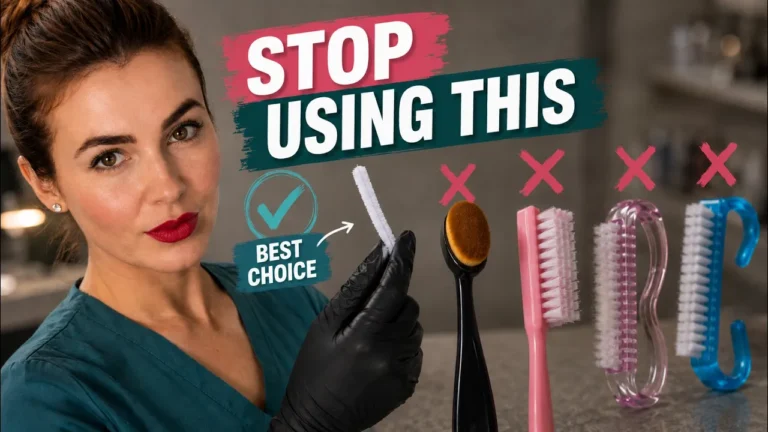
Alongside the bottle, I keep a pack of individually disposable micro-applicator brushes, the kind used in eyebrow and eyelash treatments. They are inexpensive, come in large packs, and mean a single-use applicator is always available rather than reaching for anything that has to be reused.
How I Actually Use It
Gloves stay on throughout. The bottle itself never touches the client’s skin directly. A small amount is applied to the micro-brush, held well away from the bottle to avoid any contamination, and that brush is used once before going straight into the bin. If more product is needed, a fresh brush is used, not the same one again.
A gentle, deliberate motion applied from the opposite direction to where the cut occurred, rather than repeating the original movement, helps the area settle without adding further irritation. This approach is only ever appropriate for very minor, superficial nicks.
Why Acting Immediately Matters
Delaying the response allows blood to dry, and dried blood residue is considerably more difficult to remove afterwards, particularly if the client heals or clots quickly, or if bleeding continues intermittently through the rest of the appointment. Addressing it straight away also protects the final result and the client’s photographs, since there is no dried residue left to clean around.
Do Not Continue While There Is Active Bleeding
Filing, cutting or applying product must stop the moment bleeding occurs. Assess the area properly before making any decision about whether it is appropriate to continue the service at all.
Infection Control After Any Blood Contact
Non-Negotiable Steps
✓ Change gloves immediately after any contact with blood
✓ Never reuse any tool that has been in contact with blood without full sterilisation and sanitisation first
✓ Clean and disinfect every surface that may have been touched, whether or not you are certain blood reached it
✓ Dispose of all used materials, brushes and waste appropriately and promptly
Cross-contamination is the real risk here, not just the cut itself. Being thorough rather than assuming a surface or tool is unaffected protects both you and every client who follows.
Deciding Whether to Continue the Manicure
For a very minor, superficial nick, continuing the service is a judgement call the technician makes based on what she sees. Anything beyond that, deeper, more significant, or anything you are not confident assessing, warrants referring the client to an appropriate medical professional rather than proceeding.
Why Cuts Actually Happen: The Real Prevention
Understanding why cuts occur matters more than knowing how to respond to them. Two anatomical mistakes account for most bleeding incidents during Russian Manicure.
Incorrect flame bit angle at the nail sinus. The nail sinuses, at each corner of the nail, are among the most sensitive areas in the entire nail unit. An incorrect angle with a sharp flame bit can cause bleeding here very easily.
Cutting into the proximal nail fold instead of the eponychium. The eponychium is what should be trimmed when removal is needed during Russian Manicure. The proximal nail fold is living tissue with nerve endings and blood supply, and should never be cut. Incorrect positioning of the cutting tool, or cutting too deep, is what causes this distinction to be missed in the moment.
The Distinction That Matters Most
Only the eponychium should be removed during Russian Manicure. The proximal nail fold should not be cut at all. Confusing the two is the most common technical root cause of bleeding during this service.
When Cuts Happen Frequently, It Signals a Technique Problem
An occasional minor cut happens to everyone, including highly experienced technicians. If cuts are happening consistently or frequently in your own practice, that pattern is worth taking seriously. It usually points to an angle or technique issue that can be identified and corrected, rather than something to accept as inevitable.
Learning the Angles That Prevent This
Russian Manicure – Beyond Technique covers correct tool angles, positioning and ergonomics in detail, alongside how to distinguish tissue safely and adapt technique to prevent exactly this kind of injury. The course is suitable for technicians with at least a little e-file experience, as well as working professionals looking to refine existing practice or introduce Russian Manicure into their salon for the first time.
Key Takeaway
Prevention matters more than response. Most cuts trace back to incorrect flame bit angle at the sinus, or cutting into the proximal nail fold instead of only the eponychium. When a response is needed, act immediately, prioritise infection control, and use good judgement about whether it is appropriate to continue.
Want to Reduce Cuts and Injuries in Your Practice?
Russian Manicure – Beyond Technique covers correct angles, tool positioning and ergonomics to help prevent these incidents in the first place.
See Full Course Details →About Radina Ignatova and Her Teaching Philosophy
About the Author
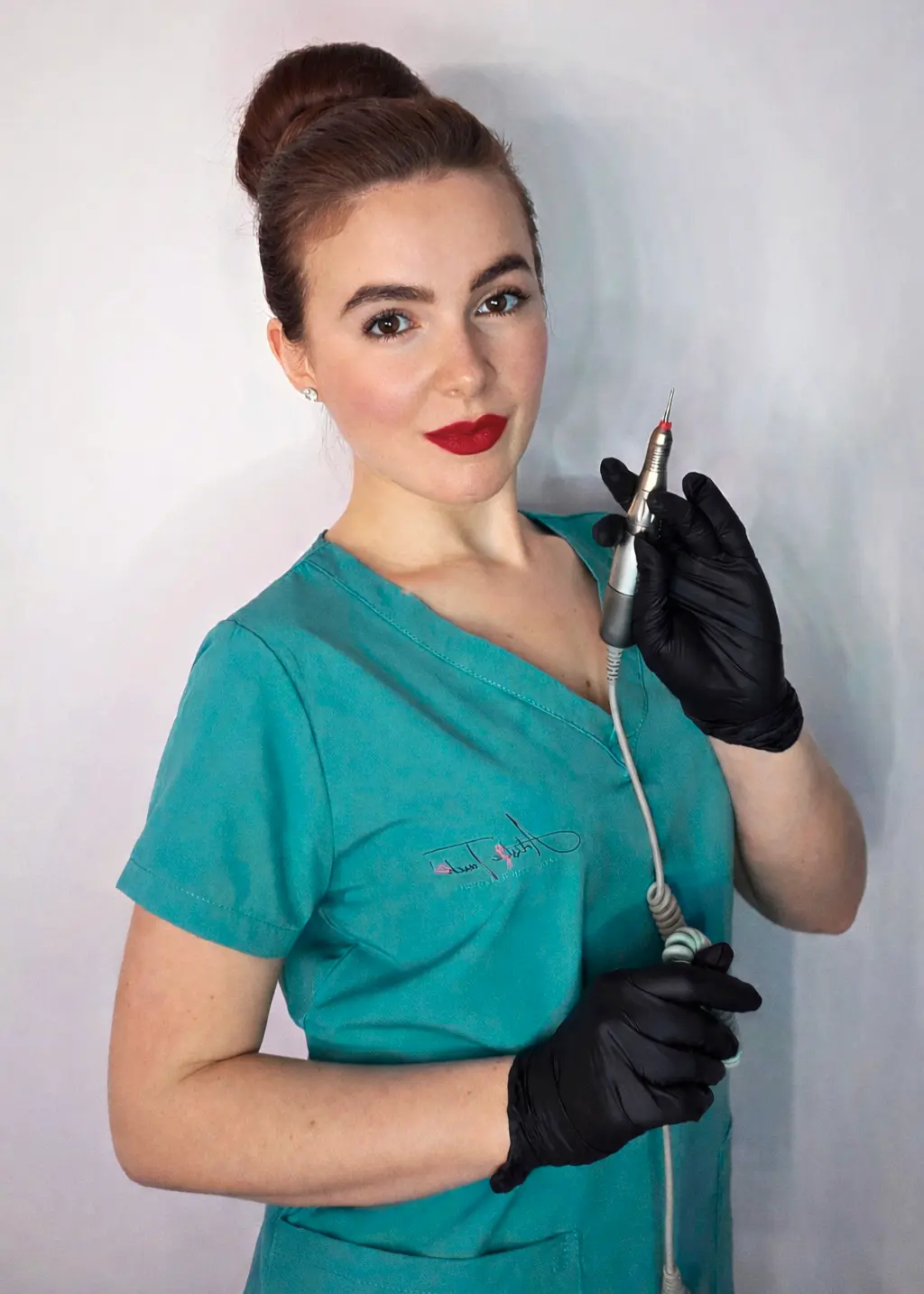
Radina Ignatova
Professional Nail Expert | International Nail Educator
I am Radina Ignatova, a Professional Nail Expert since 2014 and International Nail Educator, based in Scotland, UK. I am the Founder of Artistic Touch Nail Training Academy and TheNailWiki.
At Artistic Touch Nail Training Academy, I provide professional online nail courses specialising in dual forms, gel systems, polygel application, advanced nail structure, E-File work and Russian Manicure, with a strong focus on professional salon safety. I continue to work actively in salon practice, ensuring that all education reflects real client scenarios and current industry standards.
My teaching philosophy is simple: I show real salon challenges, real mistakes and real performance testing, not just perfect demonstrations. This is how you develop genuine technical competence and become a confident, capable nail professional.
Important Information
Infa-Lab Liquid Styptic is shown here only in the context of superficial minor nicks and cuts. Always follow the manufacturer’s instructions and your local professional hygiene, infection-control and workplace requirements, and make sure the client is not allergic to any product being used.
Do not continue filing, cutting or applying product while there is active bleeding. Assess the area before deciding whether it is appropriate to continue the service. Deeper, persistent or concerning wounds require appropriate medical attention.
Any item or surface contaminated with blood must be handled appropriately. Single-use contaminated items should be disposed of correctly, gloves should be changed, and reusable tools must go through the required cleaning, disinfection and sterilisation process before reuse. This content is not medical advice.
Frequently Asked Questions
Is occasional bleeding during Russian Manicure normal?
An occasional very minor nick can happen to any technician, regardless of experience, because this is precise work on living tissue. Frequent or persistent bleeding, however, usually indicates an angle or technique issue worth reviewing.
What is the most important hygiene step after a cut occurs?
Changing gloves immediately after any blood contact, and never reusing a tool that has touched blood without full sterilisation first. Cross-contamination is the primary risk to manage.
What is the difference between the eponychium and the proximal nail fold?
The eponychium is the tissue intended to be trimmed when removal is needed. The proximal nail fold is living skin with blood supply and nerve endings, and should not be cut. Confusing the two is a common cause of bleeding.
Should I always continue the manicure after a minor cut?
For a genuinely superficial nick, continuing is a reasonable judgement call. Anything more significant, or anything you are uncertain about, should be referred to an appropriate medical professional rather than continuing the service.
Why does the sinus bleed so easily compared to other areas?
The nail sinuses are among the most sensitive areas of the nail unit. An incorrect flame bit angle in this area can cause bleeding very easily, which is why angle and positioning matter so much when working near the sinus.
Want to work with the correct angles that help prevent this in the first place? View the course details →
Coming Soon: Russian Manicure Free Course
A foundational free course on Russian Manicure basics and anatomy understanding is coming to Artistic Touch Nail Training Academy. Check back soon.
About Artistic Touch Nail Training Academy
Artistic Touch Nail Training Academy delivers professional online nail education focused on practical skill development, professional standards and safe salon practice. All courses are available online worldwide with lifetime access.