The Best Free Nail Courses For Nail Technicians Struggling With Lifting
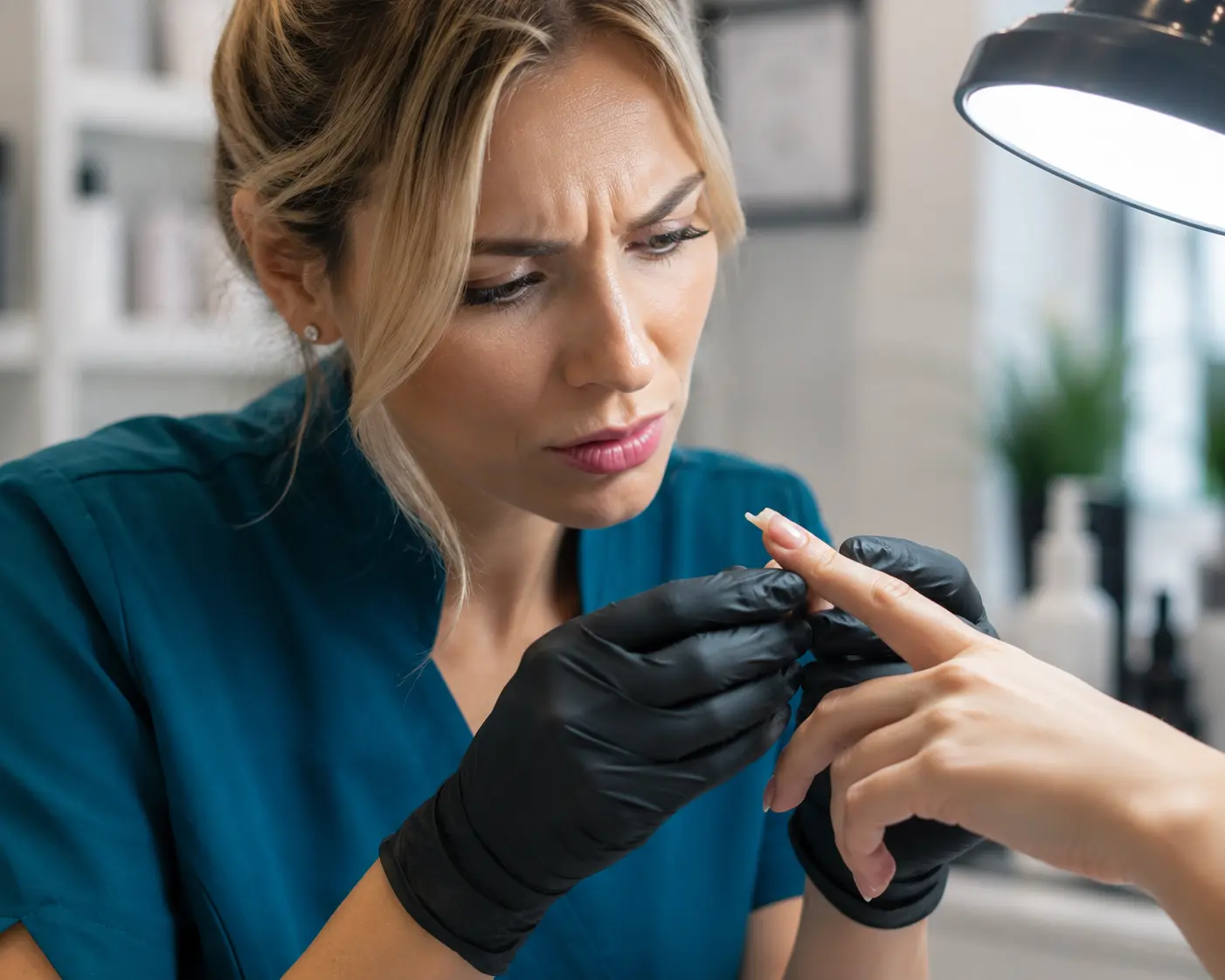
Quick Answer: Why Do Your Nails Keep Lifting?
Lifting is rarely about one thing. It is usually caused by hidden contamination, invisible prep failures, moisture problems, product behaviour, or structural mismatches that have nothing to do with your application technique. Free courses designed around retention help you diagnose the actual problem.
If you have changed products repeatedly, watched tutorials over and over, and still experience unexplained lifting, the problem is probably not visible. Which is exactly why free diagnostic courses can help.
The Frustration Of Unexplained Lifting
You do everything right. You prep carefully. You apply thoughtfully. You follow tutorials that other people seem to have great success with. And still, your nails lift.
At first you think it is a product issue, so you switch brands. Still lifting. Then you think it is your prep, so you try different products, different techniques, different routines. Still lifting. You watch more tutorials. You buy more products. You doubt your technique. You lose confidence with clients.
Some of your clients have perfect nails. Others constantly return with problems. You feel like you cannot figure out what the difference is.
This is the moment when understanding becomes more valuable than tutorials.
Lifting is rarely about one thing. It is almost never simply “bad prep” or “bad application” or “wrong product.” It is usually a combination of hidden factors that tutorials do not teach you to recognise. And you cannot fix something you do not understand.
Lifting Is Usually Hidden Before It Becomes Visible
Most tutorials show you what lifting looks like when it is obvious: edges peeling away from the nail, gaps forming along the sidewalls, the entire enhancement separating from the plate. By that point, the failure is already weeks old.
The actual failure begins much earlier. Microscopic lifting happens invisibly. Moisture penetrates in places you cannot see. Pressure distributes unevenly beneath a surface that looks perfect. Contamination spreads through zones you thought were clean.
Weeks later, your client notices lifting. You wonder what went wrong. The answer is: the problem started long before anything was visible.
Why This Matters For Free Learning
If you only learned to recognise visible lifting, you are always one step behind the problem. Real retention education teaches you to recognise the invisible signs: hidden stress points, early lifting patterns, contamination risks, and structural weaknesses that will cause failure later.
Product Switching Usually Does Not Fix The Real Problem
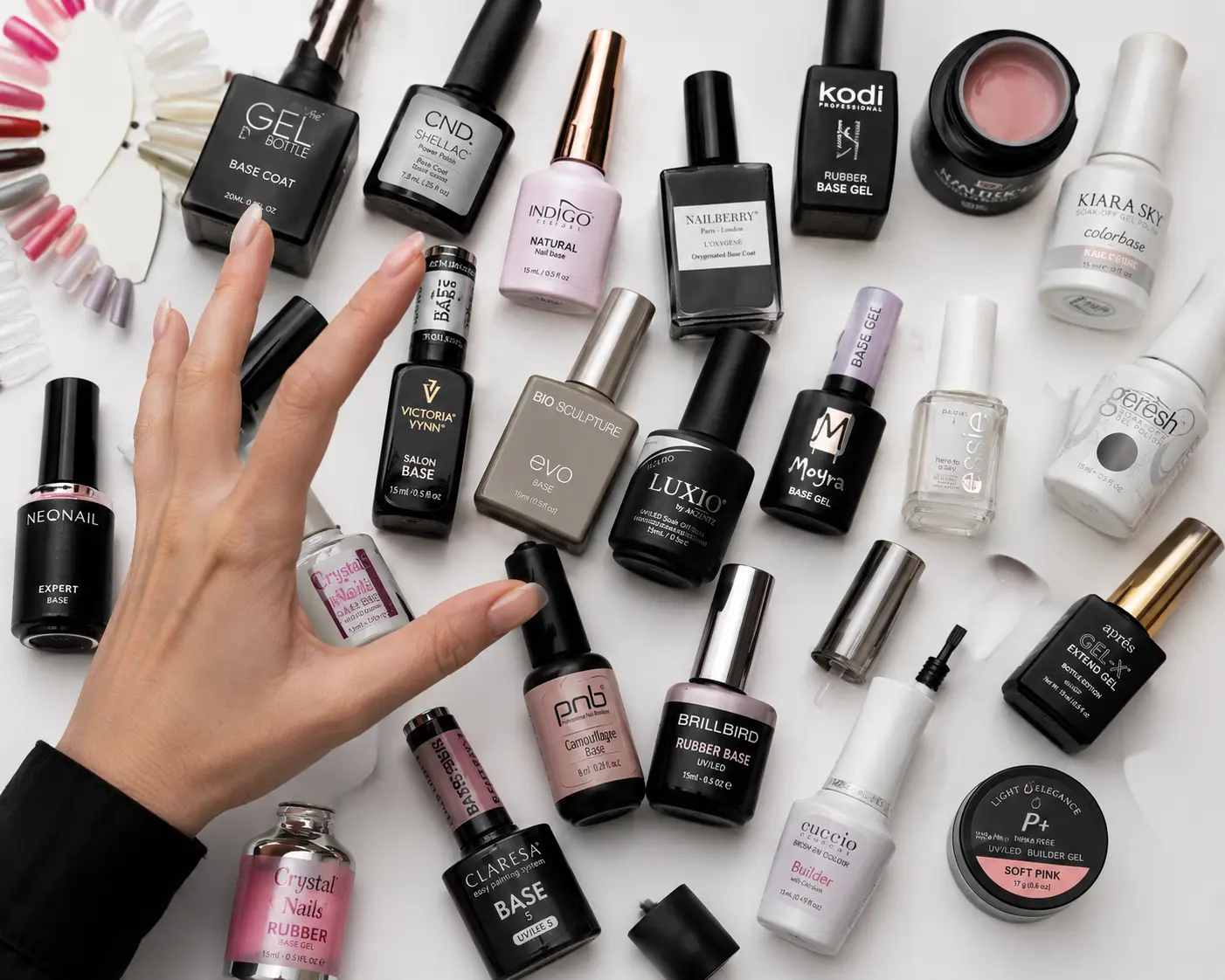
When retention fails, the first instinct is to change products. Different primer. Different base coat. Different top coat. Different builder gel. You hope the next product will be the one that works.
Sometimes this helps. But usually it does not. Not because products are bad, but because you have not identified what actually went wrong. If the real problem is invisible prep contamination, changing products will not help. If the real problem is pressure distribution, changing products will not help. If the real problem is moisture exposure or structural mismatch, changing products will not help.
This is incredibly frustrating because you feel like you are doing everything right, and you still fail. The answer is: you are probably doing the right things, but something invisible is working against you. And no product can fix what you do not understand.
Why Retention Varies So Much Between Clients
One of the most confusing aspects of lifting is that it varies dramatically between clients. You do the exact same technique on Client A and get three weeks retention. You do the exact same technique on Client B and get two weeks. You do it on Client C and they return with lifting after one week.
Same technique. Same products. Different results. This does not make sense until you understand retention factors beyond application.
Retention depends on biological factors you cannot see: nail flexibility, nail thickness, cuticle healing speed, nail plate moisture, hand exposure patterns, lifestyle stress, medications, and dozens of other variables. Your technique is important, but it is only one piece of the puzzle.
Real retention education teaches you to adapt your approach to different nail types, different clients, and different situations. Not because you are doing something wrong, but because different nails need different thinking.
⚠️ The Hidden Confidence Problem
When retention is unpredictable, you lose confidence. You start doubting yourself even when something works. You cannot trust your own technique because you do not understand why it works sometimes and fails other times. This loss of confidence is one of the biggest casualties of unexplained lifting.
Free Courses Designed Around Retention Problems
Artistic Touch free courses focused on retention are designed around real problems you encounter in salon work. Not perfect scenarios. Not step-by-step tutorials. Not surface-level tips.
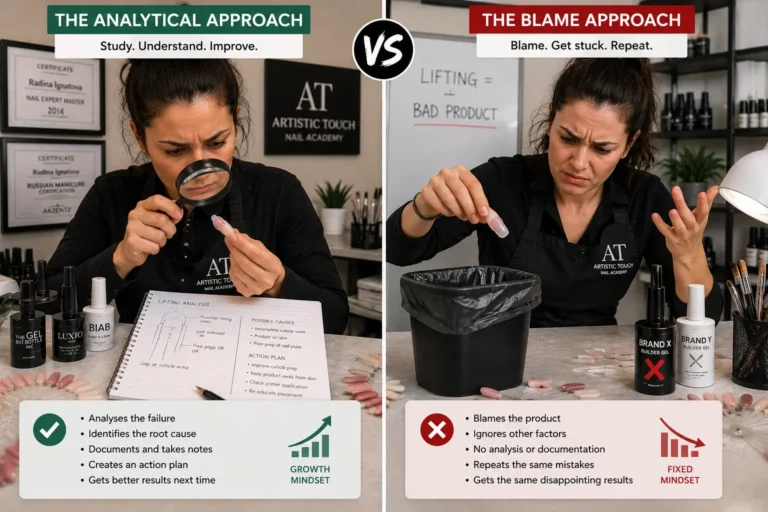
Instead, they focus on diagnosis. What causes lifting? What does invisible lifting look like? How do you recognise early warning signs? How do you adapt to different nail types? Why do some clients have problems and others do not? What hidden factors affect retention? How do you think through a retention problem when it happens?
These courses are designed to build understanding, not teach a sequence. You finish the course with a framework for thinking about retention, not a routine to copy.
This framework becomes more valuable than any tutorial because it works with your specific clients, your specific situation, and your specific challenges.
Start With Retention Understanding, Not Product Switching
The next time you experience lifting, instead of changing products, take a free retention-focused course. Learn to ask diagnostic questions. Learn to recognise hidden factors. Learn to think about structure instead of just technique.
You may find that your products were fine all along. Your application was fine too. The problem was invisible, and now you understand it. That is worth far more than any new product.
Free Retention & Lifting Courses
Designed to diagnose lifting problems and explain the hidden causes behind retention failure. Build understanding, not just technique.
View Retention Courses →Free • No sign-up pressure • Diagnostic focus • Real salon thinking
New free courses are added regularly. Check back often for upcoming lessons.
Frequently Asked Questions
If lifting is hidden, how can a course help me see it?
A good retention course teaches you to recognise early warning signs and hidden risk factors. You learn what to look for, what questions to ask about client lifestyle and nail biology, and how to recognise stress patterns before they become visible lifting.
Will a free course teach me how to fix lifting?
Free courses focus on diagnosis and understanding. You will learn what causes lifting and how to think about it professionally. Implementation and troubleshooting systems are part of deeper paid courses. But understanding comes first.
How long until I see improvement?
Many technicians report improved retention confidence within one week of understanding the hidden factors. Some clients naturally have better retention. Others require ongoing adaptation. But understanding why lifts happen is usually immediately helpful.
Should I change my products after taking a retention course?
Not necessarily. Many lifting problems can be solved through diagnosis and technique adaptation before you change products. A retention course helps you understand whether a product change is actually necessary or if something invisible is the real problem.
Will this course apply to my specific clients?
Yes. The goal of a good retention course is to teach you to think diagnostically about YOUR specific clients and their specific challenges. Not to teach a universal solution, but to teach thinking that adapts to different situations.
What is the difference between a free course and a paid course on retention?
Free courses focus on diagnosis and understanding. Paid courses add implementation systems, troubleshooting demonstrations, professional feedback, and deeper adaptation strategies. Free courses build the foundation. Paid courses deepen the expertise.
About the Author
Radina Ignatova
Professional Nail Expert | International Nail Educator
I am Radina Ignatova, a Professional Nail Expert since 2014 and International Nail Educator, based in Scotland, UK. I am the Founder of Artistic Touch Nail Training Academy and TheNailWiki.
At Artistic Touch Nail Training Academy, I provide structured professional online nail courses specialising in dual forms, gel systems, polygel application, advanced nail structure, E-File work and Russian Manicure, with a strong focus on professional salon safety. I continue to work actively in salon practice, ensuring that all education reflects real client scenarios and current industry standards.
My teaching philosophy is simple: I show real salon challenges, real mistakes and real performance testing, not just perfect demonstrations. This is how you develop genuine technical competence and become a confident, capable nail professional.
Every Artistic Touch course includes lifetime access and access to a dedicated student support group, where I provide ongoing guidance and professional feedback.
Disclaimer: This content is for educational purposes only. Nail services should be performed by trained professionals following current hygiene and safety regulations. Always carry out a full client consultation and check for contraindications before performing any nail service.
About Artistic Touch Nail Training Academy
Artistic Touch Nail Training Academy delivers structured professional online nail education focused on practical skill development, professional standards and safe salon practice. All courses are available online worldwide.