What Actually Creates Confidence in Nail Services
Quick Answer: What Creates Real Professional Confidence?
Confidence comes from understanding why techniques work structurally, recognising problems before they cause failures, knowing your current capability limits honestly, having systematic approaches for unpredictable situations and accumulating successful problem-solving experiences that prove your competence. Certificates, years of experience or social media validation create false confidence that collapses when challenged by difficult situations.
This article explains the difference between genuine capability and borrowed credibility.
Understanding Not Credentials
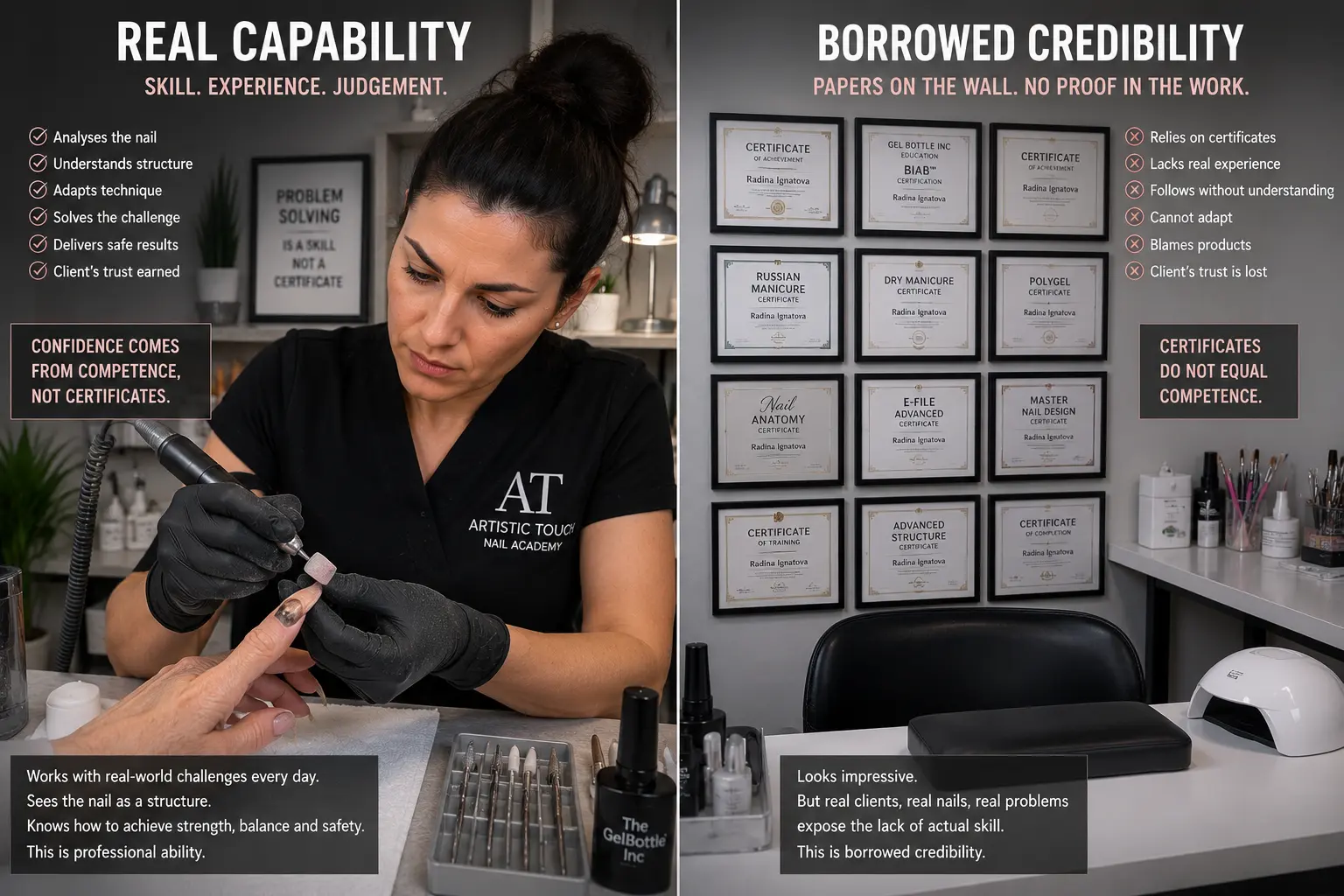
You display certificates on your wall hoping they create client confidence in your capability. But certificates indicate course completion, not actual competence. A certificate says you attended education. It does not say you understood principles, developed reliable execution or can troubleshoot when reality deviates from training examples.
Real confidence comes from understanding why techniques work at mechanical level, not from possessing documentation saying someone taught you those techniques. When unusual nail geometry appears, your certificate provides no guidance. Your understanding of structural principles allows reasoning through required adaptations confidently.
Certificates create borrowed credibility that feels like confidence until challenged. Then you discover: authority came from external validation, not internal capability. Genuine confidence withstands challenges because it is built on demonstrated competence, not awarded credentials.
Successful Problem-Solving Creates Certainty
You have never encountered severely hooked nails requiring dual form adaptation. When they appear, you feel uncertain because you lack problem-solving experience with this presentation. An advanced tech has successfully adapted technique for dozens of unusual nail types. They approach hooked nails confidently because accumulated experience proves their adaptation capability works.
Confidence builds through successful navigation of difficult situations. Each time you encounter a problem, reason through solution using principles, execute that solution and achieve good results, you prove your capability to yourself. This internal evidence creates certainty that certificates cannot provide.
You cannot shortcut this confidence-building. It requires encountering varied challenges, solving them successfully and accumulating evidence of your competence. The anxiety you feel facing unfamiliar situations is not inadequacy. It is honest recognition that you have not yet proven this specific capability to yourself.
Knowing Your Limits Builds Trust
Paradoxically, confidence increases when you honestly acknowledge what you cannot yet do reliably. A nail tech who claims capability for everything appears confident superficially. But when challenged situations reveal gaps between claimed and actual ability, that false confidence destroys client trust permanently.
Real professional confidence includes knowing: I can handle typical dual form applications reliably, I struggle with extreme nail geometry requiring adaptation I have not mastered, I should refer these cases until I develop that capability or I can attempt this with disclosed experience level and client accepts those terms.
This honesty builds genuine confidence because you know your claims match reality. You can deliver what you promise. Clients trust you because your self-assessment proves accurate. False confidence based on hoped capability creates anxiety because you fear situations exposing gaps between presentation and reality.
Understanding Why Not Just How
You learned how to place apex at this position. When nail geometry varies, you feel uncertain because your education never explained why that position works structurally. An advanced tech understands apex placement determines stress distribution through the enhancement. They confidently adjust apex position for unusual geometry because they understand the engineering principles allowing reasoned adaptation.
Procedural knowledge creates fragile confidence limited to familiar scenarios. Principled understanding creates robust confidence allowing reasoning through novel situations. The difference determines whether you can only replicate learned procedures or adapt confidently to infinite client variations.
Building understanding-based confidence requires studying why techniques work, not just memorising steps. When you understand mechanical reasons behind decisions, you can reason through modifications confidently even for situations you have never encountered.
Recognising Problems Before Failure
You complete preparation and hope it is adequate. Advanced professionals verify preparation thoroughness through specific checks revealing inadequacies before product application. This verification ability creates confidence because they know preparation meets standards objectively, not just subjectively.
Confidence comes from recognition capability: recognising when preparation is genuinely adequate, identifying contraindications requiring refusal, spotting early problem signs allowing correction, seeing structural inadequacies before they cause failures or detecting client expectation mismatches needing discussion.
You develop recognition through systematic study of what inadequate actually looks like, not just what adequate should be. Courses showing only successful examples teach you the goal without teaching you to identify when you have not reached it. Real diagnostic education shows problems alongside solutions so you learn to recognise gaps in your own execution.
Systems Not Hope
When unpredictable situations occur, you feel anxious because you are improvising responses hoping they work. Advanced professionals have systematic approaches: if preparation adequacy is uncertain, I use these specific verification checks; if contraindications appear ambiguous, I follow this decision framework; if client expectations seem unrealistic, I have this communication protocol.
Systems create confidence even in uncertain situations because you know your approach is structured and defensible regardless of outcome. Hope creates anxiety because you have no reliable process, just wishes for good results.
Building systematic confidence requires developing: assessment protocols for common decision points, verification procedures for critical technique elements, communication frameworks for difficult conversations or troubleshooting sequences for typical problems.
These systems do not eliminate uncertainty. They provide structured approaches to uncertainty that produce defensible decisions even when outcomes remain unpredictable.
Years Versus Deliberate Development
A nail tech with ten years of unfocused practice may have less capability than one with two years of deliberate skill development. Time creates confidence only when spent building competence intentionally. Repeating the same limited repertoire for years while avoiding challenging work produces time-based false confidence that collapses when stretched situations appear.
Real confidence correlates with deliberate development: systematic study of principles, targeted practice addressing identified weaknesses, active feedback seeking, diverse challenge exposure or accumulated successful problem-solving.
You can work for years without building this confidence if you avoid difficult situations, never seek external assessment, blame failures on external factors or stay comfortable with current capability level. Time alone proves nothing about competence.
Client Results Not Social Media Validation
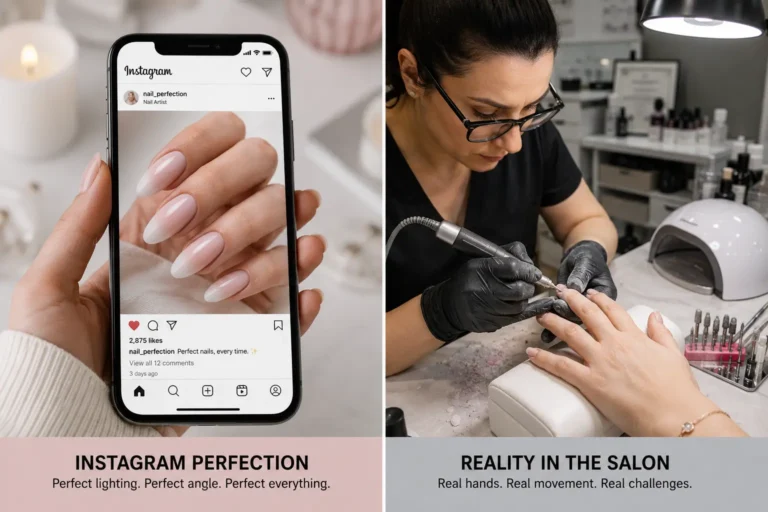
You post finished work seeking validation through likes and comments. This external approval feels like confidence temporarily. But social media validation comes from aesthetic appearance, not structural performance. Your perfectly photographed set might lift in three days. The likes do not predict retention.
Real confidence comes from client retention: enhancements consistently lasting two to three weeks, clients returning for maintenance, referrals from satisfied clients or absence of premature failures requiring correction work.
These outcome measures reflect actual capability. Social media engagement reflects photography and presentation skill. They are not equivalent. A nail tech can build massive social following while producing work that fails structurally. That is not confidence. That is marketing success creating illusion of competence.
Competence Under Pressure
True confidence reveals itself when challenged. A client presents with severely damaged nails, unrealistic expectations and time pressure. Do you: proceed hoping for acceptable results, panic because the situation exceeds comfortable capability, refuse defensively without explanation or assess calmly, communicate clearly and make professional decisions matching reality?
Genuine confidence allows professional judgment under pressure because you trust your assessment capability, know your limits honestly, have communication systems for difficult conversations and accept that some situations require refusal regardless of financial pressure.
False confidence collapses under pressure into either overconfident acceptance of inappropriate work or anxious defensive refusal. Neither response serves clients professionally. Real confidence enables calm assessment and appropriate decisions.
Internal Standards Not Client Acceptance
You complete work and ask yourself: Will the client accept this? Advanced professionals ask: Does this meet my professional standards? Client acceptance might come from limited technical knowledge. Your standards should exceed client expectations because you understand structural requirements they cannot assess.
Confidence built on client acceptance is fragile because clients may happily accept work you know is structurally inadequate. When that work fails, your confidence collapses because you relied on external validation rather than internal standards.
Real confidence requires developing and maintaining professional standards exceeding client expectations. You refuse to present work you know is inadequate even when clients might accept it. This internal standard creates sustainable confidence because your self-assessment becomes reliable regardless of external validation.
Honest Self-Assessment Creates Growth
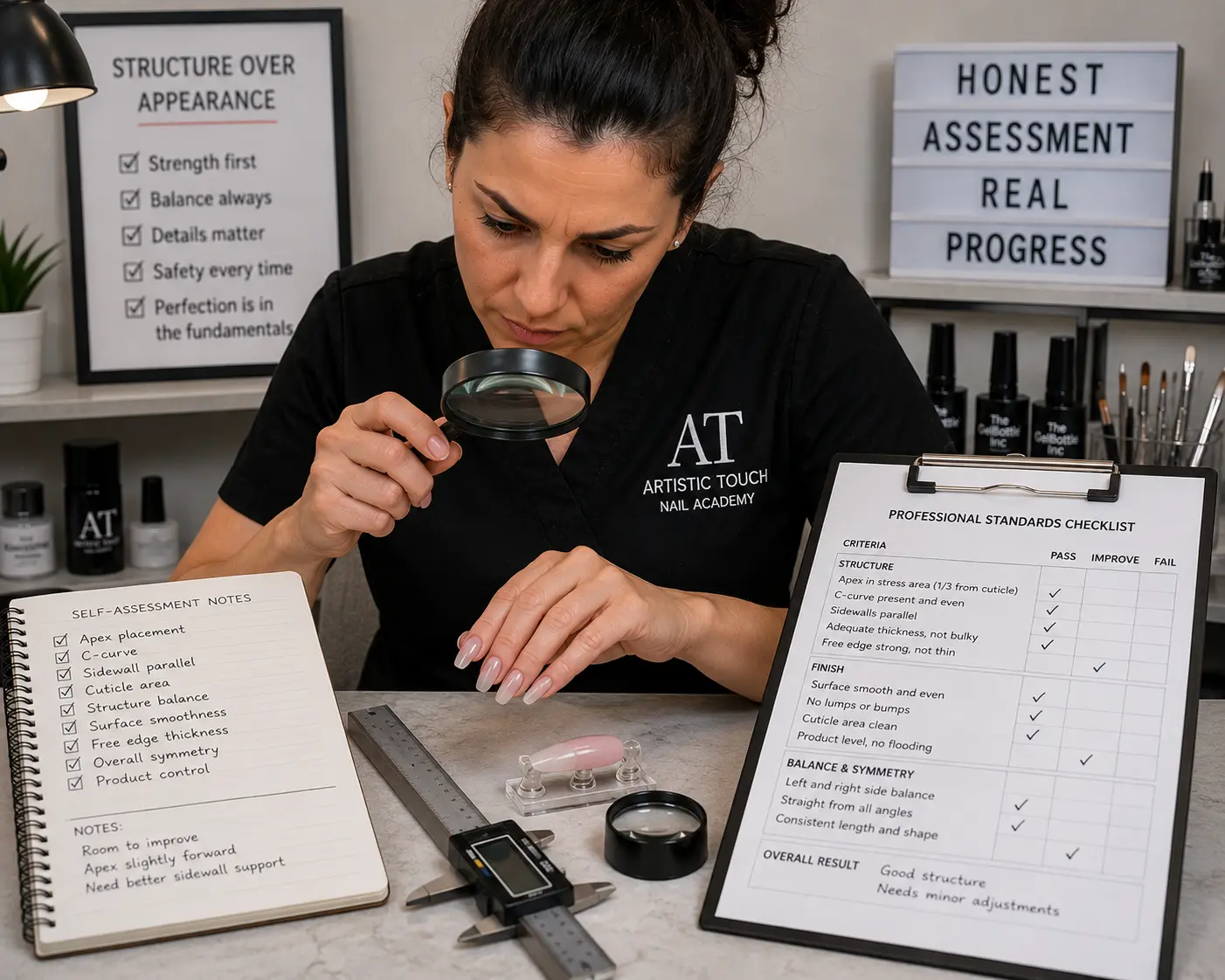
Confident professionals conduct brutal self-assessment: This preparation looked adequate to me but lifting indicates it was not. My apex placement appears correct but structural failure suggests otherwise. My self-evaluation has systematic blind spots I must address. This honesty enables improvement because you accurately identify gaps.
False confidence requires protecting ego through external blame. Product quality, client behaviour, environmental factors—anything except honest acknowledgment of technical inadequacies. This protection prevents growth because you never accurately diagnose what needs development.
Real confidence grows through honest assessment revealing gaps, targeted practice addressing those gaps and accumulating evidence of improved capability. The cycle repeats indefinitely. Confidence is not destination. It is continuous honest evaluation and deliberate development.
Capability Not Credentials
Professional confidence comes from understanding structural principles, accumulating successful problem-solving experiences, knowing capability limits honestly, developing recognition systems, building systematic approaches and maintaining internal standards. Certificates, experience years, social validation or client acceptance create false confidence that collapses when capability is tested.
The question is not whether you appear confident to others. The question is whether your confidence reflects genuine capability or borrowed credibility that cannot withstand challenge.
Build Genuine Professional Confidence
Artistic Touch courses develop real confidence through structural understanding, problem recognition training, systematic approach building and honest capability assessment—not just award certificates for course completion.
View All Courses →Lifetime access • Private student community • Start immediately
Frequently Asked Questions
Do certificates create professional confidence?
Certificates indicate course completion, not actual competence. They create borrowed credibility that feels like confidence until challenged by difficult situations revealing gaps between credentials and capability. Real confidence comes from understanding principles, successful problem-solving experience and honest knowledge of your current capability limits.
Why do I feel anxious even after years of experience?
Years of unfocused practice without deliberate skill development can produce minimal confidence growth. If you avoided challenging situations, never sought external assessment or blamed failures on external factors, time accumulated without building genuine competence. Real confidence requires targeted development, not just passage of time.
How does knowing my limits build confidence?
Honest acknowledgment of current capability creates confidence because your claims match reality. You can deliver what you promise. Clients trust you because your self-assessment proves accurate. False confidence from claiming universal capability creates anxiety because you fear situations exposing gaps between presentation and actual ability.
What creates confidence for unusual nail situations?
Understanding structural principles allowing reasoned adaptation rather than just memorising procedures for typical scenarios. When you understand why techniques work mechanically, you can confidently modify approaches for novel situations. Accumulated successful problem-solving experience also builds certainty by proving your adaptation capability works.
Should I rely on client acceptance to judge my work quality?
No. Clients may accept work you know is structurally inadequate because they lack technical knowledge to assess quality. Build confidence through internal professional standards exceeding client expectations. You should recognize when work meets objective benchmarks regardless of whether clients notice. This internal standard creates sustainable confidence independent of external validation.
How do I build real professional confidence?
Study structural principles explaining why techniques work, seek challenging situations proving your capability, conduct honest self-assessment identifying gaps, develop systematic approaches to uncertain situations, accumulate successful problem-solving experiences and maintain internal standards exceeding client expectations. Confidence builds through demonstrated competence, not collected credentials.
About the Author
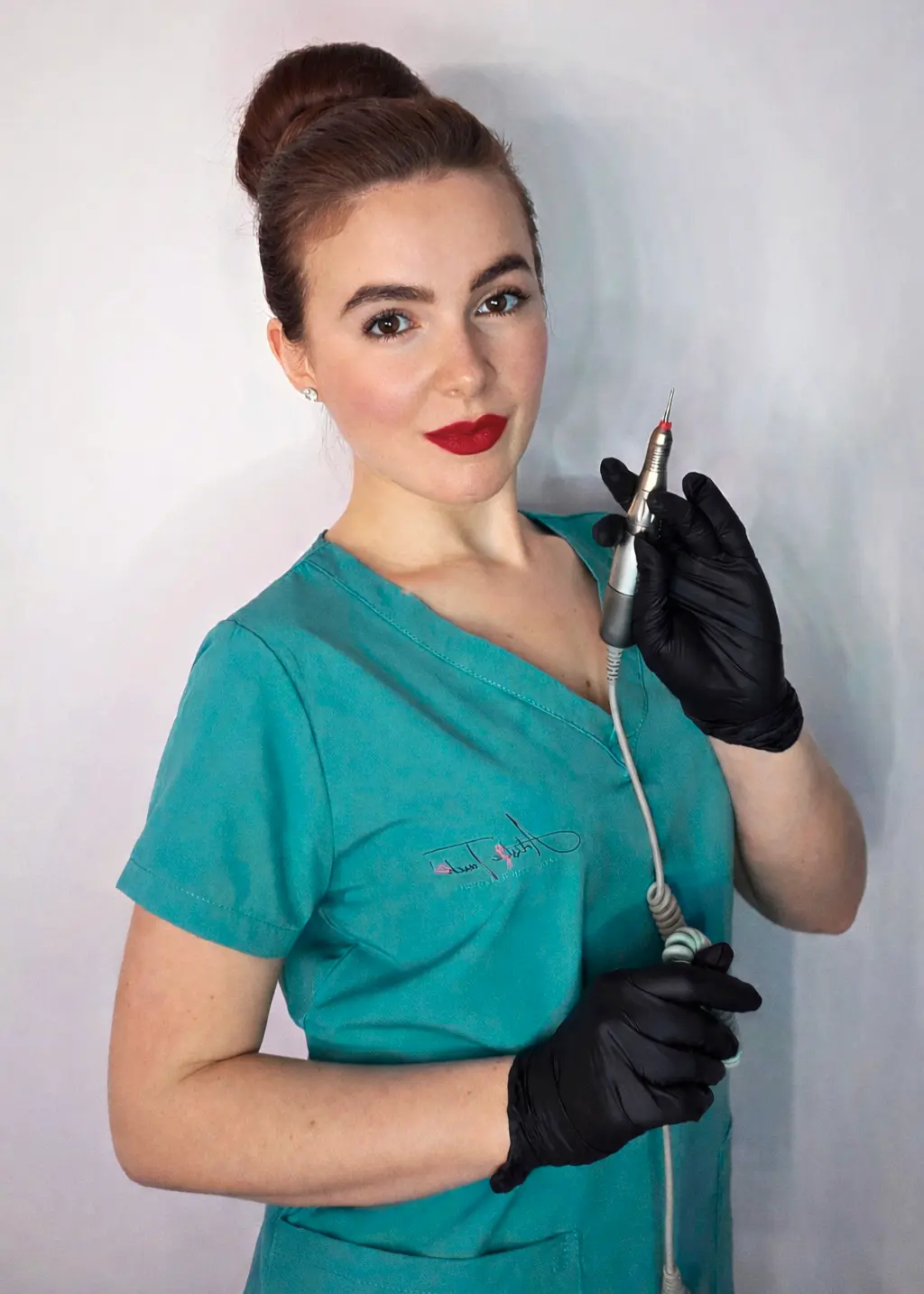
Radina Ignatova
Professional Nail Expert | International Nail Educator
I am Radina Ignatova, a Professional Nail Expert since 2014 and International Nail Educator, based in Scotland, UK. I am the Founder of Artistic Touch Nail Training Academy and TheNailWiki.
At Artistic Touch Nail Training Academy, I provide structured professional online nail courses specialising in dual forms, gel systems, polygel application, advanced nail structure, E-File work and Russian Manicure, with a strong focus on professional salon safety. I continue to work actively in salon practice, ensuring that all education reflects real client scenarios and current industry standards.
My teaching philosophy is simple: I show real salon challenges, real mistakes and real performance testing, not just perfect demonstrations. This is how you develop genuine technical competence and become a confident, capable nail professional.
Every Artistic Touch course includes lifetime access and access to a dedicated student support group, where I provide ongoing guidance and professional feedback.
Disclaimer: This content is for educational purposes only. Nail services should be performed by trained professionals following current hygiene and safety regulations. Always carry out a full client consultation and check for contraindications before performing any nail service.
About Artistic Touch Nail Training Academy
Artistic Touch Nail Training Academy delivers structured professional online nail education focused on practical skill development, professional standards and safe salon practice. All courses are available online worldwide.