The Hidden Skill Most Free Nail Tutorials Never Teach
Quick Answer: What Is The Hidden Skill?
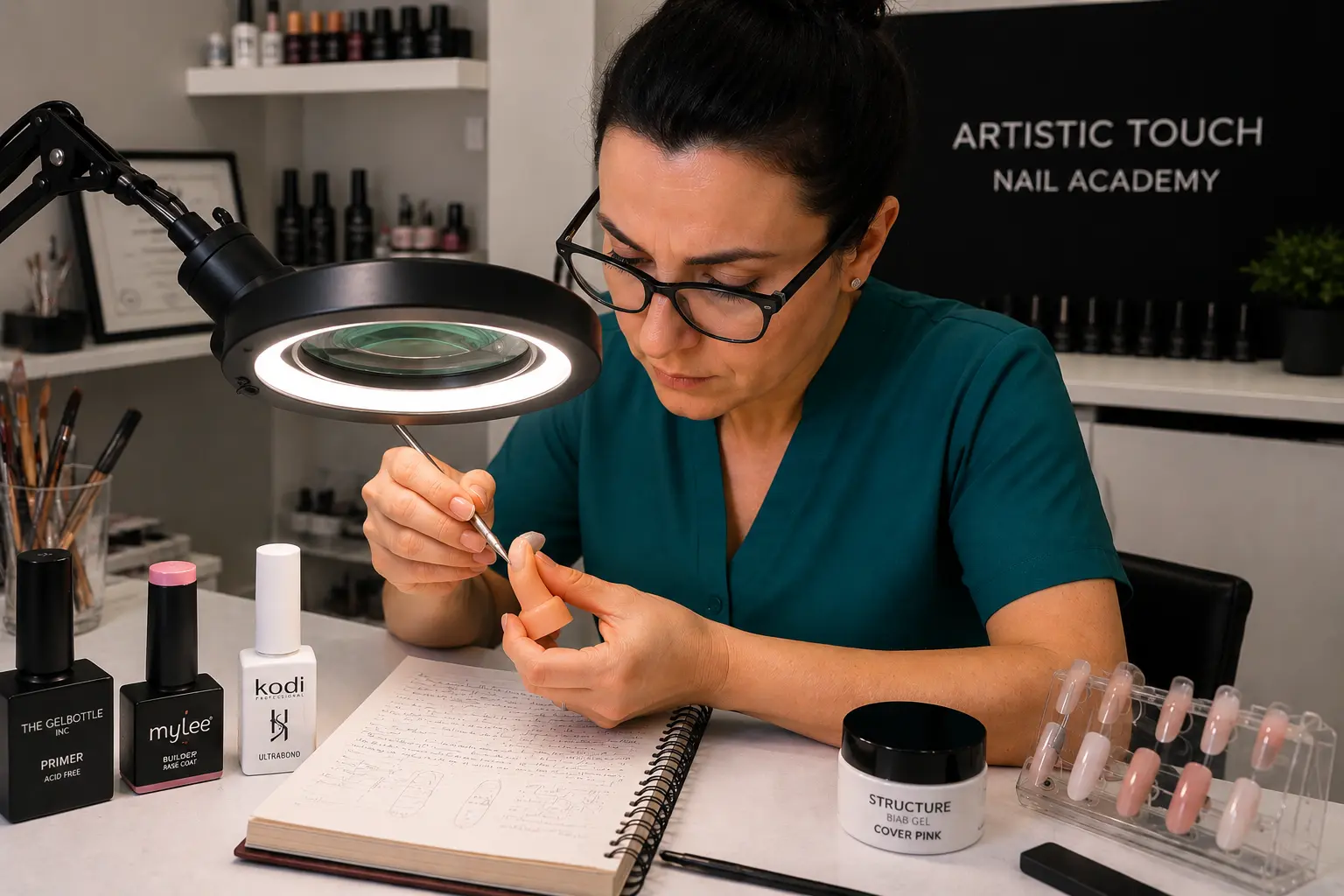
Diagnostic thinking. The ability to recognise hidden causes, adapt to different situations, understand structural principles, notice early warning signs, and think professionally instead of just following steps. This is the skill that separates confident experts from confused technicians.
Most tutorials teach you what to do. Real education teaches you to think about what you are doing and why it matters.
Why Tutorials Cannot Teach Diagnostic Thinking
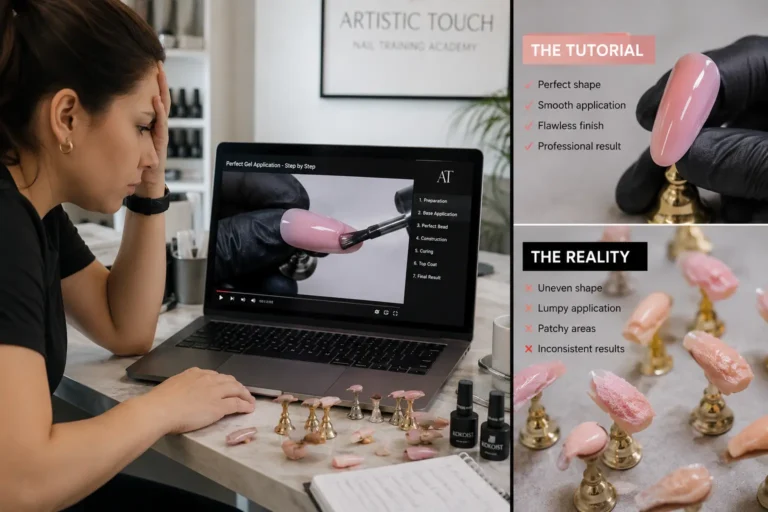
Watch a nail tutorial and you see expertise demonstrated. Perfect technique. Beautiful results. It looks simple. It looks like something you can copy.
But the real expertise is invisible. It is not in the hand movements. It is in the thinking behind those movements. It is in the decisions the educator makes before, during, and after the technique. It is in the constant observation and adjustment happening beneath the surface.
Tutorials cannot teach thinking. They can only show technique.
This is why you can watch a perfect tutorial, copy every step exactly, and still have different results. Not because you did anything wrong. But because you were taught what to do without learning how to think about what you are doing.
Recognising Hidden Causes Is A Skill
When a problem occurs in salon work, there are usually multiple possible causes. Lifting could be moisture, contamination, product mismatch, structural error, or biological incompatibility. All look the same on the surface. All feel like “lifting.”
But which one is actually happening? This is where diagnostic thinking matters.
An expert can ask the right questions. How long did prep take? What is the client’s lifestyle? Is there peeling at the edge or centre? Is the colour staying? Were there any unusual conditions during application? Each answer reveals which invisible cause is actually present.
A tutorial cannot teach you to ask these questions because it does not know your specific situation. Only diagnostic thinking can.
Why This Matters
When you can diagnose the real cause, you can fix the real problem. When you cannot, you keep trying random solutions and hoping something works.
Adapting To Different Situations Requires Thinking
Every client is different. Every nail is different. Every situation is different. But tutorials show one scenario, one technique, one outcome.
What happens when your client’s nails are thinner than the tutorial nails? What happens when they are more flexible? What happens when their lifestyle is more stressful or more moist? What happens when they are bitten down or damaged?
You cannot adapt without thinking. You need to understand why your technique works on normal nails, and then think about how to adjust it for this specific client’s situation.
Tutorials cannot teach this. They can only teach the standard approach. Your diagnostic thinking has to fill the gap.
Understanding Pressure Distribution Is Not Visual
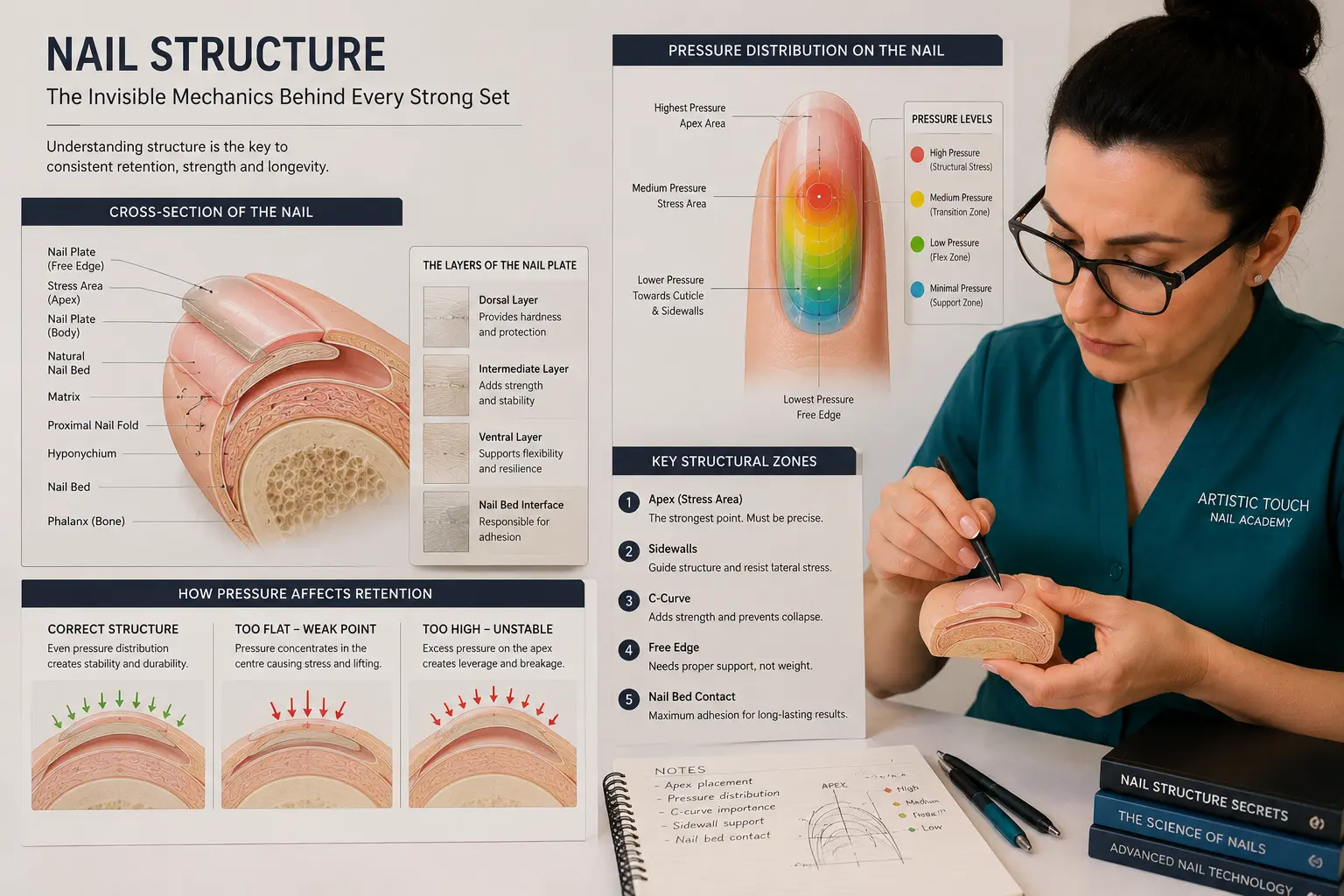
Tutorials show you where to hold the file, how fast to move it, which direction to go. But they cannot show you what is happening beneath the surface: how pressure distributes across the nail plate, where stress concentrates, which areas are vulnerable, how flexing works.
You can have perfect hand position and file in the perfect direction, but if you do not understand pressure distribution, you will create hidden damage that fails weeks later.
This understanding comes from thinking about structure, not just copying hand movements. It comes from asking: “What is happening to the nail plate when I do this?” Not just: “What does the tutorial show me to do?”
⚠️ The Invisible Damage Problem
Structural damage happens invisibly. You create it one way, it fails weeks later. Without diagnostic thinking, you never know what you did wrong, so you cannot fix it next time.
Recognising Early Warning Signs Comes From Understanding
Experts notice problems before they become obvious. Slight lifting at the edge. Subtle colour changes. Pressure points forming. Tiny gaps appearing. These early signs tell you something is going wrong before the client complains.
But you cannot notice these signs if you do not understand what they mean. They are just small visual details. With diagnostic thinking, they are diagnostic clues telling you exactly what to fix.
Tutorials show you perfect nails. They do not teach you to recognize the hundred small warning signs that appear before failure. That comes from understanding what causes failure, so you know what to look for.
Where Diagnostic Thinking Comes From
Diagnostic thinking is not magic. It is a framework for understanding how nails work, why problems happen, what causes failures, how structure affects results, and how to adapt your approach to different situations.
This is what real education teaches. Not steps to follow. But thinking to apply.
When you have diagnostic thinking, you stop being dependent on tutorials. You become capable of thinking your way through any situation. You become an expert.
Build Diagnostic Thinking
Free courses designed to teach you the thinking that separates experts from followers. Not just technique. Real professional understanding.
Explore Free Courses →Thinking-focused • Professional framework • Real expertise
New free courses are added regularly. Check back often for upcoming lessons.
Frequently Asked Questions
Can diagnostic thinking be learned?
Absolutely. It is not innate talent. It is a framework that can be learned, practised, and developed. Anyone can learn to think diagnostically with the right education.
How long does it take to develop diagnostic thinking?
You can begin thinking diagnostically immediately. Small improvements appear within weeks. Deep expertise develops over months and years. But the foundation starts as soon as you learn to ask the right questions.
Will diagnostic thinking change how I work?
Yes. You will spend more time thinking and less time blindly following steps. You will ask more questions of your clients. You will observe more carefully. You will feel more confident because you understand what is happening.
Can I still use tutorials if I have diagnostic thinking?
Yes. But instead of following them blindly, you will watch them while asking: “Why is the educator doing this? What principle is being applied? How would I adapt this for different situations?” You become a critical thinker instead of a follower.
Is diagnostic thinking only for advanced technicians?
No. Beginners benefit most from learning to think early. It creates strong fundamentals and prevents years of confusion. Advanced technicians also benefit because they often realize what they have been doing wrong.
Where do I start learning diagnostic thinking?
Start with a free course that focuses on a problem you actually experience. Learn to ask diagnostic questions about that specific problem. Build the thinking framework from there.
About the Author
Radina Ignatova
Professional Nail Expert | International Nail Educator
I am Radina Ignatova, a Professional Nail Expert since 2014 and International Nail Educator, based in Scotland, UK. I am the Founder of Artistic Touch Nail Training Academy and TheNailWiki.
At Artistic Touch Nail Training Academy, I provide structured professional online nail courses specialising in dual forms, gel systems, polygel application, advanced nail structure, E-File work and Russian Manicure, with a strong focus on professional salon safety. I continue to work actively in salon practice, ensuring that all education reflects real client scenarios and current industry standards.
My teaching philosophy is simple: I show real salon challenges, real mistakes and real performance testing, not just perfect demonstrations. This is how you develop genuine technical competence and become a confident, capable nail professional.
Every Artistic Touch course includes lifetime access and access to a dedicated student support group, where I provide ongoing guidance and professional feedback.
Disclaimer: This content is for educational purposes only. Nail services should be performed by trained professionals following current hygiene and safety regulations. Always carry out a full client consultation and check for contraindications before performing any nail service.
About Artistic Touch Nail Training Academy
Artistic Touch Nail Training Academy delivers structured professional online nail education focused on practical skill development, professional standards and safe salon practice. All courses are available online worldwide.