Stop Choosing Sandwich Dual Forms by Shape – This Is the Real Method
Quick Answer: How Should You Choose Sandwich Dual Forms?
Choose sandwich dual forms by matching their built-in arch structure to the natural nail plate geometry, not by desired shape. Flat nail plates require flatter dual forms. Arched nail plates require more curved dual forms. Incorrect arch matching creates pressure lifting, sidewall tension or product compression that changes structural integrity.
This article explains how to assess dual form architecture and match it correctly to natural nail characteristics for consistent results.
Watch: Why Sandwich Dual Form Selection Is Not About Shape
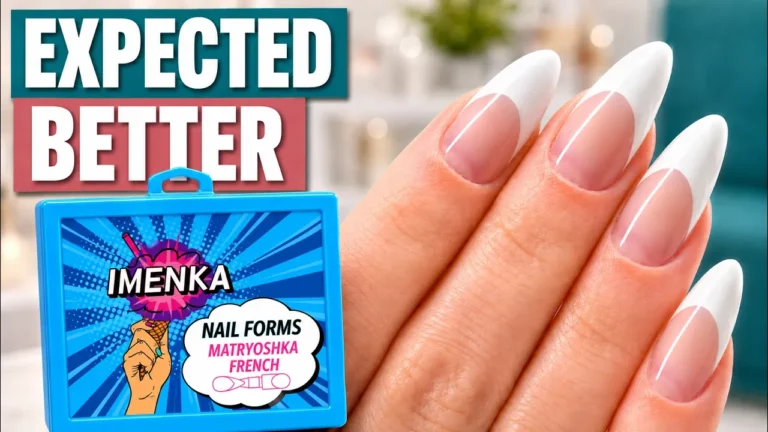
This demonstration compares three different sandwich dual form systems showing how built-in arch structure differs significantly between brands and why matching to natural nail geometry determines success.
Why Shape Selection Creates Inconsistent Results
You choose sandwich dual forms based on the shape you want to create: coffin, almond, square. Your results are inconsistent. Some applications hold perfectly. Others lift within days, pop off during application or create sidewall tension that compromises structural integrity. You assume the product or your technique failed. The actual problem is that you selected forms by desired shape rather than by matching their built-in architecture to your client’s natural nail geometry.
Sandwich dual forms are not interchangeable based on shape preference. Each form has specific built-in arch structure and C-curve design. When that architecture does not match the natural nail plate characteristics, the form either compresses the product, creates lifting pressure or produces inadequate sidewall coverage regardless of how perfectly you execute the application technique.
Professional sandwich dual form selection requires assessing the form’s structural architecture and matching it to individual nail plate geometry. This is what produces predictable, consistent results.
What Built-In Arch Structure Actually Means
All sandwich dual forms contain pre-formed arch structure visible when you examine them in profile view and assess C-curve depth. This built-in architecture is not adjustable during application. The form will transfer its structural characteristics to your enhancement whether those characteristics suit the natural nail or not.
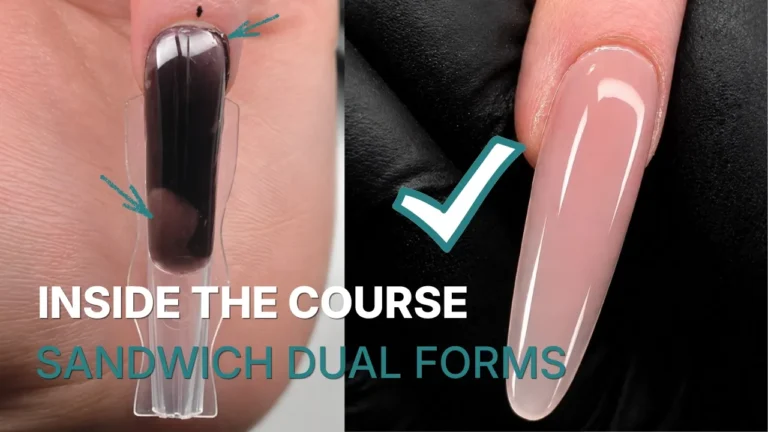
A highly arched dual form—one that appears tunnel-shaped when viewed from the front—contains significant built-in curve. When placed on a flat natural nail plate, this form attempts to impose its curved architecture onto a flat surface. The resulting mismatch creates compression forces that can cause pressure lifting at the proximal zone or force the enhancement to pop off during curing.
A flatter dual form contains minimal built-in arch. When used on naturally curved nail plates, this flat architecture cannot accommodate the existing curvature. The form may not seat properly against the sidewalls, leaving insufficient product at stress concentration points or creating tension that compromises structural integrity.
How to Assess Dual Form Architecture
Professional dual form assessment requires viewing the form from multiple angles before selection. Top view shows shape—coffin, almond, square. Profile view shows built-in arch structure. Front view shows C-curve depth and tunnel formation.
Hold the form in profile. Observe how much the form curves from proximal to distal end. A highly arched form shows significant upward curve. A flat form appears nearly straight in profile. This profile curve must match the natural nail plate curve for proper fit.
View the form from the front opening. Observe the C-curve shape—how much the sidewalls curve inward. A tunnel-shaped opening indicates high arch structure. A flatter, more rectangular opening indicates lower arch design. This C-curve must accommodate the natural nail’s lateral curvature without creating compression or gaps.
Matching Forms to Flat Nail Plates
Flat natural nail plates—those with minimal natural arch when viewed in profile and shallow C-curve when viewed from the end—require dual forms with correspondingly flat architecture. Using highly arched forms on flat nails creates structural mismatch.
When an arched form is forced onto a flat nail plate, the form’s built-in curve attempts to lift the enhancement away from the flat natural surface. This creates pressure at the proximal attachment point. The enhancement may lift prematurely as the curved architecture resists contact with the flat nail plate, or it may pop off entirely during application as curing shrinkage combines with architectural mismatch.
Flat nail plates require forms that appear relatively straight in profile view and show minimal tunnel formation from the front. The form’s architecture should mirror the natural nail’s flat characteristics rather than attempting to impose curvature that does not exist.
Matching Forms to Arched Nail Plates
Naturally arched nail plates—those showing significant upward curve in profile and pronounced C-curve from the end view—require dual forms with complementary arch structure. Flat forms on curved nails create different problems than curved forms on flat nails, but the results are equally problematic.
When a flat dual form is placed on an arched natural nail, the form cannot conform to the existing curvature. Sidewall contact becomes inadequate. Product distribution at lateral stress points suffers. The enhancement may appear structurally sound from above but lacks proper reinforcement at sidewalls where the flat form could not accommodate the natural curve.
The result is often sidewall lifting, lateral cracking or structural weakness that becomes apparent when normal use forces stress the inadequately supported areas. The form’s flat architecture worked against the nail’s natural geometry rather than supporting it.
Why This Is Not About Shape Preference
The biggest misunderstanding about sandwich dual forms is assuming that shape determines selection. You want coffin nails, so you choose coffin forms. You prefer almond, so you select almond shapes. This approach ignores the critical factor: architectural compatibility with natural nail geometry.
Shape describes the finished outline—coffin, almond, square, stiletto. Architecture describes the built-in structural characteristics—flat, moderately arched, highly curved. These are independent variables. A coffin-shaped form can have flat architecture or arched architecture. An almond form can be designed with high arch or low arch.
Professional selection requires identifying the nail’s natural geometry first, then selecting forms with matching architecture in whatever shape the client desires. When architecture matches correctly, shape becomes a styling choice. When architecture mismatches, no amount of perfect technique will produce reliable results.
Common Signs of Architectural Mismatch
Certain failure patterns reveal architectural incompatibility between dual form and natural nail. Pressure lifting at the proximal zone—where the enhancement lifts near the cuticle area within days—typically indicates that a highly arched form was used on a flat nail plate. The form’s curve created lifting pressure as it attempted to impose curvature onto a flat surface.
Forms popping off during application or immediately after removal suggest extreme architectural mismatch. The form’s structure is so incompatible with the natural nail that it cannot maintain contact during the curing process. This often occurs when very flat nails receive very arched forms or vice versa.
Inadequate sidewall coverage or visible gaps at lateral margins indicate that the form’s C-curve does not match the natural nail’s lateral curvature. Product distribution suffers because the form cannot seat properly against the sidewalls. This creates weak points at stress concentration areas that lead to premature structural failure.
What Predictable Sandwich Results Require
Inconsistent sandwich dual form results indicate selection based on desired shape rather than architectural compatibility. When you understand that forms must match natural nail geometry—flat forms for flat nails, arched forms for arched nails—the system becomes predictable.
Professional sandwich dual form work requires assessing both the form’s built-in architecture and the client’s natural nail characteristics before selection. This diagnostic approach is what separates consistent professional results from unpredictable outcomes.
Master Sandwich Dual Form Selection and Application
The Sandwich Dual Forms Online Course teaches architectural assessment, natural nail geometry evaluation and systematic form selection for predictable results. Learn how to match forms correctly and eliminate inconsistent outcomes.
Sandwich Dual Forms Course — £97 →Lifetime access • Private student community • Start immediately
Frequently Asked Questions
How do I know if a sandwich dual form is too arched for my client’s nails?
View the form in profile and compare its curve to the natural nail plate’s profile. If the form shows significant upward arch while the natural nail appears relatively flat, the form is too arched. Mismatched architecture causes pressure lifting or form pop-off during application.
Can I use the same sandwich dual forms on all clients?
No. Natural nail geometry varies significantly between clients. Some have flat nail plates requiring flat forms. Others have arched plates requiring curved forms. Using one form type for all nail geometries produces inconsistent results because architectural mismatch creates structural problems regardless of application technique quality.
What causes sandwich dual forms to pop off during application?
Forms popping off typically indicate severe architectural mismatch between the form’s built-in structure and the natural nail geometry. When a highly arched form is forced onto a very flat nail or vice versa, the structural incompatibility prevents proper contact and the form cannot maintain position during curing.
Why do I get sidewall problems with some sandwich dual forms?
Sidewall coverage problems occur when the form’s C-curve does not match the natural nail’s lateral curvature. If the form is too flat for a curved nail or too curved for a flat nail, it cannot seat properly against sidewalls. This creates inadequate product distribution at lateral stress points.
Do all coffin-shaped sandwich dual forms have the same arch?
No. Shape and arch structure are independent characteristics. Coffin-shaped forms can have flat architecture or highly arched architecture depending on manufacturer design. You must assess each form’s built-in arch structure in profile view rather than assuming shape determines architecture.
How do I assess my client’s natural nail arch?
View the natural nail in profile from the side to observe upward curve from proximal to distal end. View from the end to assess C-curve depth and lateral curvature. Flat nails show minimal profile curve and shallow C-curve. Arched nails show significant profile curve and pronounced C-curve depth.
About the Author
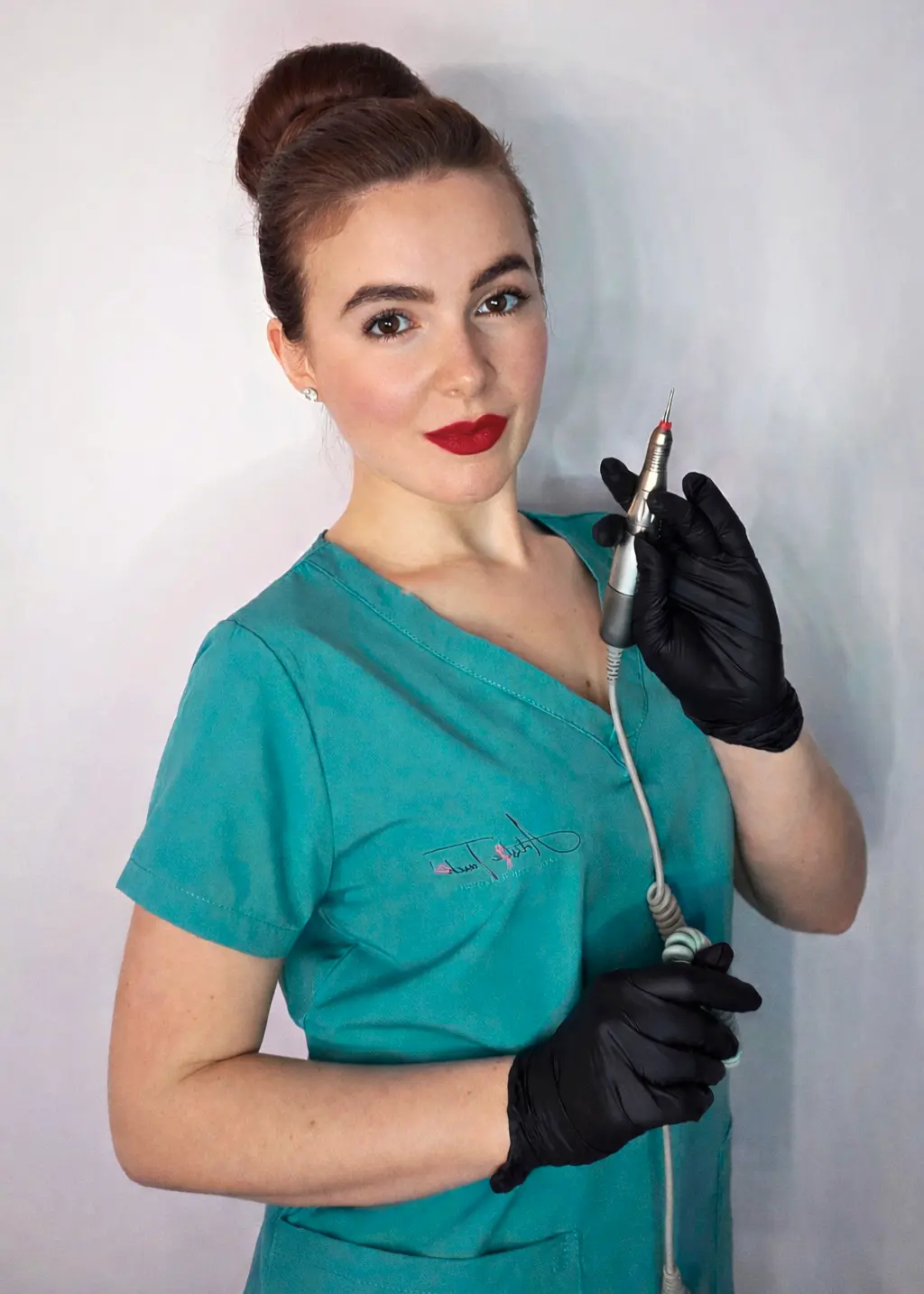
Radina Ignatova
Professional Nail Expert | International Nail Educator
I am Radina Ignatova, a Professional Nail Expert since 2014 and International Nail Educator, based in Scotland, UK. I am the Founder of Artistic Touch Nail Training Academy and TheNailWiki.
At Artistic Touch Nail Training Academy, I provide structured professional online nail courses specialising in dual forms, gel systems, polygel application, advanced nail structure, E-File work and Russian Manicure, with a strong focus on professional salon safety. I continue to work actively in salon practice, ensuring that all education reflects real client scenarios and current industry standards.
My teaching philosophy is simple: I show real salon challenges, real mistakes and real performance testing, not just perfect demonstrations. This is how you develop genuine technical competence and become a confident, capable nail professional.
Every Artistic Touch course includes lifetime access and access to a dedicated student support group, where I provide ongoing guidance and professional feedback.
Disclaimer: This content is for educational purposes only. Nail services should be performed by trained professionals following current hygiene and safety regulations. Always carry out a full client consultation and check for contraindications before performing any nail service.
About Artistic Touch Nail Training Academy
Artistic Touch Nail Training Academy delivers structured professional online nail education focused on practical skill development, professional standards and safe salon practice. All courses are available online worldwide.