5 Things Nobody Tells You About Sandwich Dual Forms (Before You Buy Them)
By Radina Ignatova | Last Updated: 2 April 2026 | Nail Techniques
What Do Sandwich Dual Forms Courses Not Tell You?
Most sandwich dual forms marketing focuses on clean imprints and reduced filing, but does not mention that form removal technique matters more than application, that size selection is more complex than traditional forms, that your first 10 sets will look average (not perfect), that proper cleaning with IPA extends form life significantly, and that professional training prevents expensive product waste.
These realities do not make sandwich forms bad — they make proper education essential. Understanding what to expect before purchasing prevents disappointment and wasted money on abandoned supplies.
You have watched three YouTube tutorials showing flawless sandwich dual form applications. Every nail looks perfect, every imprint is clean, and every instructor makes it appear effortless. You order your first sandwich dual forms set expecting similar results.
Then reality hits. Your first attempt produces uneven imprints, the bottom form will not stay in position, and removal cracks the enhancement you spent 20 minutes perfecting. Nobody mentioned these problems in the promotional videos.
This article reveals five critical facts about sandwich dual forms that marketing materials consistently omit — not to discourage you, but to set realistic expectations and help you succeed from the beginning.
1. Form Removal Technique Matters More Than Application
Every sandwich dual forms tutorial obsesses about application — product amount, pressure technique, curing time. Almost none explain proper removal technique, despite removal being where most beginners damage their work.
What Happens During Removal
When you remove forms incorrectly, several problems occur:
- Stress cracks appear where you pulled too hard on the cured gel
- Surface texture becomes rough from forcing forms away before full release
- Sidewall structure weakens when forms twist during removal
- Product delaminates from nail plate if bottom form pulls upwards instead of outwards
⚠️ Critical: This Is Where Most Beginners Fail
You can apply sandwich dual forms perfectly and still ruin the result during removal. Proper removal technique requires understanding flex points, release angles, and sequential removal order — skills that require professional training, not trial and error.
The Reality
Professional training teaches removal technique with the same detail as application. Free tutorials skip this because it is less visually interesting than watching gel spread between forms. This gap in education costs beginners countless ruined sets.
2. Size Selection Is More Complex Than Traditional Forms
Marketing claims sandwich dual forms “fit any nail” because sets include 12-15 sizes. What they do not mention is that you need to match both top and bottom form independently, and that incorrect pairing creates worse results than traditional forms ever could.
The Hidden Complexity
With traditional dual forms, you select one size based on nail width and curve. With sandwich forms, you must consider:
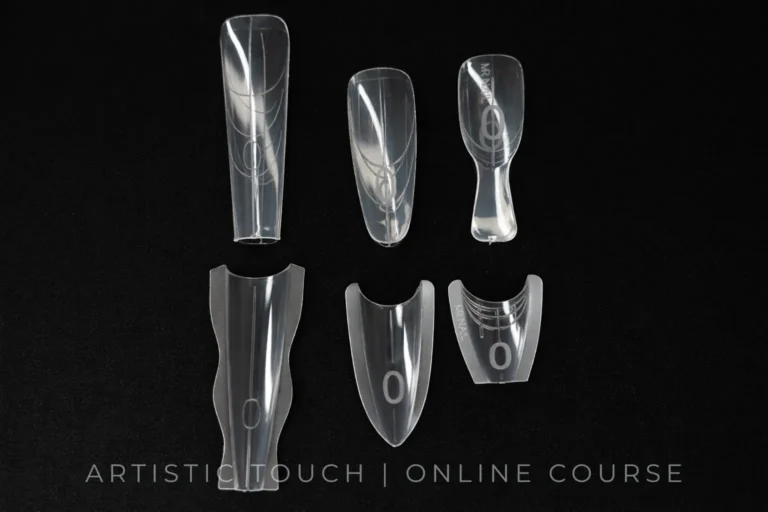
- Top form width — should be slightly bigger than nail plate
- Bottom form curve — must match natural nail bed curvature exactly
- Both forms together — must align without gaps when sandwiched
- Free edge clearance — bottom form must sit under nail without pushing back
Getting all four factors correct on every finger requires experience that beginners do not have. This is why your first few sets feel frustrating despite sandwich forms being marketed as “easier” than traditional.
Professional Tip: Test Before Product Application
Always test top and bottom form fit together (without gel) on each finger before starting application. This takes 2 extra minutes but prevents complete set failures from wrong size selection. Professional training teaches systematic testing methods that save hours of frustration.
Avoid These Hidden Problems
Professional training reveals the challenges marketing materials hide, including removal technique, size selection methods, realistic timeline expectations, and troubleshooting approaches that prevent wasted product and client disappointment.
- ✓ Proper removal technique to prevent stress cracks and damage
- ✓ Advanced size selection for top and bottom form pairing
- ✓ Realistic skill development timeline and practice expectations
- ✓ Lifetime access with expert troubleshooting support
3. Your First 10 Sets Will Look Average (Not Perfect)
Instagram posts show nail technicians producing flawless sandwich dual form sets on their first attempt. This is marketing fiction designed to sell products and courses. The reality is significantly different.
Realistic Skill Development Timeline
Sets 1-3: You will struggle with form positioning, product amount, and removal. Expect uneven imprints, some overflow, and frustration. This is normal.
Sets 4-7: You will understand the process but inconsistency remains. Some nails turn out well, others still need heavy filing. Progress is visible but slow.
Sets 8-10: Muscle memory develops. Most nails achieve acceptable results, though perfection remains elusive. Confidence begins building.
Sets 11+: Consistent professional results emerge. You can assess problems quickly and correct them. Client-ready work becomes your standard.
⚠️ Important: Budget Practice Time and Materials
You will need approximately 10 full practice sets before producing consistent client-ready work. This requires practice hands or willing models, plus sufficient product. Many beginners quit after 2-3 sets because they expect instant perfection. Professional development takes time regardless of marketing claims.
4. Reusability Depends on Cleaning and Storage Care
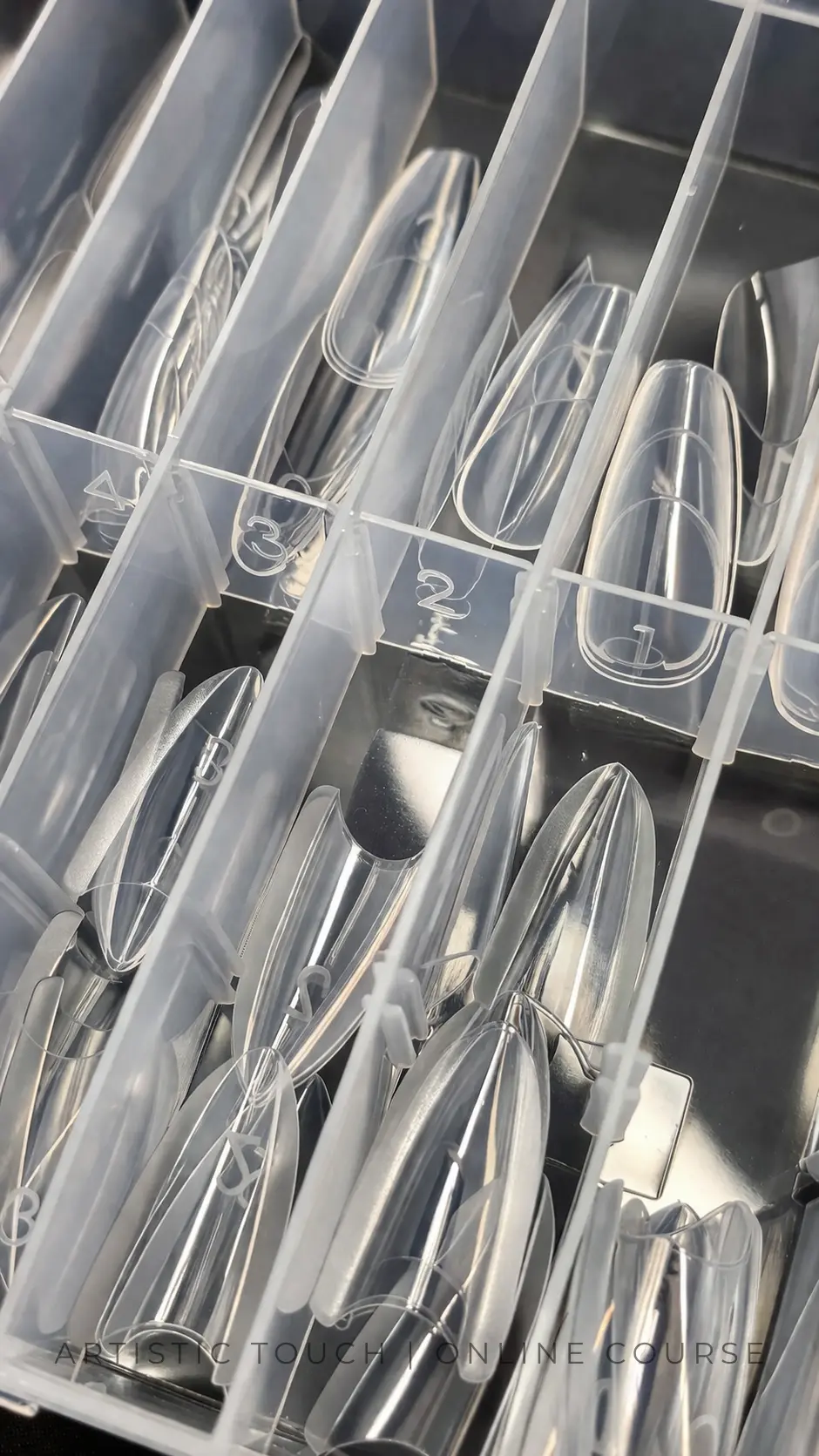
Professional quality sandwich dual forms can be reused multiple times when properly cleaned and stored. A typical box contains 240 pieces (8 sizes × 30 compartments) and costs approximately £15, making the per-use cost very economical when forms are maintained correctly.
What Affects Reusability
Form lifespan depends entirely on how you clean and store them:
- Proper cleaning with IPA (isopropyl alcohol) removes gel residue without damaging plastic
- Gentle handling during removal prevents cracks and maintains flexibility
- Correct storage in original compartments protects forms from scratches and warping
- Avoiding harsh chemicals or abrasive scrubbing preserves clarity and structure
Realistic Usage Timeline
- With proper care: Forms can be reused multiple times, maintaining clarity and flexibility
- With poor care: Forms degrade quickly — cloudiness, brittleness, cracking after fewer uses
- Professional standard: Replace forms when they become cloudy, lose flexibility, or show cracks
Professional Tip: Proper Cleaning Technique
Clean sandwich dual forms immediately after removal with IPA (isopropyl alcohol). Wipe gently to remove gel residue, then store in original compartments to prevent damage. Proper cleaning and storage significantly extends form lifespan and maintains professional results.
The Cost Reality
At approximately £15 per box (240 pieces), even replacing forms regularly remains economical for professional work. The key is not maximizing reuses at the expense of quality — it is maintaining consistent results through proper care and timely replacement when forms degrade.
5. Proper Training Prevents Hundreds of Pounds in Wasted Product
The most expensive “hidden cost” of sandwich dual forms is product waste during the learning phase. Every failed set costs money in gel, forms, and time. Without proper training, this waste accumulates quickly.
What Self-Teaching Costs
Consider a typical self-taught learning journey:
- 5 failed practice sets before achieving acceptable results = £50-75 in gel + £25-40 in forms
- 3 client sets requiring full removal and restart = £30-45 in product + lost service time
- Additional supplies purchased to “fix” problems = £20-30 in unnecessary products
- Time wasted troubleshooting without guidance = 10-15 hours of unproductive practice
Total self-teaching cost: £100-150 in materials + significant time waste + potential client dissatisfaction.
What Professional Training Provides
Proper training costs £97 but prevents the waste cycle entirely through:
- Clear product amount guidance — no guessing, no waste from excessive gel use
- Proper removal technique — prevents ruined sets from incorrect form removal
- Size selection methods — reduces sets requiring full restart from wrong forms
- Troubleshooting support — instant answers instead of hours of trial and error
Professional Investment vs Self-Teaching Cost
A £97 course saves £100-150 in wasted materials plus 10-15 hours of frustration. The course pays for itself through prevented waste, then continues providing value through lifetime access and ongoing support. This is why professional training is an investment, not an expense.
Frequently Asked Questions About Sandwich Dual Forms Reality
Are sandwich dual forms actually easier than traditional forms for beginners?
Yes, but “easier” does not mean “instant perfection.” Sandwich forms reduce specific challenges like gel overflow and rough undersides, but introduce new learning requirements like bottom form positioning and two-mould coordination. With proper training, beginners achieve professional results faster than with traditional forms — but still require practice and skill development.
Why do YouTube tutorials make sandwich dual forms look so easy?
Edited videos remove mistakes, failed attempts, and troubleshooting processes. You see the final successful result after multiple practice runs, not the learning journey. Additionally, experienced educators make techniques appear effortless through developed muscle memory — something beginners have not yet built. This creates unrealistic expectations about timeline and difficulty.
Should I buy cheap sandwich dual forms for practice?
No. Cheap forms often have poor flexibility, incorrect curves, and low clarity, making proper technique impossible to learn. Investing in quality forms from the beginning ensures you develop correct habits rather than compensating for inferior materials. Quality forms also last longer, reducing overall cost through better reusability.
Can I learn sandwich dual forms without formal training?
Yes, but at significantly higher cost in wasted materials, time, and frustration. Self-teaching typically costs £100-150 in product waste plus 10-15 hours of unproductive trial and error. Professional training costs £97 but prevents this waste whilst providing expert troubleshooting support, making it more economical overall.
What is the biggest mistake beginners make with sandwich dual forms?
Expecting immediate perfection and quitting after 2-3 practice sets when results do not match promotional videos. Skill development requires approximately 10 practice sets before achieving consistent professional results. Understanding this realistic timeline prevents premature abandonment of otherwise effective technique.
Radina Ignatova
Professional Nail Expert | International Nail Educator

I am Radina Ignatova, a Professional Nail Expert since 2014 and International Nail Educator, based in Scotland, UK. I am the Founder of Artistic Touch Nail Training Academy and TheNailWiki.
At Artistic Touch Nail Training Academy, I provide structured professional online nail courses specialising in dual forms, gel systems, polygel application, advanced nail structure, e-file work and Russian manicure, with a strong focus on professional salon safety. I continue to work actively in salon practice, ensuring that all education reflects real client scenarios and current industry standards.
My teaching philosophy is simple: I show real salon challenges, real mistakes and real performance testing, not just perfect demonstrations. This is how you develop genuine technical competence and become a confident, capable nail professional.
Every Artistic Touch course includes lifetime access, a certificate of completion and access to a dedicated student support community (Discord), where I actively participate and provide ongoing guidance and expert feedback.
About Artistic Touch Nail Training Academy
Artistic Touch Nail Training Academy delivers structured professional online nail education focused on practical skill development, professional standards and safe salon practice. All courses are available online worldwide.
Learn Sandwich Dual Forms With Honest Education
Understanding these five hidden realities prepares you for success rather than disappointment. Professional training reveals what marketing materials hide, setting realistic expectations whilst providing the techniques that actually work in salon practice.
What You Will Learn in the Sandwich Dual Forms Course:
- ✓ Proper removal technique to prevent stress cracks and product damage
- ✓ Advanced size selection for top and bottom form pairing
- ✓ Realistic practice timeline and skill development expectations
- ✓ Troubleshooting support that prevents wasted product and time
Get Honest Education, Not Marketing Promises
Learn what actually works, save money on wasted materials, achieve real results
Enrol Now — £97 →Lifetime access • Certificate included • Start immediately
Discover the honest truth about sandwich dual forms including hidden challenges, realistic timelines, and what proper training prevents at Artistic Touch Nail Training Academy.