Why Do My Gel Nails Keep Lifting? 7 Common Causes & Solutions (2025)
Quick Answer: Why Do Gel Nails Lift?
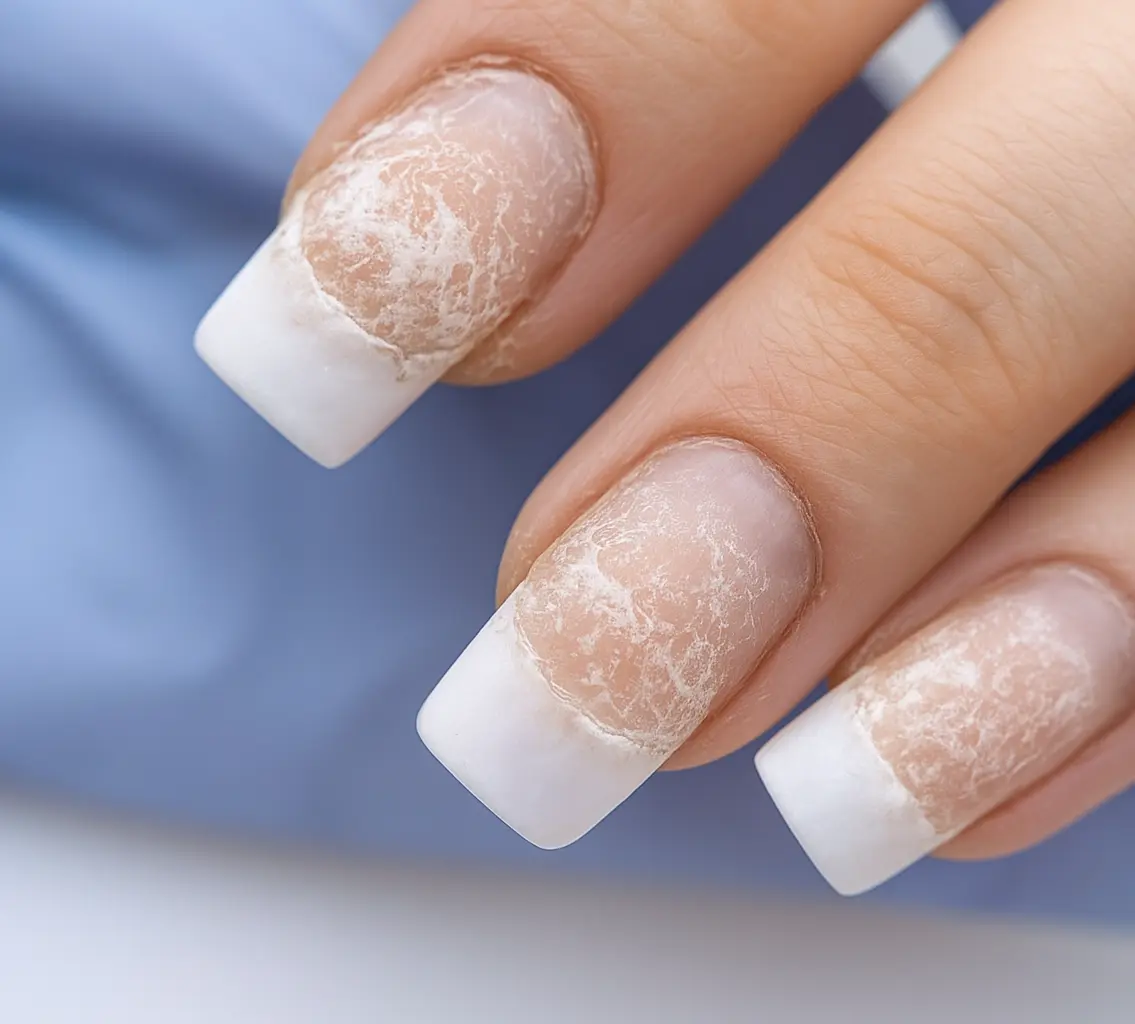
Gel nails lift primarily due to poor nail preparation, specifically inadequate cuticle removal. When the thin cuticle layer that grows onto the nail plate is not properly cleaned, it prevents gel polish from bonding directly to the nail surface, causing lifting within days.
The 7 most common causes: Improper cuticle preparation, inadequate dehydration, incorrect filing, poor product application, insufficient curing, oil or moisture contamination, and improper client aftercare.
The solution: Professional e-file technique provides thorough cuticle preparation and proper nail plate dehydration, creating the ideal surface for long-lasting gel adhesion.
The Frustration of Gel Nail Lifting
You follow the instructions perfectly. You buy professional products. You cure for the correct time. Yet within three days, your gel polish lifts at the cuticle.
Perhaps even more frustrating – sometimes your gel lasts beautifully for three weeks, and other times it fails within 48 hours. The inconsistency makes you question your technique, your products, even your career choice.
Here is the truth: gel nail lifting is almost never about the product quality. It is about preparation technique.
After training over 200 nail technicians and personally applying gel polish for more than a decade, I can tell you that 95% of lifting issues trace back to the same seven causes – and all of them are preventable with proper training.
This guide reveals exactly what causes gel lifting, how to identify each problem, and most importantly, how to prevent it from happening again.
Cause #1: Inadequate Cuticle Preparation (The Primary Problem)
This is the number one cause of gel lifting – and the one most nail technicians underestimate.
What Actually Happens
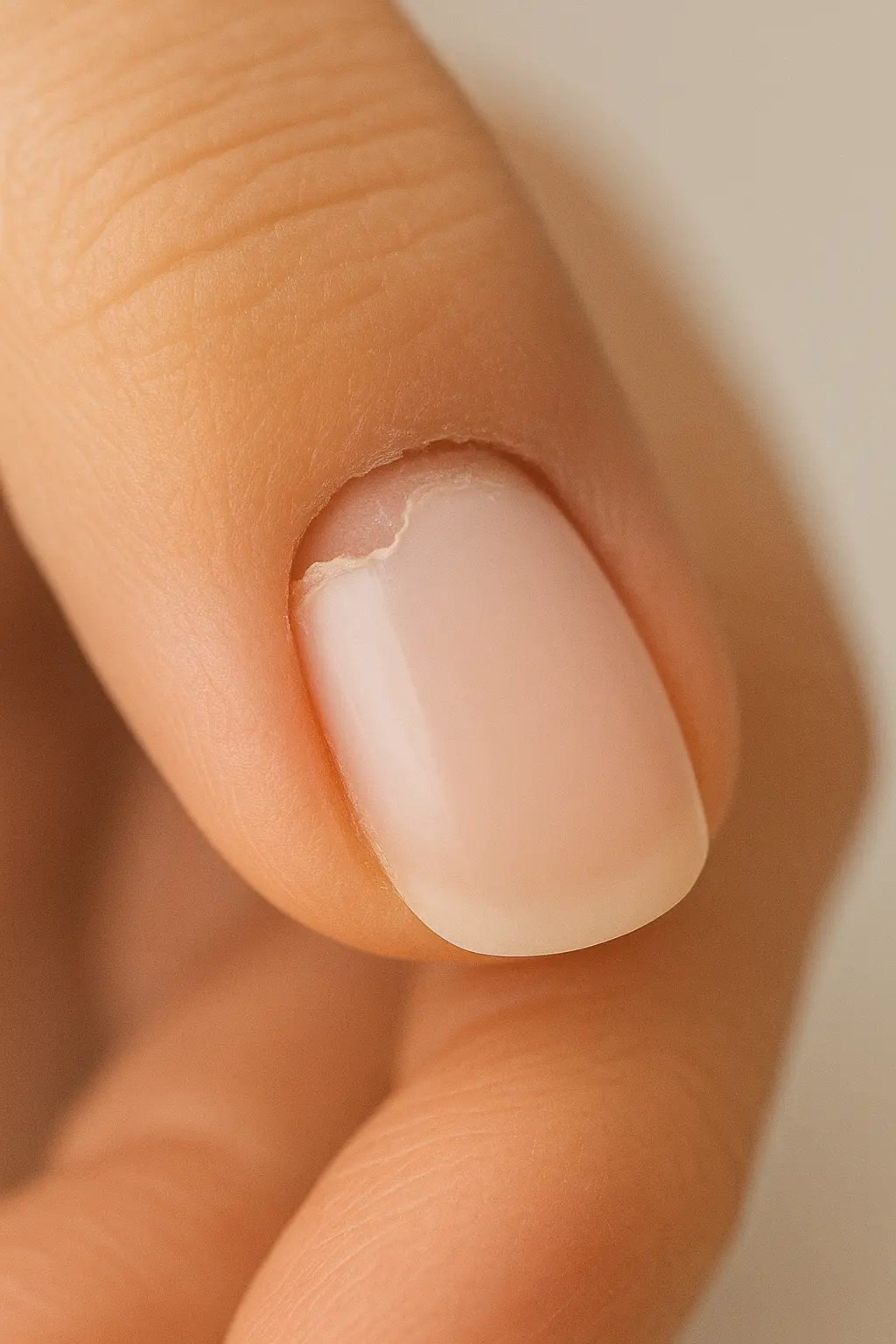
The cuticle is not just the visible skin at the base of your nail. There is a thin, almost invisible layer of cuticle tissue (called the pterygium) that grows forward onto the nail plate itself.
When this tissue remains on the nail plate during gel application, you are not bonding gel to nail – you are bonding gel to dead skin. That dead skin naturally separates from the nail as it sheds, taking your gel polish with it.
This is why gel lifts start at the cuticle zone almost every time.
Why Traditional Cuticle Pushers Fail
Most nail technicians rely on traditional metal cuticle pushers or orange sticks. These tools push back the visible cuticle, but they cannot effectively remove the microscopic tissue layer adhered to the nail plate.
Even after thorough pushing, a thin film remains – invisible to the eye but catastrophic for gel adhesion.
⚠️ Critical Mistake to Avoid
Never apply gel polish directly after using only a cuticle pusher. This single mistake causes more lifting failures than any other. The nail plate must be completely clean of all cuticle tissue before any primer or gel touches the surface.
The Professional Solution: E-File Cuticle Preparation
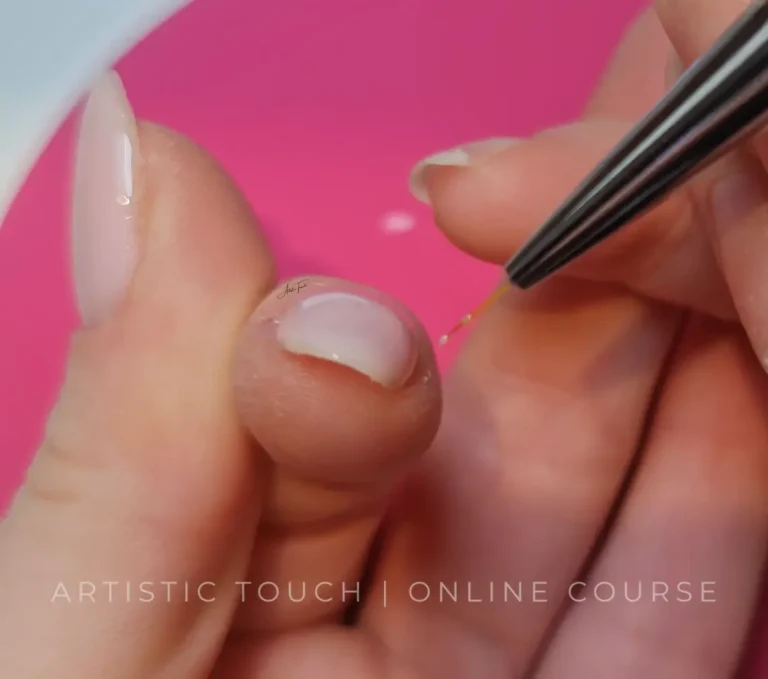
Professional e-file technique (also called Russian manicure or dry manicure) uses specialized bits to gently remove all cuticle tissue from the nail plate surface, creating a perfectly clean canvas for gel application.
The difference in retention is immediate and dramatic:
- Traditional cuticle pusher: 5-10 days average retention before lifting
- Professional e-file prep: 3-4 weeks retention without lifting
This is not an exaggeration. Proper cuticle preparation alone can triple your gel polish retention time.
Master Professional E-File Technique for Long-Lasting Results
Our E-File Manicure & Gel Polish Course teaches the exact cuticle preparation technique that prevents lifting and delivers consistent 3-4 week retention.
- ✓ Complete cuticle preparation protocol
- ✓ Safe e-file bit selection and technique
- ✓ Nail plate dehydration methods
- ✓ Step-by-step gel polish application for maximum retention
Cause #2: Inadequate Nail Plate Dehydration
Natural nails contain moisture – and moisture is the enemy of gel adhesion.
Understanding Nail Moisture
The nail plate absorbs water from:
- Hand washing and daily water exposure
- Natural oils produced by the nail bed
- Environmental humidity
- Recent nail soaking during removal
When gel polish is applied over a moist nail plate, it cannot form the molecular bond needed for long-term adhesion. The trapped moisture creates a barrier layer, leading to separation within days.
The Solution: Proper Dehydration Protocol
Step 1: Clean with lint-free wipes and alcohol or dehydrator
Remove all dust, oils, and surface moisture using 99% isopropyl alcohol or professional nail dehydrator on a lint-free wipe.
Step 2: Wait for complete evaporation
Allow 30-60 seconds for the alcohol to fully evaporate. The nail surface should appear completely matte, not shiny.
Step 3: Apply immediately after dehydration
Do not allow clients to wash hands or touch anything after dehydration. Apply primer and gel polish immediately whilst the nail plate remains dry.
Professional Tip
Complete all nail shaping, cuticle work, and filing before dehydration. Once you dehydrate, you have approximately 5-10 minutes of optimal dryness before natural moisture begins returning to the nail plate.
Cause #3: Over-Filing or Under-Filing the Nail Plate
The natural nail plate has a smooth, slightly glossy surface created by protective keratin layers. Gel polish needs the right level of texture to adhere properly – not too smooth, not too rough.
The Problem with Over-Filing
Aggressive filing with coarse grits (80-100 grit) damages the nail plate structure:
- Creates deep grooves that trap air bubbles
- Weakens the nail, making it prone to cracking
- Causes heat sensitivity during curing
- Leads to nail damage and client discomfort
The Problem with Under-Filing
Insufficient filing leaves the nail surface too smooth:
- Gel cannot grip the slick surface
- Natural oils remain trapped in keratin layers
- Primer and base coat slide rather than bond
The Correct Filing Technique
For natural nails:
- Use 180-240 grit buffer – gently buff the entire nail surface in one direction
- Create a matte finish – the nail should appear dull, not shiny
- Avoid excessive pressure – light, sweeping motions only
- Do not thin the nail – you are creating texture, not removing layers
The goal is a uniformly matte surface with light texture – like soft velvet, not sandpaper.
Cause #4: Incorrect Product Application Technique
Even with perfect preparation, poor application technique causes immediate lifting. These are the most common application errors:
Error 1: Product Flooding at the Cuticle
When gel polish touches the cuticle skin, it creates an immediate lifting point. The skin naturally moves and shifts, breaking the gel seal within hours.
Solution: Leave a 1-2mm gap between gel and cuticle. Use thin, controlled brush strokes. Remove any product that touches skin before curing.
Error 2: Thick, Uneven Layers
Applying gel polish too thickly prevents proper curing and creates weak points that crack under stress.
Solution: Apply thin, even layers. Two or three thin coats always outperform one thick coat.
Error 3: Missing the Free Edge
Failing to cap the free edge allows water to penetrate from the nail tip, causing lifting from the front.
Solution: Cap the free edge with every layer – base coat, colour, and top coat. Run the brush horizontally across the nail tip to seal the edge completely.
Error 4: Skipping Primer
Primer (or acid-free bonder) is not optional. It creates the chemical bridge between natural nail and gel polish.
Solution: Apply primer to clean, dehydrated nails before base coat. Allow it to dry completely (30-60 seconds) before proceeding.
Cause #5: Insufficient or Incorrect Curing
Gel polish requires UV or LED light to polymerise (harden). Incomplete curing creates a weak, semi-soft layer that peels away easily.
Common Curing Mistakes
Heat Spikes During Curing
Some clients experience burning sensations during curing. This happens when:
- Gel layer is too thick (generates excessive heat during polymerisation)
- Natural nail is over-filed and damaged
- Client has naturally thin, sensitive nails
Solution: Apply very thin layers and cure each layer separately. For sensitive clients, use the “flash cure” method – cure for 10 seconds, remove hand briefly, then complete the full cure time.
Cause #6: Oil or Moisture Contamination
After perfect preparation and dehydration, the nail plate can become contaminated before gel application – ruining all your careful work.
Sources of Contamination
- Client touches their face or hair – transfers natural oils back to nails
- Using lotion before service – lotion residue prevents adhesion
- Technician’s oily hands – touching prepared nails with unwashed hands
- Dust from filing – not fully removed before application
- Humid environment – moisture in air settles on nail surface
Prevention Protocol
- Instruct clients not to touch anything after dehydration
- Wash your hands between clients or wear clean gloves
- Remove all dust thoroughly using alcohol and lint-free wipes
- Work quickly after dehydration – do not allow extended time between prep and application
- If contamination occurs, re-dehydrate before proceeding
⚠️ Critical Rule
Never apply cuticle oil, hand cream, or lotion before gel polish application. These products should only be used after the service is complete and the top coat is fully cured.
Cause #7: Poor Client Aftercare and Lifestyle Factors
Even with flawless application, clients can cause lifting through their daily habits. Educating clients about aftercare is essential for long-lasting results.
High-Risk Behaviours
- Hot water exposure within 24 hours – softens gel before full curing completes
- Using nails as tools – prying, scraping, or picking causes mechanical stress
- Harsh chemicals without gloves – cleaning products, acetone, or solvents weaken gel
- Picking at lifted edges – makes small lifting worse and damages natural nail
- Excessive hand washing without drying – constant moisture exposure weakens adhesion over time
Essential Aftercare Instructions for Clients
First 24 Hours (Critical Period)
- Avoid hot water, saunas, hot baths, or swimming
- Do not use harsh cleaning products
- Avoid heavy manual work or excessive water exposure
- Keep hands dry as much as possible
Ongoing Maintenance (Weeks 2-4)
- Wear gloves when cleaning or washing dishes
- Apply cuticle oil daily (avoiding gel surface)
- Use hand cream regularly to maintain nail flexibility
- Do not pick at any lifting – return for professional removal
- Keep nails at a practical length to reduce stress points
Recognising Problem Clients
Some clients will experience consistent lifting regardless of your technique due to:
- Extremely oily nail beds – natural oils constantly push through nail plate
- Medication side effects – some medications affect nail structure and adhesion
- Very thin or damaged natural nails – cannot support gel polish weight
- Hands constantly in water – healthcare workers, cleaners, swimmers
For these clients, consider alternative services such as BIAB (Builder in a Bottle), which offers superior adhesion and strength compared to regular gel polish.
Frequently Asked Questions About Gel Nail Lifting
Why do my gel nails lift after one day?
Lifting within 24 hours indicates inadequate nail preparation, specifically incomplete cuticle removal or insufficient dehydration. The gel is bonding to dead skin tissue or moisture rather than clean nail plate. Professional e-file technique and proper dehydration protocol prevent this issue entirely.
Can I fix gel polish lifting at home?
No. Once gel polish lifts, attempting to repair it at home typically causes more damage. The lifted area allows moisture and bacteria to enter, which can lead to nail infections. Return to your nail technician for safe removal and proper reapplication with corrected technique.
Does BIAB lift less than regular gel polish?
Yes. BIAB (Builder in a Bottle) has a thicker, more flexible formula that adheres more strongly to the natural nail whilst also providing structural support. BIAB typically offers 3-4 weeks of wear without lifting, even on clients who experience problems with regular gel polish. However, proper cuticle preparation remains essential for BIAB success.
How long should gel nails last without lifting?
With proper application technique and client aftercare, gel polish should last 2-3 weeks without any lifting. With professional e-file preparation, many clients achieve 3-4 weeks of flawless wear. If gel consistently lifts before two weeks, technique improvement is needed.
Is gel lifting caused by cheap products?
Rarely. Whilst premium gel polish brands may offer marginally better performance, technique accounts for approximately 95% of retention success. Professional-grade products from any reputable brand will last 3+ weeks when applied correctly. Focus on improving preparation and application technique before changing products.
Why do only some of my nails lift?
Individual nail lifting indicates inconsistent preparation technique. The nails that lift likely had inadequate cuticle removal, contamination, or missed dehydration. This is common when rushing through preparation or becoming fatigued during longer appointments. Maintain consistent, thorough preparation on every single nail.
Can e-file technique really prevent gel lifting?
Yes, absolutely. Professional e-file technique (Russian manicure) removes all cuticle tissue from the nail plate surface, creating the ideal clean canvas for gel adhesion. The difference in retention is immediate and dramatic – most technicians see their gel polish retention improve from 7-10 days to 3-4 weeks after learning proper e-file preparation.
What should I do if my client’s gel lifts between appointments?
Document when and where the lifting occurred, then offer a complimentary repair whilst you identify the cause. Use this as a learning opportunity to refine your technique. Most importantly, do not blame the client – take professional responsibility and use improved preparation methods for their next appointment.
About Your Instructor: Radina Ignatova
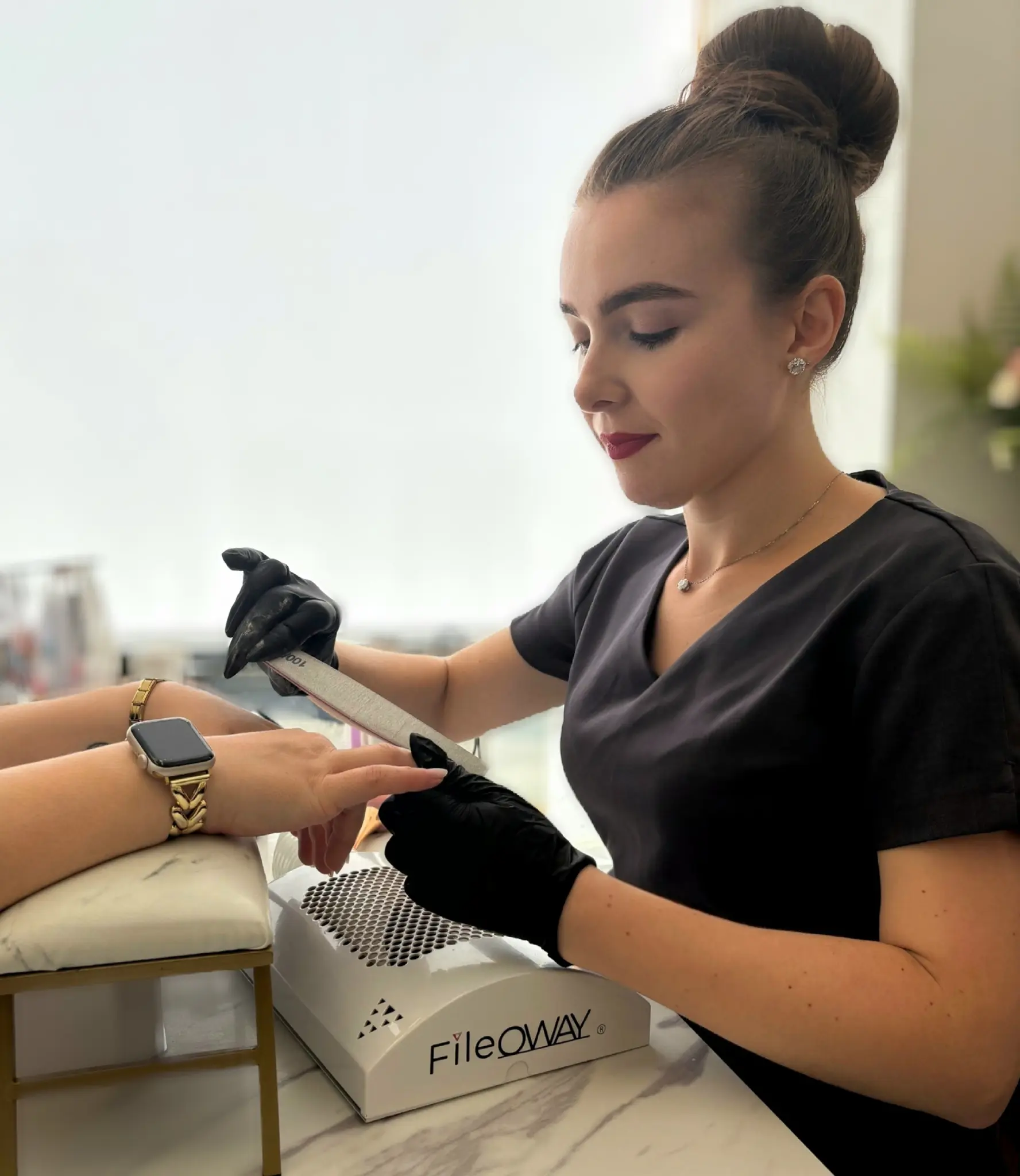
Radina Ignatova is a Professional Nail Expert, Certified Educator, and founder of Artistic Touch – Nail Training Academy, based in Dundee, Scotland, UK.
With over a decade of professional experience in advanced nail techniques including e-file manicure, BIAB application, and troubleshooting gel retention issues, Radina specialises in transforming beginner nail technicians into confident professionals through structured online and in-person education.
Her teaching philosophy focuses on:
- Practical, real-world techniques that work in busy salon environments
- Troubleshooting and problem-solving rather than just theory
- Student success and confidence building through patient, detailed instruction
- Safety and professionalism in every aspect of nail services
Stop Gel Lifting Forever: Master Professional E-File Technique
Gel nail lifting is frustrating, time-consuming, and damages your professional reputation. But it is entirely preventable with proper technique.
The single most effective solution is mastering professional e-file preparation. This one skill improvement will transform your gel polish retention from inconsistent 7-10 days to reliable 3-4 weeks.
What You Will Achieve with Professional Training:
- ✓ Consistent 3-4 week gel polish retention without lifting
- ✓ Confident cuticle preparation with professional e-file technique
- ✓ Fewer client complaints and service failures
- ✓ Higher client satisfaction and retention
Invest in your professional development. Learn the exact techniques that eliminate gel lifting permanently.
Master E-File Technique for Long-Lasting Results
Complete online course with lifetime access and Non-Accredited Certificate of Completion
Lifetime access • Certificate included • Start immediately
Already Confident with E-File? Try BIAB for Superior Retention
Our BIAB Masterclass includes basic e-file techniques for BIAB prep and teaches how to achieve 4+ weeks of flawless wear even on challenging clients.
Note: This course covers e-file basics for BIAB application but does not include in-depth cuticle or skin work training. For advanced Russian manicure technique, consider our E-File Manicure Course or watch for our upcoming Advanced E-File Masterclass.
Advanced E-File Russian Manicure Masterclass coming soon! Want in-depth cuticle and skin work training? Join our email list for early access when this comprehensive course launches.
About Artistic Touch – Nail Training Academy: Professional online nail education delivered by Radina Ignatova from Dundee, Scotland, UK. Specialising in e-file manicure technique, BIAB application, gel polish retention solutions, and comprehensive nail education for aspiring and professional nail technicians.