Sandwich Dual Forms Bottom Form Fit: When It Works and When It Fails
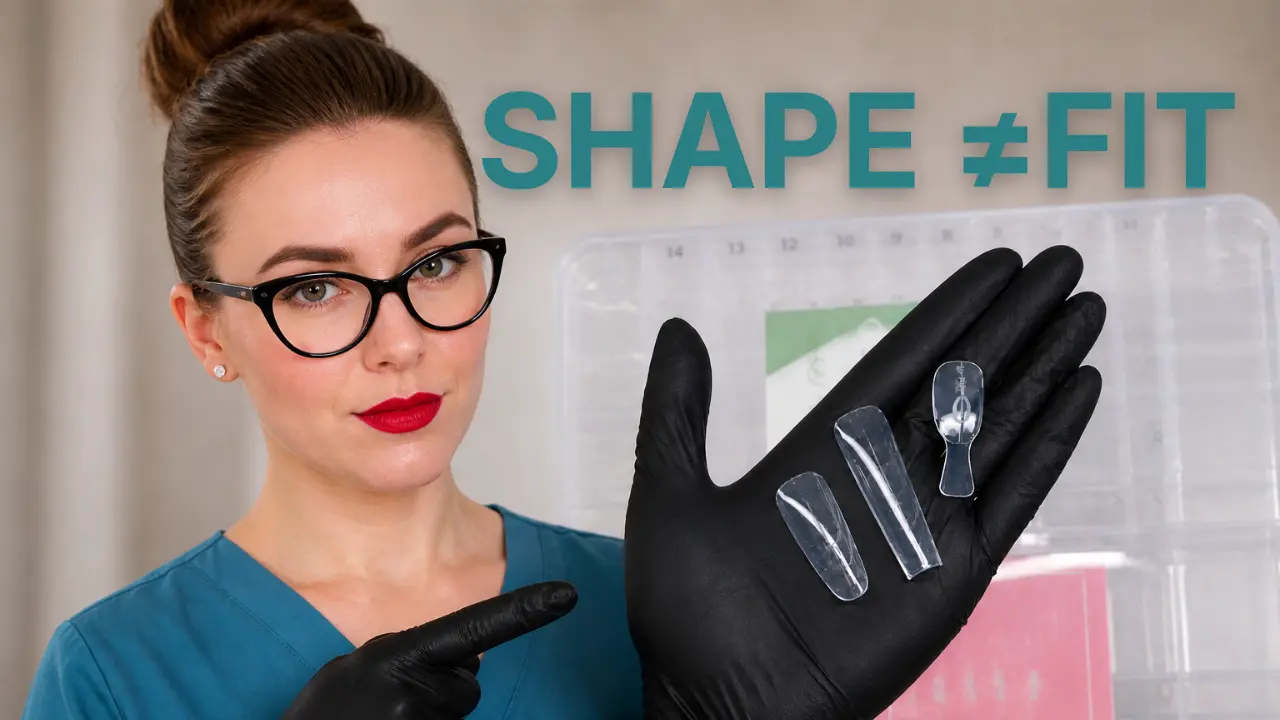
The bottom form of a sandwich dual form decides whether the system works. If the fit is wrong, the structure is wrong, whatever you do afterwards.
This is a deeper understanding of dual forms, with the reasons behind it, not another general tutorial. I explain what a good fit looks like and why. I teach the full fitting process on real nails in my Sandwich Dual Forms course.
Quick Answer: How Should the Bottom Form Fit?
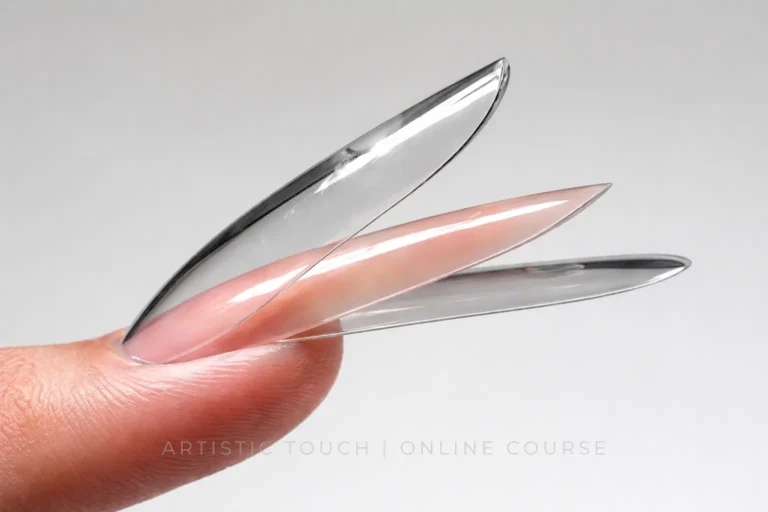
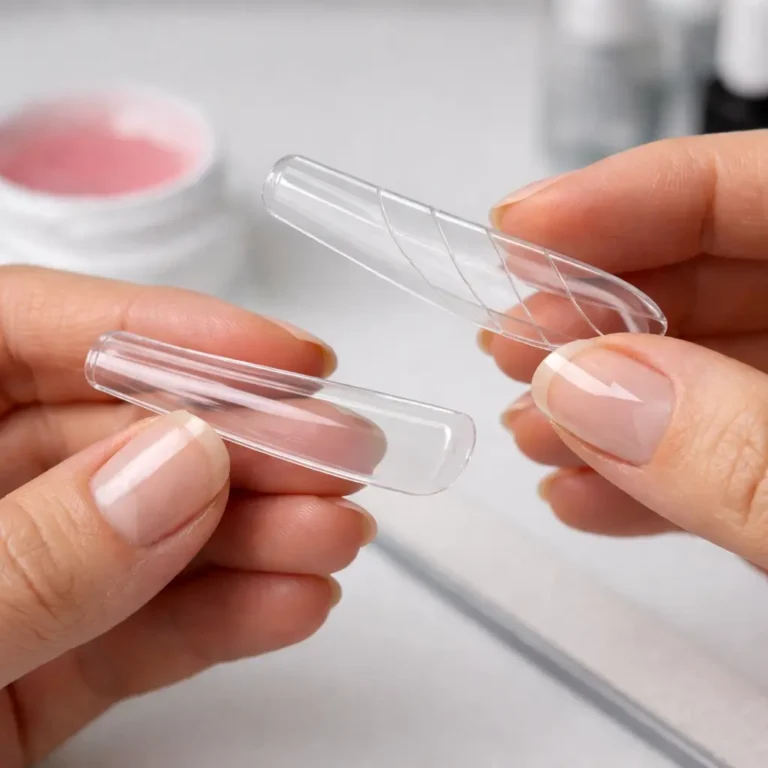
The bottom form must match the curvature of the natural nail and sit flush and naturally, with no gaps and without forcing. It has to extend over the side walls and cover the growth points, and it should sit straight, not tilted up or down. If it needs forcing, it is the wrong size or the wrong form. A form that is too small exposes the growth points and can cause lifting, breakages and damage to the natural nail.
Assess the Nail Before You Pick the Form
Not every nail suits the sandwich system, and not every finger on the same hand is the same. A client can have different nail types on different fingers, so you have to notice that and assess each nail before you start. Hooked and ski jump nails are more advanced and are not suited to this system. I explain how the system works in What Are Sandwich Dual Forms?.
What a Good Fit Looks Like
- The bottom form matches the curvature of the natural nail
- There are no gaps between the natural nail, the free edge and the form
- It sits naturally, without forcing
- It extends over the side walls and covers the growth points
- It sits straight, not tilted upwards or downwards
The lines of the growth points on the nail should match the form. The nail extends from the side walls, and the form should continue that natural line.
Never Force the Form
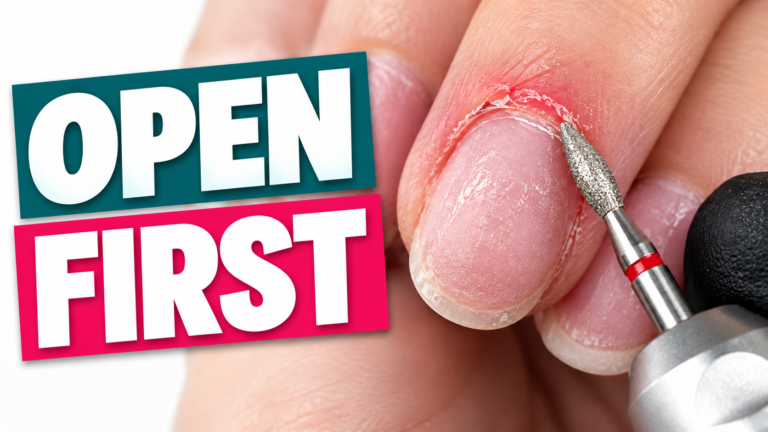
If a form does not fit, do not push it into place. Forcing a form into the hyponychium can cause onycholysis and other problems that you do not want. If it does not fit, trim a little to match, or choose another size. Do not trim away the parts of the form that support it, and do not try to move it up or down to make it fit.
What Goes Wrong When the Fit Is Wrong
| Problem | What it causes |
|---|---|
| Form too small | Growth points are exposed, which can lead to lifting, breakages and damage to the natural nail plate |
| Lines or curvature do not match | The structure is wrong from the start, and the form is difficult to fit |
| Form sits tilted upwards or downwards | Incorrect architecture of the nail |
| Gaps under the form | The bottom is not sitting on the nail, so it cannot do its job |
Do Not Choose by the Number
A size number means different things in different boxes. A size four from one box can fit, and a size four from another box can be too big. Choose by how the form fits the nail, not by the number on it. This is the same principle as in Stop Choosing Sandwich Dual Forms by Shape.
What Helps When You Choose Forms
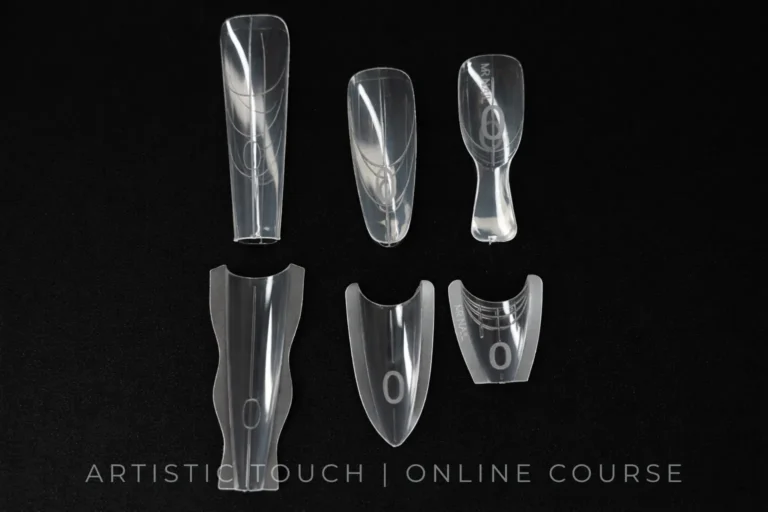
I like forms that have markings, because they guide you to trim and to match the client’s curve and the hyponychium, and some mark the central axis. I use Mr Nail Forms for that. This is not an affiliate link, and I buy my own products.
To see what a correct result looks like, read What a Correct Sandwich Dual Forms Nail Should Look Like. For the product side, read builder gel or polygel, and for care, how to clean sandwich dual forms.
Learn to Fit the Form, Not Guess It
The Sandwich Dual Forms course shows how to assess each nail and fit the form on real nails, so you understand why it works.
View the Sandwich Dual Forms Course →Frequently Asked Questions
How should the bottom form of a sandwich dual form fit?
It should match the curvature of the natural nail and sit flush and naturally, with no gaps and no forcing. It should extend over the side walls, cover the growth points and sit straight.
What happens if the bottom form is too small?
The growth points are exposed, which can lead to lifting, breakages and damage to the natural nail plate.
Can I force a form to fit?
No. Forcing a form, especially into the hyponychium, can cause onycholysis. If it does not fit, trim a little to match or choose another size.
Does the same size number fit in every box?
No. Sizes differ between boxes, so choose by how the form fits the nail, not by the number.
Can sandwich dual forms be used on hooked nails?
Hooked and ski jump nails are more advanced and are not suited to the sandwich system.
Why does the bottom form need to sit straight?
If it sits tilted upwards or downwards, you get incorrect architecture of the nail.
Where can I learn the full fitting process?
In my Sandwich Dual Forms online course, where I show it on real nails.
Key Takeaway
Check the fit of the bottom form before anything else: matching curvature, no gaps, no forcing, growth points covered, sitting straight. Choose by fit, not by the number on the form.
About the Author

Professional Nail Expert | International Nail Educator
I am Radina Ignatova, a Professional Nail Expert since 2014 and International Nail Educator, based in Scotland, UK. I am the Founder of Artistic Touch – Nail Training Academy and TheNailWiki.
At Artistic Touch – Nail Training Academy, I provide structured professional online nail education specialising in dual forms, nail preparation and retention, nail structure, E-File work and Russian Manicure, with a strong focus on professional salon safety. I continue to work actively in salon practice, ensuring that all education reflects real client scenarios and current industry standards.
My teaching philosophy is simple: I show real salon challenges, real mistakes and real performance testing, not just perfect demonstrations. This is how you develop genuine technical competence and become a confident, capable nail professional.