How to Clean Sandwich Dual Forms Between Clients (and What Never to Use)
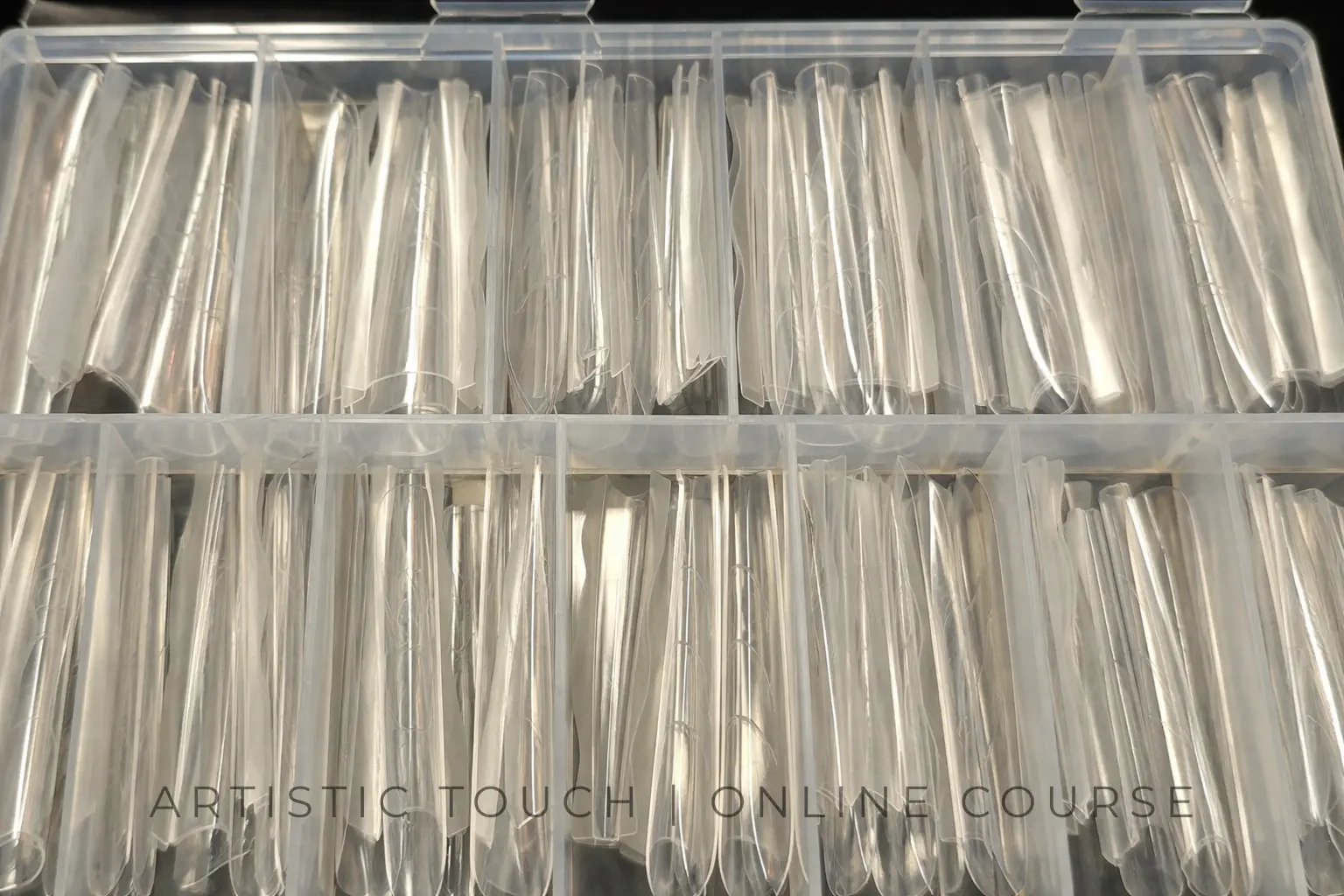
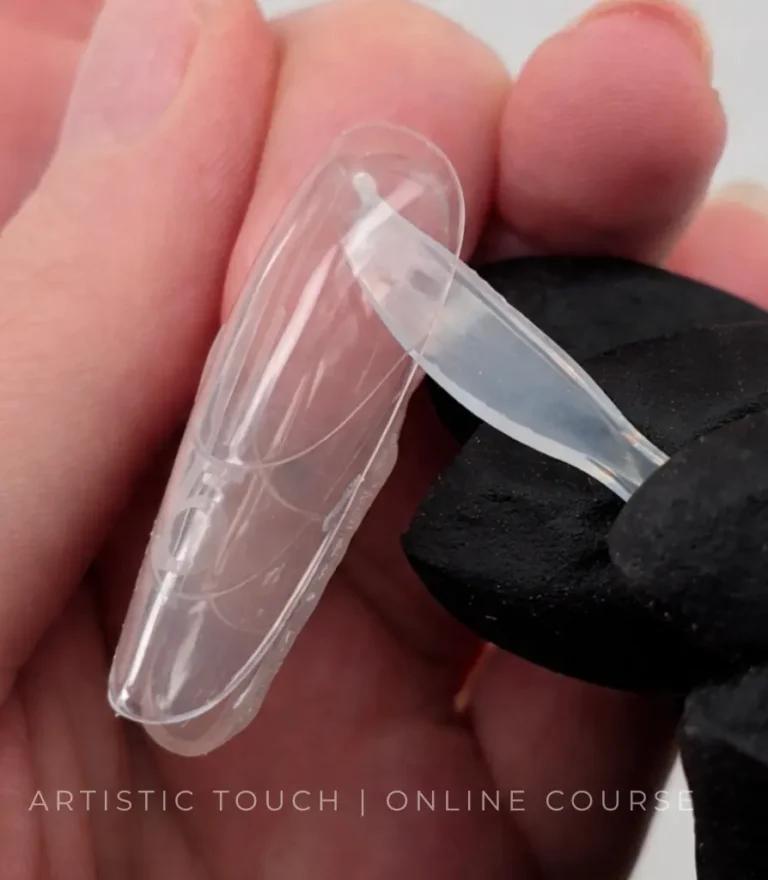
What you do with a sandwich dual form after the application matters as much as how you fill it. The form is reused, so how you clean it affects the next client.
This is a deeper understanding of dual forms, with the reasons behind it, not another general tutorial. I explain what to clean, what to clean it with and what to avoid. I show the full routine on real forms in my Sandwich Dual Forms course.
Quick Answer: How Do You Clean Sandwich Dual Forms?
Wipe both forms with pure IPA on a lint-free pad to remove the inhibition layer, including the corners and the underside, and use a fresh pad when the first one is loaded with residue. Do not use acetone, which damages the plastic, or a wiping solution that contains oils, which can interfere with the next application. Never put a dirty form back in the box.
Why Clean Forms Matter
The next application starts on the surface of the form, so you do not want residue left on it. In a sandwich system, as I describe in What Are Sandwich Dual Forms?, the forms shape the nail, so I want them clean every time.
Removing the Product and the Inhibition Layer
If you made a mistake, do not try to wipe wet product off the form. It is quicker to cure it, take the cured product out and bin it. Touching wet, uncured product with your gloves should always be kept to a minimum, even with gloves on.
After that, the form still carries the sticky inhibition layer, which you do not want to leave on it. This is the layer you clean off with IPA on a lint-free pad.
Clean Both Sides, Corners Included
Clean the top form and the bottom form, the corners and the underside as well. When a pad is loaded with residue, bend it and throw it away, then take a new one so you do not spread the residue back onto the form. It takes a couple of extra minutes to make sure all of your forms are clean.
What to Clean With, and What Never to Use
| Use | Avoid | Why |
|---|---|---|
| Pure IPA | Acetone | Acetone eats the plastic and degrades the form |
| A wiping solution without oils | A wiping solution that contains oils | Oils can interfere with the next application and stop the product sitting evenly |
| A fresh lint-free pad | A pad that is already loaded with residue | You move the residue around instead of removing it |
If your system has a cleansing solution that you use at the very end of a service, you can use that too, but only if it does not contain oils.
Never Put a Dirty Form Back in the Box
Everything that goes back into the box should be clean. Cleaning is not the same as disinfection, so follow the hygiene rules that apply where you work.
For more on the product side, read the most common mistakes and builder gel or polygel.
Learn the Whole System, Not Just One Step
The Sandwich Dual Forms course shows the full routine, from choosing the form to cleaning it, so you understand why each step matters.
View the Sandwich Dual Forms Course →Frequently Asked Questions
How do you clean sandwich dual forms?
Wipe them with pure IPA on a lint-free pad to remove the inhibition layer. Clean the top form and the bottom form, including the corners and the underside, and use a fresh pad when one is loaded with residue.
Can I use acetone to clean dual forms?
No. Acetone eats the plastic and degrades the form. Use pure IPA.
Can I use a wiping solution that contains oils?
I would not. Oils can interfere with the next application and stop the product sitting evenly on the form.
What should I do if I make a mistake in a form?
Do not try to wipe wet product. It is quicker to cure it, take out the cured product and bin it, then clean the form.
What is the inhibition layer on a dual form?
It is the sticky layer left on the surface after curing. You clean it off the form with IPA so it does not carry over to the next application.
Can I put a dirty form back in the box?
No. Everything that goes back in the box should be clean.
Where can I see the full cleaning routine?
In my Sandwich Dual Forms online course, where I show it on real forms.
Key Takeaway
Clean forms give consistent results. Use pure IPA and a fresh lint-free pad, clean both forms including the corners, never use acetone or a wiping solution with oils, and never put a dirty form back in the box.
About the Author
Professional Nail Expert | International Nail Educator
I am Radina Ignatova, a Professional Nail Expert since 2014 and International Nail Educator, based in Scotland, UK. I am the Founder of Artistic Touch – Nail Training Academy and TheNailWiki.
At Artistic Touch – Nail Training Academy, I provide structured professional online nail education specialising in dual forms, nail preparation and retention, nail structure, E-File work and Russian Manicure, with a strong focus on professional salon safety. I continue to work actively in salon practice, ensuring that all education reflects real client scenarios and current industry standards.
My teaching philosophy is simple: I show real salon challenges, real mistakes and real performance testing, not just perfect demonstrations. This is how you develop genuine technical competence and become a confident, capable nail professional.