Why Some Nail Techs Get Perfect Results and Others Do Not
Quick Answer: Why Do Some Nail Technicians Achieve Consistent Results While Others Do Not?
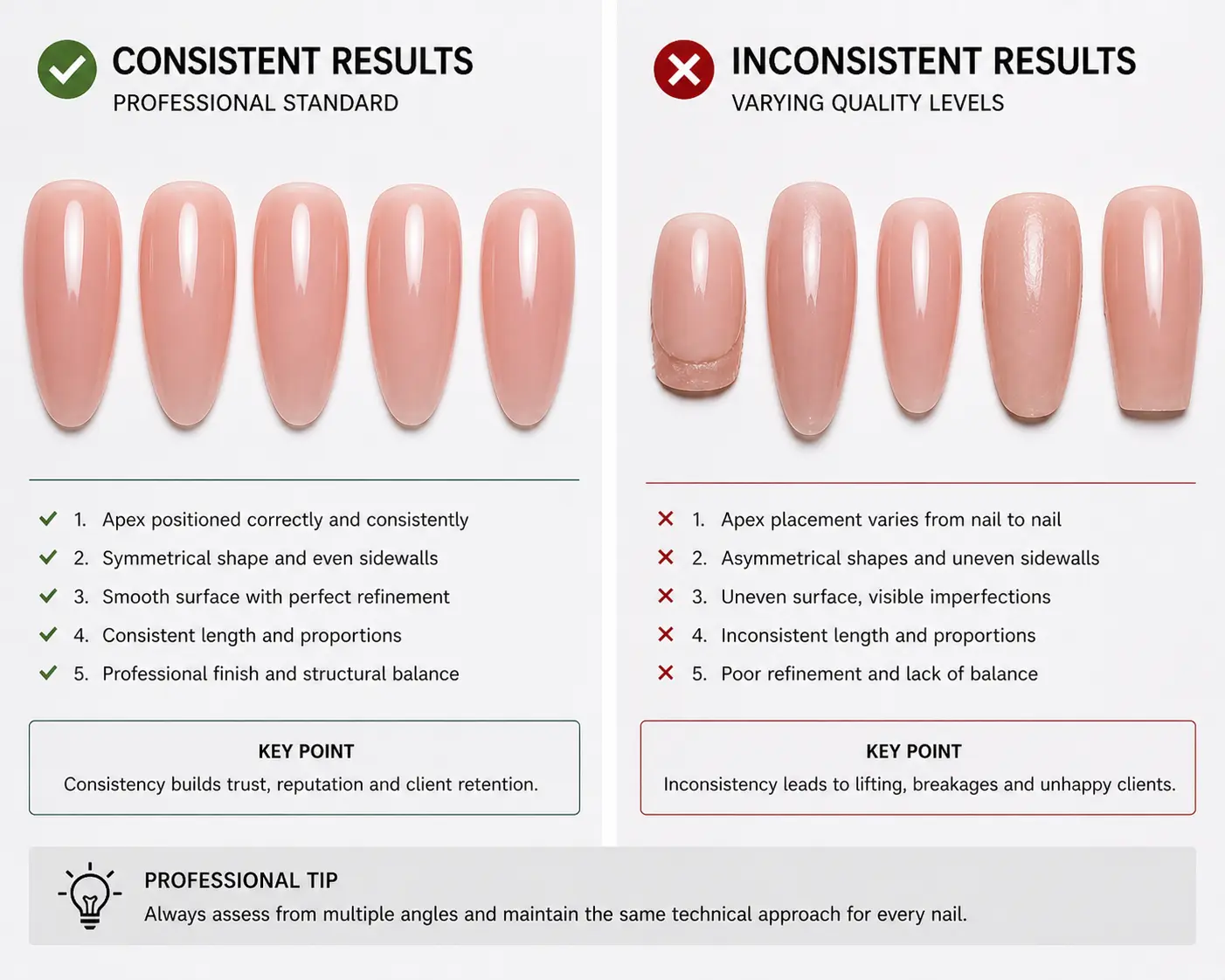
Consistent results come from diagnostic ability, measurable performance standards and systematic error correction rather than talent or expensive products. Nail technicians who achieve reliable outcomes can identify technical errors before they cause failures, assess work against objective standards and implement specific corrections based on diagnostic assessment.
This article explains what separates consistent professional performance from unpredictable results.
It Is Not About Talent
You watch other nail technicians produce perfect enhancements consistently while yours succeed sometimes and fail other times. You assume they have better natural ability, superior hand steadiness or some innate talent you lack. You are wrong.
The difference between consistent results and unpredictable outcomes is not talent. It is diagnostic ability. Nail technicians who achieve reliable results can identify technical errors during execution rather than after failure, assess their work against measurable standards rather than subjective impressions and implement specific corrections based on diagnostic findings rather than random adjustments.
These are learned skills, not innate abilities. When you develop them, your results become consistent regardless of your natural aptitude or years of experience.
The Assessment Gap That Creates Inconsistency
Inconsistent results indicate that you cannot accurately assess whether your technique execution meets professional standards. Sometimes your preparation is adequate and enhancements hold. Sometimes preparation has gaps you do not recognise and lifting occurs. You cannot predict which outcome will happen because you cannot identify the technical difference between adequate and inadequate execution.
Nail technicians with consistent results assess each technical step against objective criteria: Is the nail plate completely matte with zero shine? Are lateral folds visibly dry? Is product viscosity flowing correctly? Is apex positioned relative to the stress curve? They verify standards before proceeding rather than hoping their execution was adequate.
This continuous assessment during execution is what produces consistent outcomes. You catch errors when correction is still possible rather than discovering them when enhancements fail on clients.
Why Product Quality Is Not the Answer
When results are inconsistent, many nail technicians assume they need better products. They switch to premium gel systems, invest in professional-grade lamps and buy recommended product lines. Results remain inconsistent because products were not the limiting factor.
Professional products cannot compensate for inadequate preparation, incorrect application or under-curing. If your preparation protocol has gaps, premium gel will lift just as readily as budget gel. If your apex placement is structurally incorrect, expensive builder will break just as easily as cheap builder. If your curing is inadequate, professional lamps will not fix it unless you verify complete polymerisation.
Nail technicians with consistent results achieve them using mid-range products because their technique execution meets professional standards. Product quality matters, but only after technique quality is established.
The Role of Systematic Protocol vs Intuitive Application
Inconsistent results often come from intuitive application—varying your approach based on how the nail “feels” or what seems right in the moment without following systematic protocol. Sometimes your intuition is correct and results succeed. Sometimes it is wrong and results fail.
Nail technicians with consistent outcomes follow systematic protocols: preparation follows the same verification sequence every time, product application follows the same placement pattern every time, curing follows the same time and inspection protocol every time. This systematic approach eliminates the variability that intuitive methods introduce.
Systematic protocol does not mean rigid inflexibility. It means establishing baseline execution standards and varying from them only when diagnostic assessment indicates a specific adjustment is required for individual nail geometry or client conditions. Random variation produces inconsistency. Diagnostic variation produces adaptation.
The Preparation Checklist Professional Technicians Use
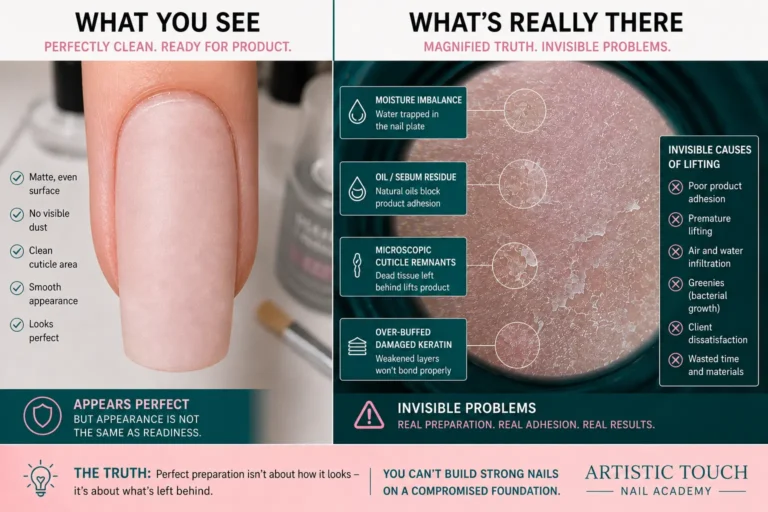
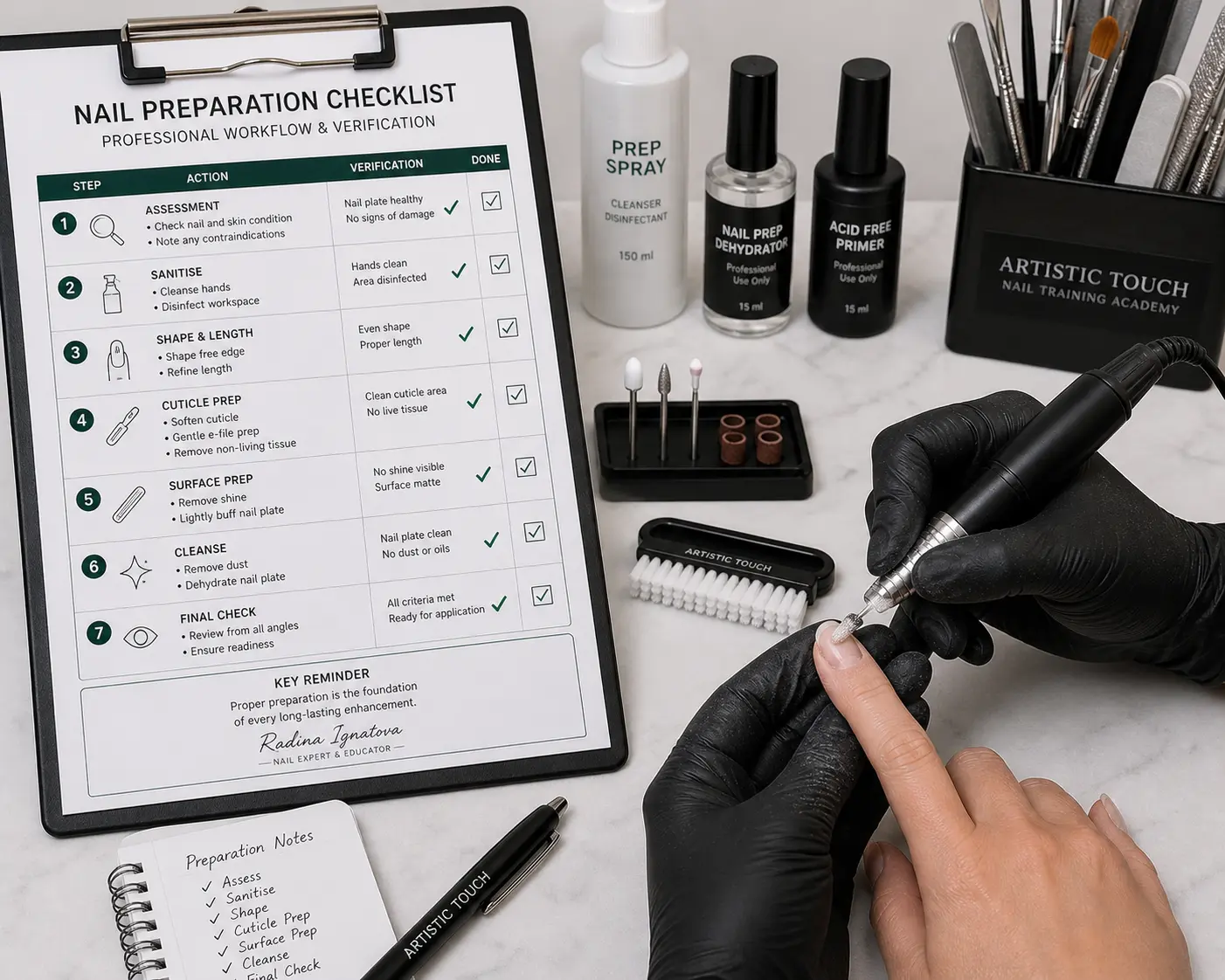
Consistent nail technicians verify the same preparation elements in the same sequence every time: contamination check, complete buffing to matte finish, shine verification under angled light, dehydrator coverage including lateral folds, moisture elimination confirmed visually, final contamination check before product application. Each step has pass/fail criteria. If any step fails verification, it is corrected before progression.
This systematic approach takes no longer than random preparation once the protocol becomes habit. It produces dramatically more consistent results because preparation gaps are identified and corrected during execution rather than discovered through post-application failures.
Error Recognition Before Failure Occurs
The critical difference between consistent and inconsistent results is when errors are identified. Inconsistent technicians discover errors after enhancements fail. Consistent technicians identify errors during execution while correction is still possible.
This requires knowing what incorrect execution looks like at each stage. What does inadequate preparation look like? What does incorrect product viscosity behave like during placement? What does under-cured gel feel like immediately after lamp removal? Professional training teaches you to recognise these error indicators so you can correct them before they progress to visible failures.
When you can identify that preparation shine remains in lateral folds, that gel is not self-levelling correctly, that apex is positioned too far forward or that cured product has insufficient hardness, you make the specific correction required. When you cannot identify these errors, you proceed to the next step with the error still present, and it causes failure later.
Performance Verification vs Completion Assumption
Inconsistent results often stem from assuming technique steps are complete without verifying performance. You buffed the nail so you assume oil removal is complete. You applied dehydrator so you assume moisture is eliminated. You cured the product so you assume polymerisation is adequate.
Nail technicians with consistent results verify performance rather than assuming it. They check for remaining shine after buffing. They inspect lateral folds for moisture after dehydrator. They test product hardness after curing. When verification reveals inadequacy, they correct it. When verification confirms adequacy, they proceed with confidence.
This verification habit transforms inconsistent guesswork into reliable execution. You know whether each step met standard rather than hoping it did.
The Feedback Loop That Develops Consistency
Nail technicians with consistent results typically received external performance feedback early in their development. Someone assessed their work, identified specific technical errors and explained exact corrections. This feedback established their reference standards for what adequate execution actually looks like.
Without external feedback, you develop reference standards based on your own perception, which is often inaccurate when you are still learning. You think your preparation is thorough when it has gaps. You think your apex is correctly placed when it violates structural principles. Years later, you still execute to these incorrect self-established standards and wonder why results remain inconsistent.
Professional online courses with work submission and technical review provide this feedback loop. You discover that your “thin layer” exceeds professional thickness, that your “complete preparation” misses lateral fold contamination, that your “centred apex” is positioned incorrectly for stress distribution. You make specific corrections. Your results improve measurably and become consistent.
Why Some Failures Teach and Others Do Not
Failures can improve technique when you can identify the specific technical cause. Failures reinforce errors when you cannot diagnose what went wrong and make random corrections hoping for improvement.
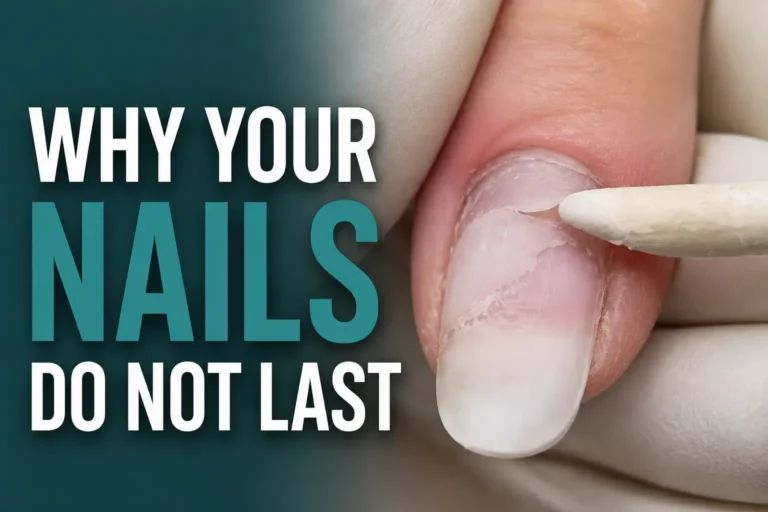
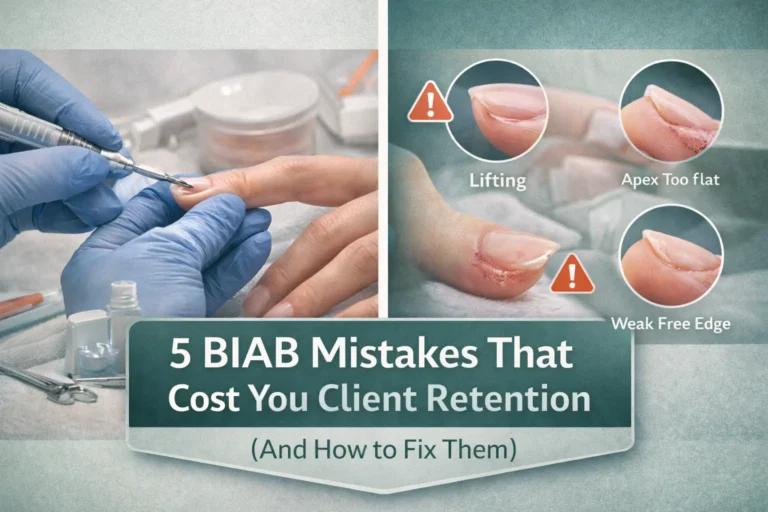
When BIAB lifts at the proximal edge and you understand this indicates inadequate eponychium preparation, you correct that specific preparation step and lifting stops. When BIAB lifts and you do not know why, you try switching products, using more primer, applying thicker layers—random corrections that do not address the actual cause, so lifting continues.
Consistent nail technicians learn from every failure because they can diagnose cause and implement targeted corrections. Inconsistent technicians repeat failures because they cannot identify what to change.
What Consistency Actually Requires
The gap between occasional success and reliable professional results is not talent, expensive products or years of practice. It is diagnostic ability, systematic protocol adherence, error recognition during execution and performance verification rather than completion assumption.
When you develop these skills, your results become predictable and consistent. When you do not, outcomes remain unpredictable regardless of how many applications you complete.
Develop Diagnostic Ability for Consistent Results
Artistic Touch online nail courses teach systematic protocols, error recognition and performance verification standards. Learn how to assess your work objectively and produce consistent professional results.
View All Courses →Lifetime access • Private student community • Start immediately
Frequently Asked Questions
Why are my nail results inconsistent?
Inconsistent results indicate that you cannot accurately assess whether your technique execution meets professional standards. Sometimes your preparation or application is adequate, sometimes it has gaps you do not recognise. Developing objective assessment ability against measurable criteria rather than subjective impressions eliminates this variability.
Do I need expensive products to get consistent results?
Product quality matters, but technique quality matters more. Professional products cannot compensate for inadequate preparation, incorrect application or verification gaps. Nail technicians with strong diagnostic ability achieve consistent results with mid-range products because their execution meets professional standards. Focus on technique first, then optimise products.
How long does it take to achieve consistent nail results?
Timeline depends on whether you develop diagnostic ability and systematic protocols or continue with intuitive application. With structured training that teaches error recognition and performance verification, most nail technicians achieve measurable consistency improvement within 4-8 weeks. Without diagnostic guidance, inconsistency can persist for years despite regular practice.
What is the most common cause of inconsistent nail work?
The most common cause is inadequate preparation assessment combined with completion assumption rather than performance verification. You assume preparation is adequate because you completed the steps, but you do not verify that those steps actually achieved the required standard. Inconsistency results from this gap between assumed adequacy and actual performance.
Can natural talent make up for poor technique?
Natural hand steadiness or artistic ability does not compensate for systematic technique gaps. Consistent professional results require diagnostic assessment, performance verification and error correction ability regardless of natural aptitude. These are learned skills that develop through structured training and feedback, not innate talents.
How do professional nail technicians achieve such reliable results?
Professional technicians follow systematic protocols with built-in verification at each stage, can recognise technical errors during execution rather than after failure and implement specific corrections based on diagnostic assessment. They verify performance against objective standards rather than assuming completion equals adequacy. This systematic approach produces predictable outcomes.
About the Author
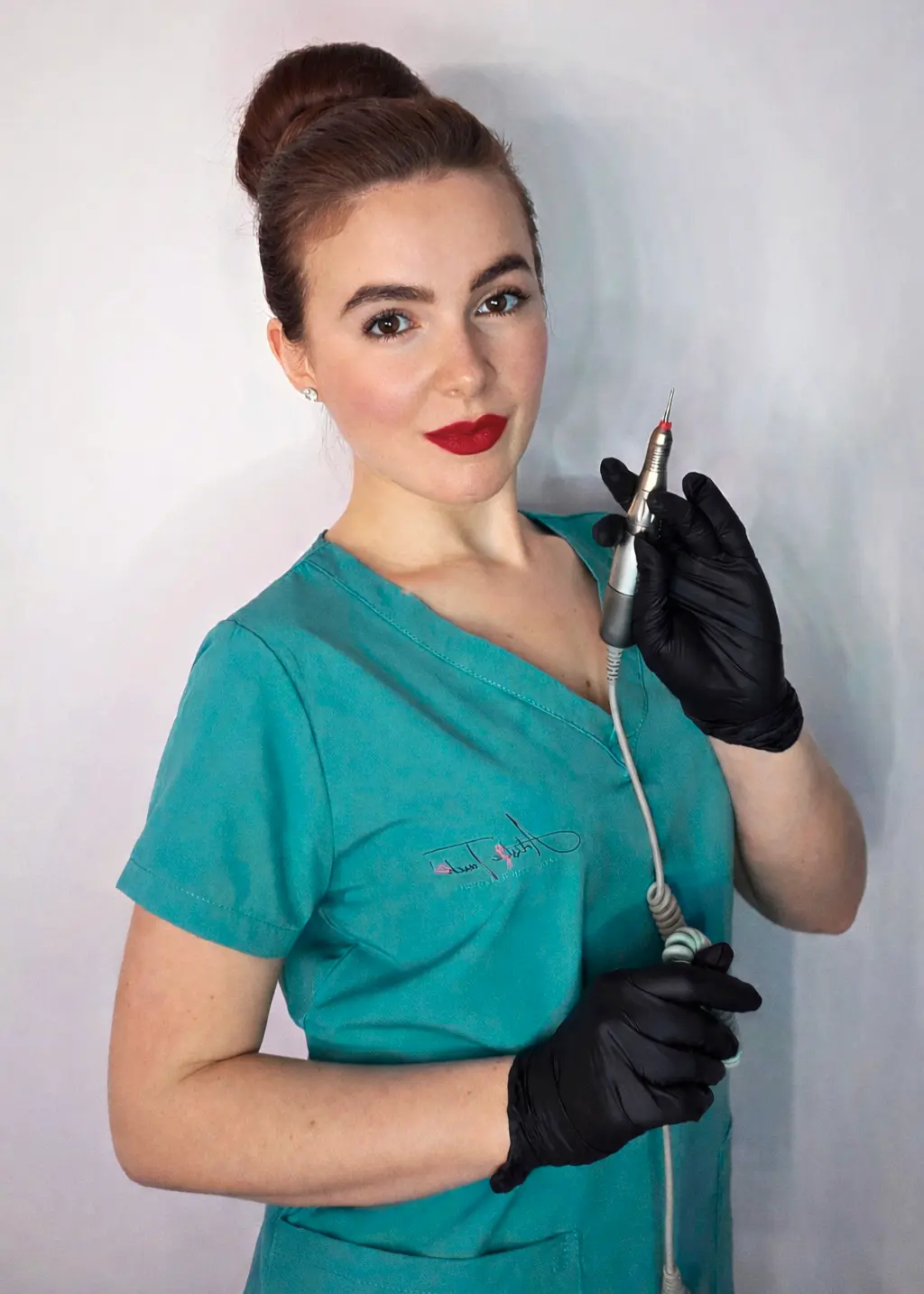
Radina Ignatova
Professional Nail Expert | International Nail Educator
I am Radina Ignatova, a Professional Nail Expert since 2014 and International Nail Educator, based in Scotland, UK. I am the Founder of Artistic Touch Nail Training Academy and TheNailWiki.
At Artistic Touch Nail Training Academy, I provide structured professional online nail courses specialising in dual forms, gel systems, polygel application, advanced nail structure, E-File work and Russian Manicure, with a strong focus on professional salon safety. I continue to work actively in salon practice, ensuring that all education reflects real client scenarios and current industry standards.
My teaching philosophy is simple: I show real salon challenges, real mistakes and real performance testing, not just perfect demonstrations. This is how you develop genuine technical competence and become a confident, capable nail professional.
Every Artistic Touch course includes lifetime access and access to a dedicated student support group, where I provide ongoing guidance and professional feedback.
Disclaimer: This content is for educational purposes only. Nail services should be performed by trained professionals following current hygiene and safety regulations. Always carry out a full client consultation and check for contraindications before performing any nail service.
About Artistic Touch Nail Training Academy
Artistic Touch Nail Training Academy delivers structured professional online nail education focused on practical skill development, professional standards and safe salon practice. All courses are available online worldwide.