Sandwich Dual Forms vs Traditional Dual Forms: Which Should You Choose?
By Radina Ignatova | Last Updated: 2 April 2026 | Nail Techniques
Sandwich vs Traditional Dual Forms: Which Is Better?
Sandwich dual forms use two moulds (top and bottom) to contain gel between them, creating clean underside imprints with minimal filing. Traditional dual forms use one mould pressed onto the nail, requiring more filing and offering less control over gel overflow.
Sandwich forms work better for beginners because they reduce common problems like gel leaking, messy undersides, and excessive filing time. Traditional forms cost less and work faster for experienced technicians who have mastered product control and pressure application.
You are standing in the nail supply shop comparing two dual form systems. Both promise professional results. One uses a single mould system, the other uses two moulds working together. The price difference varies depending on brand and quality, but the real question is: which system works better for your skill level?
The difference becomes clear after your first application. Traditional forms require precise product control, perfect pressure technique, and significant filing work to achieve professional results. Sandwich forms contain the gel between two moulds, reducing overflow and creating clean imprints that need minimal refinement.
This comparison explains exactly what separates these two systems, which works better for different skill levels, and how to choose the right option for your nail business.
How Each System Works
Traditional Dual Forms: Single Mould System
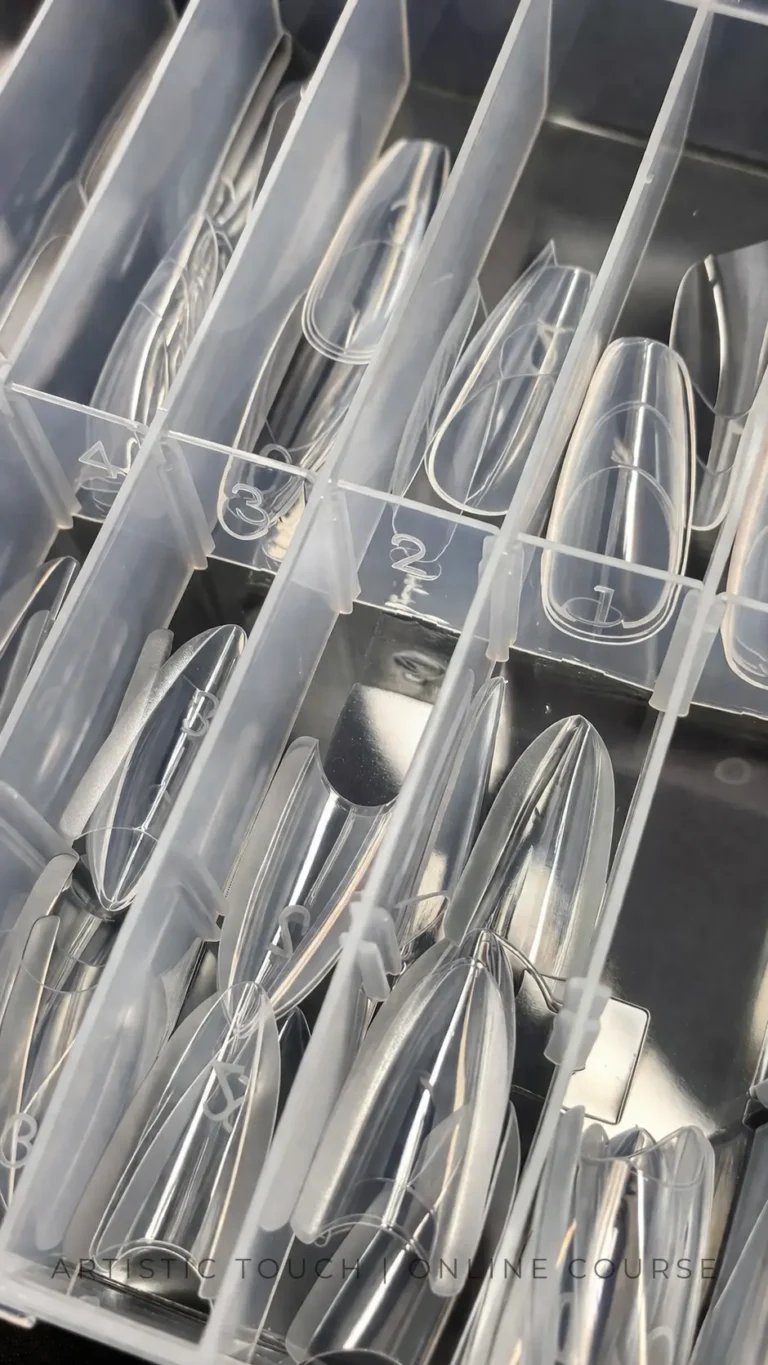
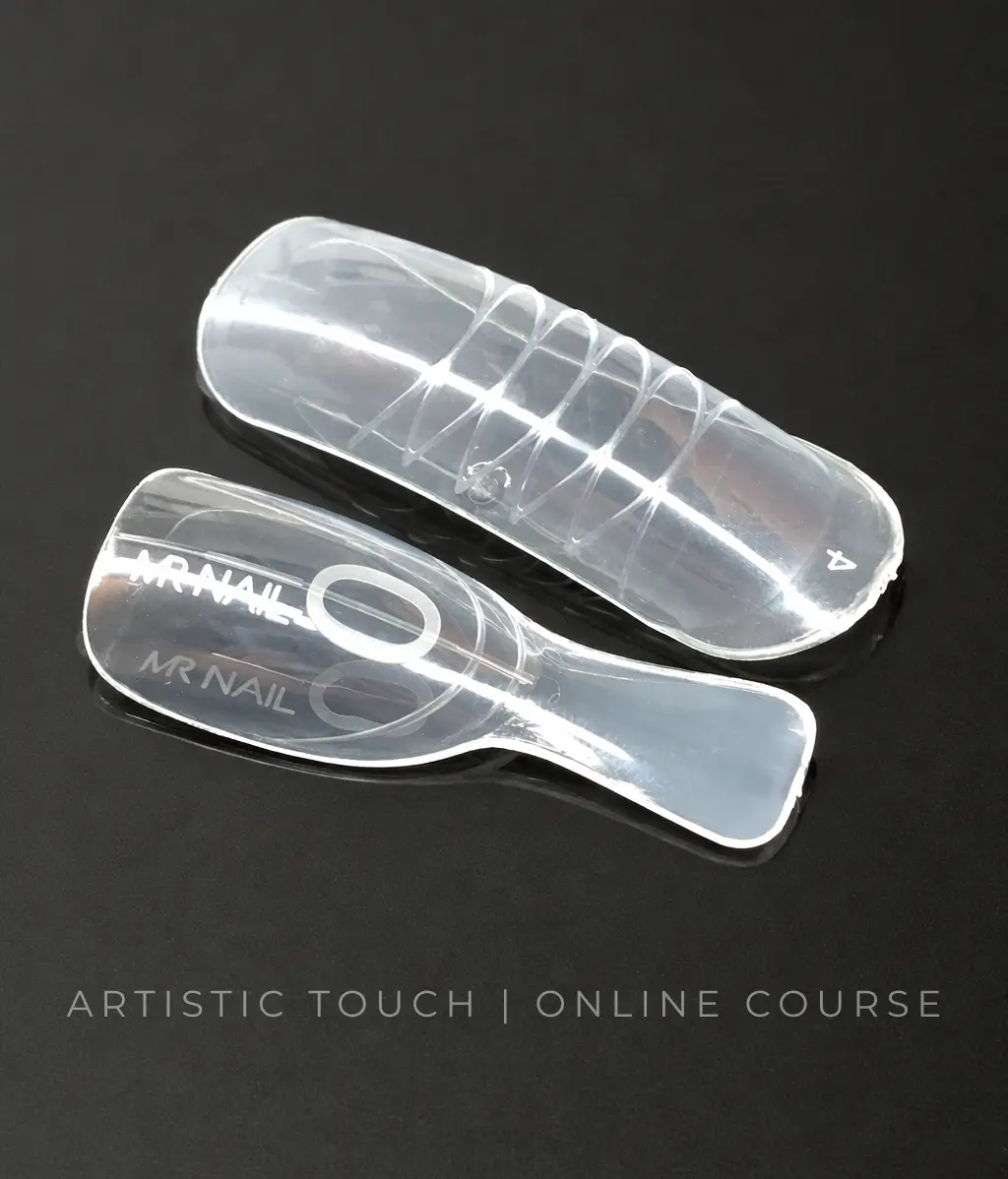
Traditional dual forms use one clear plastic mould placed over the natural nail with builder gel or poly gel inside. You press the form down onto the nail plate, applying pressure to shape the gel and create the extension structure. The form creates the top surface (what clients see), whilst your pressure and technique determine the underside finish.
This system relies entirely on your ability to control gel flow through pressure application. Too much pressure forces gel out from edges (overflow). Too little pressure leaves gaps or weak structure. Getting this balance correct requires practice and developed muscle memory.
Sandwich Dual Forms: Two Mould System
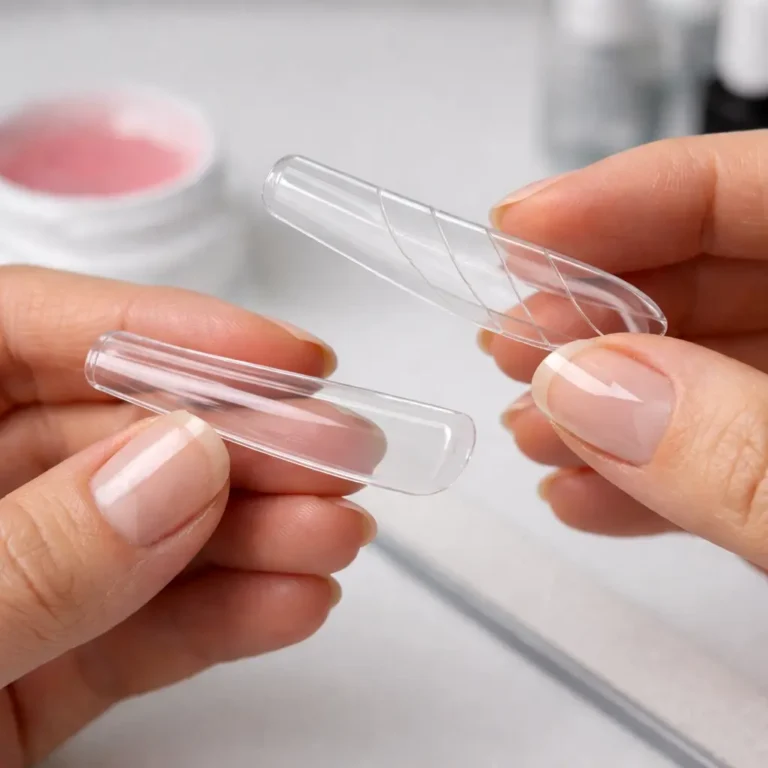
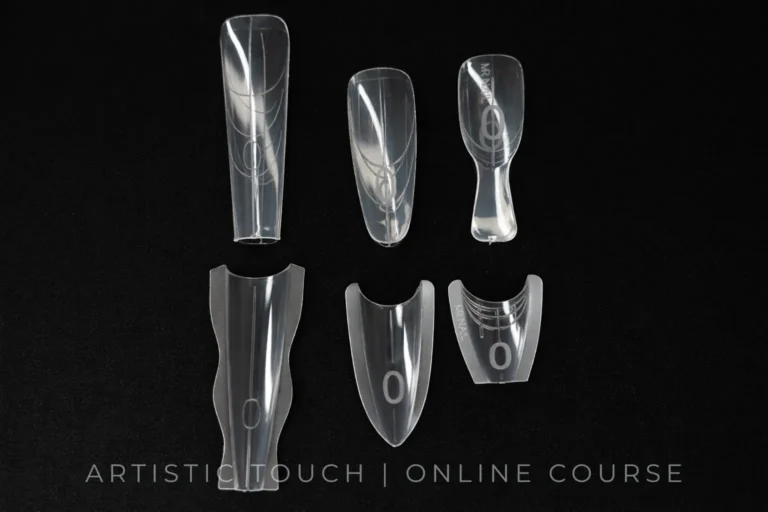
Sandwich dual forms use two moulds — a top form and a bottom form. The bottom form positions under the free edge (using safe attachment methods taught in professional courses), whilst the top form sits above with gel between them. Both moulds work together to contain and shape the gel, creating physical barriers that prevent sideways overflow.
This containment system means gel cannot escape as easily during application. The bottom mould creates a clean underside imprint, whilst the top mould shapes the visible surface. Both sides cure with smooth finishes requiring less filing than traditional methods.
Direct Comparison: Key Differences
Master Sandwich Dual Forms Professionally
Learn proper sandwich dual form application with clean imprint techniques, form selection guidance for different nail types, and troubleshooting methods for common problems.
- ✓ Two-mould system application technique
- ✓ Form selection for flat, curved, and problem nail beds
- ✓ Overflow prevention and troubleshooting methods
- ✓ Lifetime access with expert guidance from Radina
Advantages and Disadvantages of Each System
Traditional Dual Forms
✓ Advantages
- Lower initial cost (£10-15 per set)
- Faster application when experienced
- Widely available from suppliers
- Simple single-mould system
- Works with all gel types
✗ Disadvantages
- High gel overflow risk
- Rough underside requires filing
- Difficult for beginners to control
- Inconsistent results during learning
- More cleanup and filing time
Sandwich Dual Forms
✓ Advantages
- Clean underside imprint (minimal filing)
- Reduced gel overflow risk
- Beginner-friendly system
- Consistent results from first use
- Professional finish with less skill
✗ Disadvantages
- Higher initial cost (£20-30 per set)
- Two-part system more complex
- Less widely available
- Requires proper technique (taught in courses)
- Bottom form application needs training
Which System Should You Choose?
Choose Traditional Dual Forms If:
- You are an experienced nail technician with developed pressure control and product placement skills
- Speed is your priority and you can achieve clean results without the containment system
- You have mastered gel flow control and rarely experience overflow problems
- Cost is a limiting factor and you need the most affordable option
- You do not mind additional filing time to refine the underside finish
Choose Sandwich Dual Forms If:
- You are learning nail extensions and want consistent results from the beginning
- You struggle with gel overflow using traditional forms
- You want to reduce filing time and achieve clean undersides without excessive refinement
- You prioritise professional results over initial cost savings
- You are willing to invest in proper training to learn the two-mould system correctly
Professional Recommendation
If you are new to dual forms, start with sandwich forms and invest in proper training. The higher initial cost is offset by reduced product waste (less overflow), shorter learning curve, and professional results that build client confidence. Once you have mastered sandwich forms, you can experiment with traditional forms if speed becomes a priority.
Can You Use Both Systems?
Many experienced nail technicians keep both systems in their kits and choose based on client needs, time constraints, and nail condition.
When to Use Traditional Forms
- Quick repairs or infills where speed matters more than perfect underside finish
- Experienced clients who understand nail maintenance and do not scrutinise underside appearance
- Your own nails where you can accept slight imperfections
When to Use Sandwich Forms
- New clients where first impression determines repeat bookings
- Competition work or portfolio photos requiring flawless finish
- Difficult nail beds (very flat or very curved) where form fit is challenging
- Training or demonstration where consistent results matter
Frequently Asked Questions About Sandwich vs Traditional Dual Forms
Do sandwich dual forms work with all gel systems?
Yes. Sandwich dual forms work with builder gel, poly gel, and hard gel systems. Product viscosity affects application slightly — thicker gels require less pressure to fill forms, whilst thinner gels may need slightly more product — but the two-mould containment system functions with all gel types.
Are sandwich dual forms more difficult to use than traditional forms?
No. Sandwich forms are actually easier for beginners because the two-mould system controls gel flow and reduces overflow. The bottom form application requires proper technique (taught in professional training), but once learnt, the system produces cleaner results with less skill than traditional forms require.
Can I switch from traditional to sandwich forms easily?
Yes. Technicians experienced with traditional forms usually adapt to sandwich forms quickly because they already understand gel behaviour and form selection. The main adjustment is learning bottom form positioning and working with the two-mould system rather than single-mould pressure technique.
Do sandwich forms take longer to apply than traditional forms?
For experienced technicians, traditional forms can be slightly faster during application. However, sandwich forms save significant time during filing and refinement because the underside cures clean. Total service time (application + finishing) is often similar or faster with sandwich forms, especially for beginners.
Which system lasts longer on clients?
Wear time depends on application technique and nail prep quality, not the form system used. Both traditional and sandwich forms can create extensions that last 3-4 weeks when applied correctly with proper nail preparation. The difference is in application ease and finish quality, not durability.
Radina Ignatova
Professional Nail Expert | International Nail Educator

I am Radina Ignatova, a Professional Nail Expert since 2014 and International Nail Educator, based in Scotland, UK. I am the Founder of Artistic Touch Nail Training Academy and TheNailWiki.
At Artistic Touch Nail Training Academy, I provide structured professional online nail courses specialising in dual forms, gel systems, polygel application, advanced nail structure, e-file work and Russian manicure, with a strong focus on professional salon safety. I continue to work actively in salon practice, ensuring that all education reflects real client scenarios and current industry standards.
My teaching philosophy is simple: I show real salon challenges, real mistakes and real performance testing, not just perfect demonstrations. This is how you develop genuine technical competence and become a confident, capable nail professional.
Every Artistic Touch course includes lifetime access, a certificate of completion and access to a dedicated student support community (Discord), where I actively participate and provide ongoing guidance and expert feedback.
About Artistic Touch Nail Training Academy
Artistic Touch Nail Training Academy delivers structured professional online nail education focused on practical skill development, professional standards and safe salon practice. All courses are available online worldwide.
Ready to Master Sandwich Dual Forms?
Understanding the differences between sandwich and traditional dual forms helps you choose the right system, but professional mastery requires proper training in application technique, form selection, and troubleshooting methods.
What You Will Achieve in the Sandwich Dual Forms Course:
- ✓ Two-mould system application with clean imprint technique
- ✓ Form selection guidance for different nail bed types
- ✓ Overflow prevention and troubleshooting techniques
- ✓ Lifetime access with private student support and expert guidance from Radina
Learn Professional Sandwich Dual Forms
Master the two-mould system with clean results and minimal filing
Enrol Now — £97 →Lifetime access • Certificate included • Start immediately
Compare sandwich and traditional dual forms to choose the right nail extension method for your skill level and client needs at Artistic Touch Nail Training Academy.