Everyone Is Wrong About Russian Manicure – A Professional Explains
By: Radina Ignatova, Professional Nail Expert |
Reading Time: 8 minutes

Quick Answer: Is Russian Manicure Banned?
No, Russian manicure is NOT banned. The viral panic stems from broad legal language in some US states that could theoretically apply to many nail services—but Russian manicure performed by trained professionals using proper exfoliation techniques remains legal and safe across the UK, Europe, and most locations worldwide.
The reality: Professional Russian manicure has been safely performed in Eastern Europe for decades. When done correctly by qualified technicians, it is one of the safest and most effective nail preparation methods available.
Learn more: Watch the video above for the complete professional explanation, or continue reading for detailed analysis from a nail expert with 12+ years of experience trained in Eastern Europe.
The Russian Manicure Controversy Explained
The nail industry is experiencing widespread panic about Russian manicure being “banned” or “dangerous.” As a Professional Nail Expert trained in Eastern Europe with over 12 years of experience, I need to address this misinformation directly.
The truth is far more nuanced than the viral headlines suggest.
Russian manicure—also known as dry manicure or e-file manicure—has been a standard professional technique in Eastern Europe for decades. It involves precise cuticle preparation and nail surface work using professional e-files and proper technique to achieve exceptionally clean, long-lasting manicure results.
The current controversy stems from broad legal language in some jurisdictions that could technically apply to many common nail services, combined with viral videos showing improper technique performed by untrained individuals.
What Is Actually Happening: The “Ban” Myth
Let me be absolutely clear: Russian manicure is not banned.
What actually happened is that some US states have broad legal language prohibiting “cutting, abrading, or removing living tissue.” This language exists in many cosmetology regulations and has been in place for years—it is not new, and it is not specifically targeting Russian manicure.
This same language could theoretically apply to:
- Traditional cuticle nippers (cutting)
- Foot files and callus removers (abrading)
- Cuticle pushers used incorrectly (removing tissue)
- Aggressive buffing (abrading)
The Key Issue
The legal language is intentionally broad to prevent dangerous practices, but it has always required interpretation. Professional nail technicians have worked within these regulations for decades.
Why the Panic Started
The current panic began when:
- Viral videos showed extremely aggressive, improper Russian manicure technique performed by untrained individuals
- Social media amplified fear without context or professional insight
- Some nail technicians discovered existing legal language and assumed it was new
- Headlines used sensational language like “BANNED” without explaining the nuance
European Professional Reality: Decades of Safe Practice
I was trained in Eastern Europe where Russian manicure has been the professional standard for over 30 years. In countries like Russia, Poland, Ukraine, and throughout Eastern Europe, this technique is taught in professional nail schools, regulated by health authorities, and performed safely millions of times per year.
Professional Russian manicure training includes:
- Comprehensive nail anatomy education – Understanding the difference between live tissue, dead tissue, eponychium, cuticle, and nail structure
- Professional e-file control – Learning proper pressure, speed, bit selection, and movement patterns
- Client assessment – Recognising when Russian manicure is appropriate and when alternative methods should be used
- Safety protocols – Sterilisation, contraindications, and proper technique to avoid tissue damage
The results speak for themselves: clients in Eastern Europe have enjoyed healthy, beautiful nails with exceptional retention for decades using this method.
My Professional Experience
I have been performing Russian manicure professionally for over 12 years. I was trained in Eastern Europe where this technique is standard professional practice, and I now teach it to students across the UK through Artistic Touch Nail Training Academy. In that time, I have never caused injury when following proper professional technique, and neither have my properly trained students.
These principles are developed in depth in Russian Manicure – Beyond Technique, my online course focused on understanding the anatomy, control and professional decisions behind the technique.
What Is Actually Dangerous
Let me be absolutely clear about what is actually problematic:
⚠️ Real Risks in Russian Manicure
- Untrained technicians attempting the technique after watching YouTube videos
- Improper e-file control – too much pressure, wrong speed, incorrect bit selection
- Lack of anatomy knowledge – not understanding the difference between safe exfoliation and tissue damage
- Aggressive technique – removing living tissue rather than dead cuticle
- Poor sterilisation practices – increasing infection risk
These are training and skill issues, not inherent problems with the technique itself.
The same logic applies to any nail service: traditional manicures can cause damage when performed incorrectly by untrained technicians. Gel polish can cause nail damage when removed improperly. Acrylics can harm the nail plate when applied with poor technique.
The technique is not the problem—the lack of proper professional training is the problem.
What Professional Russian Manicure Actually Involves
Let me explain what proper, professional Russian manicure technique actually entails:
The difference is training, knowledge, and professional standards.
Benefits of Properly Performed Russian Manicure
When performed correctly by a trained professional, Russian manicure offers significant advantages:
- Exceptional retention: 21+ days compared to 10-14 days with traditional manicure
- Cleaner application: Better adhesion and prevents product flooding
- Healthier nail growth: Proper cuticle management encourages strong, healthy nails
- Professional finish: Extremely clean, polished appearance
- Long-term nail health: Prevents cuticle overgrowth and maintains optimal nail condition
The Broad Legal Language Problem
The legal language that is causing panic typically reads something like: “It is prohibited to cut, abrade, or remove living tissue.”
This language is intentionally broad to give regulatory bodies flexibility in addressing genuinely dangerous practices. However, it has existed in nail industry regulations for years without preventing professional services.
How This Has Always Been Interpreted
Professional nail technicians have always worked within these regulations by:
- Understanding the difference between dead and living tissue – Professional training teaches nail anatomy
- Using proper technique – Working carefully to avoid damage
- Obtaining proper training and certification – Demonstrating competence in safe practices
- Following professional standards – Adhering to industry best practices
Russian manicure, when performed by properly trained professionals, does not violate these regulations because it involves exfoliation of dead cuticle tissue, not removal of living tissue.
⚠️ The Real Risk: Misinformation Could Lead to Actual Bans
Ironically, the current panic and viral misinformation could actually lead to unnecessary regulation. We have seen this before with HEMA gel polish bans—widespread panic led to restrictions even though the issue was improper use, not the product itself. The nail industry must respond with education and professional standards, not fear.
What Nail Technicians Need to Know
If you are a nail technician concerned about Russian manicure, here is what you need to understand:
Key Professional Guidelines
- Get proper professional training – Do not attempt Russian manicure based on YouTube videos. Invest in comprehensive training from qualified educators who understand nail anatomy and proper technique.
- Understand your local regulations – Contact your local licensing board to understand how regulations apply in your specific jurisdiction. Do not rely on social media for legal advice.
- Use exfoliation-only technique – Russian manicure can be performed entirely through gentle exfoliation of dead cuticle without ever touching living tissue. This approach is safe and legal everywhere.
- Prioritise client safety – Always assess each client individually, recognise contraindications, and adapt your technique to their specific nail structure and condition.
- Maintain professional standards – Follow proper sterilisation protocols, use appropriate products, and continue your education to stay current with best practices.
Client Aftercare Matters
Proper aftercare is essential for maintaining the results of Russian manicure:
- Daily cuticle oil application – Keeps the cuticle area healthy and prevents dryness
- Hand cream with each hand washing – Maintains skin hydration and barrier function
- Gentle massage of nail beds – Promotes healthy circulation and nail growth
- Avoid picking or pushing cuticles – Let professional maintenance handle cuticle care
Learn Professional Russian Manicure Technique
Master the safe, legal, effective approach taught across Europe for decades. Our E-File Manicure Masterclass includes comprehensive coverage of Russian manicure technique with proper anatomy education, e-file control, and client safety protocols.
Frequently Asked Questions About Russian Manicure
Is Russian manicure legal in the UK?
Yes, Russian manicure is completely legal in the UK when performed by properly trained professionals. UK regulations focus on hygiene, sterilisation, and professional standards rather than prohibiting specific techniques. As long as you follow proper safety protocols and professional practices, Russian manicure is a legal and recognised nail service in the UK.
Is Russian manicure safe?
When performed by a properly trained professional using correct technique, Russian manicure is very safe. The key is comprehensive training in nail anatomy, e-file control, and client assessment. The problems you see in viral videos come from untrained individuals attempting the technique without proper education. Professional Russian manicure has been performed safely in Eastern Europe for over 30 years.
What is the difference between Russian manicure and regular manicure?
Russian manicure (also called dry manicure or e-file manicure) uses professional e-files for precise cuticle preparation and nail surface work, without water soaking. Traditional manicure typically involves soaking hands in water and using manual tools like cuticle nippers and pushers. Russian manicure provides longer retention (21+ days vs 10-14 days), cleaner application, and more professional results when performed correctly.
How long does Russian manicure training take?
Proper Russian manicure training requires comprehensive education in nail anatomy, e-file control, and safety protocols. At Artistic Touch, our E-File Manicure Masterclass provides the complete foundation you need, including theory, practical demonstration, troubleshooting, and professional standards. However, mastering the technique requires practice—expect to spend several months developing your skills with supervision before working independently on clients.
Why do people say Russian manicure is banned?
The “ban” myth comes from misunderstanding broad legal language in some US state regulations that prohibit “cutting, abrading, or removing living tissue.” This language has existed for years and applies to many services when performed incorrectly—not specifically to Russian manicure. The panic was amplified by viral videos showing improper technique and sensational social media headlines. Russian manicure is not banned and remains legal when performed by trained professionals.
Can I learn Russian manicure online?
Yes, you can learn the theory, technique, and professional standards of Russian manicure through comprehensive online training. Our E-File Manicure Masterclass includes detailed video demonstrations, nail anatomy education, e-file control guidance, and safety protocols. However, you will also need to practice extensively on practice hands and under supervision before working on real clients. Online training provides the knowledge foundation, but practical skill development requires hands-on practice.
What e-file should I use for Russian manicure?
Professional Russian manicure requires a quality e-file machine with adjustable speed control (typically 0-35,000 RPM) and smooth rotation. You will need various professional bits including small barrel bits, flame bits, and safety bits for different stages of the manicure. The E-File Manicure Masterclass covers specific equipment recommendations, bit selection for different tasks, and proper speed settings for safe, effective work. Proper equipment is essential—cheap or inappropriate e-files increase the risk of damage.
Does Russian manicure damage nails?
When performed correctly by a properly trained professional, Russian manicure does not damage nails—in fact, it promotes healthier nail growth through proper cuticle management and preparation. However, aggressive or improper technique by untrained individuals can cause significant damage including thinning, heat damage, and tissue trauma. This is why proper professional training is absolutely essential. The technique itself is not damaging; improper execution is.
About Your Instructor: Radina Ignatova
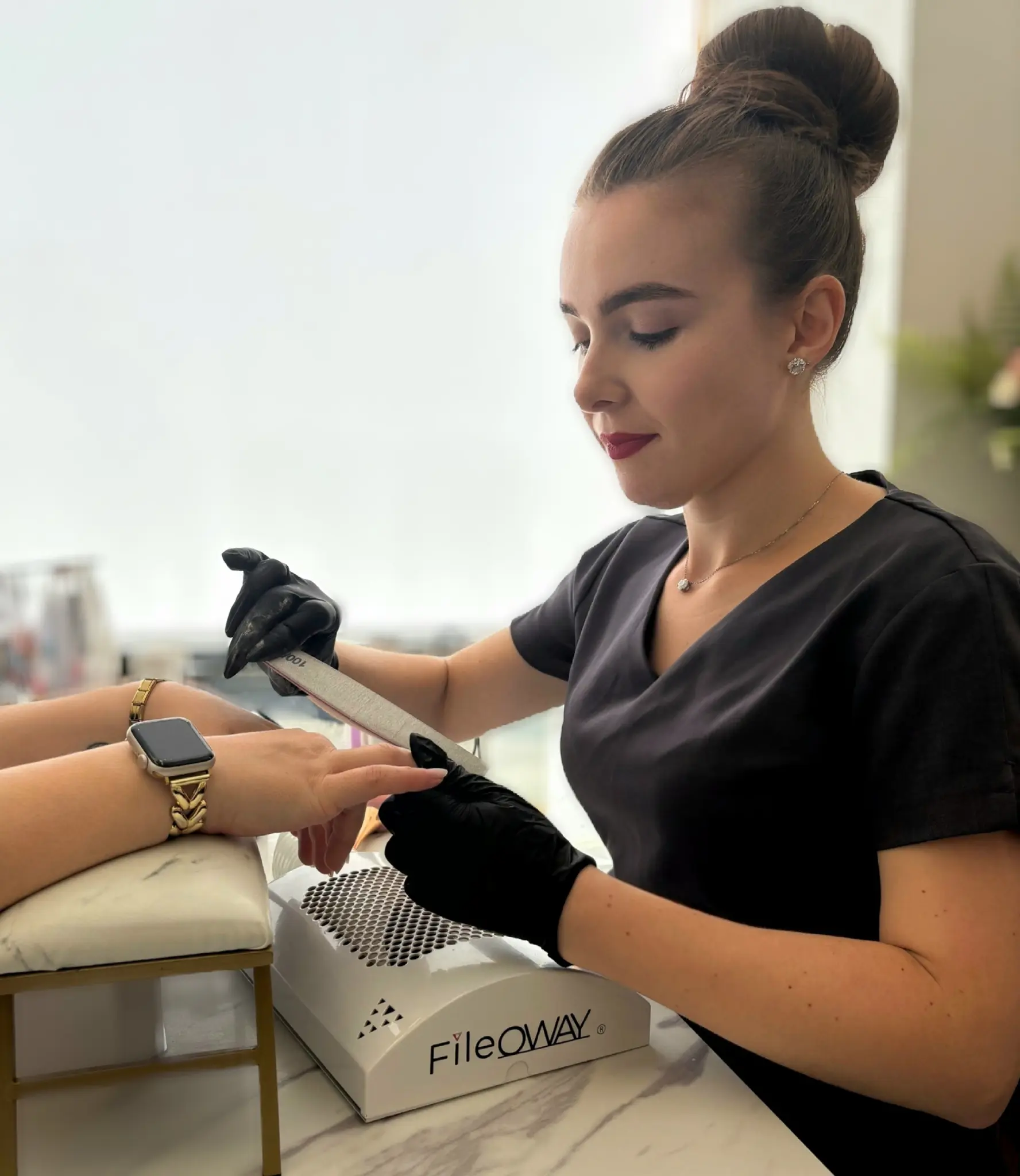
Radina Ignatova is a Professional Nail Expert, Certified Educator, and founder of Artistic Touch – Nail Training Academy, based in Dundee, Scotland, UK.
With over 12 years of professional experience in advanced nail techniques including Russian Manicure, BIAB, e-file techniques, and extreme nail shapes, Radina specialises in transforming beginner nail technicians into confident professionals through structured online and in-person education.
Trained in Eastern Europe where Russian manicure is the professional standard, Radina brings authentic technique and comprehensive understanding to her teaching. Her courses focus on real salon techniques she uses personally, rather than theoretical approaches.
Her teaching philosophy focuses on:
- Practical, real-world techniques that work in busy salon environments
- Troubleshooting and problem-solving rather than just theory
- Student success and confidence building through patient, detailed instruction
- Safety and professionalism in every aspect of nail services
Ready to Learn Professional Russian Manicure?
Now that you understand the truth about Russian manicure—that it is safe, legal, and highly effective when performed by properly trained professionals—the question is: do you want to learn this valuable technique the right way?
The E-File Manicure Masterclass provides everything you need to master professional Russian manicure technique safely and confidently.
What You Will Achieve:
- ✓ Master safe, professional Russian manicure technique
- ✓ Understand nail anatomy and proper e-file control
- ✓ Achieve 21+ day retention for your clients
- ✓ Work confidently within legal and safety guidelines
- ✓ Deliver professional results clients love
Stop learning from viral videos that show dangerous technique. Learn from a professional with 12+ years of experience who was trained where Russian manicure originated.
Master Professional Russian Manicure Technique
Learn the safe, legal, effective approach taught across Europe for decades
Enrol in Russian Manicure – Beyond Technique →
Lifetime access • Certificate included • Start immediately
About Artistic Touch – Nail Training Academy: Professional online nail education delivered by Radina Ignatova from Dundee, Scotland, UK. Specialising in Russian Manicure, BIAB, e-file techniques, extreme nail shapes, and comprehensive nail education for aspiring and professional nail technicians.