Online Nail Training UK: Complete Beginner’s Guide (2025)
Quick Answer: Can I Learn Nail Techniques Online as a Complete Beginner?
Yes, absolutely. Online nail training allows complete beginners to learn professional techniques at their own pace with unlimited access to expert demonstrations. Quality courses provide structured progression from basic nail anatomy through advanced techniques, with lifetime access allowing you to review complex skills as many times as needed.
Realistic timeline: Most beginners achieve confident, client-ready skills in 4-6 weeks with dedicated practice (3-5 hours weekly). Professional courses cost £47-£297 depending on technique complexity.
What you need: Internet connection, practice hand, basic nail supplies, and commitment to regular practice. No previous experience required.
Why Complete Beginners Choose Online Nail Training
You have admired beautiful nails for years. Perhaps you have experimented with gel polish at home, or maybe you have never touched nail products before. Either way, you are considering learning professional nail techniques – but the traditional route feels intimidating.
College courses require full-day attendance for months. In-person workshops happen in London at inconvenient times. You have work commitments, family responsibilities, or live in areas where professional nail education simply does not exist locally.
Online nail training has changed everything for beginners like you.
Today, you can learn the exact same professional techniques taught in £1,000+ workshops, but from your kitchen table, at 10pm after the children are asleep, or during weekend mornings with unlimited pausing and replaying of complex steps. No travel costs, no rigid schedules, no pressure to keep pace with faster learners.
This guide walks you through everything a complete beginner needs to know about starting online nail training in the UK: realistic timelines, equipment requirements, course selection, practice schedules, and the honest truth about what it takes to become confident enough to work with real clients.
Is Online Nail Training Right for Complete Beginners?
The short answer: yes, if you are self-motivated and willing to practice consistently. Online training works beautifully for certain learning styles and life situations, whilst others may benefit more from in-person instruction.
You Will Thrive with Online Training If You:
- Learn well from visual demonstrations: You can watch someone perform a task and then replicate it
- Prefer working at your own pace: You want to spend extra time on difficult concepts without holding others back
- Have limited schedule flexibility: Work shifts, care for family, or live far from training centres
- Value unlimited review access: You like revisiting material multiple times until fully confident
- Are disciplined with self-study: You can commit to regular practice without external accountability
- Want lower financial investment: Online courses cost significantly less than equivalent in-person training
You Might Prefer In-Person Training If You:
- Need someone physically adjusting your hand position and technique
- Require external structure and accountability to maintain practice schedules
- Learn better through immediate feedback and real-time correction
- Want networking opportunities with other students
- Struggle with self-directed learning without instructor presence
The Hybrid Approach
Many successful nail technicians begin with online training to learn fundamentals affordably, then attend occasional in-person workshops for hands-on refinement once they understand the basics. This combination maximises both cost-effectiveness and skill development.
What You Actually Need to Start Online Nail Training
Forget expensive starter kits filled with products you will never use. Here is what beginners genuinely need to begin learning professional nail techniques:
Essential Equipment (£50-£100 Initial Investment)
Absolute Essentials (Cannot Start Without)
- Practice hand: £15-25 (reusable silicone hand, not cheap plastic)
- LED lamp (48W minimum): £25-40 (essential for curing gel products)
- Basic gel polish set: £20-30 (base coat, top coat, 2-3 colours for practice)
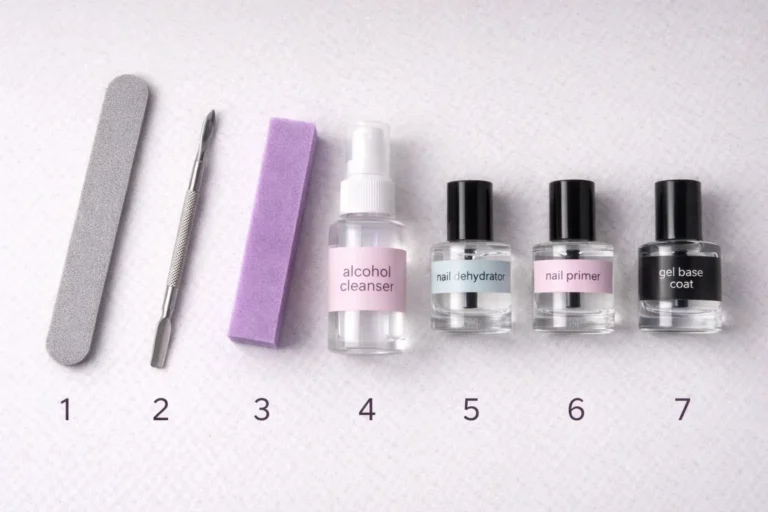
- Nail files and buffer: £10-15 (180 grit and 240 grit files, buffer block)
- Cleansing wipes and alcohol: £5-10 (lint-free wipes, isopropyl alcohol 99%)
Helpful But Not Immediately Required
- E-file machine: £80-150 (only needed if learning e-file technique specifically)
- BIAB products: £30-50 (only if taking BIAB course)
- Cuticle tools: £15-25 (pusher, nippers – technique-dependent)
- Brush cleaner: £8-12 (can use alternative methods initially)
⚠️ Avoid These Beginner Mistakes
- Buying £300 “starter kits” before knowing which techniques you will focus on
- Cheap UV lamps under 36W (will not cure products properly)
- Hard plastic practice hands (unrealistic, damages quickly)
- Purchasing e-file equipment before learning safe technique
- Buying 20+ gel polish colours for practice (unnecessary expense)
Workspace Requirements
You do not need a dedicated nail studio. A simple setup works perfectly for beginners:
- Stable table or desk: Kitchen table or bedroom desk works perfectly
- Good lighting: Daylight lamp or bright overhead light (LED lamp is not workspace lighting)
- Storage container: Simple box or drawer to keep products organised
- Ventilation: Open window or door (gel products have odour)
- Nearby bin: For disposing of used wipes and files
Your 6-Month Nail Training Pathway (From Zero to Client-Ready)
This realistic timeline shows how most beginners progress from knowing nothing about nails to confidently working with paying clients. Your pace may be faster or slower depending on practice frequency and natural aptitude.
Month 1: Foundation & Safety (Weeks 1-4)
What you learn:
- Nail anatomy and structure
- Health and safety protocols
- Proper sanitisation and hygiene
- Client consultation basics
- Product knowledge and selection
Practice focus:
- Nail shaping and filing (3-4 hours weekly)
- Applying gel polish in thin, even layers
- Proper curing and timing
- Clean removal techniques
End of Month 1 goal: Successfully apply basic gel polish to practice hand with clean cuticle work and no flooding
Month 2: Skill Refinement (Weeks 5-8)
What you learn:
- Advanced cuticle preparation
- Proper nail dehydration techniques
- Product application precision
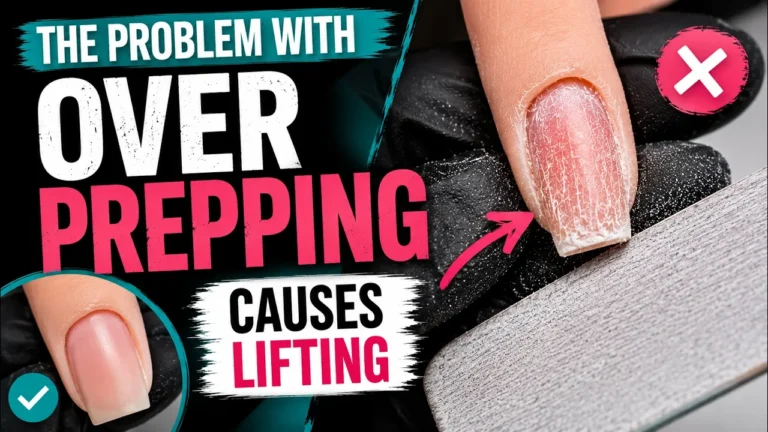
- Troubleshooting common problems (lifting, peeling)
Practice focus:
- Practising on willing friends or family (free services)
- Timing yourself to improve efficiency
- Perfecting cuticle zone application
- Managing different nail shapes and sizes
End of Month 2 goal: Complete full gel polish application on real person in under 90 minutes with clean results
Month 3: Specialisation Decision (Weeks 9-12)
What you learn:
- Choose specialisation: BIAB, e-file manicure, or nail art
- Advanced technique specific to chosen path
- Business basics: pricing, terms and conditions
- Professional client communication
Practice focus:
- Intensive practice in chosen specialisation
- Building confidence with varied nail types
- Perfecting timing and efficiency
- Developing professional consultation skills
End of Month 3 goal: Confident enough to offer discounted services to test clients
Months 4-6: Professional Development (Weeks 13-24)
What you learn:
- Advanced troubleshooting and problem-solving
- Client retention strategies
- Professional business systems
- Additional technique courses as desired
Practice focus:
- Building client base through friends, family, social media
- Accepting paying clients at professional rates
- Refining efficiency (60-minute full service goal)
- Developing personal style and specialisation
End of Month 6 goal: Working professionally with regular clients, confident in your chosen specialisation, generating income
Realistic Practice Schedules for Working Adults
The most common beginner question: “How much time do I need to practice?” The honest answer depends on your availability, but here are three proven schedules:
Sample Weekly Practice Schedule (Standard Pace)
Monday: 1 hour – Watch course videos, take notes
Tuesday: Rest day – mental processing time
Wednesday: 1.5 hours – Practice technique on practice hand
Thursday: Rest day
Friday: 1 hour – Review difficult sections of course
Saturday: 2 hours – Extended practice session, try on willing friend/family
Sunday: 30 minutes – Product organisation, workspace cleaning, planning next week
Total: 6 hours weekly
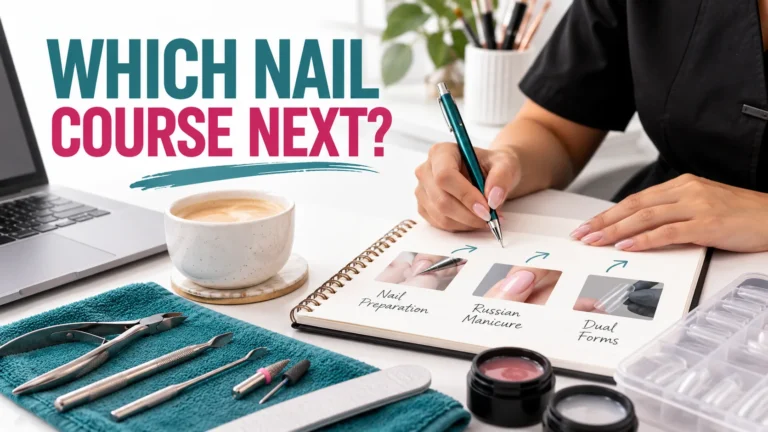
Choosing Your First Online Nail Course
As a complete beginner, you face dozens of course options. Here is how to choose wisely without wasting money on inappropriate training.
Three Beginner-Friendly Starting Points
Most beginners succeed by choosing one of these three paths based on their goals and interests:
Path 1: Business Foundation First (Recommended for Future Professionals)
Start with: Client consultation, safety protocols, and business protection training
Then add: Technical skill courses (gel polish, BIAB, e-file)
Advantage: Build professional foundation before technical training. Understand legal protection and client safety from day one.
Best for: Anyone planning to work with paying clients eventually
Path 2: Core Technical Skills (Recommended for Hands-On Learners)
Start with: E-file manicure and gel polish technique (most versatile foundational skill)
Then add: BIAB or advanced specialisation, plus business training
Advantage: Learn the single most impactful skill for retention and client satisfaction. Applicable to all gel services.
Best for: Learners who want immediate practical skills and already understand basic safety
Path 3: Specialisation Focus (Recommended for Existing Basic Knowledge)
Start with: BIAB masterclass (if you already know basic gel polish application)
Then add: Advanced techniques and business protection
Advantage: Build premium service offering immediately. Charge higher prices for specialised skill.
Best for: Those with some gel polish experience wanting to add strengthening services
Understanding Certificates and Qualifications
One of the most confusing aspects for beginners: what certificates actually mean and which ones you need. Here is the honest truth:
UK Legal Reality
- No legal requirement: The UK has no law requiring qualifications to practice as a nail technician
- Insurance requirements: Most insurance providers require proof of training (accredited or professional non-accredited)
- Client perception: Clients care more about your work quality than your certificates
Accredited vs Non-Accredited: What It Actually Means
Accredited Courses
What it means: Meets educational standards set by awarding bodies (VTCT, City & Guilds, etc.)
Advantages:
- Universally recognised by insurers
- Standardised curriculum
- Required for some employment
Limitations: Often focus on theory over advanced practical skills, usually more expensive, rigid curriculum
Non-Accredited Courses
What it means: Professional training without external awarding body oversight
Advantages:
- Taught by active salon professionals
- Focus on practical, real-world skills
- More affordable, flexible learning
- Advanced specialisation options
Limitations: May not satisfy all insurance providers, quality varies by instructor
The Practical Approach Most Professionals Take
Many successful nail technicians combine both: basic accredited Level 2-3 qualification for insurance requirements, plus professional non-accredited masterclasses for actual skill development. This hybrid approach provides legal coverage whilst ensuring you learn from active professionals with current, real-world expertise.
Beginner-Friendly Courses from Artistic Touch Academy
All courses include lifetime access, structured progression, troubleshooting training, and honest transparency about certification status. Taught by Radina Ignatova, active salon professional with over a decade of experience.
Perfect First Course: Nail Consultation Form – Client Safety & Business Protection
Why start here: Learn professional client management and legal protection before technical training. Understand exactly how to screen clients safely and protect your business from day one.
What you learn:
- Professional client consultation protocols
- Health screening and contraindications
- Legal liability protection
- Informed consent procedures
- Documentation requirements
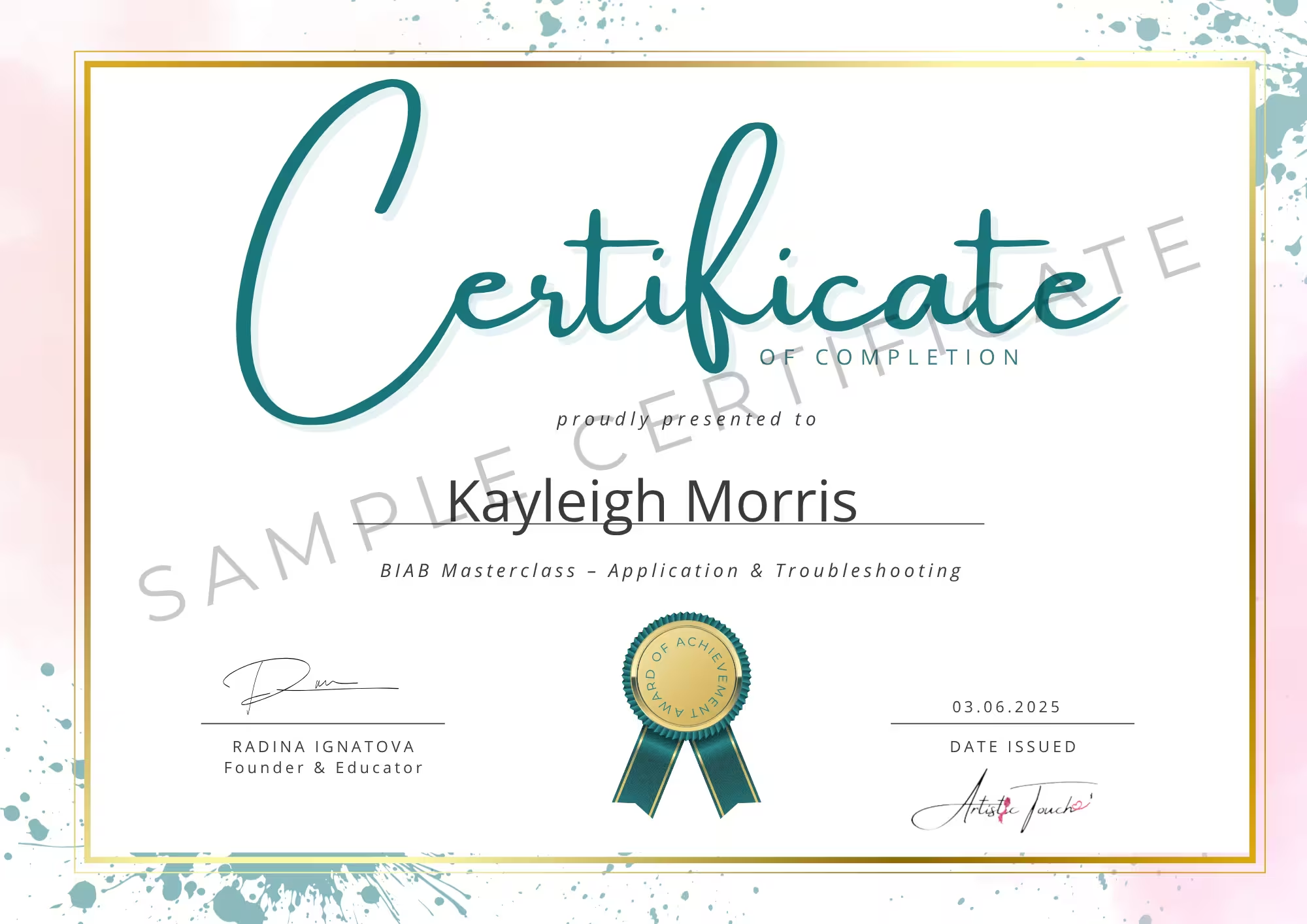
Investment: £297 | Certificate: Non-Accredited Certificate of Completion | Access: Lifetime
Best Technical Foundation: E-File Manicure & Gel Polish Course
Why this matters: Professional e-file technique is the single most impactful skill for gel polish retention. Master cuticle preparation and achieve consistent 3-4 week results without lifting.
What you learn:
- Russian-style e-file manicure technique
- Safe e-file use and bit selection
- Cuticle preparation for maximum retention
- Gel polish application mastery
- Troubleshooting lifting and peeling
Investment: £297 | Certificate: Non-Accredited Certificate of Completion | Access: Lifetime
Premium Specialisation: BIAB Masterclass – Application & Troubleshooting
Why add this: BIAB services command premium pricing (£60-75 per appointment). Perfect for strengthening weak nails without extensions. Ideal second course after mastering basic gel polish.
What you learn:
- Complete BIAB system application
- Structure and apex creation
- Preventing lifting and peeling
- Safe removal protocols
- Client aftercare guidance
Investment: £297 | Certificate: Non-Accredited Certificate of Completion | Access: Lifetime
Essential Safety Training: Nail Patch Testing MasterClass
Why every technician needs this: Protect clients and your business from allergic reactions. Learn proper patch testing procedure, documentation, and emergency protocols.
What you learn:
- Proper patch testing procedure
- Legal documentation requirements
- Allergy recognition and response
- When patch testing is required
- Professional safety standards
Investment: £47 | Certificate: Non-Accredited Certificate of Completion | Access: Lifetime
Frequently Asked Questions from Complete Beginners
Can I really learn professional nail techniques online with no previous experience?
Yes. Thousands of professional nail technicians began as complete beginners learning online. Quality courses provide structured progression from basic nail anatomy through advanced techniques with unlimited video replay. The key is choosing courses taught by active professionals and committing to regular practice (3-5 hours weekly).
How long until I can start charging clients?
Most beginners feel confident accepting paid clients after 3-4 months of consistent practice (assuming 5-7 hours weekly practice). However, start with heavily discounted or free services for friends and family first to build confidence and portfolio. Rush into paid work too quickly and you risk damaging your reputation through preventable mistakes.
Do I need to buy an expensive starter kit before beginning?
No. Avoid expensive pre-packaged kits until you know which techniques you will focus on. Start with essentials only: practice hand (£15-25), LED lamp (£25-40), basic gel polish set (£20-30), files and buffer (£10-15). Total initial investment: £50-100. Add specialized equipment only after completing relevant courses.
Will online training certificates allow me to get insurance?
Insurance requirements vary by provider. Some accept professional non-accredited training, whilst others require accredited qualifications. Contact insurance providers directly about requirements before purchasing courses. Many technicians maintain basic accredited Level 2-3 qualifications for insurance whilst relying on professional masterclasses for actual skill development.
What if I practice for weeks and still cannot get it right?
This is normal and expected. Professional nail techniques require muscle memory development and hand-eye coordination that takes time to develop. Quality courses with lifetime access allow unlimited review of difficult sections. The advantage of online training: you can revisit challenging techniques as many times as needed without embarrassment or time pressure.
Should I learn gel polish, BIAB, or e-file technique first?
For complete beginners, start with e-file manicure and gel polish technique. This foundational skill applies to all gel services and dramatically improves retention. Once confident with e-file prep and basic gel polish, add BIAB for premium service offerings. Alternatively, start with business protection training (consultation forms, patch testing) to build professional foundation first.
Can I make a full-time income as a nail technician?
Yes, many nail technicians earn £25,000-40,000+ annually working from home or renting salon space. Income depends on location, services offered, pricing strategy, and client base size. Advanced techniques like BIAB and e-file manicure command premium pricing. Realistic timeline: 6-12 months to build sustainable full-time income after completing training.
What happens if I cannot commit to regular practice?
Skill development stalls without consistent practice. If you can only practice 1-2 hours weekly, adjust expectations: progress will take 6+ months rather than 3-4 months. Quality online courses with lifetime access accommodate irregular schedules – your course remains available whenever you are ready to practice. However, if you cannot commit to ANY regular practice time, consider whether nail training fits your current life situation.
About Your Instructor: Radina Ignatova
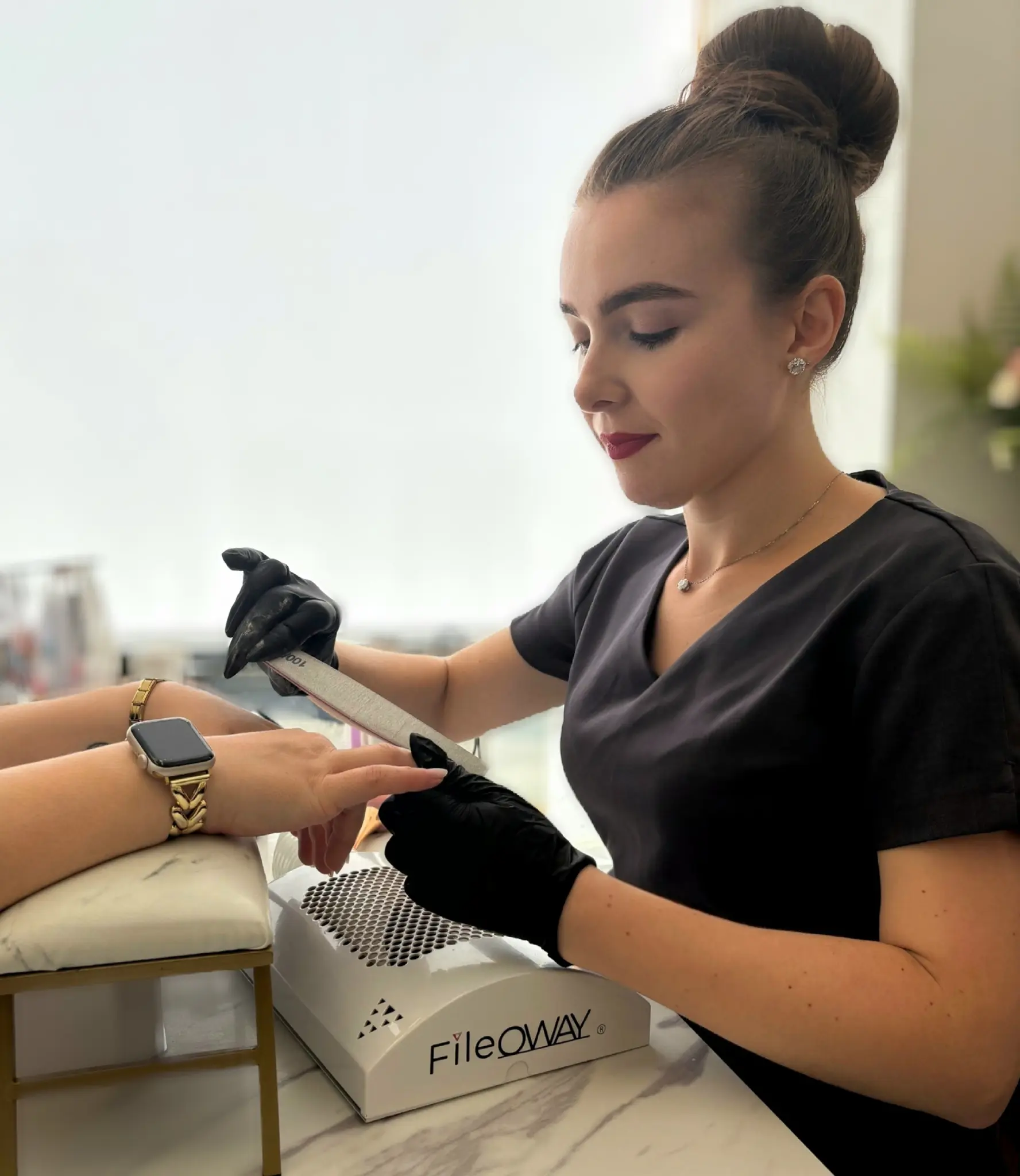
Radina Ignatova is a Professional Nail Expert, Certified Educator, and founder of Artistic Touch – Nail Training Academy, based in Dundee, Scotland, UK.
With over a decade of professional experience operating a busy nail salon whilst simultaneously developing beginner-friendly training programmes, Radina understands exactly what complete beginners struggle with and how to guide them to confidence.
Her teaching philosophy for beginners focuses on:
- Realistic expectations: Honest timelines for skill development without false promises
- Structured progression: Building complex skills on solid foundations
- Patient instruction: Understanding that beginners need extra explanation and practice time
- Safety emphasis: Teaching proper client protection from day one
Start Your Nail Technician Journey Today
You have explored the possibilities, understood the realistic timelines, and seen what genuine beginners achieve with dedicated practice. The question now: are you ready to begin?
Online nail training offers something traditional education never could: the ability to learn professional techniques at your own pace, on your own schedule, with lifetime access to expert instruction. No rigid timetables. No travel expenses. No pressure to keep pace with faster learners.
Start with one course. Practice consistently for 3-4 weeks. Watch your confidence grow.
Begin Your Professional Nail Training Journey
All courses include lifetime access, beginner-friendly progression, and Non-Accredited Certificates of Completion
Learn from active salon professional • Start immediately • Practice at your own pace
About Artistic Touch – Nail Training Academy: Professional online nail education delivered by Radina Ignatova from Dundee, Scotland, UK. Specialising in beginner-friendly nail training, structured skill progression, honest transparent education, and realistic career guidance for aspiring nail technicians across the UK.