Inside Russian Manicure – Beyond Technique: What Makes This Online Course Different
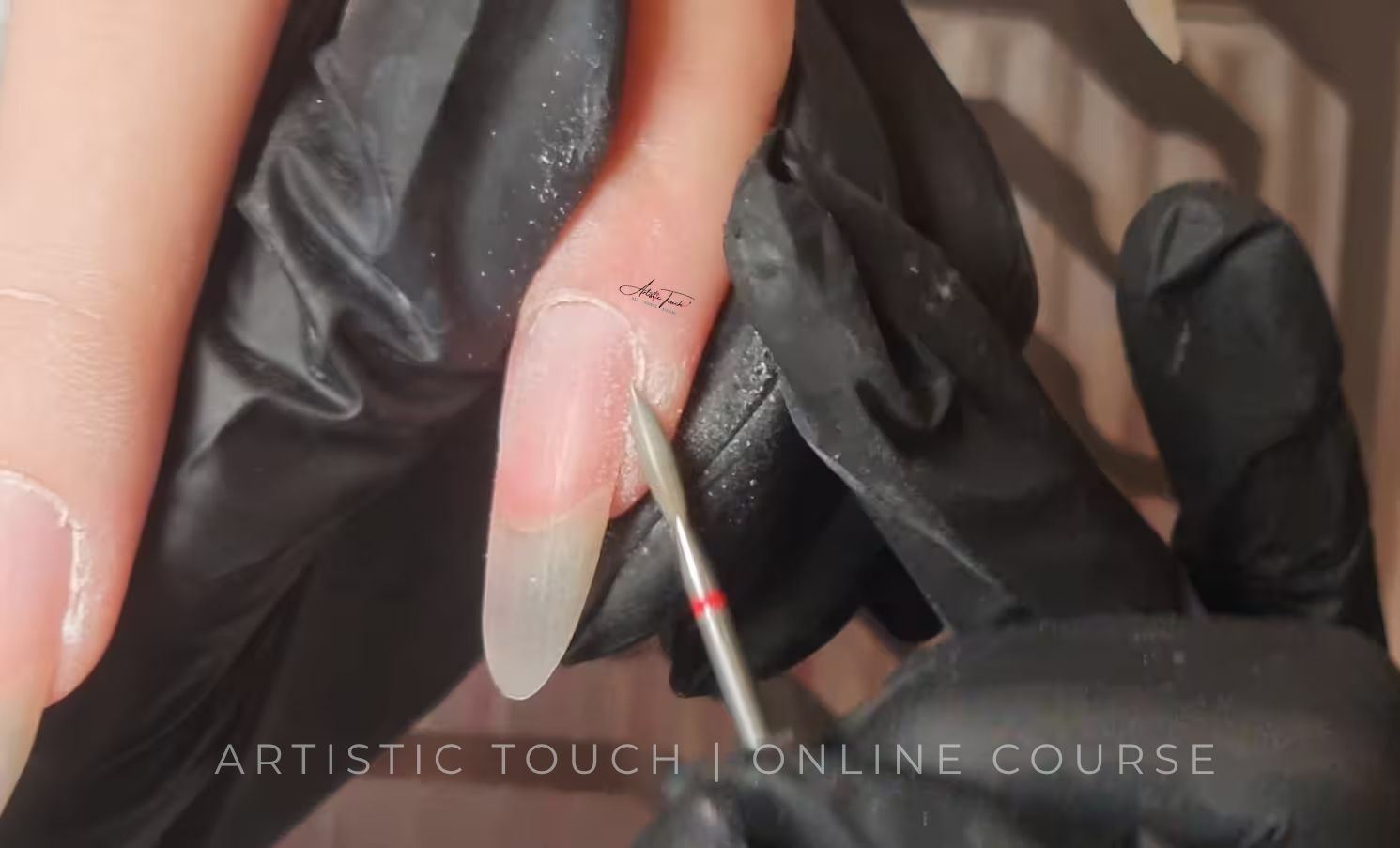
A qualified nail technician sits down to perform a Russian Manicure. She knows the general idea of the service. She may already own a flame bit, a mandrel and a small collection of polishing tools. And yet, the moment the skin in front of her looks slightly different from the last client, a small doubt appears.
The pocket will not open the way it did yesterday. The sinus feels harder to reach safely. The client reacts in a way she did not expect. The result takes far longer than it should, and by the end of the appointment she is not entirely sure whether what she has produced is genuinely correct, or simply acceptable.
This uncertainty is rarely a lack of effort or practice. In many cases, the technician has been shown a sequence of movements without being taught how to assess the tissue in front of her, adapt her approach, and make a professional decision in the moment.
Russian Manicure – Beyond Technique was designed to close that specific gap. This article looks at what the course actually contains, the reasoning behind its structure, and the transformation it is designed to create in a working nail technician.
What Makes This Course Different
Russian Manicure – Beyond Technique is not a short demonstration built around one flame bit, one perfect model or one memorised sequence. It is an in-depth professional training system covering anatomy, ergonomics, e-file control, tool selection, the complete practical technique, different skin types, hygiene, aftercare, marketing, pricing and confidence.
More than eight hours of detailed filmed education have already been created, with further real-client demonstrations forming part of the complete programme.
Why Technique Alone Is Not Enough
Memorising a sequence of movements can teach a technician what to do on a favourable, well-behaved nail. It does not, on its own, teach her what tissue she is actually looking at, what can safely be removed, or how that tissue is responding as she works.
It does not explain why a bit is catching, or whether the real issue is pressure, angle, movement, or simply poor visibility of the working area. It does not tell her when a result is genuinely complete, and it certainly does not prepare her for the next client, whose anatomy may be nothing like the one she has just finished working on.
Russian Manicure – Beyond Technique is built around a different aim: teaching a technician how to think while she is performing the service, rather than simply how to copy a set of movements she has watched someone else perform.
Anatomy That Directly Guides the Technique
The course includes a detailed anatomy module covering the structures a technician works with directly during every Russian Manicure: the nail plate, the proximal nail fold, the eponychium and true cuticle, the nail sinuses, the cuticle pocket, the lateral nail folds and the lateral grooves.
Many technicians already know some of these terms. The difficulty is applying that knowledge while a bit is actually running against living tissue. Knowing a definition and recognising a structure under working conditions are not the same skill.
Inside the course, this anatomy is not included to make the material sound academic. Every structure is connected directly to a practical decision: which tissue is living and should be protected, what can safely be removed, why the sinus is a particularly vulnerable area, why the base of the nail requires a different level of control, and how anatomy should influence pressure, direction, depth and tool choice throughout the service.
Students are also introduced to TheNailWiki, a free professional nail knowledge library, which they can continue to use to revisit anatomy after completing this module.
The Transformation
The student stops working from assumption and begins understanding where the bit is positioned, what tissue she is contacting, and why her movement must change in response.
This is only the anatomy foundation. The full reasoning behind ergonomics, tool selection and practical application is covered throughout Russian Manicure – Beyond Technique.
Workspace Setup and Ergonomics as Part of Technical Control
Ergonomics within the course is not treated as a comfort topic added at the end. It is treated as part of technical control.
What This Section Covers
✓ Chair and working height, relaxed shoulders, elbow and forearm support
✓ Neutral wrist positioning and client hand and arm support
✓ Lighting and working distance
✓ Bringing the client’s hand into clear view
✓ Repositioning the client’s hand rather than twisting your own body
✓ Organising essential tools within reach
Poor ergonomics affects far more than comfort. It reduces visibility, undermines pressure control, compromises stability and bit control, slows working speed, increases fatigue, and contributes to neck, shoulder, wrist and back strain over time.
The Transformation
The student understands that a stable body supports a stable hand. She stops moving her body around the client and learns to position the client’s hand correctly instead.
E-File Control Beyond Memorised RPM Settings
The course does not simply hand a student one speed number to memorise. It teaches how the e-file actually behaves, and how speed, pressure, movement, direction, bit angle, contact points, stabilisation, visibility and controlled repositioning work together as a single system.
Changing one setting in isolation, without understanding the others, rarely resolves a genuine problem. A technician who increases speed to compensate for poor visibility, or increases pressure to compensate for an unopened pocket, is treating a symptom rather than the cause.
This section directly addresses common frustrations: making clients jump, catching the sinus, generating unwanted heat, hesitating mid-movement, pressing harder when the bit does not appear to be working, repeating the same area unnecessarily, and switching tools when the actual issue lies elsewhere.
The Transformation
The student stops reacting to the e-file and begins controlling it with intention.
A Complete Tool and Bit System
Many technicians accumulate bits over time without a clear system for selecting between them. The course covers flame bits, mandrel bits, cutting tools, silicone polishers, diamond polishing bits, cuticle powder, and how these fit together as a complete system used throughout the treatment.
For each tool, students learn its intended purpose, where it should and should not be used, how its shape affects access to different areas of the nail, how abrasiveness affects performance and tissue response, why different clients may call for different choices, when a tool is simply unnecessary, and why no single flame bit should be expected to solve every problem on its own.
The Transformation
The student stops asking only, “Which bit should I buy?” and begins asking, “What does this tissue require, and which tool is appropriate for this task?”
Cleaning, Disinfection, Sterilisation and Tool Care
Professional technique extends beyond the visible treatment itself. This section covers what happens to the tools after the appointment.
What This Section Covers
✓ Manually cleaning diamond coatings with a brush to remove skin and residue
✓ Ultrasonic cleaning to reach difficult areas while the cleaning solution works
✓ Chemical cleaning or disinfection according to product instructions and local requirements
✓ Drying instruments thoroughly, dry heat sterilisation and autoclave sterilisation
✓ The advantages and limitations of different systems
✓ Disposable sterilisation pouches and protected storage when pouches are not used
✓ Treating any dropped instrument as contaminated, and never using a tool picked up from the floor
This article does not provide legal or regulatory advice. Always follow local requirements and manufacturer instructions.
The Transformation
The student understands that professional standards extend beyond the visible treatment.
The Complete Practical Russian Manicure Process
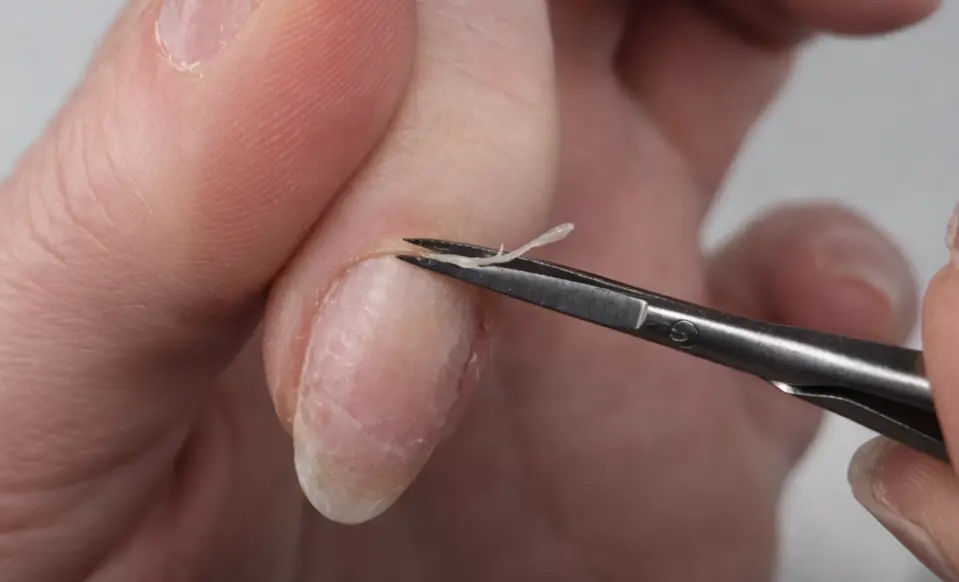
The practical training covers the full salon process as a connected system, including opening the cuticle pocket, controlled skin stretching, cleaning the pocket, folds and sinuses, removing excess tissue, refining and polishing the surrounding skin, and applying gel polish neatly beneath the opened pocket.
This article does not set out the exact private technical sequence, specific movement patterns, or the full internal lesson structure. What matters here is the underlying principle: students are taught how each stage supports the one that follows, rather than viewing the service as a series of disconnected demonstrations.
Common difficulties addressed within this section include the pocket not opening as expected, losing visibility mid-service, poor skin tension, difficulty reaching the folds or sinuses safely, uncertainty about how much tissue to remove, uneven refinement, flooding of product, and inconsistent application beneath the cuticle.
The Transformation
The student stops performing isolated movements and begins understanding the treatment as one connected system.
Macro Footage Versus Real Salon Work
This is one of the more important distinctions within the course. Macro filming has genuine value: it supports education, reveals fine anatomical detail, demonstrates small technical points clearly, and produces visually engaging content for advertising and social media.
However, technicians do not perform salon services while looking through a macro lens. For this reason, a number of demonstrations within the course are also filmed from a realistic top-down perspective, matching the view a technician actually has at her own nail desk.
The course addresses the risk of chasing macro-level perfection directly: repeatedly revisiting areas that are already clean, searching for microscopic imperfections that are not visible at a normal viewing distance, overworking living tissue as a result, losing appointment time unnecessarily, expecting skin to appear artificially flawless, and confusing marketing footage with the reality of everyday salon work.
The Transformation
The student learns to identify what genuinely matters, work efficiently, and recognise when a clean, healthy, professional result has actually been achieved.
Real-Client Demonstrations and Different Skin Types
The course does not rely on a single, consistently cooperative model. It includes demonstrations and case-based learning across a range of skin conditions: thin and dry skin, normal skin, thick or rubbery skin, moist or oily skin, and more difficult or less predictable cases, with direct comparisons drawn between clients.
A recurring theme throughout is that the same rigid sequence should not be forced onto every client regardless of what her anatomy and tissue condition actually show.
The thin and dry skin demonstration is a useful example of how this is taught. Students see how the amount of work is adjusted for this tissue type, why restraint matters in this context, how tissue response is assessed as the service progresses, and why fewer, more accurate movements can produce a better outcome than repeated refinement. The demonstration also includes the four-week grown-out result, along with a discussion of the relationship between the treatment performed in the salon and the client’s aftercare at home, including how inconsistent cuticle-oil use can affect the appearance of the surrounding skin even when product retention itself remains good.
The Transformation
The student moves away from trying to make every client fit one standard routine, and instead learns to assess the individual in front of her.
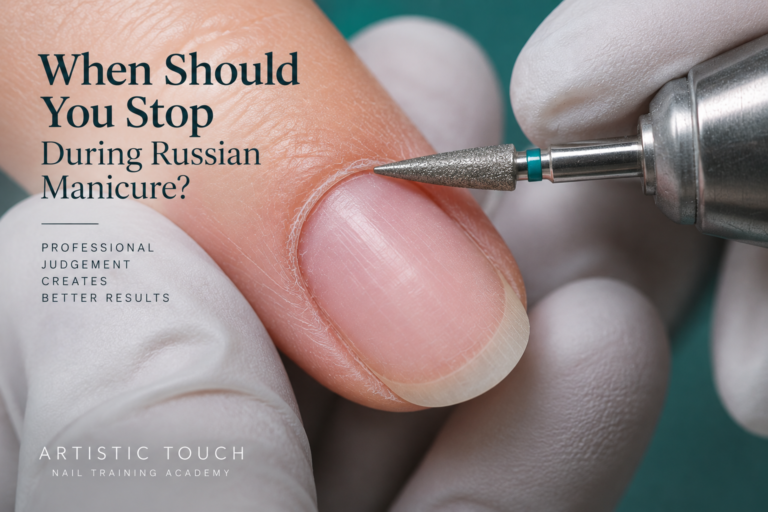
Knowing When to Stop
Restraint is taught as a professional skill in its own right. The course addresses the technician who continues working because one small flake remains visible under magnification, because both hands do not appear microscopically identical, because the skin does not look artificially edited, because she does not yet trust her own assessment, or because she believes that additional work must automatically produce a better result.
Students learn that further work can sometimes add risk to living tissue without adding any real value to the outcome.
Evaluating a Finished Result
✓ Cleanliness and tissue condition
✓ Visible dead skin
✓ Pocket access and overall balance
✓ Product placement
✓ The finished result from a normal salon viewing distance, not under magnification
Supporting downloadable resources are being developed to reinforce this skill, including a final-result checklist, a “Know When to Stop” reference card, a student self-evaluation scorecard, and a photo-evaluation guide.
The Transformation
The student develops the confidence to recognise when the manicure is genuinely complete.
Recognise Any of These Challenges in Your Own Work?
Restraint, efficiency, marketing and pricing are all covered in the sections still ahead in the course, alongside everything already described here.
See Full Course Details →From Slow and Uncertain to Controlled and Efficient
Speed is not taught as a matter of rushing. Students examine where time is typically lost during a Russian Manicure: hesitation, unnecessary movements, returning to areas that were already finished, poor positioning, unclear tool selection, constantly switching bits, the absence of a consistent working system, and chasing macro-level detail that a client will never notice.
Efficiency is developed through anatomy knowledge, confident assessment, working through the service in organised stages, effective use of the non-dominant hand, correct positioning, knowing when to stop, consistent practice on models, and a structured progression from model services, to material-cost appointments, and finally to full-paying clients.
The Transformation
The student becomes quicker because she makes better decisions and fewer unnecessary movements, not because she sacrifices safety.
Aftercare and Maintenance
The final result of a Russian Manicure does not depend only on what happens during the appointment itself. This section covers professional aftercare guidance, cuticle-oil use, maintaining the appearance and condition of the surrounding skin, the client’s own share of responsibility between appointments, communicating realistic expectations, and explaining clearly to clients the difference between product retention and the ongoing condition of the skin itself.
The Transformation
The student becomes more confident explaining aftercare and managing the client’s expectations between appointments.
Marketing and Selling the Service
Detailed technical work still needs to be communicated properly if it is to be valued appropriately. This section covers how to explain the value of Russian Manicure to a prospective client, how to market the result without relying solely on extreme macro imagery, how to use close-up content appropriately alongside realistic footage, how to demonstrate refinement, precision and a professional process, how to attract clients who genuinely value specialist work, and how to move the conversation beyond simply “cuticle removal”.
The Transformation
The student learns to present Russian Manicure as a complete specialist service, rather than treating it as a minor add-on to a standard manicure.
Pricing and Positioning
Many technicians perform genuinely detailed, careful work and then price it in line with a standard manicure. This section of the course addresses that gap directly, covering the time genuinely involved, the training and expertise required, professional tool systems, hygiene and sterilisation processes, disposables and product costs, service quality, client experience, profitability, premium positioning, and communicating value with confidence.
The course does not promise that every student will double her prices or reach a particular income.
The Transformation
The student stops apologising for her price, and instead positions the service around precision, knowledge, hygiene, efficiency and a genuinely refined result.
Building Confidence
Confidence within the course is not built by pretending to know everything. It develops through understanding anatomy, recognising tissue accurately, controlling the e-file with intention, selecting tools deliberately, practising across different models, reviewing results honestly, learning from mistakes, knowing when to adapt an approach, and knowing when to stop.
“Do not chase speed. Chase quality. Speed naturally follows.”
Who This Course Is For
Russian Manicure – Beyond Technique is designed for qualified nail professionals who want to develop or refine their Russian Manicure skills, understand the reasoning behind the technique, improve e-file control, work more safely and consistently, adapt to different clients, improve salon efficiency, and position the service professionally.
It is not designed for someone who wants only a quick demonstration, a copied routine, or a list of RPM numbers without deeper study.
Key Takeaway
You may begin the course asking, “Am I doing this correctly?” The purpose of the training is for you to complete it understanding what you are seeing, why you are making each movement, how to adapt the service, and when the result is complete. The course develops knowledge, judgement, control, adaptability, efficiency, confidence and professional positioning together, not any one of these in isolation.
Russian Manicure – Beyond Technique
If several of the challenges described in this article are familiar to you, from catching the sinus and inconsistent results, to uncertainty around pricing and positioning, this course was built specifically to close that gap.
Explore Russian Manicure – Beyond Technique →About Radina Ignatova and Her Teaching Philosophy
About the Author
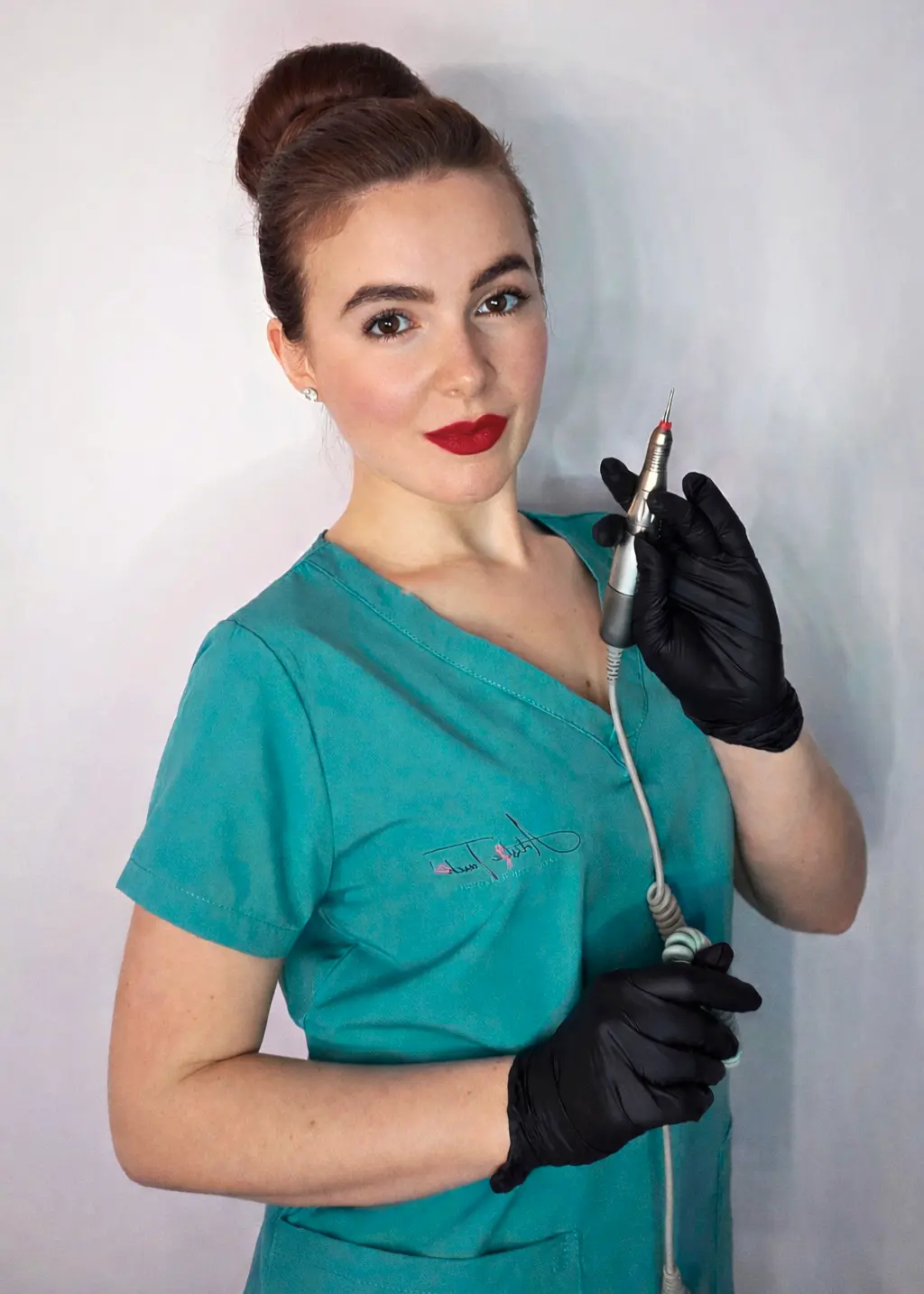
Radina Ignatova
Professional Nail Expert | International Nail Educator
I am Radina Ignatova, a Professional Nail Expert since 2014 and International Nail Educator, based in Scotland, UK. I am the Founder of Artistic Touch Nail Training Academy and TheNailWiki.
At Artistic Touch Nail Training Academy, I provide professional online nail courses specialising in dual forms, gel systems, polygel application, advanced nail structure, E-File work and Russian Manicure, with a strong focus on professional salon safety. I continue to work actively in salon practice, ensuring that all education reflects real client scenarios and current industry standards.
My teaching philosophy is simple: I show real salon challenges, real mistakes and real performance testing, not just perfect demonstrations. This is how you develop genuine technical competence and become a confident, capable nail professional.
Frequently Asked Questions
Is Russian Manicure – Beyond Technique suitable for someone who has already completed basic Russian Manicure training?
Yes. The course is designed for qualified technicians who already understand the general concept of Russian Manicure but want to develop the anatomy knowledge, e-file control and professional judgement that technique-only training often leaves out.
Does the course focus only on the e-file movements?
No. Alongside the practical technique, the course covers anatomy, ergonomics, tool selection, hygiene and sterilisation, real-client case studies across different skin types, aftercare, marketing and pricing.
Will this course teach me to work faster?
The course does not teach speed as a goal in itself. It addresses the common causes of lost time, such as hesitation, unnecessary movements and unclear tool selection, so that efficiency develops as a result of better decision-making.
Does the course include real clients, or only one demonstration model?
The course includes demonstrations and case-based learning across a range of skin types and conditions, rather than relying on a single, consistently cooperative model.
Is this course delivered entirely online?
Yes. The course is filmed and delivered as a structured online programme, including anatomy instruction, ergonomics, e-file control, tool selection, real-client case demonstrations, hygiene practice, aftercare, marketing and pricing.
Ready to see the full curriculum for yourself? View the course details →
Disclaimer: This content is for professional nail technician education purposes only. Nail services should be performed by trained professionals following current hygiene and safety regulations. Always follow local requirements and manufacturer instructions for cleaning, disinfection and sterilisation. Russian Manicure is not risk-free and requires proper anatomical understanding and training.
About Artistic Touch Nail Training Academy
Artistic Touch Nail Training Academy delivers professional online nail education focused on practical skill development, professional standards and safe salon practice. All courses are available online worldwide with lifetime access.