Do Gel Nails Cause Infertility? What the TPO Headlines Are Not Explaining

If you have read that the new “gel nail ban” happened because gel manicures cause fertility problems, there is an important distinction missing from that statement.
TPO has received a reproductive toxicity hazard classification, and this classification has consequently triggered its prohibition in cosmetic products. That is not the same statement as evidence that having gel manicures causes infertility in humans.
The Distinction That Matters
Gel manicures have not been banned. TPO is the ingredient affected. A regulatory hazard classification and the actual risk created by a particular level and route of exposure are different concepts. Understanding that difference is essential to reading the TPO story accurately.
Where the Fertility Story Comes From
TPO was given a Category 1B reproductive toxicant classification. This comes from UK and EU chemicals law, based on animal studies. A hazard classification like this describes something a substance can do under tested laboratory conditions. It is not the same as a documented case of harm in an actual human nail client.
Here is the legal chain of events: under cosmetics law, once a substance gets a CMR Category 1A or 1B classification, it is automatically banned from cosmetics. There is only one way around this, applying for a specific exemption and having it granted. No exemption was applied for with TPO, so the ban followed automatically. This is the direct cause of the ban. It did not come from a new case, incident, or clinical finding involving nail salons.
Hazard Is Not the Same Thing as Exposure
A substance can have a hazardous property under lab conditions. Whether that translates into real risk for you depends on several things: how much of the substance you are exposed to, how strong the concentration is, how it gets into your body, how often and for how long, and how the finished product is actually used.
Chemicals classification law is deliberately cautious. Its whole job is to flag possible hazards early, before any harm can happen, using a worst-case reading of the evidence. Cosmetics law then adds a separate layer, looking at how a product is genuinely used. This is why a hazard classification and a specific, real judgement about salon-level exposure are two different things, even though the classification is what legally triggers the ban.
This Does Not Mean the Regulation Should Be Ignored
Explaining the difference between hazard and exposure is not an argument for disregarding the restriction. The regulation should be followed. It simply should not be exaggerated beyond what it actually establishes.
What the Earlier Safety Opinion Said

Before this reclassification, TPO had already been checked by the Scientific Committee on Consumer Safety (SCCS). This is the EU’s independent scientific body for cosmetic ingredient safety. In 2015, in an opinion numbered SCCS/1558/15, it looked specifically at TPO in professional artificial nail systems. It found TPO safe at a maximum strength of 5%, under the conditions it tested. It also flagged TPO as a moderate skin sensitiser.
This is not the EU “admitting” TPO was safe in some way that contradicts the later ban. There is no conspiracy or contradiction here. The two conclusions simply belong to two different regulatory processes. The 2015 opinion looked at safety by concentration, under TPO’s classification at that time. The later CMR 1B reclassification comes from separate chemicals law, and it triggers a ban automatically through its own legal route, regardless of the earlier opinion. Once a CMR 1A or 1B classification applies, older SCCS opinions stop applying too, unless someone formally asks for a fresh safety review.
The Exposure Comparison From the Industry’s Scientific Body
The Cosmetic, Toiletry and Perfumery Association (CTPA), the UK trade body for the cosmetics industry, has explained that the classification reflects a worst-case scenario, not how TPO is actually used in nail products. Its Director of Science, Caroline Rainsford, has said the amount of TPO used in nail products is “over a thousand times less than the amount which could have any negative effect” found in the underlying studies. She also notes the product is applied to the nail, not the skin.
This context helps explain why trade and professional bodies describe the change as cautious and classification-driven, rather than as proof of harm at typical salon-level exposure.
Why the Classification Still Triggered a Ban Despite This Context
Cosmetics law does not weigh a substance’s classification against a custom, product-specific risk assessment before deciding whether to ban it. Once a formal CMR 1A or 1B classification applies, the ban in cosmetic products follows automatically, unless someone requests a specific exemption and it survives its own safety review. This is a deliberate, cautious legal design. It is not a judgement that has already considered the CTPA’s exposure comparison and rejected it.
What Clients Are Likely to Ask
Have gel manicures been proven to cause infertility? No. The classification is based on animal study evidence at hazard-assessment exposure levels, not on clinical findings in salon clients.
Why prohibit TPO if normal cosmetic exposure is much lower? Because cosmetics law prohibits CMR 1A/1B substances automatically upon classification, as a precautionary measure, independent of a bespoke exposure assessment for each specific product category.
Is TPO dangerous? It carries a hazard classification under chemicals law. Whether a specific level of exposure translates into meaningful risk is a separate question this article cannot answer for any individual, and no claim of individual risk is made here.
Should clients stop having gel manicures? This article does not offer medical advice. Compliant, TPO-free gel systems continue to exist and continue to be regulated cosmetic products.
Are TPO-free products automatically safe? TPO-free status addresses this one specific restriction. It does not remove the need for correct curing, proper technique, and attention to any other sensitising ingredients a formulation may contain.
Does the TPO classification mean every photoinitiator is dangerous? No. TPO’s classification is specific to TPO. Other photoinitiators are subject to their own separate safety assessments and regulatory status.
Key Takeaway
TPO received a reproductive toxicity hazard classification that triggered cosmetics regulation. That is different from evidence proving that normal gel manicures cause infertility. Regulations should be respected. They should also be explained accurately, without turning a hazard classification into an unsupported claim.
Want the Full Regulatory Picture?
Read the complete breakdown of the EU, Great Britain and Northern Ireland positions, with confirmed dates and sources.
Read the Full TPO Explainer →Evidence-Led Understanding, Not Panic
Artistic Touch Nail Training Academy is built on understanding why before how, including how to read regulation, chemistry and product information accurately.
Explore Artistic Touch Courses →About Radina Ignatova and Her Teaching Philosophy
About the Author
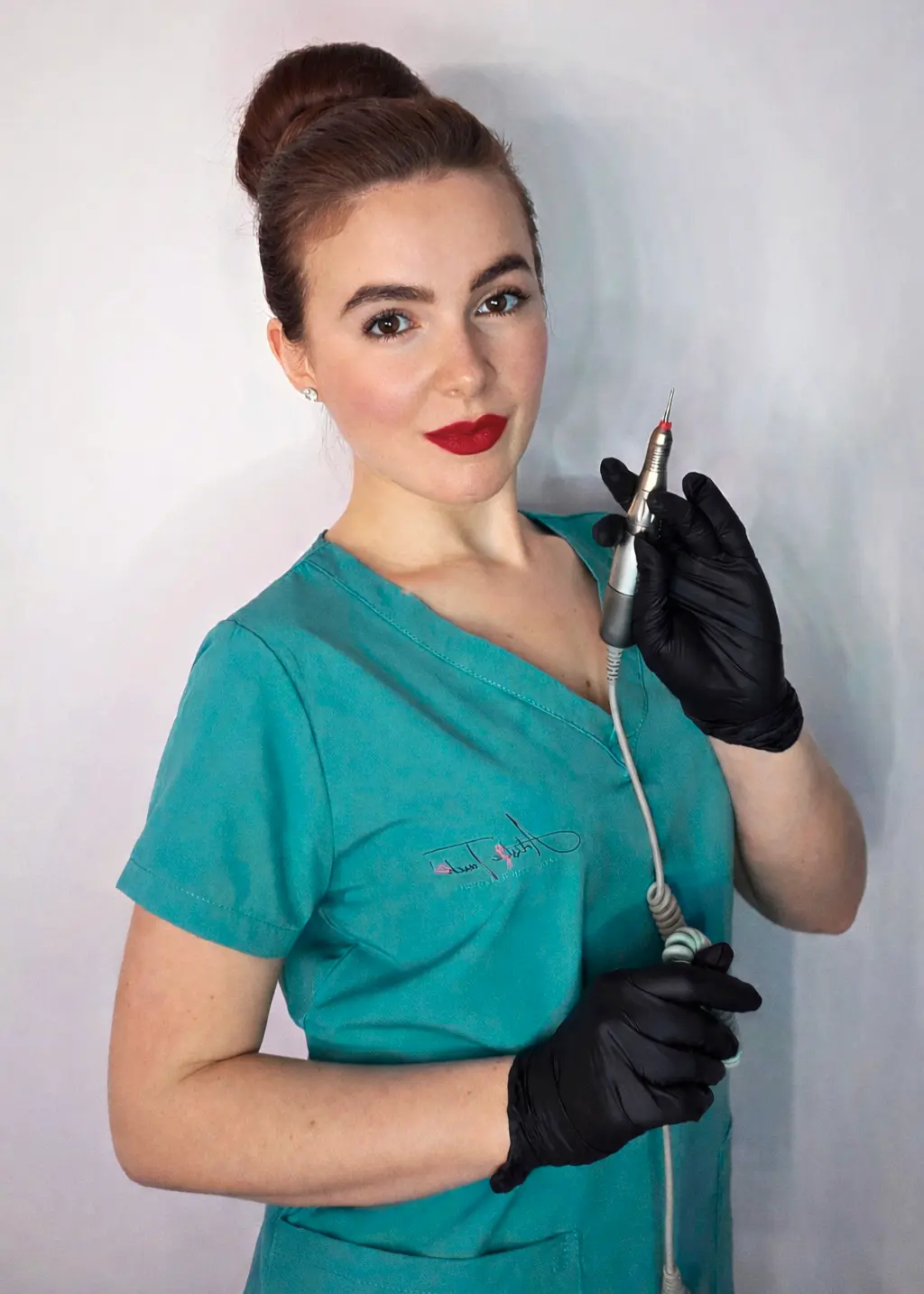
Radina Ignatova
Professional Nail Expert | International Nail Educator
I am Radina Ignatova, a Professional Nail Expert since 2014 and International Nail Educator, based in Scotland, UK. I am the Founder of Artistic Touch Nail Training Academy and TheNailWiki.
At Artistic Touch Nail Training Academy, I provide professional online nail courses specialising in dual forms, gel systems, polygel application, advanced nail structure, E-File work and Russian Manicure, with a strong focus on professional salon safety. I continue to work actively in salon practice, ensuring that all education reflects real client scenarios and current industry standards.
My teaching philosophy is simple: I show real salon challenges, real mistakes and real performance testing, not just perfect demonstrations. This is how you develop genuine technical competence and become a confident, capable nail professional.
Important Information
This article is provided for professional and consumer education purposes and reflects publicly available regulatory and scientific information at the time of writing. It is not medical advice, and no claim is made about the health outcome of any individual. Hazard classification, exposure level and individual risk are distinct concepts, and this article does not assert a specific level of risk for any person’s past or ongoing product use.
For personal health concerns, consult an appropriate medical or healthcare professional. For compliance questions, consult the Office for Product Safety and Standards, the Cosmetic, Toiletry and Perfumery Association, or your product supplier directly.
Frequently Asked Questions
Has anyone become infertile from TPO gel polish?
The classification is based on evidence from animal studies conducted at hazard-assessment exposure levels. This article makes no claim about outcomes in any individual human, and no such claim should be inferred from the regulation itself.
What does CMR Category 1B actually mean?
It is a hazard classification under chemicals safety legislation indicating a substance is presumed to have reproductive toxicity potential, generally based on animal study evidence, rather than confirmed human clinical data.
Does the earlier SCCS opinion mean regulators were wrong to prohibit TPO now?
No. The earlier opinion was conducted under a different hazard classification. Once TPO’s classification changed to CMR 1B, a separate legal mechanism applied, and the earlier concentration-based opinion no longer governs the current position.
Is it safe to say gel nails are “completely safe” now that TPO is being removed?
No such blanket claim is made here. TPO-free status addresses one specific restriction; correct curing, technique and other ingredient considerations remain relevant regardless.
Who is the Cosmetic, Toiletry and Perfumery Association?
The CTPA is the UK trade association representing the cosmetics and personal care industry, and a recognised source of technical commentary on cosmetics regulation, including the TPO restriction.
About Artistic Touch Nail Training Academy
Artistic Touch Nail Training Academy delivers professional online nail education focused on practical skill development, professional standards and safe salon practice. All courses are available online worldwide with lifetime access.