Why You Keep Catching the Nail Sinus During Russian Manicure
Have you found yourself catching the sides and making clients bleed? Or perhaps they simply jump. You might have concluded you need a smaller drill bit, a finer grit, or that you need to slow down while working on this area.
The same drill bit can be given to two different nail technicians. One works safely. The other catches the sinuses. The bit is rarely the real problem.
Why the Sinus Keeps Getting Caught
Catching the nail sinus is rarely caused by the drill bit itself. It usually happens because the cuticle pocket was not opened properly, the bit was not following the nail’s natural C-curve, or the wrong part of the bit, the tip instead of the body, was doing the work. These are anatomy and control issues, not equipment issues.
Two technicians can use the exact same bit with very different results, because the difference lies in how anatomy is respected, not in the tool itself.
What Is the Nail Sinus?
The nail sinus is the corner where the side wall meets the cuticle pocket. Every nail has two sinuses, one on each side.
It is one of the smallest areas worked on during a Russian Manicure. Because it is so small, even a minor mistake in this area can cause trauma. This area should never be underestimated.
Mistake One: Not Opening the Cuticle Pocket Properly
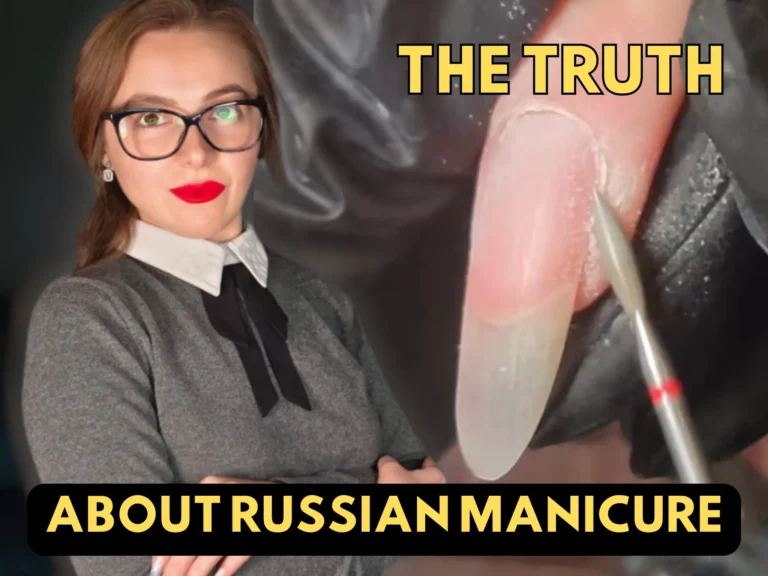
The first and most common mistake begins before the flame drill bit is even switched on: not knowing how to open the cuticle pocket correctly.
When the pocket is not open, or is only open halfway, the flame drill bit has nowhere to go once cleaning begins, and it moves into live tissue instead. This is the single most common cause of bleeding and injury at the sinus. Opening the pocket properly, before any drilling begins, creates the safe working space that a controlled Russian Manicure depends on.
Mistake Two: Not Following the Nail’s Natural C-Curve
Viewed from the front, a nail is not flat. It has a curve, known as the C-curve. This means the angle of the drill bit cannot stay fixed as it moves across the nail; it needs to follow that curve.
With every pass, the wrist needs to move along with the curve of the natural nail. The bit should not simply be dragged in a straight line. It needs to twist and adjust with the correct movement. Failing to follow the C-curve is a direct route to injuring the sinus, because a fixed angle eventually meets living tissue at the wrong point.
Mistake Three: Using the Wrong Part of the Flame Bit
A flame drill bit consists of a tip and a body. The tip and body are used for different purposes, and the tip is not appropriate for every part of the movement.
As the bit moves along the C-curve, the part of the bit in contact with the nail should change accordingly. Around the sides, the body of the bit is generally used, not the tip. The tip is sharp and can damage living tissue very easily if pointed directly at the skin. Depending on the area of the nail being worked on, both the angle and the part of the bit in use should adapt. None of it should be treated the same way, at the same angle, with the same movement, throughout the whole procedure.
None of These Injuries Start With the Flame Bit Alone
Looking at all three mistakes together, none of them are actually caused by the flame drill bit on its own. They happen because the anatomy was not respected: the pocket was not ready to be worked on, the angle of the bit was not adapted to the area, or the wrong part of the bit was doing the work.
When anatomy is understood, technique changes naturally as a result.
Three Questions Before Entering the Sinus
Before Working Near the Sinus, Ask
✓ Is my cuticle pocket open?
✓ Am I following the curve of the nail?
✓ Is the body of the flame drill bit doing the work, not the tip?
If the answer to any of these is no, the appropriate response is to stop, reposition, and continue. These are small checks, but they are what prevent injury and trauma in one of the smallest, most sensitive areas of the nail.
Russian Manicure Is an Anatomy Technique, Not an E-File Technique
One of the biggest misconceptions about Russian Manicure is that it is fundamentally an e-file technique. It is not. It is an anatomy technique performed with an e-file. Once the underlying structures are understood, confidence changes, movements change, and the entire procedure becomes more predictable.
This is exactly why the Russian Manicure – Beyond Technique Online Course was built the way it was. The course spends considerable time on the anatomy involved, the cuticle pocket, the nail plate, the eponychium, the sinuses, and every structure that plays a part in the service, before adjusting movement according to the structure underneath. Understanding why something works removes the reliance on trial and error.
About Radina Ignatova and Her Teaching Philosophy
About the Author
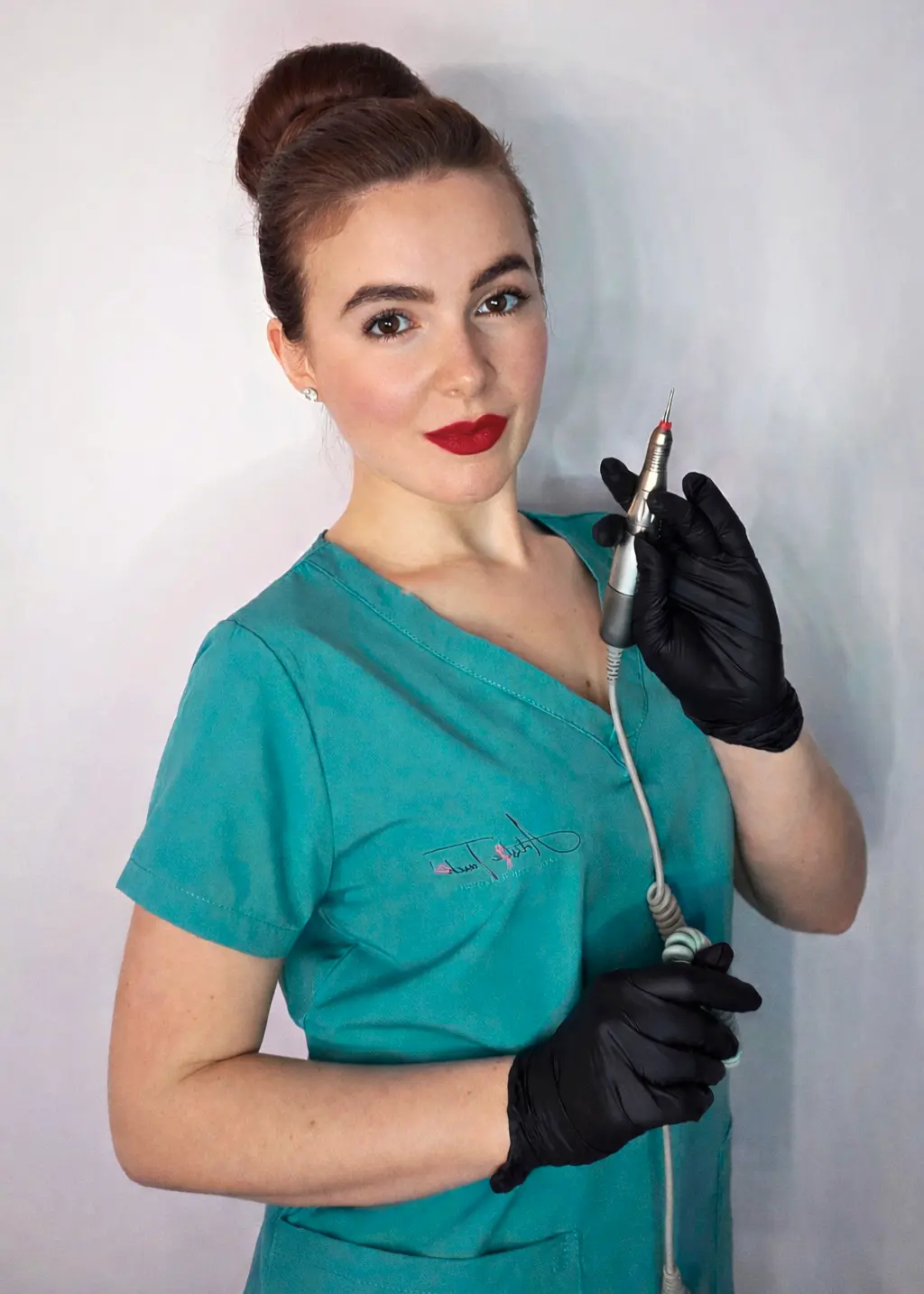
Radina Ignatova
Professional Nail Expert | International Nail Educator
I am Radina Ignatova, a Professional Nail Expert since 2014 and International Nail Educator, based in Scotland, UK. I am the Founder of Artistic Touch Nail Training Academy and TheNailWiki.
At Artistic Touch Nail Training Academy, I provide professional online nail courses specialising in dual forms, gel systems, polygel application, advanced nail structure, E-File work and Russian Manicure, with a strong focus on professional salon safety. I continue to work actively in salon practice, ensuring that all education reflects real client scenarios and current industry standards.
My teaching philosophy is simple: I show real salon challenges, real mistakes and real performance testing, not just perfect demonstrations. This is how you develop genuine technical competence and become a confident, capable nail professional.
Russian Manicure – Beyond Technique
Understand the anatomy behind every movement, so control over areas like the nail sinus becomes predictable rather than accidental.
Explore Russian Manicure – Beyond Technique →Planned launch: 30 September 2026
Frequently Asked Questions
Does a smaller drill bit or finer grit prevent catching the sinus?
Not on its own. The same bit can be used safely by one technician and cause injury in the hands of another. The deciding factors are usually whether the pocket was opened properly, whether the C-curve was followed, and which part of the bit was in contact with the tissue.
What should I do if the pocket does not open easily?
Do not proceed to drill in that area until the pocket has been opened appropriately for that client’s anatomy. Working with an unopened or partially opened pocket is what leaves living tissue exposed to the bit.
Why does the C-curve matter so much for sinus safety?
The nail is not flat, so a fixed drill bit angle will eventually meet the tissue at an inappropriate point as it travels across the curve. Adjusting the wrist to follow the curve keeps the bit working with the shape of the nail rather than against it.
Is Russian Manicure primarily about mastering the e-file?
No. It is an anatomy technique performed with an e-file. The e-file is the tool, but the underlying decisions are driven by understanding the cuticle pocket, the nail plate, the eponychium and the sinuses.
Coming Soon: Russian Manicure Free Course
A foundational free course on Russian manicure basics and anatomy understanding is coming to Artistic Touch Nail Training Academy. Check back soon.
Disclaimer: This content is for professional nail technician education purposes only. Nail services should be performed by trained professionals following current hygiene and safety regulations. Always carry out a full client consultation and check for contraindications before performing any nail service. Russian Manicure is not risk-free and requires proper anatomical understanding and training.
About Artistic Touch Nail Training Academy
Artistic Touch Nail Training Academy delivers professional online nail education focused on practical skill development, professional standards and safe salon practice. All courses are available online worldwide with lifetime access.