Why Russian Manicure Is More Than Learning How to Use a Flame Bit
The flame bit does not make decisions. It removes material according to how it is angled, how much pressure is applied, how fast it rotates, and how it moves across the tissue, all of which are determined by the technician, not the tool itself. Learning to hold and move a flame bit correctly is only one part of Russian Manicure. The larger part is knowing where to use it, when to stop, and why.
Why the Flame Bit Has Become the Symbol of Russian Manicure
The flame bit is the most visually distinctive tool associated with Russian Manicure, and it appears in nearly every demonstration video. Because it is the most visible element, it has become closely tied to how the technique is perceived: master the flame bit movement, and the technique follows.
This framing overlooks the assessment and decision-making that determines how the flame bit should be used on any given client, and whether it should be used at all in a particular area.
What the Flame Bit Can and Cannot Do
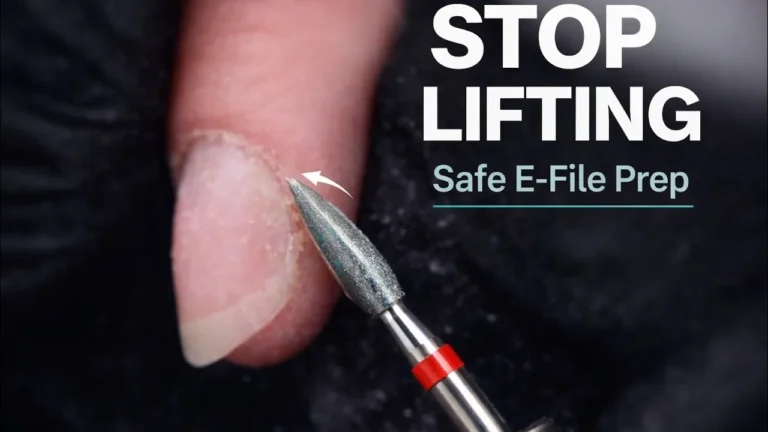
The flame bit is a tool for removing true cuticle efficiently. It can be effective when used with appropriate speed, angle, and pressure, matched to the anatomy in front of the technician. It cannot compensate for poor visibility, poor positioning, or a lack of understanding about what tissue is actually being addressed.
The same flame bit, used identically on two different clients, can produce very different outcomes, because the anatomy it is working across is different in each case.
Anatomy Determines How the Tool Should Be Used
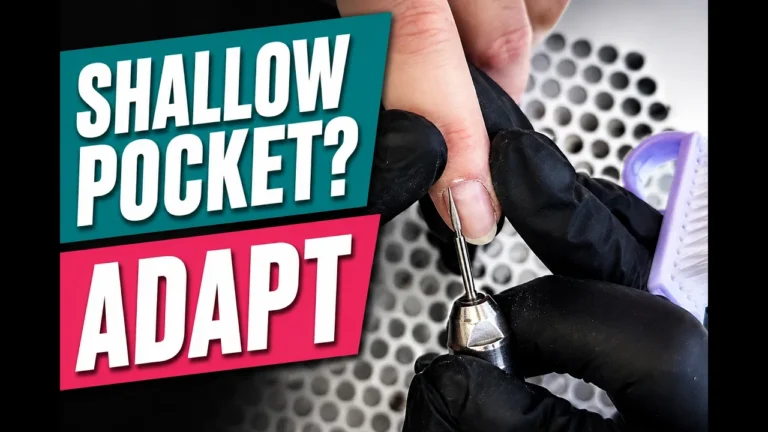
Where the nail sinus sits, how deep the cuticle pocket opens, how firm or flexible the proximal nail fold is, and how sensitive the surrounding skin appears, all influence how the flame bit should be angled and how much pressure is appropriate. A technique that works well on soft, flexible anatomy may be inappropriate on firmer, less mobile anatomy.
This is why a single demonstrated movement, however well performed, cannot be treated as a universal method. The tool stays the same. The anatomy does not.
Speed, Pressure, Angle and Direction Work Together
These four factors do not operate independently. A change in angle affects how much pressure is being transmitted to the tissue. A change in speed affects how much heat and friction is generated. Direction affects which structures are being approached and how visibility is maintained throughout the movement.
Increasing speed does not automatically improve efficiency, and increasing pressure does not compensate for poor access or poor positioning. Understanding how these factors interact is part of what allows a technician to adjust appropriately rather than relying on force.
Why the Nail Sinus Is Commonly Caught
The nail sinuses, where the proximal nail fold meets the lateral nail folds, are frequently cited as one of the most commonly injured areas in Russian Manicure. This usually happens not because the technician is being careless, but because visibility into this area is limited, and the angle required to work safely changes depending on the client’s anatomy.
When technicians struggle to access the sinus clearly, the instinct is often to apply more pressure or work more aggressively. This does not address the underlying issue, which is typically visibility or positioning, not depth.
Still Relying on the Tool Rather Than the Assessment?
Russian Manicure – Beyond Technique is built for technicians who want to understand what they are seeing, why common problems occur, and when the technique needs to be adapted rather than repeated.
View the Course Curriculum →Pocket Opening and Cuticle Cleaning Are Different Stages
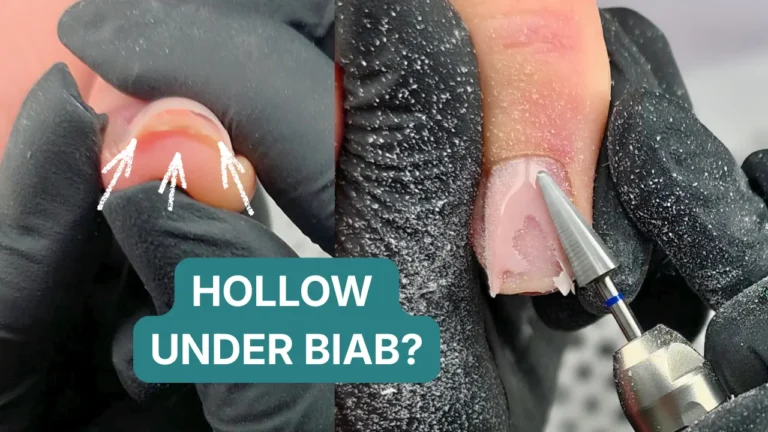
Opening the cuticle pocket, gently lifting the proximal nail fold away from the nail plate, is a distinct step from removing true cuticle from within that pocket. Treating these as a single continuous action can lead to unnecessary tissue involvement, particularly if the pocket is opened further than the anatomy comfortably allows in pursuit of a deeper result.
Why One Bit or Movement Does Not Suit Every Client
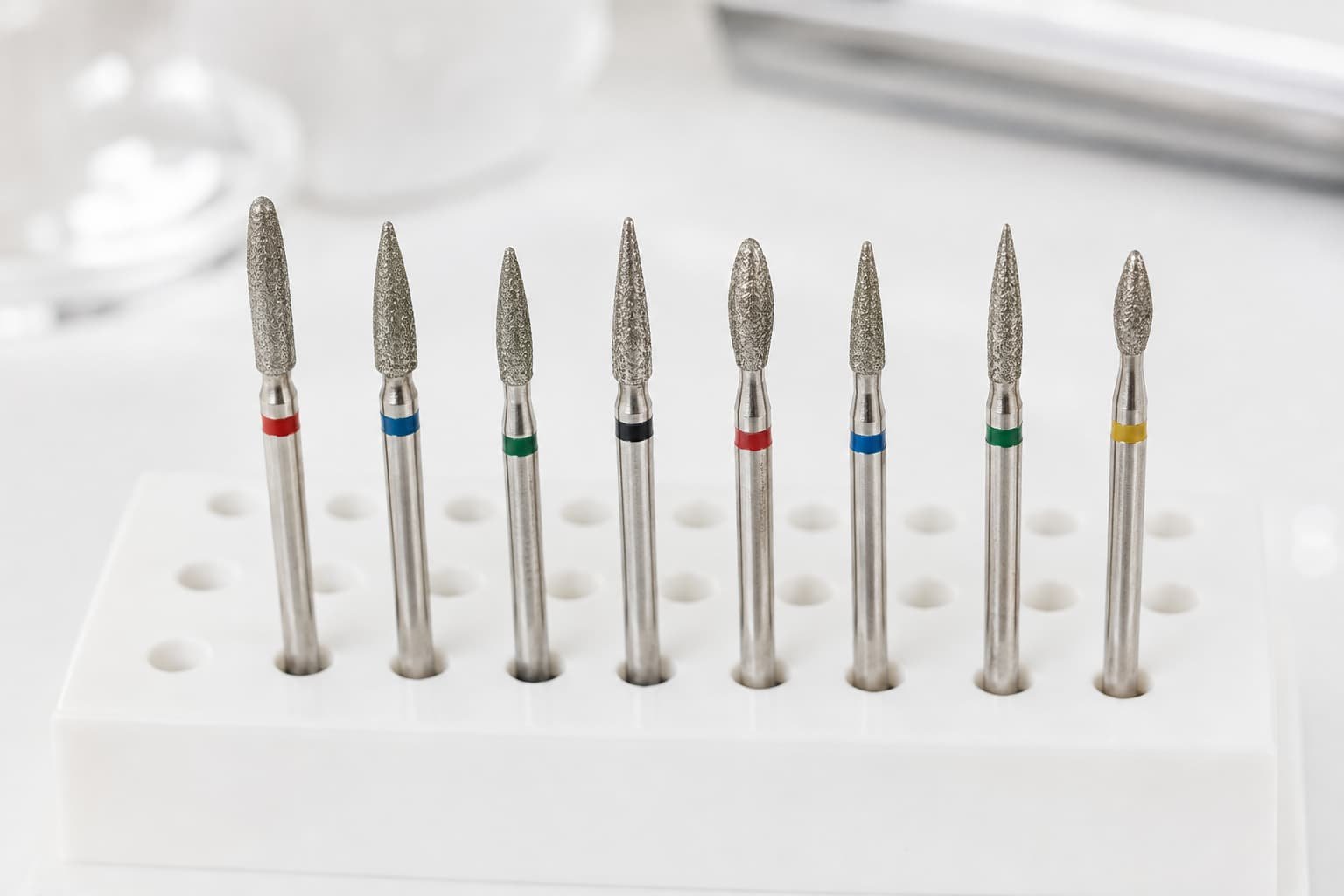
Bit shape, diameter, and abrasiveness all affect how a tool interacts with tissue. Carbide, ceramic, and diamond bits each behave differently, and a bit and movement appropriate for one client’s anatomy may be poorly suited to another’s, either because the pocket is a different depth, the skin is more sensitive, or the sinus is positioned differently. A worn or unsuitable bit can also affect control, regardless of how well the technician’s movement is executed.
What Technicians Should Assess Before Starting
Before Using the Flame Bit, Assess These Factors
✓ The flexibility and firmness of the client’s proximal nail fold
✓ How deeply the cuticle pocket naturally opens
✓ Visibility into the nail sinuses on this particular hand
✓ The condition and sensitivity of the surrounding skin
✓ Whether the bit selected is appropriate in shape, diameter and abrasiveness
✓ The condition of the bit itself, and whether it needs replacing
✓ Client positioning, to ensure a clear, comfortable working angle
Assessment before the e-file is switched on is as much a part of Russian Manicure as the movement itself. It determines how the subsequent technique should be adapted. This is the reasoning behind Russian Manicure – Beyond Technique.
How Russian Manicure – Beyond Technique Teaches the Complete Reasoning
The Russian Manicure – Beyond Technique Online Course addresses the assessment and reasoning that surrounds tool use, not only the flame bit movement itself. This includes the anatomical structures discussed in this article, how speed, pressure, angle and direction interact, and how to recognise when a client’s anatomy requires a different approach than the one demonstrated on a training model.
This article is not intended as a complete technical procedure. It explains the reasoning and limitations involved in flame bit use; the full technical instruction is covered within the course itself.
Key Takeaway
The flame bit does not decide how it is used. The technician does. Speed, pressure, angle and direction must be adjusted according to the anatomy in front of you, and assessment before starting is as important as the movement itself.
Russian Manicure – Beyond Technique
For technicians who know what the flame bit does but want to understand when, why, and how the technique must be adapted for each client.
Explore Russian Manicure – Beyond Technique →Planned launch: 30 September 2026
About Radina Ignatova and Her Teaching Philosophy
About the Author
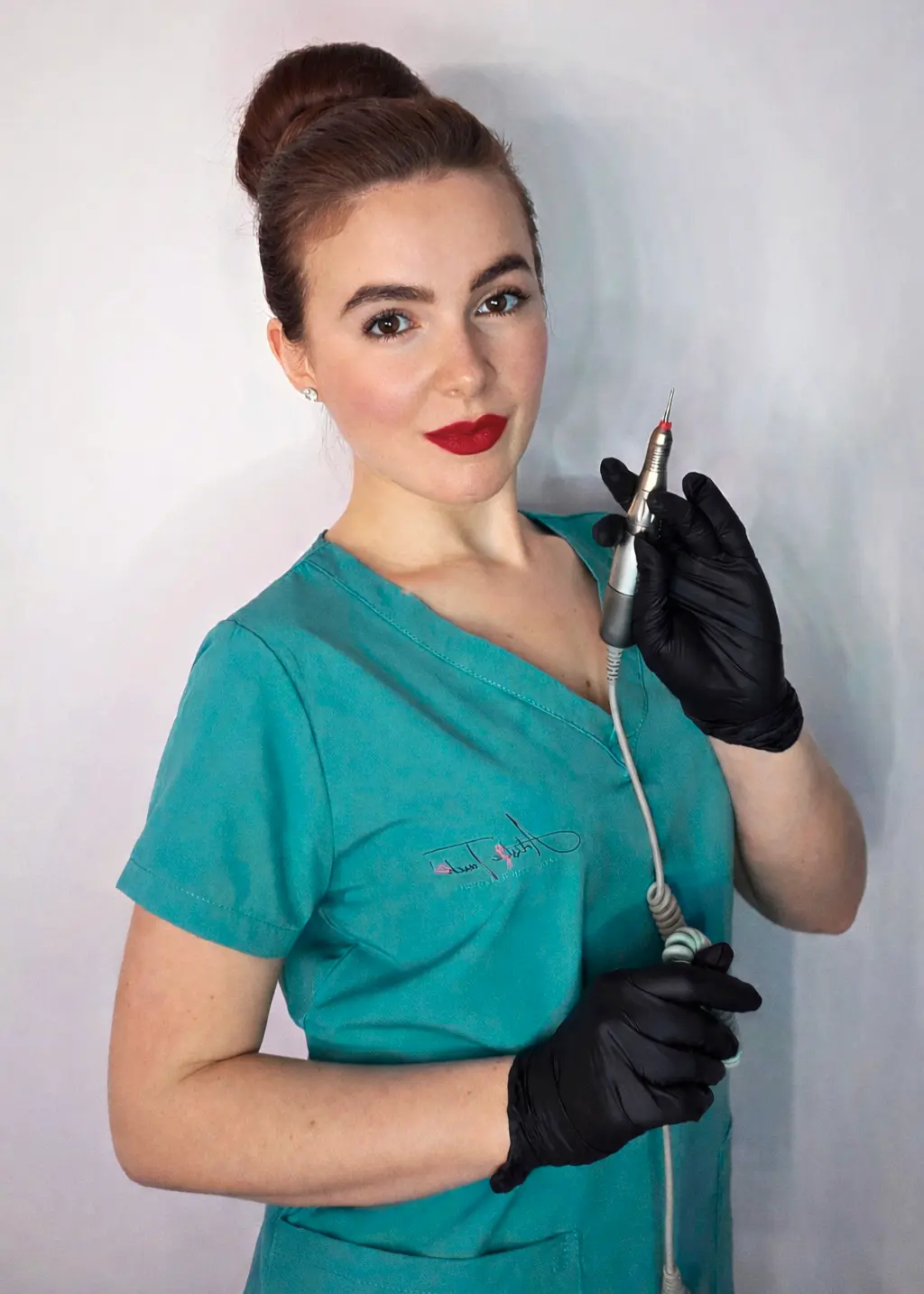
Radina Ignatova
Professional Nail Expert | International Nail Educator
I am Radina Ignatova, a Professional Nail Expert since 2014 and International Nail Educator, based in Scotland, UK. I am the Founder of Artistic Touch Nail Training Academy and TheNailWiki.
At Artistic Touch Nail Training Academy, I provide professional online nail courses specialising in dual forms, gel systems, polygel application, advanced nail structure, E-File work and Russian Manicure, with a strong focus on professional salon safety. I continue to work actively in salon practice, ensuring that all education reflects real client scenarios and current industry standards.
My teaching philosophy is simple: I show real salon challenges, real mistakes and real performance testing, not just perfect demonstrations. This is how you develop genuine technical competence and become a confident, capable nail professional.
Frequently Asked Questions
Is a flame bit the only tool used in Russian Manicure?
No. Scissors, nippers, and polishing bits are also commonly used, each with a specific purpose depending on the client’s needs and the stage of the service.
Why does the same bit sometimes feel different between clients?
The bit itself has not changed, but the anatomy it is working across has. Skin firmness, pocket depth, and tissue sensitivity all affect how the same tool behaves in practice.
If I struggle with the nail sinus, does that mean I need a different bit?
Not necessarily. Difficulty with the sinus is often related to visibility or positioning rather than the bit itself. Adjusting the angle or repositioning the client’s hand is frequently more effective than switching tools.
Does increasing e-file speed make the service more efficient?
Not automatically. Speed affects friction and heat generation, and increasing it without appropriate control can create more risk than benefit, rather than improving efficiency.
Learn to Assess the Technique, Not Just Copy It
Working confidently across different clients means understanding anatomy, maintaining technical control, and adapting the service to what the tissue in front of you actually requires, rather than repeating one routine regardless of who is in the chair.
View the Course Details →Disclaimer: This content is for professional nail technician education purposes only. Russian Manicure is not risk-free and should be performed only by trained professionals following current hygiene and safety regulations. Always carry out a full client consultation and check for contraindications before performing any nail service.
About Artistic Touch Nail Training Academy
Artistic Touch Nail Training Academy delivers professional online nail education focused on practical skill development, professional standards and safe salon practice. All courses are available online worldwide with lifetime access.