Watching Tutorials vs Structured Nail Training: Why Results Are Different
Quick Answer: Why Do Tutorial Results Differ from Structured Training Outcomes?
Tutorials demonstrate correct execution without teaching diagnostic assessment, error recognition or correction protocols. Structured training provides systematic skill progression, performance verification, professional feedback and accountability that tutorials cannot deliver. You can replicate demonstrated steps from tutorials but cannot develop the diagnostic ability required to identify and fix your own errors.
This article explains what separates watching content from developing professional competence.
When Watching Does Not Equal Learning
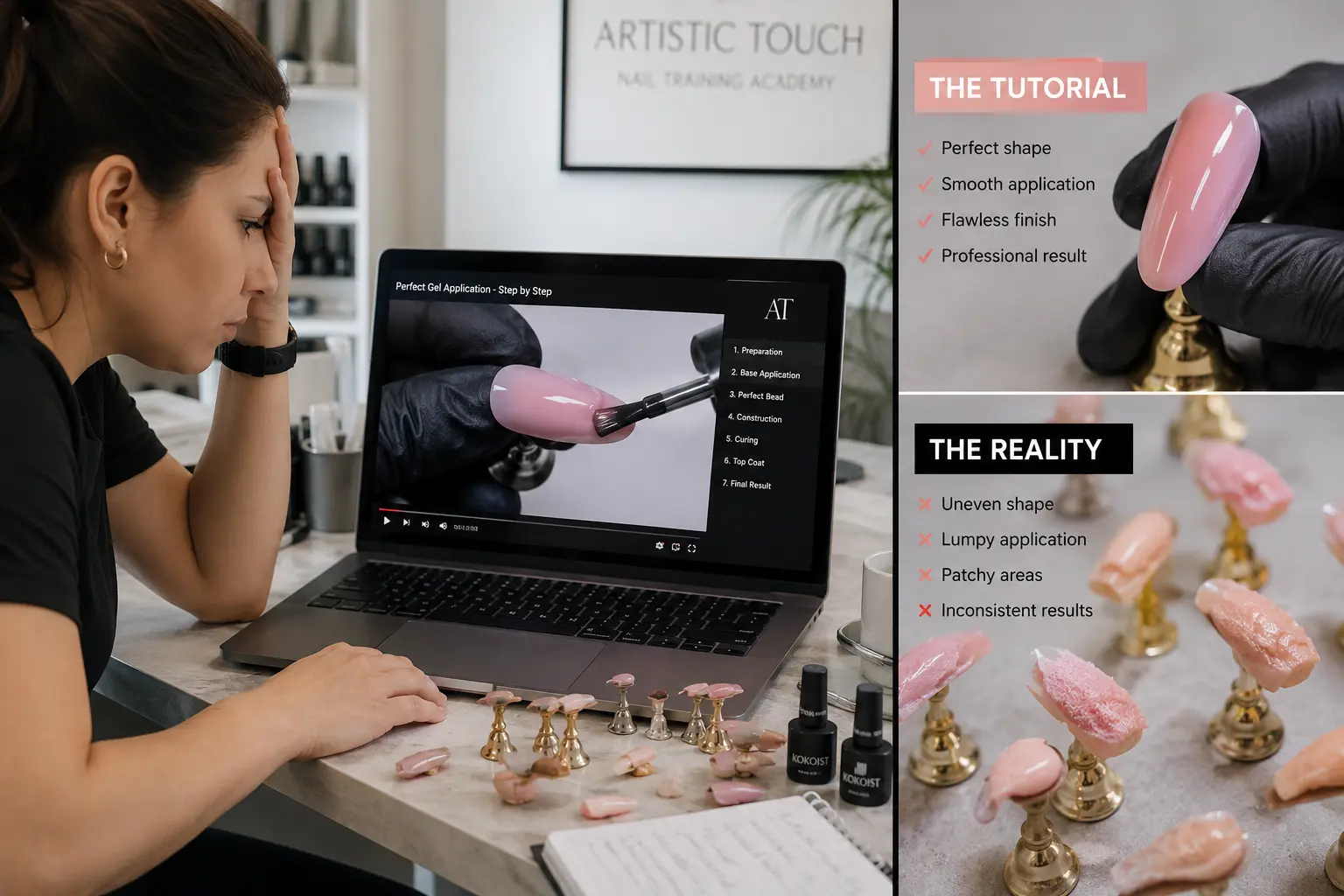
You watch nail tutorials religiously. You follow popular educators, study application demonstrations and save technique videos. You attempt to replicate what you watched. Your results do not match the demonstration. The tutorial showed perfect execution. Your application lifts, your structure fails or your finish requires excessive refinement work.
You assume you executed incorrectly and watch more tutorials hoping for clarity. The new tutorials show the same perfect results without explaining why yours differ or what specific adjustment will fix the gap. This is the fundamental limitation of tutorial-based learning: demonstrations show what correct execution looks like but do not teach you how to recognise when your execution deviates from standard or what diagnostic steps identify the specific error.
Structured nail training addresses this gap by teaching assessment protocols, demonstrating common errors alongside correct execution and providing performance feedback that reveals the specific technical problems your self-assessment cannot identify. This is why structured training produces different outcomes than tutorial watching.
What Tutorials Actually Teach
Tutorials demonstrate procedures under ideal conditions. The educator shows flawless preparation on a perfect nail model, demonstrates optimal product viscosity behaviour, achieves perfect apex placement and produces a finished result requiring no correction. This demonstration teaches you what the end goal looks like. It does not teach you how to achieve that goal when your conditions differ from ideal.
When your preparation is slightly inadequate, when product viscosity behaves differently due to temperature variations, when apex placement is subtly incorrect or when natural nail geometry differs from the demonstration model, tutorials provide no guidance. They showed you perfect execution. They did not show you imperfect execution, explain how to recognise deviation or demonstrate the correction sequence that brings imperfect work to professional standard.
This is not a tutorial quality problem. Even excellent tutorials have this inherent limitation: they can demonstrate correct execution but cannot teach diagnostic thinking or error correction without showing failures and explaining systematic assessment.
The Missing Diagnostic Framework
Professional nail technique requires more than knowing application steps. It requires understanding what adequate preparation looks like versus inadequate preparation, recognising when product behaviour indicates a problem, identifying structural errors before they cause failures and implementing specific corrections based on diagnostic assessment.
Tutorials assume you can self-diagnose execution quality. When the demonstration shows thin product layers and yours appear similar to your eye, you assume yours are correct. Professional assessment might reveal your layers exceed thickness standards by measurable amounts. This gap between your perception and actual performance creates the difference between tutorial results and your results.
Structured training teaches diagnostic frameworks: what to check at each execution stage, what adequate looks like verified objectively, what inadequate looks like even when it appears acceptable to untrained assessment and how to measure execution against professional benchmarks rather than subjective impressions.
Why Error Recognition Cannot Be Self-Taught
Recognising your own errors requires reference standards you do not yet have when developing a skill. You cannot accurately assess whether your preparation meets professional standard because you do not yet know what professional standard preparation looks like when verified objectively rather than judged subjectively.
Tutorials show you the correct version. They rarely show you incorrect versions with explanations of how to recognise them during your own work. Without seeing what inadequate preparation looks like, what incorrect product placement produces, what structural errors appear like before they cause failures, you have no visual reference for identifying these problems in your own applications.
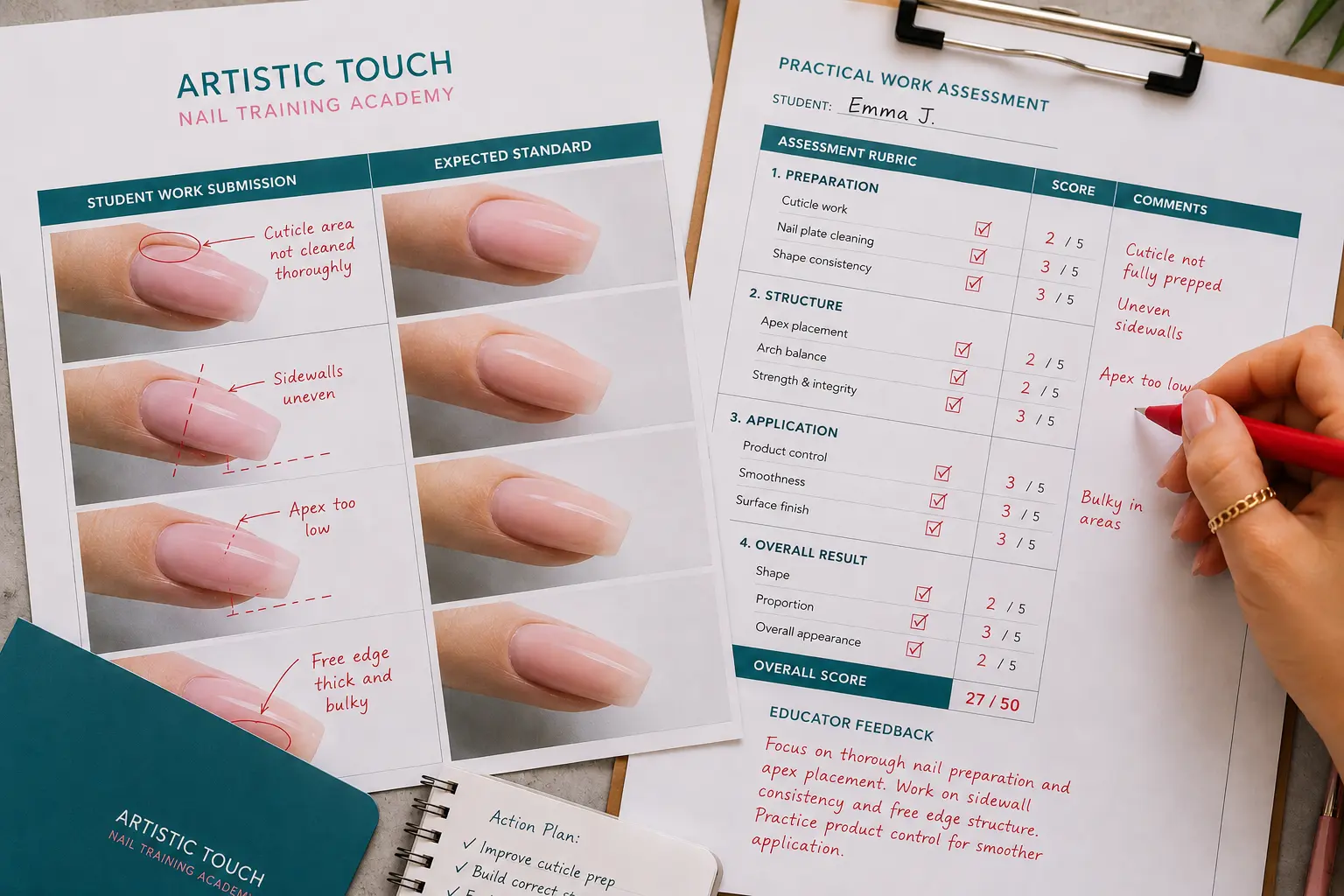
Structured training demonstrates multiple execution variations: correct execution, common error pattern one with visual indicators, common error pattern two with diagnostic markers, and the specific corrections each error requires. This comparative demonstration is what develops error recognition ability that self-teaching from perfect demonstrations cannot provide.
The Absence of Performance Accountability
Tutorials have no mechanism for verifying whether you actually achieved the demonstrated result. You watch the content, attempt replication and self-assess the outcome. If your self-assessment is inaccurate—which it often is when you are still developing the skill—you proceed with incorrect execution patterns believing they are adequate.
Structured training includes work submission and professional assessment. You complete an application following course instruction. You submit photographic documentation. An educator evaluates your preparation quality, product placement, structural accuracy and finish standard against professional benchmarks, then identifies specific errors your self-assessment missed and provides exact corrections.
This external verification is what reveals the gap between what you think you executed and what you actually produced. Without it, you can watch tutorials for years while your technique remains at the same level because no one identified the systematic errors you could not self-diagnose.
Systematic Progression vs Random Content Consumption
Tutorials are consumed in whatever order you encounter them or whatever topic currently interests you. Today you watch gel application. Tomorrow you watch nail art. Next week you study e-file technique. This random consumption does not build systematic competence because professional skills have prerequisite relationships.
You cannot execute advanced structural work correctly without mastering foundational preparation standards. You cannot achieve consistent product application without understanding material behaviour principles. You cannot develop efficient workflow without establishing systematic protocols. Tutorials do not enforce progression sequences because they are designed for individual consumption, not cumulative skill building.
Structured training follows deliberate skill progression: preparation competence before application instruction, application competence before structural refinement, foundational skills before advanced techniques. Each module builds on principles established in previous modules. You cannot progress to advanced content while executing foundational skills incorrectly because performance verification catches errors before they become reinforced habits.
The Illusion of Comprehensive Knowledge
After watching dozens of tutorials on a technique, you feel you understand it thoroughly. You have seen multiple demonstrations, heard various explanations and absorbed different perspectives. This feels like comprehensive knowledge. It is actually comprehensive exposure to demonstrations, which is not the same as diagnostic competence or execution ability.
You know what correct execution looks like when performed by experienced educators under ideal conditions. You do not know what your execution looks like when assessed against professional standards, what specific errors are present in your technique, how to identify deviations during application or what corrections will bring your work to professional level.
Structured training makes this distinction explicit: demonstration shows you the goal, diagnostic instruction teaches you how to assess progress toward that goal, error recognition training teaches you what prevents reaching it and correction protocols teach you how to fix the specific problems you encounter.
When Tutorials Are Valuable
Tutorials serve specific purposes effectively: they demonstrate new techniques you have not encountered, show alternative approaches to familiar procedures, provide inspiration for creative work and offer exposure to different educational styles. These are valuable functions that complement structured learning.
Tutorials work best as supplements to systematic training rather than replacements for it. Once you have diagnostic ability from structured instruction, tutorials become more useful because you can recognise what the demonstration is actually showing beyond surface-level steps. You understand the preparation standards being applied, the structural principles being demonstrated and the quality verification happening even when not explicitly stated.
The mistake is using tutorials as your primary learning method when developing foundational competence. This approach gives you exposure to procedures without building the diagnostic and correction abilities that professional execution requires.
What Professional Competence Actually Requires
The gap between watching tutorials and developing professional nail technique is not about tutorial quality or how many you watch. It is about what tutorials can and cannot teach. Demonstrations show results. Diagnostic training teaches assessment. Perfect examples show goals. Error recognition teaches problem identification. Watching builds knowledge. Structured progression with accountability builds competence.
When you choose how to develop your nail technique, you are choosing between exposure to perfect demonstrations and systematic development of diagnostic and correction abilities that produce reliable professional results.
Structured Training with Diagnostic Instruction
Artistic Touch online nail courses provide systematic skill progression, error recognition training, performance verification and professional feedback on submitted work. Develop the diagnostic ability tutorials cannot teach.
View All Courses →Lifetime access • Private student community • Start immediately
Frequently Asked Questions
Can I learn professional nail technique from tutorials alone?
Tutorials can teach you what correct execution looks like but cannot provide diagnostic assessment, error recognition training or performance feedback. Without these elements, you can replicate demonstrated steps but cannot develop the ability to identify and correct your own errors when results fail. Professional competence requires structured training with accountability.
Why do my results not match tutorial demonstrations?
Tutorial demonstrations show perfect execution under ideal conditions by experienced educators. Your results differ because tutorials do not teach you how to recognise execution deviations, diagnose technical errors or implement corrections when your conditions differ from the demonstration. This diagnostic gap is what structured training addresses.
What do structured nail courses provide that tutorials do not?
Structured courses provide systematic skill progression, error recognition demonstrations, diagnostic assessment training, performance verification against professional benchmarks and individualised feedback identifying specific technical gaps in your execution. Tutorials demonstrate procedures; structured training develops diagnostic competence.
How long does it take to learn from tutorials vs structured training?
Learning timelines depend on whether you develop diagnostic ability. Structured training with performance feedback typically produces measurable improvement within 4-8 weeks. Tutorial-based learning can take months or years to reach similar competence levels because self-teaching without external assessment reinforces errors rather than correcting them.
Should I stop watching tutorials if I enrol in a course?
Tutorials complement structured training effectively once you have diagnostic ability from systematic instruction. Continue watching tutorials for new technique exposure and creative inspiration, but rely on structured courses for foundational skill development, error correction and performance verification that tutorials cannot provide.
Why does watching more tutorials not improve my technique?
More tutorials provide more exposure to demonstrations but do not address the diagnostic gaps preventing improvement. If you cannot identify what you are executing incorrectly, watching additional perfect demonstrations will not reveal your specific errors or teach you the corrections required. External assessment is needed to identify systematic problems.
About the Author
Radina Ignatova
Professional Nail Expert | International Nail Educator
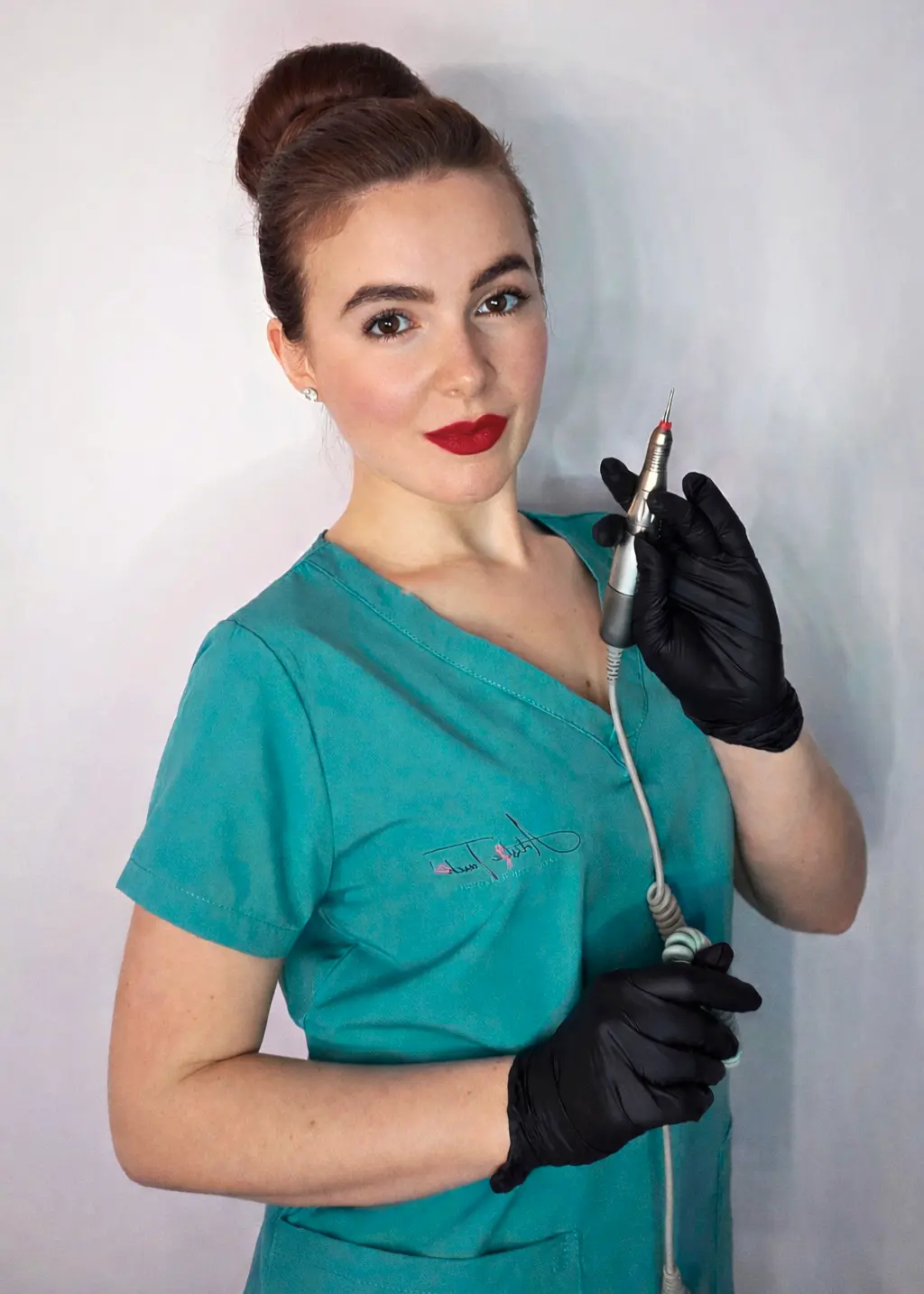
I am Radina Ignatova, a Professional Nail Expert since 2014 and International Nail Educator, based in Scotland, UK. I am the Founder of Artistic Touch Nail Training Academy and TheNailWiki.
At Artistic Touch Nail Training Academy, I provide structured professional online nail courses specialising in dual forms, gel systems, polygel application, advanced nail structure, E-File work and Russian Manicure, with a strong focus on professional salon safety. I continue to work actively in salon practice, ensuring that all education reflects real client scenarios and current industry standards.
My teaching philosophy is simple: I show real salon challenges, real mistakes and real performance testing, not just perfect demonstrations. This is how you develop genuine technical competence and become a confident, capable nail professional.
Every Artistic Touch course includes lifetime access and access to a dedicated student support group, where I provide ongoing guidance and professional feedback.
Disclaimer: This content is for educational purposes only. Nail services should be performed by trained professionals following current hygiene and safety regulations. Always carry out a full client consultation and check for contraindications before performing any nail service.
About Artistic Touch Nail Training Academy
Artistic Touch Nail Training Academy delivers structured professional online nail education focused on practical skill development, professional standards and safe salon practice. All courses are available online worldwide.