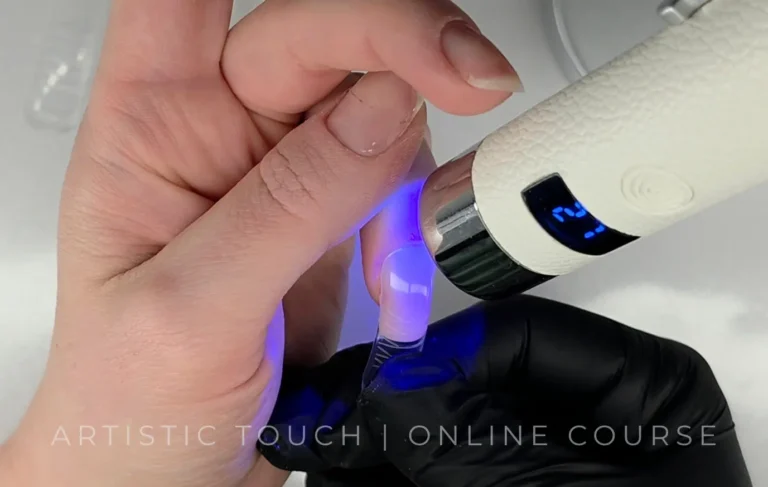
5 E-File Mistakes That Cause Lifting — And How to Fix Them
Quick Answer: What E-File Mistakes Cause Lifting?
The five most common e-file mistakes that cause lifting are: incorrect angle and pressure on the nail plate, skipping or rushing cuticle preparation, not removing nail dust and debris after e-file work, using the wrong drill bit for the wrong zone, and incorrect speed settings for the service being performed.
This article names each mistake and explains why it causes lifting. The full breakdown of exactly how to identify and fix each one is in the free guide — download it below.
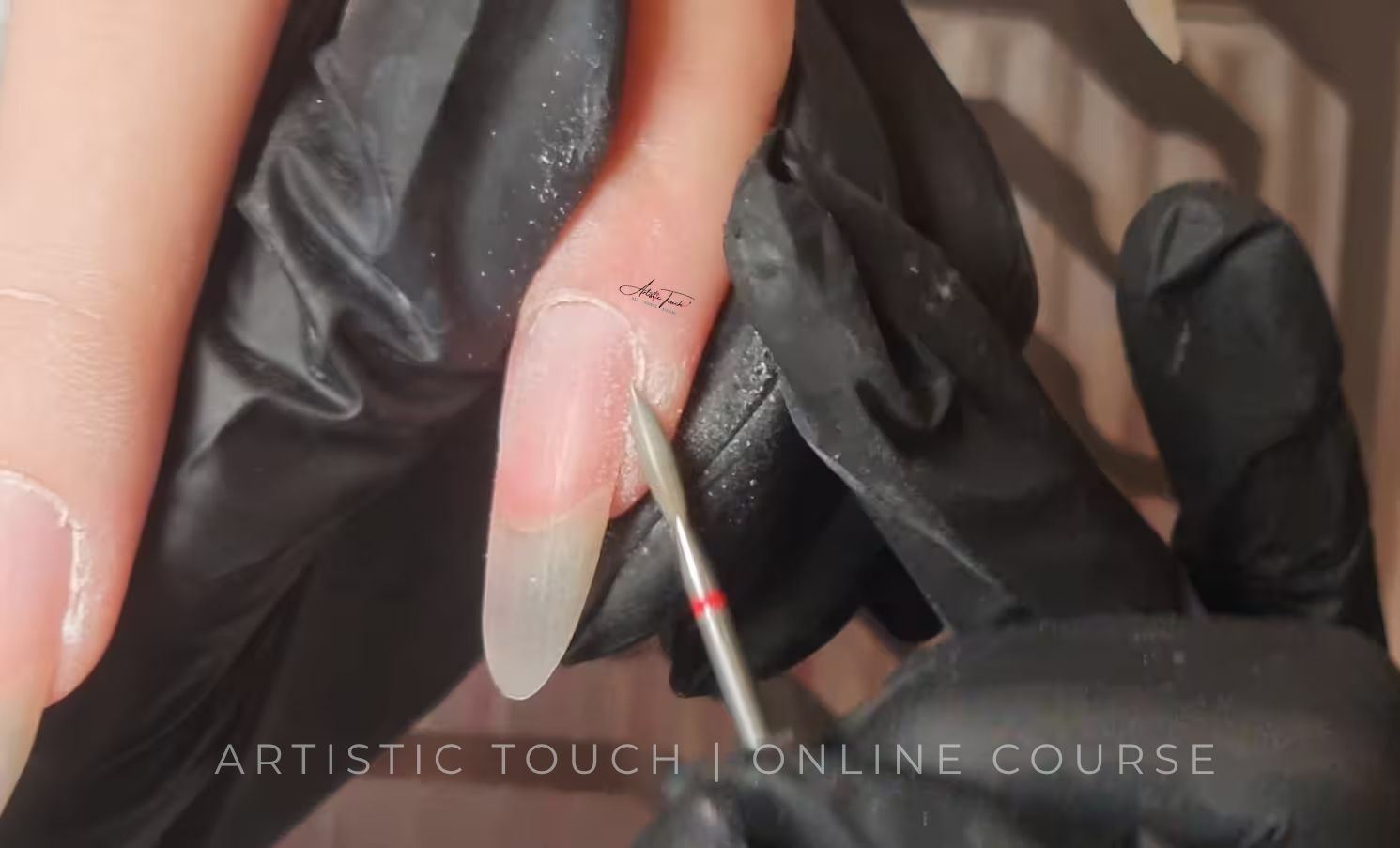
Watch: Professional E-File Cuticle Prep on a Real Client
Before reading the five mistakes in detail, watch this full salon e-file cuticle prep on a real client. This is what correct e-file technique looks like in a real appointment — not a studio demonstration and not an ideal model client.
Why Lifting Is Almost Always a Prep Problem
Lifting is one of the most common complaints in nail services — and one of the most misunderstood. When a client returns with product lifting away from the nail, the instinct is often to blame the product. A different brand is purchased, a different base coat is tried. The lifting continues.
The reason it continues is that the product was never the problem. In the vast majority of cases, lifting is caused by something that happened — or did not happen — during preparation. Specifically, during e-file preparation.
The e-file is one of the most powerful tools in professional nail work. Used correctly, it creates a perfectly prepared nail plate that holds product reliably. Used incorrectly, it creates the exact conditions that cause lifting — and most technicians do not realise which mistake they are making or why.
The five mistakes below are the most common e-file errors encountered across over 12 years of professional salon practice. This article names each one and explains the problem it creates. The exact fixes for every mistake are in the free guide — download it at the end of this article.
Mistake 1 — Incorrect Angle and Pressure on the Nail Plate
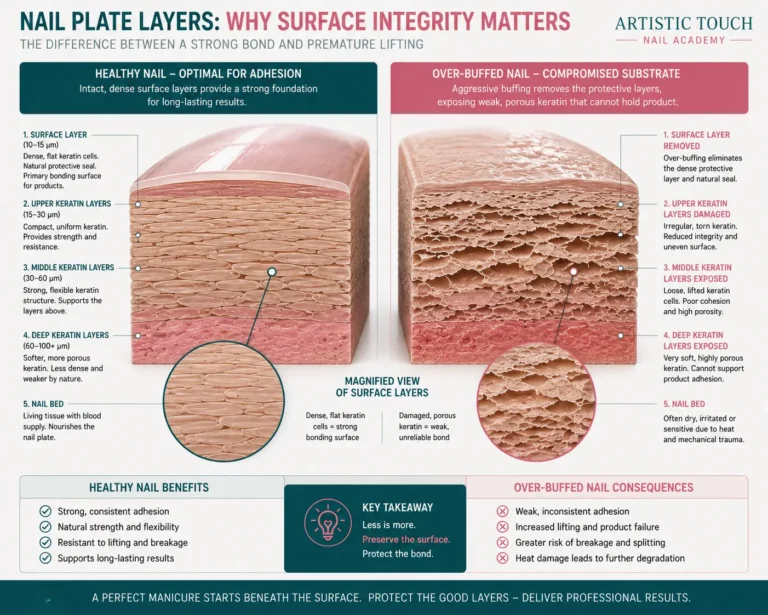
When the drill bit is held at the wrong angle or applied with too much pressure, it does not exfoliate the nail plate evenly. Instead, it creates microscopic grooves and uneven texture across the surface — and product applied over an uneven surface cannot adhere reliably.
This mistake is particularly common because it is invisible in the moment. The nail plate looks prepared and buffed. There is no immediate sign that anything has gone wrong. The lifting appears days later — often from the same area of the nail, repeatedly, across multiple appointments — and the technician does not connect it to what happened during prep.
If your clients experience consistent lifting from the same position on the nail, this mistake is almost always involved. The full correction is in the free guide.
Mistake 2 — Skipping or Rushing Cuticle Preparation
Before the e-file touches the nail plate, the cuticle area must be properly prepared. When this stage is skipped or rushed, a thin and often invisible layer of skin remains on the nail plate. Product applied over this layer bonds with the skin rather than the nail — and as that skin naturally sheds, the product comes with it.
This is what lifting along the cuticle line looks like. It is not a product failure. It is a preparation failure — specifically at this stage.
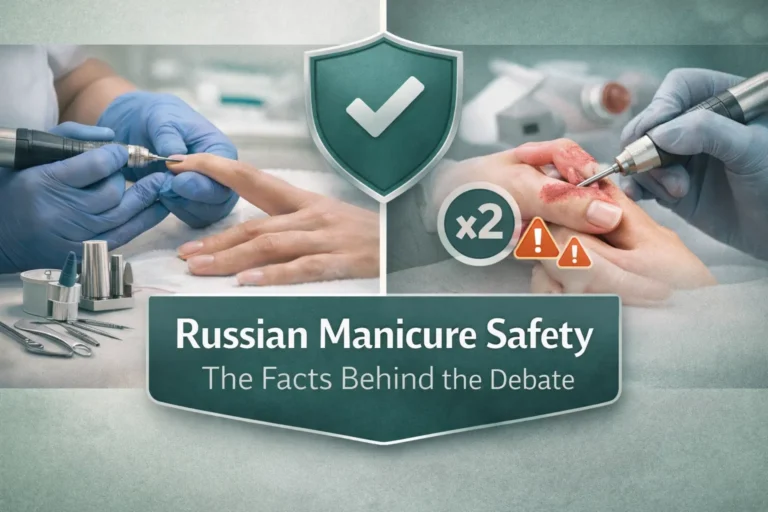
Rushing cuticle preparation is also one of the leading causes of rings of fire — a burn injury caused by e-file contact with the live skin surrounding the nail. Before performing any e-file service, always carry out a full client consultation and check for contraindications.
Mistake 3 — Not Removing Nail Dust and Debris After E-File Work
Every e-file session produces nail dust. This dust settles across the entire nail plate — including in the areas that were just prepared. The problem is that it is almost entirely invisible to the naked eye under standard salon lighting.
When product is applied over a nail plate that still carries dust, the dust sits between the plate and the product and acts as a barrier. It prevents direct adhesion. This is why two identical services performed on the same client can produce different results from one appointment to the next. The difference is often this step alone — and whether it was done properly or skipped.
Mistake 4 — Using the Wrong Drill Bit for the Wrong Zone
Different drill bits are designed for different tasks and different areas of the nail. Using the wrong bit in the wrong zone damages the nail surface in ways that directly cause lifting — and the damage is not visible at the time it happens.
This mistake is particularly common amongst nail technicians whose training did not cover bit selection in sufficient detail. The nail looks prepared. The consequences appear later, when the client returns with product lifting from the same areas every single appointment without variation.
Mistake 5 — Incorrect Speed Settings for the Service
The correct e-file speed depends on the stage of the service, the bit being used, the area of the nail being worked on, and the individual client’s nail thickness and sensitivity. Running the e-file at the wrong speed causes damage that leads directly to lifting.
Speed that is too high generates friction and heat. That heat damages the nail plate at a structural level — and product applied over a heat-damaged surface cannot adhere reliably. If a client ever reports warmth or discomfort during e-file work, this is a signal that something is wrong. It should never be dismissed as normal.
What These Five Mistakes Have in Common
Every one of these mistakes interferes with adhesion at the preparation stage — before any product has been applied. None of them are visible in the moment they happen. All of them produce lifting that looks identical to a product failure, which is why they go undiagnosed and uncorrected for months or years.
Knowing that a mistake exists is not enough to fix it. The free guide goes through each mistake in full — what is actually happening, how to recognise it in your own work, and exactly what to change.
If you want to understand the full technique from start to finish — including bit selection, speed settings, cuticle prep methodology, and gel polish application — take a look at our full range of online nail courses.
Learn the Full Technique From Start to Finish
Explore our full range of professional online nail courses covering technique, bit selection, speed settings, cuticle preparation, gel polish application, and safe removal.
View Our Nail Courses →Lifetime access • Certificate of completion • Private student community • Direct access to Radina • Start immediately
Frequently Asked Questions
Why do my gel nails keep lifting even when I use good products?
In the majority of cases, persistent lifting is caused by preparation errors rather than product quality. The five mistakes in this article — incorrect angle and pressure, rushed cuticle prep, residual nail dust, wrong drill bit selection, and incorrect speed settings — are the most common causes. Changing products without addressing the preparation technique will not resolve the lifting.
What are rings of fire in nail services?
Rings of fire is the term used in the professional nail industry to describe a burn injury caused by e-file contact with the live skin surrounding the nail plate. They appear as circular redness or a burning sensation around the nail fold and are caused by incorrect e-file angle, excessive speed, or heavy pressure near the skin.
How long should a professional e-file cuticle prep take?
A thorough professional e-file cuticle prep typically takes approximately 15 minutes as part of a standard salon service. This includes the orange wood stick push back, forward and reverse e-file passes, cuticle cutting where necessary, and full dust removal. Rushing this stage is one of the primary causes of lifting.
Is e-file preparation safe for every client?
Not every client is suitable for e-file services. A full consultation must be carried out before any e-file service, including a check for contraindications. Certain nail conditions, skin conditions, and medical circumstances make e-file preparation inappropriate or require modification of the technique. Always consult the contraindications guide and complete a nail consultation form before proceeding.
Where can I learn professional e-file technique properly?
Artistic Touch Nail Training Academy’s online nail courses cover complete technique from start to finish, including preparation, application, removal, and safe working practices. Courses are fully online with lifetime access, a certificate of completion, and access to a private student community where you can share your work and receive direct feedback.
About the Author
Radina Ignatova
Professional Nail Expert | International Nail Educator
I am Radina Ignatova, a Professional Nail Expert since 2014 and International Nail Educator, based in Scotland, UK. I am the Founder of Artistic Touch Nail Training Academy and TheNailWiki.
At Artistic Touch Nail Training Academy, I provide structured professional online nail courses specialising in dual forms, gel systems, polygel application, advanced nail structure, E-File work and Russian Manicure, with a strong focus on professional salon safety. I continue to work actively in salon practice, ensuring that all education reflects real client scenarios and current industry standards.
My teaching philosophy is simple: I show real salon challenges, real mistakes and real performance testing, not just perfect demonstrations. This is how you develop genuine technical competence and become a confident, capable nail professional.
Every Artistic Touch course includes lifetime access, a certificate of completion and access to a dedicated student support group, where I provide ongoing guidance and professional feedback.
Disclaimer: This content is for educational purposes only. E-file services should be performed by trained professionals following current hygiene and safety regulations. Always carry out a full client consultation and check for contraindications before performing any nail service.
About Artistic Touch Nail Training Academy
Artistic Touch Nail Training Academy delivers structured professional online nail education focused on practical skill development, professional standards and safe salon practice. All courses are available online worldwide.