Why Many Nail Technicians Still Struggle After Training (And Why It Is Not Your Fault)
Watch the full video above or continue reading for a detailed breakdown
Quick Answer: Why Do Nail Technicians Struggle After Training?
Most nail technicians struggle after training because they were taught to copy steps without understanding the reasoning, were only shown perfect results without real-world adaptation skills, and never received honest personal feedback on their specific technique. This is not a reflection of your ability — it is a gap in how nail education is traditionally delivered.
The three main reasons: Copying without understanding the why, unrealistic training conditions that do not match salon reality, and no constructive feedback to correct mistakes before they become habits.
Special announcement: To celebrate one year of Artistic Touch Nail Training Academy, I am giving away three free personal feedback sessions. Details below.
The Reality Many Nail Technicians Face After Training
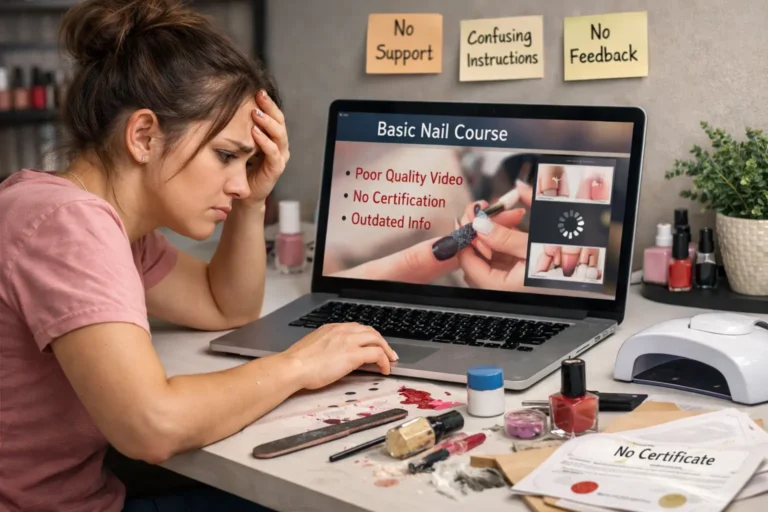
A lot of nail technicians finish training and still feel unsure. Sometimes they feel even more confused than when they started. Some courses leave you questioning yourself instead of giving you clarity.
After over a decade working in nails and training hundreds of students since 2014, I have seen the same patterns repeat themselves. The same struggles. The same frustrations. And I want to be very clear about something important.
If you are struggling after training, it does not mean you are a bad nail technician. It usually means something was not explained properly or something was missing from your training course.
In this article, I will walk you through the three main reasons why this happens, what you can do about it, and how to get the honest feedback you need to move forward properly.
🎉 Celebrating One Year of Artistic Touch Nail Training Academy
This article marks a special milestone — one full year since I launched Artistic Touch Nail Training Academy. Over the past twelve months, I have worked directly with nail technicians at all levels, from complete beginners to experienced professionals looking to correct ingrained habits. The patterns I discuss in this article are not theoretical — they come from real students, real conversations, and real transformations. To celebrate this milestone and give back to the nail community, I am offering something I have never done before: three free personal feedback sessions. Keep reading to find out how to enter.
Reason 1: Copying Without Understanding
Most nail training teaches you steps, not reasoning. You watch a demonstration, you follow what you see, you try to replicate the result. When it does not come out the same way, you assume you did something wrong.
But here is the problem. Nobody explained the why behind each step.
What Happens When You Do Not Understand The Why
When something goes wrong — and it will, because that is just nail work — you have no framework to diagnose the problem. You cannot troubleshoot. You can only repeat the same steps and hope for a different outcome.
- Why does cuticle preparation directly affect retention? Most technicians do not know the biomechanical answer.
- Why does apex placement need to change with different nail shapes? Without understanding structure, you apply one technique to every nail.
- Why does the same product behave differently on different clients? Natural nail biology varies — understanding this prevents frustration.
This is exactly why my courses focus heavily on the reasoning behind every single technique. I show my students what happens when things go wrong — intentionally and unintentionally — because we are humans, not robots. Mistakes happen. What matters is understanding why they happened and how to correct them.
Reason 2: Real Salon Work Is Not Perfect (And You Were Not Told)
You are not a bad nail technician. You are often trained in unrealistic conditions.
Most training environments show you perfect lighting, calm conditions, cooperative practice hands, and unlimited time. Then you step into a real salon where clients move, you work under pressure, time is limited, and the lighting is not ideal.
The Gap Between Training and Reality
When your work does not look perfect in these real-world conditions, you blame yourself. But the truth is, you were simply not taught how to adapt to actual working situations.
⚠️ What Real Salon Work Actually Looks Like
Clients move during application. Natural nails vary wildly in shape, flexibility, and oil levels. Products behave differently in different temperatures and humidity. Time pressure is real. These are normal salon conditions — not signs that you are doing something wrong. The problem is that traditional training rarely shows you how to handle these variables.
This is why in my training, I deliberately show mistakes — both the ones that happen naturally and the ones I create intentionally. I do not cut them out of the footage. I show you exactly what went wrong and what to do next. Because that is how you learn to work in real salon conditions, not just in perfect demonstration environments.
Reason 3: No Constructive Feedback or Support
This is the biggest gap in nail education, and it is the one that makes the most difference to your actual progress.
Sometimes nail technicians do not even realise when they are making mistakes or slowly damaging natural nails. Without honest feedback, those mistakes repeat. They become habits. And habits become ingrained techniques that are much harder to correct later.
Why Sugar-Coating Does Not Help Anyone
Constructive criticism is not negative. It is how you learn safely and professionally. When an educator tells you your work is “lovely” or “great” when there are visible safety issues or structural problems, they are not helping you — they are allowing you to continue practising incorrectly.
You can watch hundreds of videos. You can read every article online. But if nobody has ever looked at your specific work and told you specifically what needs to change, you are essentially guessing.
This is exactly why I created a private student group for people who train with Artistic Touch Academy. It is not just a place to share pretty nail pictures. It is a space where students get real, honest, structured feedback on their actual work. That is what actually moves you forward.
🎁 Free Personal Feedback Giveaway — One Year Anniversary Celebration
I Am Giving Away Three Free Personal Feedback Sessions
To celebrate one full year of Artistic Touch Nail Training Academy, I am offering something I have never done publicly before — three completely free personal feedback sessions.
How It Works:
- You send me images and short videos of your real work — not your best sets, your actual day-to-day work
- I will review your technique, structure, and visible safety issues
- You will receive written feedback through messaging — no live calls required
- The feedback will be honest, specific, and actionable
- This feedback may also be used as educational content on my YouTube channel and social media (anonymously unless you want to be credited)
How To Enter:
- Watch the video at the top of this article on YouTube
- Like the video
- Subscribe to the channel
- Leave a comment telling me what you are currently struggling with — be specific and honest
- Bonus entry: Share the video on your social media
Important Dates:
Giveaway closes: 31st March 2026
Winner announcement: I will reply publicly to the three winning comments in the YouTube comment section
Response deadline: Winners have 48 hours to contact me after being announced
If no response: I will move to the next person
What To Do If You Are Struggling Right Now
If you recognise yourself in any of the three points above, here is what I recommend you do next.
1. Identify Which Gap Applies To You
Are you copying steps without understanding why they work? Are you comparing your salon work to unrealistic training conditions? Or have you simply never had anyone look at your specific technique and give you honest feedback?
Knowing which gap you are dealing with tells you exactly what to focus on next.
2. Seek Out Education That Explains The Why
Look for educators who do not just demonstrate techniques — look for those who explain the reasoning behind each step. When you understand the biomechanics, the chemistry, and the structural principles, you can adapt to any situation.
3. Get Honest Eyes On Your Work
Whether it is through the free giveaway above, a professional course with structured feedback, or finding a mentor who will give you constructive criticism — get someone qualified to look at your actual work and tell you specifically what needs attention.
Why Artistic Touch Students Get Different Results
Students who train with Artistic Touch Academy receive structured feedback throughout their learning journey — not just at the end. They see real mistakes and how to correct them. They learn in a private student group where honest, professional feedback is the standard. And they understand the why behind every technique, which means they can adapt to any client, any nail type, and any salon condition. This is not just education — it is practical skill-building designed for real salon work.
Frequently Asked Questions
Is it normal to still struggle after completing a nail course?
Yes, it is extremely common. Most nail courses teach you what to do but not why it works, which leaves you unable to troubleshoot when problems arise. Additionally, many courses only show perfect results in ideal conditions, which does not prepare you for real salon work. Struggling after training usually indicates a gap in the education you received, not a lack of ability on your part.
How do I know if I am making mistakes without feedback?
Without professional feedback, it is very difficult to identify your own mistakes — especially if they relate to nail health or safety. Common signs include inconsistent retention, client complaints, lifting, or product not lasting as long as expected. However, some mistakes (like improper e-file technique or inadequate cuticle preparation) may not be immediately obvious but can cause long-term damage. This is why honest professional feedback is so important.
What is the difference between constructive feedback and harsh criticism?
Constructive feedback is specific, actionable, and focused on improvement. It identifies what needs to change and explains how to change it. Harsh criticism is vague, discouraging, and does not provide a path forward. Good feedback might say “your apex placement is too far back for this nail shape, which is causing stress at the free edge — move it forward by 2mm.” Poor criticism says “that does not look right” without explanation. Constructive feedback is essential for professional growth.
Can I enter the giveaway if I am not based in the UK?
Yes, absolutely. The feedback is provided through written messaging, so it does not matter where in the world you are based. You send images and short videos of your work, and I provide written feedback that you can review and implement at your own pace. There are no live calls or time-zone complications.
How long does it take to see improvement after receiving feedback?
This depends on what needs to be corrected. Simple technique adjustments can show improvement within one or two practice sessions. Habit changes (like correcting e-file pressure or cuticle work patterns) may take several weeks of conscious practice. The most important factor is understanding what to change and why — once you have that clarity, improvement typically happens much faster than struggling without direction.
What should I include when submitting work for feedback?
Send clear, well-lit images from multiple angles (top view, side view, free edge). Include close-ups of cuticle work and apex structure. Short videos showing your technique are extremely helpful. Most importantly, send your real work — not your best set. The point of feedback is to identify what needs improvement, and I can only help you if I see where you are actually struggling.
About Your Instructor: Radina Ignatova
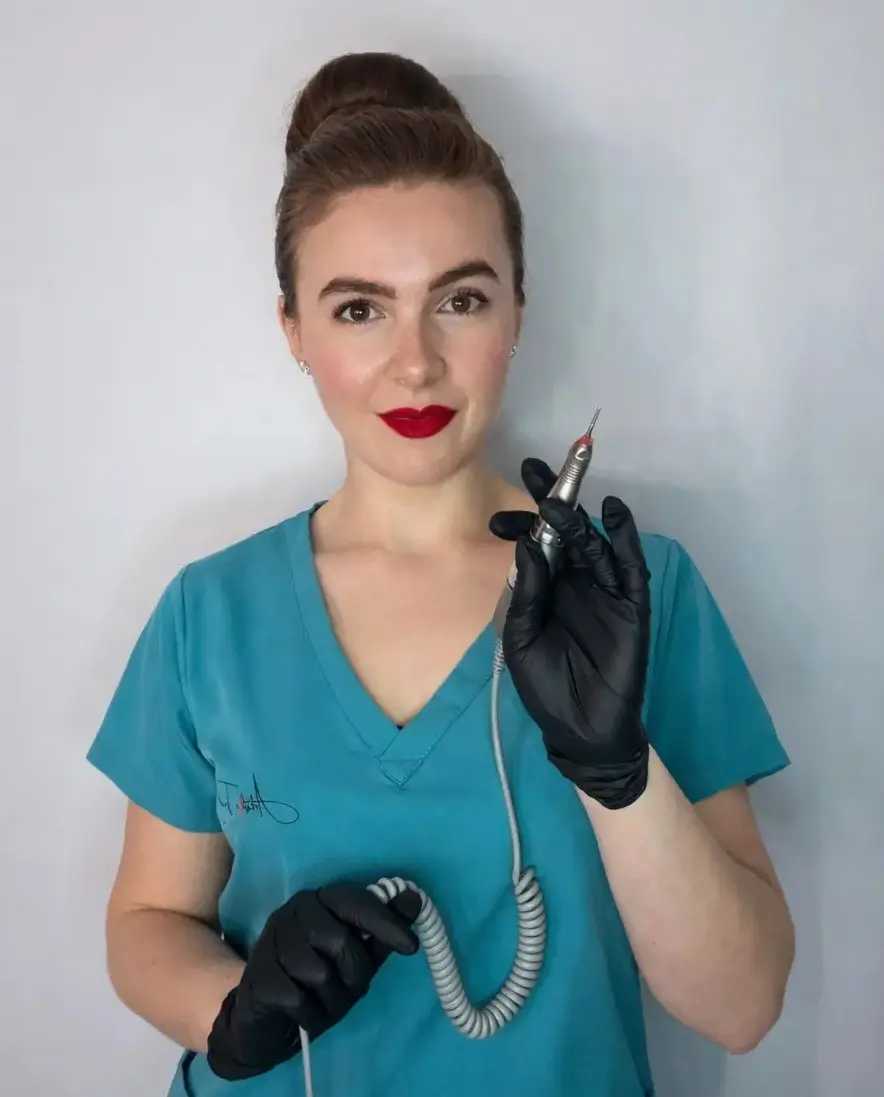
Radina Ignatova is a Professional Nail Expert, Certified Educator, and founder of Artistic Touch – Nail Training Academy, based in Dundee, Scotland, UK.
With professional experience in advanced nail techniques since 2014, Radina specialises in Russian Manicure, BIAB (Builder in a Bottle), e-file techniques, and nail safety protocols. She has trained hundreds of nail technicians worldwide through both online courses and in-person training sessions.
Her teaching philosophy focuses on:
- Honest education that shows real mistakes and how to fix them — not just perfect results
- Understanding the why behind every technique, not just copying steps
- Structured personal feedback through a private student community
- Real-world preparation for actual salon conditions, not just demonstration environments
- Safety and professionalism as non-negotiable standards in every aspect of nail services
Radina also founded TheNailWiki, a free evidence-based nail education resource designed to provide accurate, professionally-informed nail care guidance accessible to everyone.
Ready To Move Forward With Your Nail Education?
Struggling after training does not mean you are not good enough. It usually means something was not explained properly or something was missing from your education.
If you want honest, real-world nail education that prepares you for actual salon work — not just demonstration conditions — explore the professional courses at Artistic Touch Nail Training Academy.
What You Will Achieve:
- ✓ Understand the why behind every technique, not just the steps
- ✓ Learn to troubleshoot problems and adapt to any client
- ✓ Receive honest structured feedback in a private student community
- ✓ Work confidently in real salon conditions with professional competence
About Artistic Touch Nail Training Academy: Professional online and in-person nail education based in Dundee, Scotland, UK. Specialising in advanced techniques including Russian Manicure, BIAB, and e-file methods. Our mission is to provide honest, evidence-based education that produces confident, skilled nail technicians who prioritise client safety and nail health.
Have questions? Contact us here