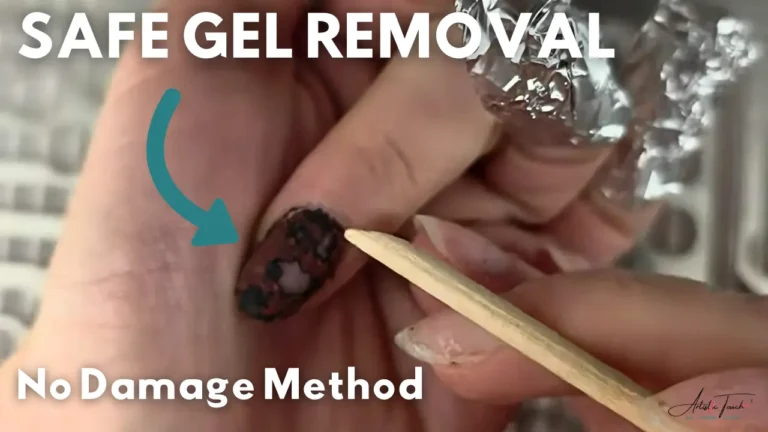
The 3 BIAB Mistakes Causing 90% of Lifting Issues
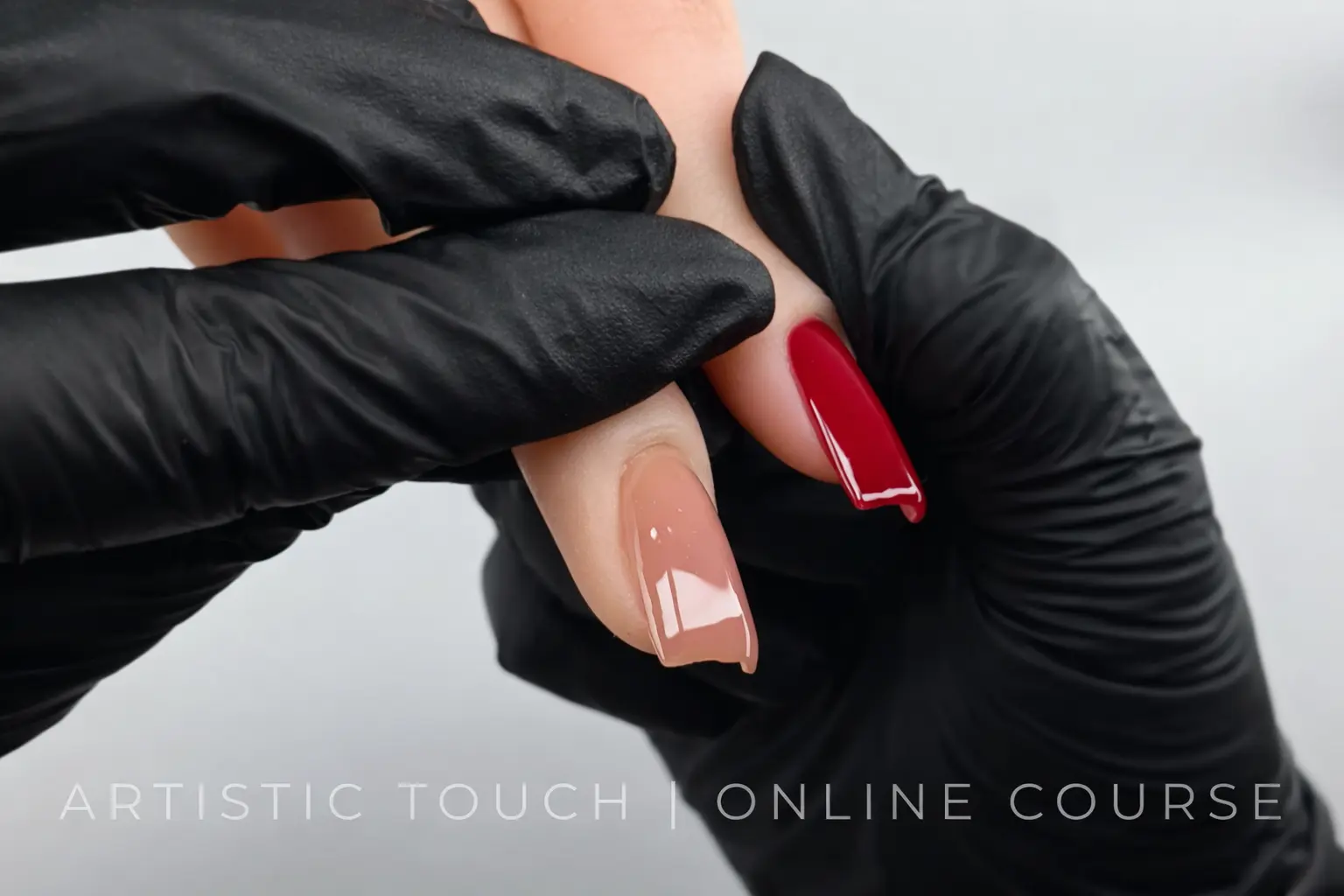
Quick Answer: What Causes BIAB to Lift?
The three main mistakes causing BIAB lifting are insufficient nail preparation, improper product application at the cuticle area, and incorrect curing technique. These errors account for approximately 90% of all BIAB retention problems and can be corrected with proper training and attention to detail.
Key points: Proper nail plate preparation, precise cuticle application, and complete product curing are essential for 3-4 week retention.
Learn more: Our free masterclass covers each mistake in detail with visual demonstrations and corrective techniques.
Why BIAB Lifting Happens So Often
BIAB (Builder in a Bottle) has become one of the most popular nail enhancement systems amongst both professionals and home users. However, lifting within the first week remains the most frustrating problem for nail technicians learning this technique.
After training hundreds of students and troubleshooting countless lifting issues, I have identified three specific mistakes that cause the vast majority of retention problems. The good news is that all three are completely preventable once you understand what is going wrong.
Understanding these mistakes is not just about fixing problems – it is about transforming your BIAB services from inconsistent results to reliable 3-4 week retention every single time.
Mistake #1: Treating BIAB Like Gel Polish
The single most common mistake I see is technicians treating BIAB exactly as they would treat gel polish. Whilst both products cure under LED lamps, they are fundamentally different materials requiring different application techniques.
Why This Causes Lifting
BIAB is a builder gel designed to add structure and strength to the natural nail. It requires proper apex building, correct thickness, and specific application patterns. Gel polish is a thin colour coating that simply sits on top of the nail plate.
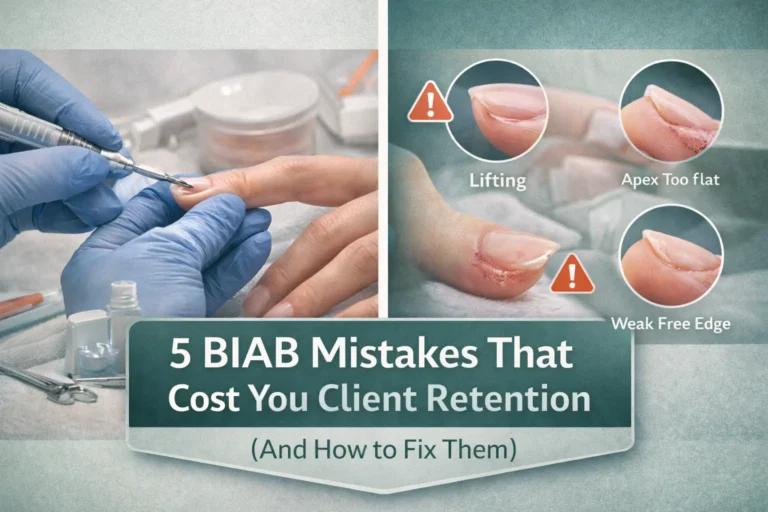
- Applying BIAB too thin: Without proper thickness, the product cannot provide structure and will flex with the natural nail, causing lifting
- Not building an apex: The apex is the strongest part of the nail enhancement and essential for preventing breakage and lifting
- Flooding the cuticle area: Applying BIAB the same way as gel polish creates pooling at the cuticle, which lifts within days
- Using gel polish application speed: BIAB requires slower, more deliberate placement to build proper structure
Understanding BIAB Structure
BIAB must create a gentle dome shape across the nail, with the highest point (apex) positioned at the stress point of the nail. This structure distributes pressure evenly and prevents the nail from flexing excessively, which would cause the product to separate from the natural nail plate.
The Correct Application Method
BIAB application requires building layers to create structure. Start with a thin base layer for adhesion, then build the apex using controlled bead placement. The product should be thickest at the centre of the nail plate, gradually tapering towards the cuticle and free edge. Each layer must be cured completely before adding the next.
Mistake #2: Incorrect Prep for the Nail Type
Not all nails are the same. Oily nails, dry nails, flexible nails, and curved nails all require different preparation approaches. Using a one-size-fits-all prep routine is one of the fastest paths to lifting problems.
Understanding Different Nail Types
Natural nails have varying characteristics that affect how products adhere. Some clients have naturally oily nail beds that repel products. Others have extremely dry nails that require extra hydration. Flexible nails bend and move differently than rigid nails.
⚠️ Signs You Are Using Wrong Prep
If BIAB lifts consistently on certain clients but not others, if lifting occurs despite perfect application technique, or if some nails on the same hand lift whilst others do not, you are likely using incorrect preparation for that specific nail type. Each nail type requires tailored preparation steps.
Matching Prep to Nail Type
The key is identifying the nail type before you begin application and adjusting your preparation accordingly.
- Oily nails: Require extra dehydration steps and potentially acid-based primers for better adhesion
- Dry nails: Need gentler preparation to avoid over-drying, which can cause brittleness and lifting at the free edge
- Flexible nails: Require thicker BIAB application to reduce flex and prevent product separation
- Curved nails: Need careful apex placement to support the natural curve without creating stress points
Quick Nail Type Assessment
Before application, press gently on the natural nail to check flexibility, observe the nail surface for shine (indicating oils), check for any natural curve or hooks, and ask the client about their nail history. This 30-second assessment will tell you exactly which preparation approach to use.
Mistake #3: Ignoring Growth Direction & Daily Stress
Natural nails are living structures that grow continuously and respond to physical stress. Ignoring how the nail grows and where it experiences daily pressure is a guaranteed path to lifting problems.
Understanding Nail Growth Patterns
Not all nails grow straight forward. Some grow upward, some grow downward (creating hooks), and some grow with a pronounced sideways curve. Each growth pattern creates different stress points where lifting is most likely to occur.
- Downward-growing nails: Create pressure at the free edge that can break the seal at the cuticle area
- Upward-growing nails: Experience stress at the nail bed attachment point
- Curved nails: Create sideways pressure that can cause lifting along the lateral edges
- Flexible nails: Bend with daily activities, creating constant movement that separates product from the nail plate
Where Daily Stress Causes Problems
Your clients use their hands constantly. Typing, opening doors, handling items, cleaning, and countless other activities create repeated stress on the nail structure. BIAB application must account for these forces.
The Stress Point Solution
The apex (the highest point of your BIAB structure) must be positioned at the natural stress point of the nail. For most nails, this is approximately one-third of the way back from the free edge. However, nails with unusual growth patterns require adjusted apex placement to properly support the structure and prevent lifting.
Adapting Application to Growth Direction
Before applying BIAB, assess each nail individually. Look at the nail from the side to identify its growth angle. Observe where the client experiences the most stress during their daily activities. Then adjust your apex placement and product thickness accordingly.
- Assess growth direction – View the nail from the side to identify upward, straight, or downward growth
- Identify stress points – Determine where pressure is most concentrated during daily activities
- Position apex correctly – Place the apex to support the natural growth pattern and counteract stress
- Adjust thickness – Use additional product thickness on nails that experience higher stress or excessive flexibility
Client Lifestyle Matters
Ask your clients about their daily activities. Nurses and healthcare workers wash hands frequently. Office workers type constantly. Manual workers use their hands for physical tasks. Each lifestyle requires slightly different BIAB application strategies to achieve optimal retention.
“After identifying these three mistakes in my technique, my BIAB retention went from 5 days to 4 weeks. Understanding proper cuticle application alone transformed my results.”
— Emma T., Professional Nail Technician ★★★★★
✓ What You Will Learn in the Free Masterclass
- ✓ Visual demonstration of each mistake and the correct technique
- ✓ Troubleshooting guide for identifying which mistake you are making
- ✓ Step-by-step correction methods for immediate improvement
- ✓ Professional tips for achieving consistent 3-4 week retention
Frequently Asked Questions About BIAB Lifting
How soon after application should BIAB lifting occur if something is wrong?
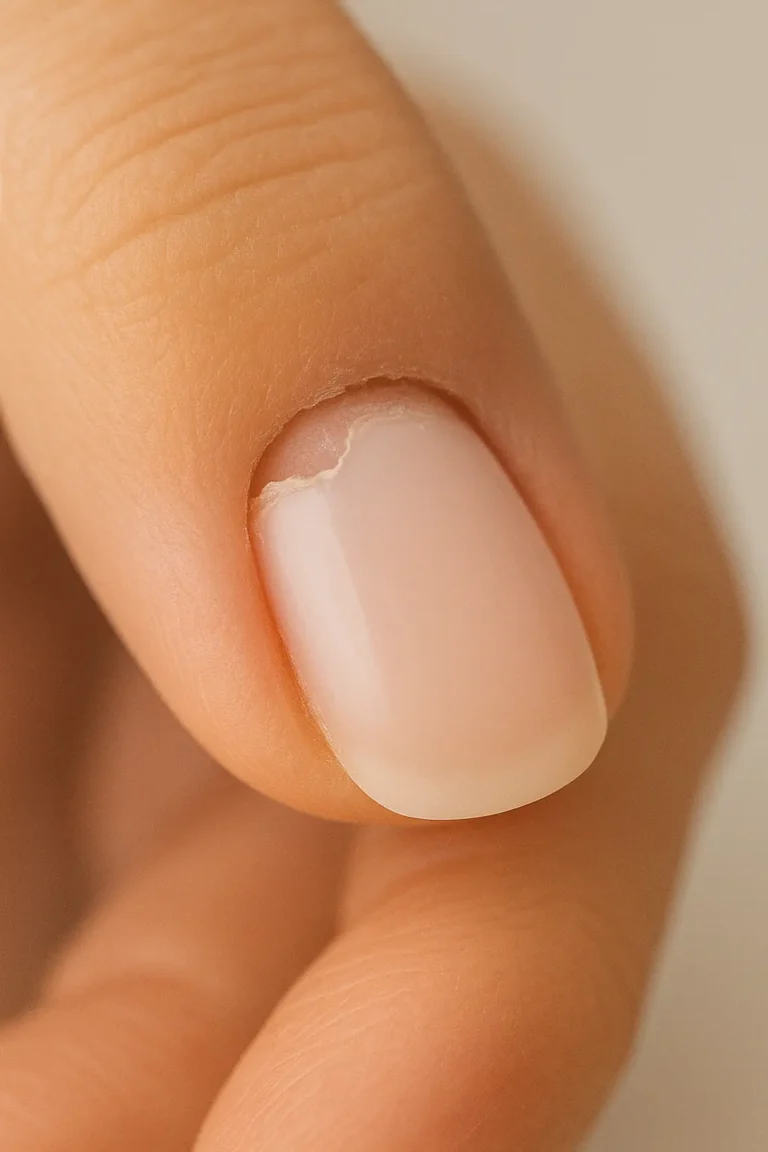
If BIAB lifts within 24-48 hours, this indicates a preparation or application error. Lifting within 3-7 days typically points to cuticle area application issues. Properly applied BIAB should provide 3-4 weeks of wear without lifting.
Can I fix lifting once it starts, or must I remove and reapply?
Once lifting begins, it will continue to worsen and can lead to moisture becoming trapped beneath the product, potentially causing nail damage or infection. The product must be properly removed and the nail reprepped for a fresh application.
Do some nail types lift more easily than others?
Yes, oily nail beds, very flexible nails, and nails with pronounced curves can present additional challenges. However, proper preparation and application technique can achieve good retention on all nail types. Some clients may require additional preparation steps.
Is it normal for BIAB to lift slightly at the edges after 3 weeks?
Minimal lifting at the free edge after 3-4 weeks is normal due to natural nail growth and daily wear. However, lifting at the cuticle area or sides of the nail is not normal at any point and indicates an application issue.
Does the brand of BIAB product affect lifting?
Product quality does matter, but proper technique is far more important. A high-quality product applied incorrectly will still lift, whilst a mid-range product applied properly will provide excellent retention. Focus on perfecting technique before considering product switches.
Can lifestyle factors cause BIAB lifting?
Excessive water exposure, harsh chemicals without gloves, and physical trauma can contribute to lifting, but should not cause failure if the product is properly applied. Proper application creates a seal that resists normal daily activities. If lifting occurs easily, technique is the primary issue.
About Your Instructor: Radina Ignatova
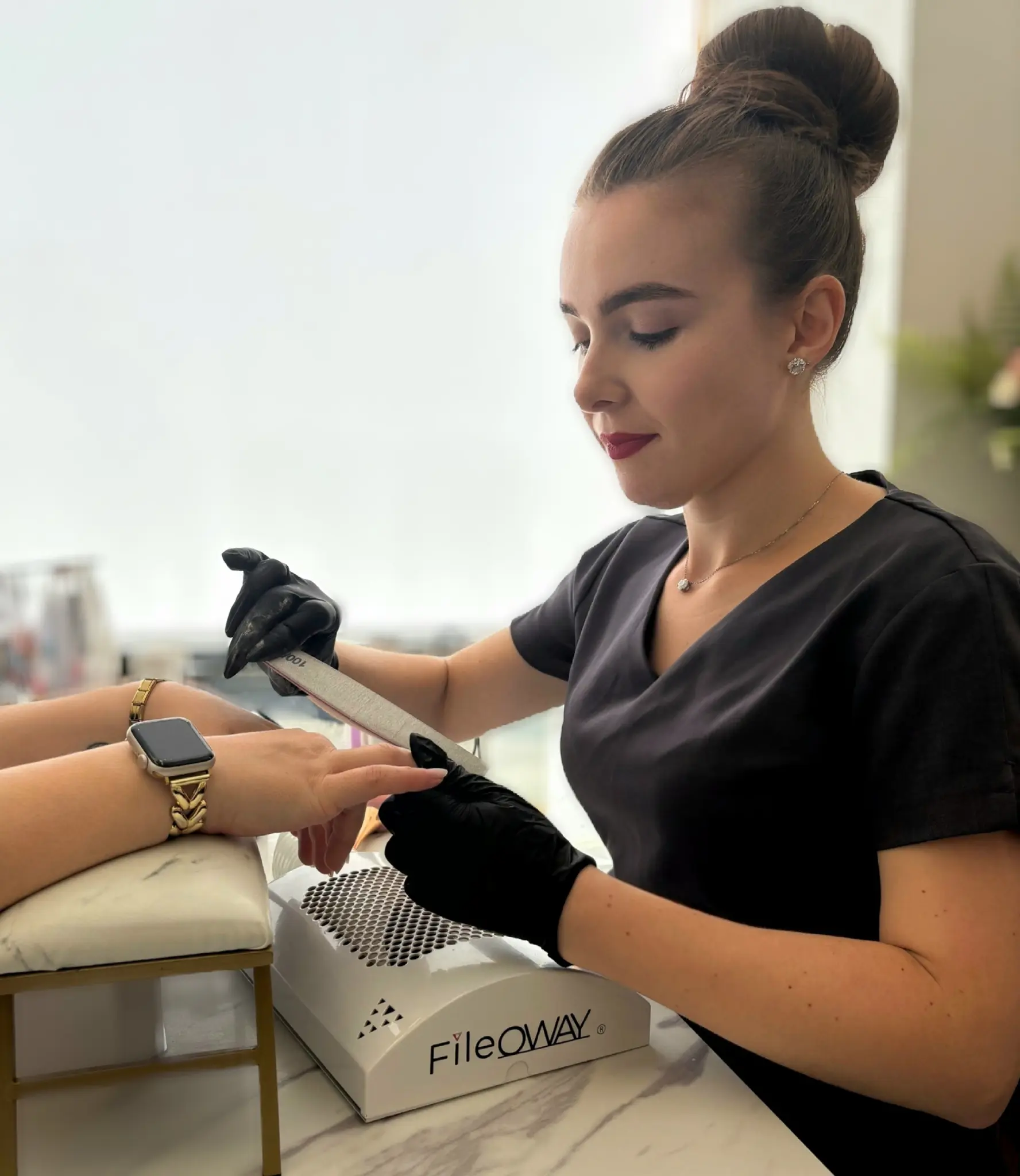
Radina Ignatova is a Professional Nail Expert, Educator, and founder of Artistic Touch – Nail Training Academy, based in Dundee, Scotland, UK.
With 12 years of professional experience since 2014 in advanced nail techniques including BIAB systems, Russian Manicure, and e-file methods, Radina specialises in transforming beginner nail technicians into confident professionals through structured online and in-person education.
Her teaching philosophy focuses on:
- Practical, real-world techniques that work in busy salon environments
- Troubleshooting and problem-solving rather than just theory
- Student success and confidence building through patient, detailed instruction
- Safety and professionalism in every aspect of nail services
Transform Your BIAB Results Today
Understanding and correcting these three mistakes will immediately improve your BIAB retention. You do not need expensive products or years of experience – you simply need to know what you are doing wrong and how to fix it.
What You Will Achieve:
- ✓ Consistent 3-4 week retention on every client
- ✓ Confidence in your BIAB application technique
- ✓ Ability to troubleshoot lifting problems immediately
- ✓ Professional results that build client loyalty
Stop wasting time and product on failed applications. Learn the correct technique once and achieve reliable results every time.
Watch the Free BIAB Masterclass
Learn exactly what is causing your lifting and how to fix it permanently
Access Free Masterclass Now →No credit card required • Watch instantly • Lifetime access
About Artistic Touch – Nail Training Academy: Professional online nail education delivered by Radina Ignatova from Dundee, Scotland, UK. Specialising in BIAB systems, Russian Manicure, e-file techniques, and comprehensive nail education for aspiring and professional nail technicians worldwide.