JD700 vs Saeyang K35 E-File Comparison: Same 30,000 RPM – Not the Same Power
Quick Answer: Which E-File Is Better for Professional Use?
The Saeyang K35 outperforms the JD700 despite both having 30,000 RPM. The critical difference is not the maximum speed but how each machine handles pressure during actual product removal. The K35 maintains consistent power without vibration or heat buildup, whilst the JD700 stalls under load and generates excessive heat in the handpiece.
Key points: The JD700 is suitable for beginners and light use (£40-50 price range), but professionals should invest in the Saeyang K35 for reliable performance during removals, pedicures, and extended salon use. The K35 does not vibrate, stays cooler, and delivers power consistently even through thick product.
Learn more: Master professional e-file techniques safely with structured training in our comprehensive E-File Manicure & Gel Polish Course.
Watch the full comparison video showing real-time performance testing on polygel nail extensions
Why RPM Alone Does Not Determine E-File Performance
When choosing a professional nail drill, many technicians focus exclusively on RPM (revolutions per minute) as the deciding factor. Both the JD700 and Saeyang K35 advertise 30,000 RPM, which suggests they should perform identically. However, after eight years of heavy use with the JD700 and extensive testing with the brand new K35, the performance gap is substantial.
The critical question is not “How fast can it spin?” but rather “How well does it maintain power when it matters most?” During product removal, cuticle work, or pedicure services, your e-file encounters resistance. This is where torque, motor quality, and engineering design become far more important than the maximum RPM specification.
I tested both machines side by side on the same polygel nail extensions using identical drill bits to show you exactly what happens under real salon conditions.
JD700 Performance: Budget-Friendly But Limited
The JD700 is a popular entry-level e-file available on Amazon for approximately £40-50. I have used mine for around eight years, primarily for light personal use and occasional demonstration models for masterclasses. It still functions, but its limitations become immediately apparent during product removal.
What Happens Under Pressure: JD700
During the polygel removal test at nearly maximum speed, the JD700 exhibited three significant performance issues:
- Motor overload and stalling: When working through thicker areas of product (the apex region), the drill audibly struggled and began to stall. You could hear the motor labouring under load.
- Excessive vibration: The handpiece vibrates noticeably, particularly at higher speeds. This vibration transfers to your hand and can cause fatigue during extended use.
- Heat buildup in handpiece: After removing product from just two nails, the handpiece became noticeably warm to hold. This heat would intensify significantly during acrylic removals or pedicure work.
⚠️ Important Note on Heat and Client Safety
Excessive heat in the handpiece is not merely uncomfortable for the technician—it can transfer heat through the drill bit to the natural nail during prolonged contact. This is particularly concerning during cuticle work or e-file manicure services where the bit remains in contact with the nail plate for extended periods. Always monitor handpiece temperature and allow cooling breaks if needed.
Who Should Consider the JD700?
Despite these limitations, the JD700 serves a purpose for specific users:
- Beginners in training: If you are practising e-file techniques on training hands or doing your own nails whilst learning, the JD700 provides adequate performance at minimal cost.
- Very light personal use: For maintaining your own gel polish applications or occasional light cuticle work, it functions adequately.
- Budget constraints: If you genuinely cannot afford professional-grade equipment yet, the JD700 allows you to begin learning proper e-file technique whilst saving for an upgrade.
However, if you plan to work professionally with clients or perform product removals regularly, you should budget for a higher-quality machine from the start.
Saeyang K35 Performance: Professional-Grade Engineering
The Saeyang K35 is manufactured in South Korea and represents what I consider the professional standard for nail drill performance. It is significantly more expensive than the JD700, but the engineering quality justifies the investment for serious technicians.
What Happens Under Pressure: Saeyang K35
Using the same USA Pro Berra carbide bit on identical polygel extensions, the K35 demonstrated markedly superior performance:
- Zero vibration: The handpiece remains completely smooth and stable even at maximum speed (30,000 RPM). This reduces hand fatigue dramatically during extended work sessions.
- Consistent power delivery: The motor maintains full torque through thick product without any audible strain or stalling. It removes product smoothly and efficiently regardless of pressure applied.
- Minimal heat generation: Even after extended use, the handpiece remains cool enough for comfortable handling. This is essential for pedicure work and lengthy removal sessions.
- Precision digital display: The K35 features a clear digital readout showing exact RPM, which allows you to work at specific speeds consistently—particularly important when learning or teaching specific techniques.
Why Korean Engineering Matters
Saeyang manufactures professional-grade equipment used globally in medical and dental applications as well as nail services. The K35 benefits from the same manufacturing standards as their medical devices, which explains the superior motor engineering, bearing quality, and thermal management. This is why I describe it as “the Mercedes of nail technicians”—the engineering quality is genuinely different, not merely marketing.
Adjustment Period: Weight and Feel
One notable difference is handpiece weight. The K35 handpiece feels substantially heavier and more solid than the JD700, which feels almost toy-like in comparison. If you are transitioning from a lightweight machine, you will need approximately one week to adjust to the weight and balance of the K35 handpiece.
This weight difference comes from higher-quality bearings, superior motor components, and better internal construction—the same factors that deliver the vibration-free performance. After the brief adjustment period, most technicians prefer the substantial feel as it provides better control and stability during precision work.
Side-by-Side Comparison: JD700 vs Saeyang K35
The Critical Role of Drill Bit Quality
An essential factor that many technicians overlook is drill bit quality. During my testing, I used a USA Pro Berra carbide bit—a high-quality bit with sharp, well-defined teeth. This bit performed adequately even with the JD700 because the cutting edges were sharp and effective.
However, if you pair a budget e-file with cheap drill bits, your experience will be significantly worse. Dull or poorly manufactured bits require more pressure to cut through product, which increases friction, heat, and the likelihood of motor stalling—even on better machines.
Investment Priority: Machine First, Then Bits
If you must choose where to allocate a limited budget, invest in the best machine you can afford first, then gradually build your collection of quality bits. A professional-grade machine will perform better with medium-quality bits than a budget machine will perform with expensive bits. The motor quality and power delivery cannot be compensated for by better accessories.
My Professional Recommendation
After eight years with the JD700 and extensive testing with the Saeyang K35, my recommendation is straightforward and depends entirely on your situation:
Choose the JD700 If You Are:
- A complete beginner practising on training hands
- Using the e-file exclusively for your own nails (not professionally)
- On an extremely tight budget whilst learning
- Planning to upgrade within 6-12 months as your business grows
Choose the Saeyang K35 If You Are:
- Working professionally with paying clients
- Performing product removals regularly (gel polish, BIAB, polygel, acrylic)
- Offering pedicure services or Russian manicure
- Serious about long-term professional development
- Able to invest in quality equipment that will last years
The price difference is significant, but so is the performance gap. The K35 will pay for itself through faster work times, reduced hand fatigue, and the ability to offer services (like pedicures and extensive removals) that would be uncomfortable or impractical with the JD700.
Master Safe E-File Techniques with Professional Training
Owning quality equipment is only the first step. Proper e-file technique, safety protocols, and speed selection are essential skills that protect both you and your clients from injury whilst maximising efficiency.
Our E-File Manicure & Gel Polish Course covers everything from bit selection and safe cuticle work to product removal and troubleshooting common problems.
- ✓ Complete e-file safety protocols and contraindications
- ✓ Bit selection guide for different services and nail types
- ✓ Russian manicure technique with detailed demonstrations
- ✓ Gel polish application for maximum retention (3-4 weeks)
Beyond the Numbers: What RPM Actually Means
This comparison demonstrates a crucial lesson that applies throughout the nail industry: specifications on paper rarely tell the complete story. Both machines advertise 30,000 RPM, and technically both can achieve this speed under no-load conditions (spinning freely in the air).
The difference emerges the moment you apply the bit to a nail surface. The JD700 motor cannot maintain its speed and power under load, whilst the K35 motor barely registers the resistance. This is determined by:
- Motor wattage and efficiency: Higher-quality motors deliver more usable power from the same electrical input.
- Bearing quality: Precision bearings reduce friction and allow the motor to deliver more power to the bit rather than losing energy to internal resistance.
- Thermal management: Better cooling systems prevent heat buildup that degrades performance and shortens motor life.
- Build quality and materials: Superior components simply last longer and perform more consistently over time.
This is why you must test equipment under realistic working conditions rather than relying solely on manufacturer specifications. Two machines with identical RPM ratings can perform entirely differently when it actually matters.
Frequently Asked Questions About E-File Selection
How long does the JD700 typically last with regular professional use?
With light personal use, the JD700 can last several years (mine has lasted eight years). However, with daily professional use—particularly for product removals and pedicures—most technicians report the motor degrading significantly within 12-18 months. The vibration worsens, heat increases, and power delivery becomes less consistent. This makes it an expensive long-term choice despite the low initial cost.
Is the Saeyang K35 suitable for Russian manicure technique?
Absolutely. The K35 is actually ideal for Russian manicure work because the zero-vibration handpiece allows extremely precise control during delicate cuticle work. The digital RPM display lets you work at exactly the correct speed for each step of the service (typically 8,000-12,000 RPM for cuticle work with safety bits, higher for product removal). The consistent power delivery prevents the bit from “grabbing” or stalling on resistant cuticle tissue.
Can I use the same drill bits on both machines?
Yes, both the JD700 and Saeyang K35 use standard 3/32 inch shank drill bits. Any professional nail drill bit will fit either machine. However, the superior power of the K35 means you will notice better performance from the same bits—particularly carbide bits that require consistent power to cut efficiently without creating excessive heat.
What speed should I use for polygel or BIAB removal?
For product removal with carbide bits, I typically work at 20,000-25,000 RPM on the Saeyang K35. With the JD700, I find myself needing to push closer to maximum speed (27,000-30,000 RPM) to achieve similar cutting efficiency, which contributes to the excessive heat and vibration problems. The correct speed also depends on your bit grit, technique, and the specific product being removed. Our E-File Manicure Course covers speed selection in detail for different services.
Why does the handpiece get hot during use?
Handpiece heat comes from three sources: friction within the handpiece bearings, motor inefficiency (electrical energy converted to heat rather than rotation), and heat transferred back from the drill bit. Budget machines like the JD700 use lower-quality bearings and less efficient motors, which generate significantly more heat. Additionally, when the motor struggles under load, it draws more current and produces more waste heat. Professional-grade machines manage all three heat sources more effectively through better engineering.
Are there other professional e-file brands I should consider besides Saeyang?
Yes, several brands manufacture professional-grade nail drills comparable to Saeyang. Marathon (also Korean), Strong (Korean), and certain models from NSI and Kupa are all reputable professional options. The key features to look for are: digital RPM display, rated wattage above 30W, Korean or Japanese manufacturing, vibration-free operation, and positive reviews from working nail technicians (not just beginners). Avoid machines that only list RPM without wattage specifications.
Will upgrading my e-file improve my technique?
A better machine will not compensate for poor technique, but it will remove certain obstacles that make learning and executing proper technique more difficult. The consistent power, lack of vibration, and thermal stability of professional equipment allow you to focus on hand position, pressure, and movement rather than fighting equipment limitations. However, you must still invest time in proper training—equipment quality and technical skill are both essential for safe, effective e-file work.
Should I buy a corded or cordless e-file?
For professional work, I strongly recommend corded machines. Cordless models offer convenience for mobile technicians, but they compromise on power consistency (performance degrades as battery depletes), runtime (requiring charging breaks during busy days), and longevity (batteries degrade over time). Both the JD700 and Saeyang K35 are corded machines. If you absolutely require portability, invest in a high-end cordless model from a reputable professional brand, and budget for eventual battery replacement.
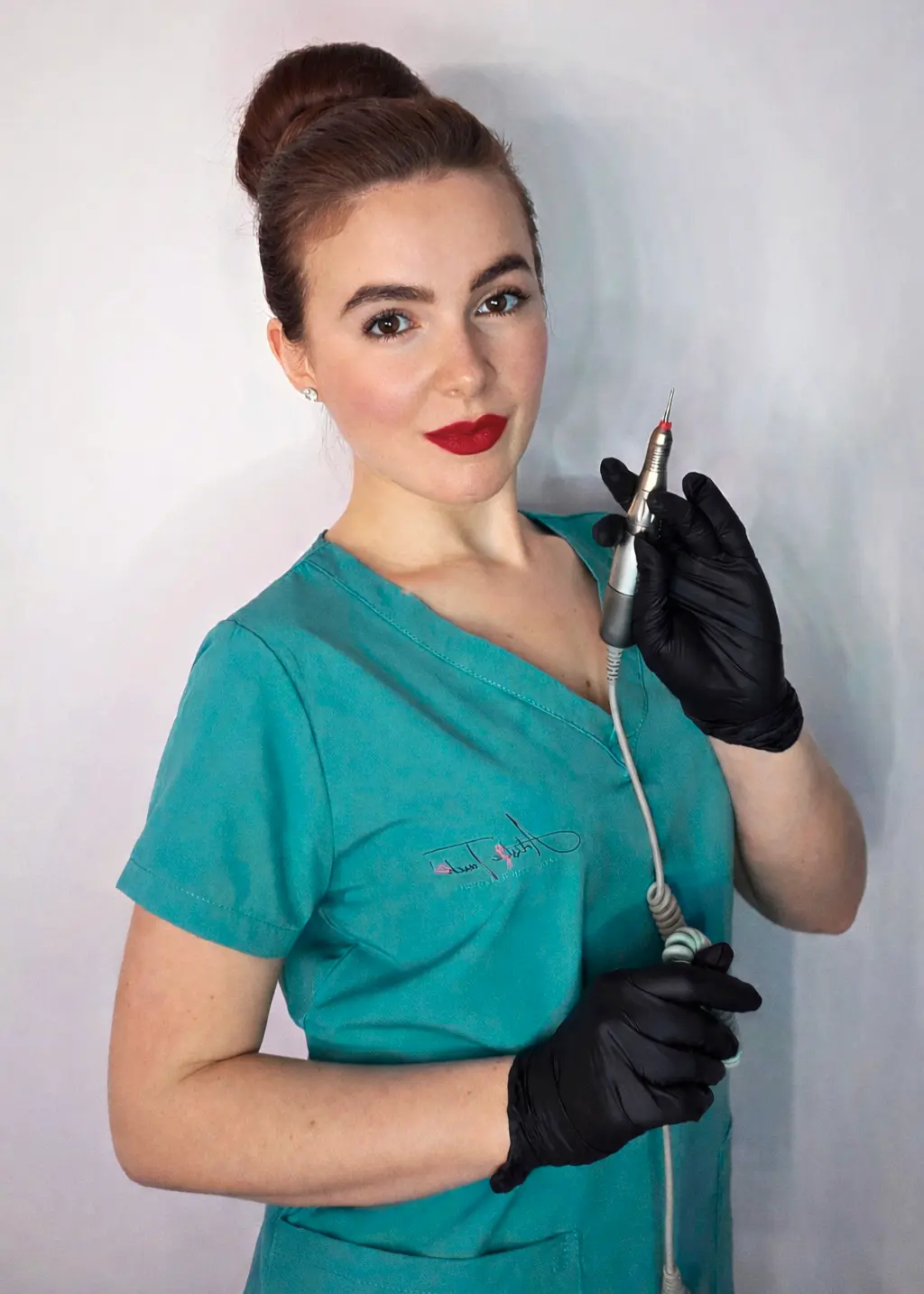
About the Author
Radina Ignatova
Professional Nail Expert | International Nail Educator
I am Radina Ignatova, a Professional Nail Expert since 2014 and International Nail Educator, based in Scotland, UK. I am the Founder of Artistic Touch Nail Training Academy and TheNailWiki.
At Artistic Touch Nail Training Academy, I provide structured professional online nail courses specialising in dual forms, gel systems, polygel application, advanced nail structure, E-File work and Russian Manicure, with a strong focus on professional salon safety. I continue to work actively in salon practice, ensuring that all education reflects real client scenarios and current industry standards.
My teaching philosophy is simple: I show real salon challenges, real mistakes and real performance testing, not just perfect demonstrations. This is how you develop genuine technical competence and become a confident, capable nail professional.
Every Artistic Touch course includes lifetime access, a certificate of completion and access to a dedicated student support group, where I provide ongoing guidance and professional feedback.
Ready to Master Professional E-File Techniques?
Learn safe, effective e-file skills from foundations to advanced techniques. Whether you are just starting or looking to refine your Russian manicure skills, our comprehensive course provides structured training with lifetime access.
Enrol in E-File Manicure Course →£97 | Lifetime Access | Community Support Included
Disclaimer: This comparison represents my personal professional experience and testing with both machines. Your results may vary based on your specific usage patterns, drill bit quality, and maintenance practices. Neither manufacturer has sponsored this review. All opinions are my own based on eight years with the JD700 and extensive testing with the Saeyang K35.
About Artistic Touch Nail Training Academy
Artistic Touch Nail Training Academy delivers structured professional online nail education focused on practical skill development, professional standards and safe salon practice. All courses are available online worldwide.