How to Choose an Online Nail Course in the UK: What Actually Matters for Professional Development

Quick Answer: How Do I Choose a Quality Online Nail Course?
First, understand whether you need accredited foundation training or non-accredited upskilling. UK insurance requires accredited qualifications (ABT, VTCT) for foundation coverage. Once you have accredited foundation training, non-accredited advanced technique courses are acceptable for upskilling in areas like Russian Manicure or advanced BIAB methods.
For any course type, prioritise: Video quality with multiple camera angles, comprehensive downloadable resources, honest demonstrations including mistakes and corrections, appropriate support for your schedule, realistic timeframes for mastery, proper safety protocols, and correct anatomical terminology.
What to avoid: Courses promising instant certification, those without safety emphasis, purely Instagram-perfect demonstrations, high-pressure sales tactics, unrealistic income guarantees, and courses that bundle unnecessary training kits for experienced professionals.
Why Choosing the Right Nail Course Matters More Than Ever
The UK nail education market has evolved significantly in recent years, with hundreds of online courses now available to working nail technicians. This abundance of choice has created confusion about what actually matters when selecting professional development training.
Many nail professionals waste hundreds of pounds on courses that promise comprehensive training but deliver superficial content, Instagram-perfect demonstrations that bear no resemblance to real client work, or include unnecessary training kits that sit unused in cupboards.
This guide explains the key factors that determine course quality and suitability, helping you make informed decisions about your nail education investments based on what actually matters for professional development.

Understanding Different Types of Nail Education
Before evaluating specific courses, it is essential to understand that not all nail education serves the same purpose. The distinction between foundation certifications and advanced technique training fundamentally changes what you should look for in a course.
Foundation Certifications vs Advanced Technique Training
Foundation certifications introduce complete beginners to nail technology. These courses typically carry accreditation from bodies like ABT (Accreditation for Beauty Therapists) or VTCT (Vocational Training Charitable Trust) because they are designed for individuals with no prior nail industry experience.
Advanced technique training develops specific skills for experienced nail technicians. These courses focus on Russian Manicure methodology, BIAB application techniques, e-file mastery, or complex client consultations. They typically do not carry formal accreditation because they assume existing professional competence.
What “Accreditation” Actually Means in UK Nail Education
Accreditation is one of the most misunderstood aspects of nail education in the UK. Many nail technicians believe they cannot obtain insurance or work legally without ABT or VTCT certification. This is incorrect and costs professionals hundreds of pounds in unnecessary foundation courses.
The Role of Accreditation Bodies
ABT and VTCT are awarding organisations that validate foundation-level nail education. They ensure courses meet minimum standards for introducing complete beginners to nail technology.
Accreditation serves several important purposes:
- Quality assurance for beginners: Provides structure for students with no industry knowledge to evaluate course quality
- Standardised certification: Creates baseline competency expectations that insurers recognise
- Educator guidance: Offers frameworks for new course creators developing foundation content
- Consumer protection: Ensures courses cover essential health and safety protocols
However, accreditation is not required for advanced technique training, specialist methodology courses, continuing professional development (CPD), or technique refinement courses for experienced professionals.
What Insurance Actually Requires
Understanding insurance requirements is essential for legal professional practice in the UK nail industry.
⚠️ Critical Insurance Information
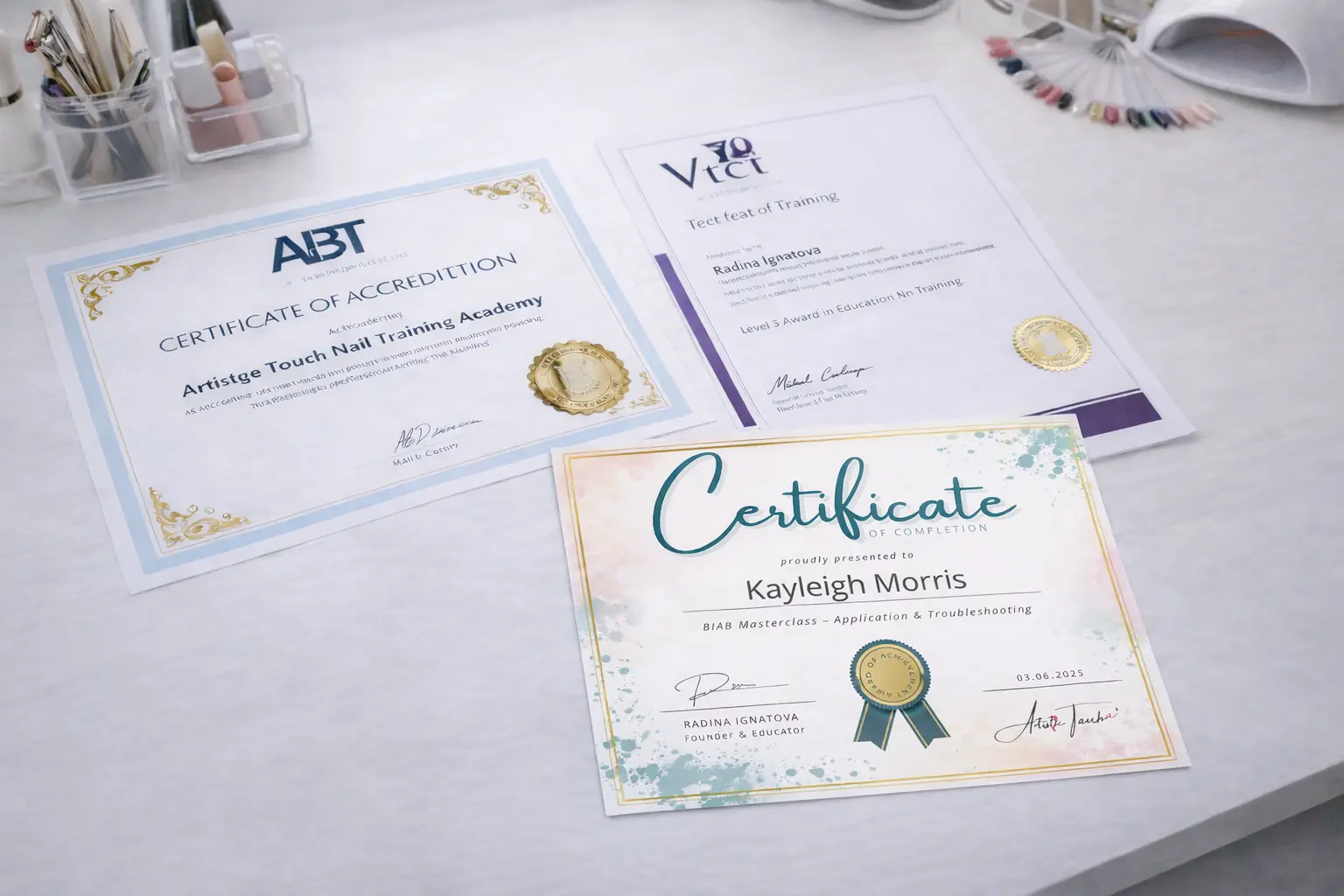
UK insurance companies require accredited qualifications as your foundation coverage. Without accredited training from bodies like ABT or VTCT, you cannot obtain nail technician insurance regardless of your years of experience or skill level. This is non-negotiable for professional practice.
However, once you have accredited foundation training covering basic nail services, insurers typically accept non-accredited certificates for advanced techniques like Russian Manicure, e-file methods, or advanced BIAB application. These are considered upskilling beyond your accredited base, not replacement qualifications. Insurance companies assess: “Do you have accredited foundation coverage?” If yes, then advanced non-accredited training certificates demonstrate continuing professional development.
For example, if you complete an accredited e-file and gel polish course, your insurance covers those services. When you then complete a Russian Manicure masterclass (non-accredited upskilling), your insurer typically accepts this as evidence of training for that advanced technique because you already hold foundation accreditation.
Always contact your insurance provider directly to verify which services require accredited qualification versus which accept advanced training certificates as upskilling evidence.
What Council Licensing Actually Requires
Another common misconception involves local council licensing. Most UK councils require nail salons and mobile technicians to register under Special Treatment Licensing, which typically requires evidence of appropriate training, health and safety awareness, infection control understanding, and public liability insurance.
Councils do not universally require accredited qualifications. They require evidence of competent training. A certificate from a respected educator demonstrating Russian Manicure training is typically acceptable evidence. Requirements vary significantly by council, so always check your specific local authority’s requirements.
Ready to Learn Advanced Techniques?
Our courses focus on technique mastery, proper European terminology, and realistic demonstrations that prepare you for actual client work – not Instagram-perfect results.
Explore Our Courses →Self-Paced vs Live Instructor-Led Training
The format of online nail education significantly affects its suitability for different learning styles and professional circumstances. Understanding the advantages and limitations of each approach helps you select courses that fit your working schedule and learning preferences.
Self-Paced Video and Text-Based Learning
Self-paced courses allow students to progress through material at their own speed, typically including pre-recorded video demonstrations, written methodology documents, downloadable resources, and lifetime or extended access to content.
Advantages for working nail technicians:
- Study during salon downtime or between clients without scheduling conflicts
- Pause and replay complex technique demonstrations multiple times
- Progress faster through familiar concepts, slower through new techniques
- Access material repeatedly when practicing new methods months later
- No conflict with client appointments or unpredictable salon schedules
Considerations to evaluate:
- Requires self-discipline and motivation to complete without external structure
- No immediate correction of mistakes during initial practice sessions
- Must self-assess technique accuracy using provided materials and checklists
- Relies on asynchronous feedback rather than real-time guidance
Live Instructor-Led Sessions
Live courses deliver content through scheduled video calls with real-time demonstrations, immediate question answering, live feedback on student practice, and interactive discussion with instructor and peers.
Advantages to consider:
- Immediate correction of technique errors during demonstration
- Real-time clarification of complex concepts without waiting
- Structured accountability through scheduled sessions
- Interactive discussion revealing questions you had not considered
Limitations to evaluate:
- Fixed schedules conflict with salon hours and client appointments
- Cannot replay live sessions unless recordings are provided
- Single viewing of demonstrations during live session
- Time-zone complications for international students
- Limited flexibility for busy professionals juggling multiple commitments
Which Format Suits Professional Development?
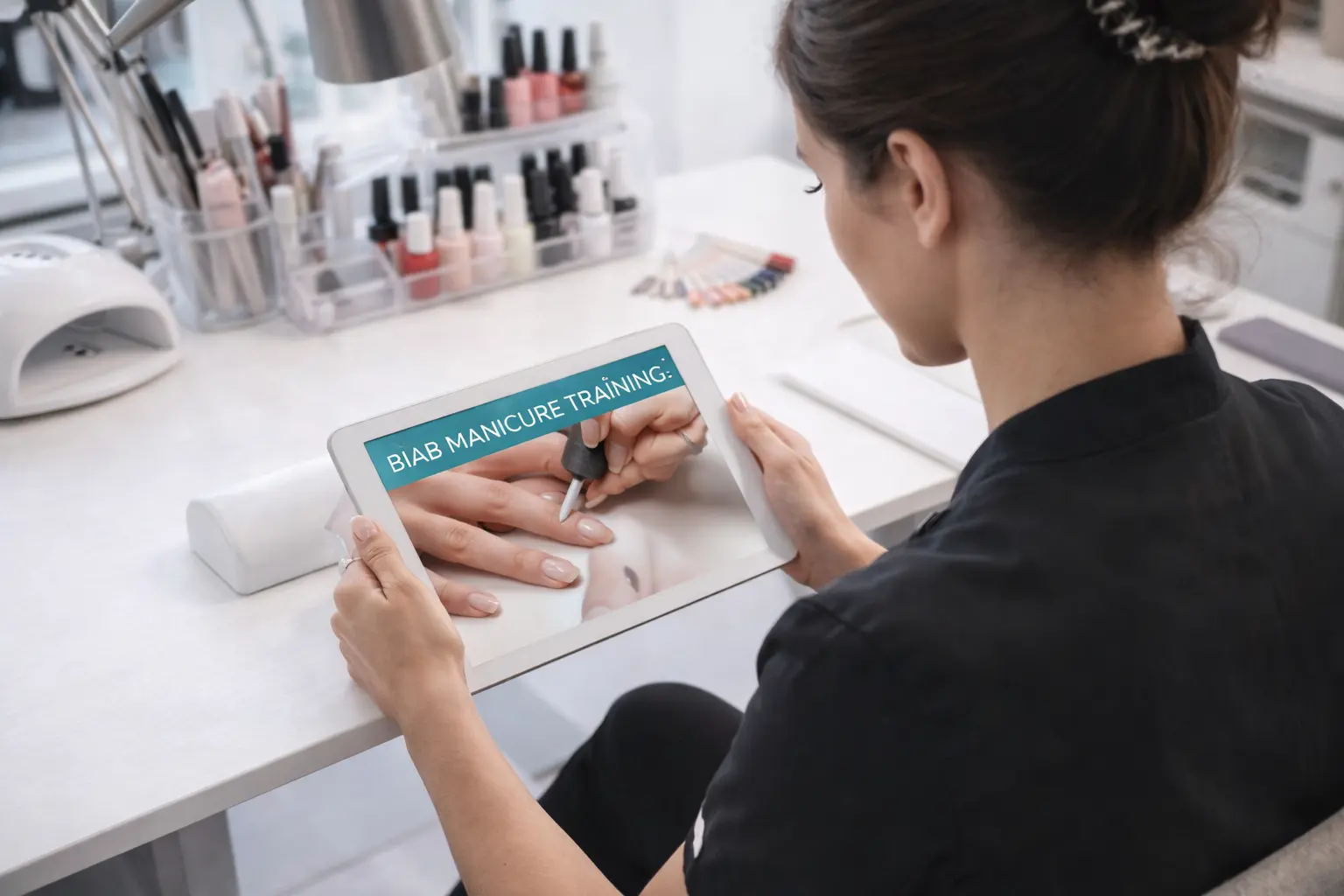
For experienced nail technicians learning advanced techniques, self-paced formats often provide superior outcomes because technique mastery requires repeated viewing, professional schedules vary unpredictably, practice timing differs individually, and learning pace varies based on background experience. Foundation courses for complete beginners often benefit more from live formats due to immediate correction needs.
Understanding Different Types of Student Support
“Instructor feedback” means different things across different online nail courses. Understanding these distinctions helps evaluate whether a course’s support model suits your learning needs and professional schedule.
Asynchronous Photo and Video Review
Courses offering asynchronous review allow students to submit work photos or videos through email, private messaging platforms, or community group channels. Instructors then provide written or video feedback within 24-48 hours.
Advantages for working professionals:
- Submit work whenever convenient between clients or after salon hours
- Receive detailed written feedback you can reference repeatedly during practice
- No scheduling conflicts with salon work or personal commitments
- Individual attention to your specific challenges and technique questions
- Fits professional schedules without requiring fixed availability
Community-Based Peer Learning
Many advanced courses include private community groups (Discord, Facebook, forums) where students post practice work and questions, other students share experiences and solutions, instructors provide guidance and corrections, and collective troubleshooting addresses common challenges.
Benefits of community learning:
- Learn from others encountering similar challenges with different nail types
- Multiple perspectives on problem-solving reveal alternative approaches
- Ongoing support beyond course completion through graduate community
- Build professional network with peers at similar skill levels
- Faster responses as community may answer before instructor availability
💡 Support Model for Advanced Learning
Experienced nail technicians learning complex methods like Russian Manicure typically benefit most from community-based learning with asynchronous photo feedback because you already have professional judgement to self-assess basic accuracy, specific challenges arise at different practice stages for different people, peer learning reveals common mistakes you might encounter, flexibility fits unpredictable salon schedules, and written feedback provides permanent reference material.
The Training Kit Question: When You Need One and When You Do Not
Training kits are among the most contentious topics in online nail education. Understanding who benefits from kits – and who does not – prevents wasteful spending on products you will never use.
Who Benefits from Training Kits
Complete beginners with no nail supplies benefit from starter kits because they do not yet know which brands or products to purchase, kits ensure minimum necessary items for practice, and this eliminates decision paralysis about what to buy first.
Brand-specific certification courses require specific products. CND certification courses must use CND products, The Gel Bottle certification teaches that brand’s system, and brand courses often include product costs in course fees to ensure students learn brand-specific protocols correctly.
Why Experienced Professionals Usually Do Not Need Kits
Working nail technicians learning advanced techniques typically do not benefit from training kits for several important reasons:
- You already have professional suppliers and preferences – Your existing relationships provide better products than generic kits
- Professional techniques work across brands – Russian Manicure methodology applies whether you use NSI, The Gel Bottle, CND, or any other professional gel system
- One brand cannot provide everything – Professional nail work often requires products from multiple manufacturers
- Kit products are often inferior – Training kits frequently include cheaper versions of professional tools to keep costs down
- Technique training is not product training – Learning proper cuticle preparation technique does not require specific gel brands
The Reality of Multi-Brand Professional Work
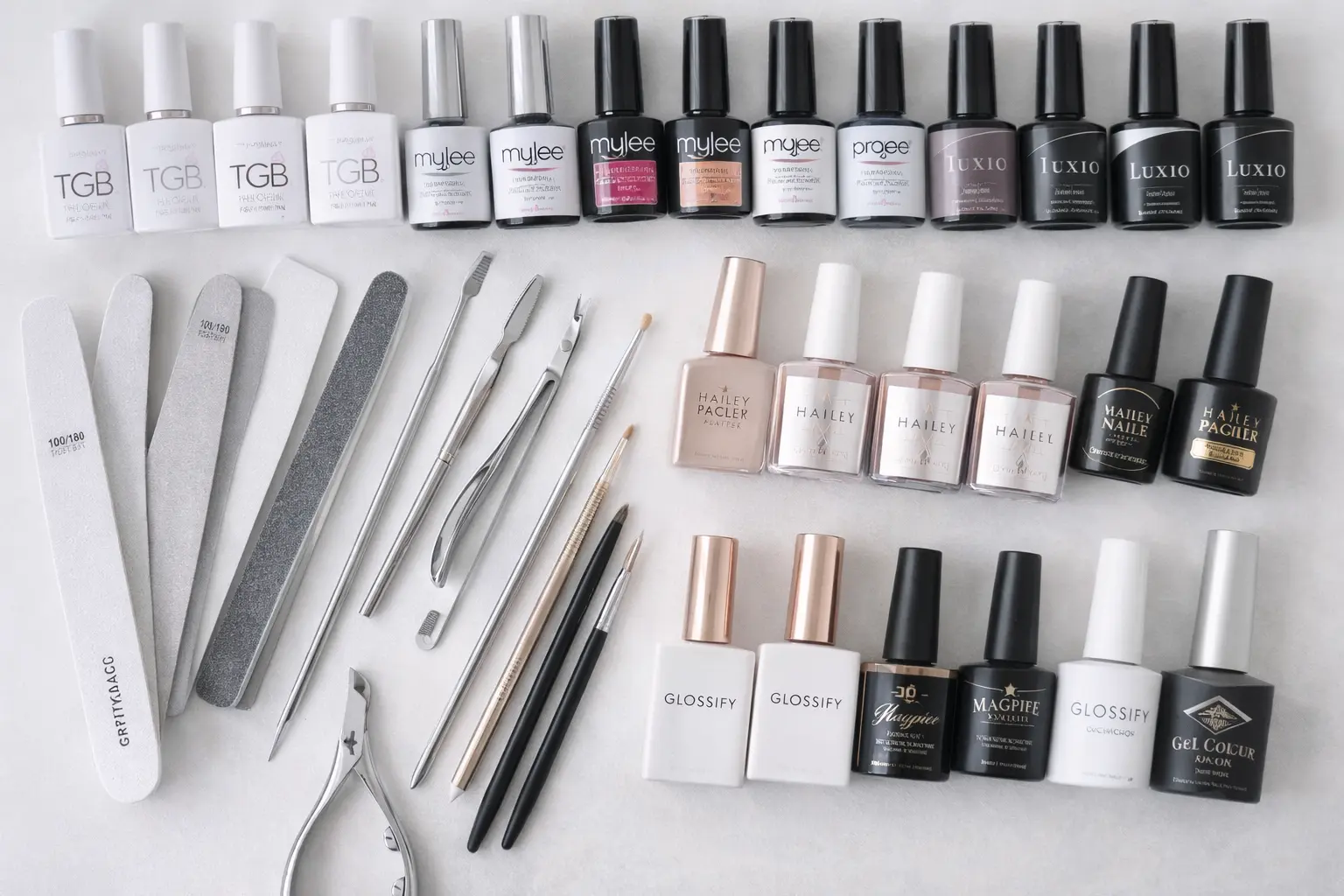
In professional European nail practice, working with multiple brands is standard because no single manufacturer produces superior formulations across all product categories. One brand’s gel formula may be excellent whilst their removal products are inadequate. Another brand offers superior cuticle oils but average base coats.
Professional nail technicians select the best product for each specific purpose from different manufacturers. This has been standard practice in European professional nail work for years without problems. You use Brand A’s base coat because it prevents lifting, Brand B’s colour because it applies smoothly, and Brand C’s top coat because it provides superior shine and durability.
Some UK insurance policies mention brand mixing restrictions, but these provisions typically target mobile technicians using retail-grade products rather than professional salon work with professional product lines. Insurance companies focus on whether you use professional-grade products appropriate for client services, not whether every product carries the same brand label.
Important: Always verify your specific insurance policy terms by contacting your provider directly. Ask explicitly: “Can I use professional products from different manufacturers in the same service?” Most professional insurance policies accommodate multi-brand professional work because this is industry-standard practice.
Learn Professional Techniques Without Unnecessary Kits
Our courses teach methodology that works across all professional gel systems, allowing you to use your preferred brands and suppliers.
View BIAB Masterclass →Course Content Quality: What Actually Matters
Beyond support models and kit inclusion, the core course content determines whether you will successfully learn the advertised techniques. Several critical quality markers separate professional education from superficial courses.
Video Quality and Camera Angles
Professional nail technique requires seeing fine detail. Course videos should include multiple camera angles showing overhead view of full hand positioning, side angle revealing tool angles and pressure, close-up detail of cuticle work and precise movements, and client’s perspective showing techniques in practice.
Quality courses also provide adequate lighting without shadows obscuring technique, crisp focus on working areas, appropriate pacing showing real-time technique speed, and slow-motion replays of complex movements.
⚠️ Video Quality Warning
Poor video quality – shaky cameras, single angles, poor lighting, rushed demonstrations – makes learning complex techniques nearly impossible regardless of instructor expertise. Always preview sample videos before purchasing to verify you can actually see the techniques being demonstrated.
Real Demonstrations vs Instagram-Perfect Content
A critical quality marker distinguishes professional nail education from social media content. Educational demonstrations should show mistakes and how to correct them, challenging client scenarios with resistant cuticles or damaged nails, real-time problem-solving during application, imperfect results and improvement strategies, and multiple attempts showing progression.
Instagram-style content only shows perfect final results, ideal client conditions, edited sequences removing mistakes, and best-case scenarios. This creates unrealistic expectations and leaves you unprepared when your results do not match edited social media content.
Quality nail education deliberately includes imperfect moments, showing “this is cuticle flooding – here is how to fix it” and “my bit just chattered – I need to adjust my angle” rather than creating frustration when your results differ from edited demonstrations.
Proper Anatomical Terminology vs Simplified Language
Professional nail education uses precise anatomical terminology for several important reasons. Correct terminology includes proximal nail fold (not “cuticle skin”), eponychium (not “cuticle”), hyponychium (not “under-nail skin”), pterygium (not “stuck cuticle”), and onycholysis (not “nail lifting”).
Proper terminology matters for professional communication with other technicians, insurance and legal documentation requiring anatomical terms, contraindication identification needing accurate condition recognition, treatment planning for different nail conditions, and professional credibility as clients increasingly research nail health online.
Professional Terminology Standards
Quality courses explain terminology clearly with visual examples rather than assuming students already know it. Proper terminology is not pretentious – it is professional competence. Look for courses that introduce terms with clear definitions, show visual examples of each structure, explain why distinctions matter practically, and use correct terms consistently throughout.
Red Flags in Online Nail Education
Certain course characteristics indicate low-quality or potentially harmful education that wastes your professional development budget and undermines your client service quality.
Unrealistic Time Claims
Courses promising “become a certified nail technician in 3 hours” or “master Russian Manicure in one weekend” are oversimplifying complex techniques into ineffective shortcuts, providing superficial overviews rather than comprehensive training, and creating false confidence that endangers clients.
Realistic timeframes for technique mastery:
- Foundation gel polish skills: 20-40 practice sessions
- Russian Manicure competence: 50-100 practice clients
- E-file safety and efficiency: 30-60 practice sessions
- BIAB application mastery: 40-80 practice applications
Absent or Inadequate Safety Protocols
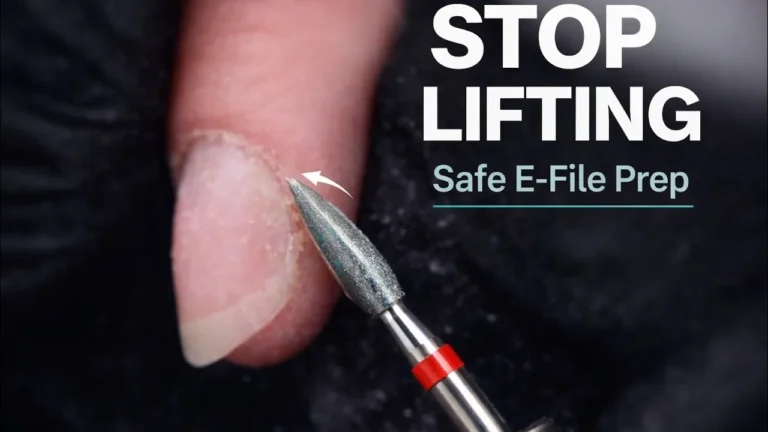
Professional nail services carry genuine health risks if performed incorrectly. Quality courses emphasise contraindication identification, infection control procedures, patch testing protocols, and e-file safety including proper RPM speeds and heat management.
⚠️ Safety Warning
Courses that minimise safety discussion or dismiss concerns as “unnecessary worry” demonstrate dangerous disregard for client welfare. Professional education treats safety protocols as fundamental requirements, not optional extras.
Promises of Guaranteed Income or Job Placement
Courses claiming “earn £50,000 in your first year” or “guaranteed salon placement upon completion” use manipulative marketing tactics targeting financially vulnerable individuals. Nail technician income depends on local market rates, business skills, years of experience, service range, and client retention – no online course can guarantee your income outcomes.
Pressure Tactics and Artificial Scarcity
Excessive pressure tactics like “only 5 spots left at this price” or “course closes forever in 24 hours” prevent students from researching alternatives and create false urgency. Quality nail education remains consistently available. Be cautious of courses “closing forever” repeatedly or “final discounts” appearing monthly.
Experience Honest, Professional Nail Education
No false promises, no artificial urgency, no Instagram perfection – just realistic technique training that prepares you for actual client work.
View E-File Course →Making Your Decision: Key Questions to Ask
Before investing in online nail education, evaluate courses systematically using these essential questions organised by category.
About Your Needs
- What is my current skill level? (Complete beginner, experienced technician, specialist)
- What specific technique do I want to learn?
- What is my learning style? (Self-paced, structured, community-supported)
- What is my realistic practice time commitment?
- What support level do I actually need?
About Course Content
- Can I preview sample videos before purchasing?
- What camera angles and video quality does the course use?
- Does the course show mistakes and corrections, not just perfect demonstrations?
- Are written explanations and methodology documents included?
- Does the course use proper European terminology?
- What downloadable resources are provided?
About Support and Access
- What type of instructor support is included? (Community, photo review, live sessions)
- How quickly does the instructor typically respond to questions?
- Is course access lifetime or time-limited?
- Are course updates included automatically?
- Can I contact previous students for feedback?
About Practical Considerations
- What is the total course cost including any mandatory kit purchases?
- Are payment plans available?
- What is the refund policy, and what actions void it?
- Do I need specific products or equipment beyond basic nail supplies?
- What certification or evidence of completion is provided?

Finding the Right Course for Your Professional Development
The “best” online nail course is highly individual, depending on your current skills, learning preferences, professional goals, and practical circumstances. Understanding these distinctions helps you select courses that genuinely advance your capabilities.
Course Providers That Prioritise Professional Standards
When evaluating nail education providers, look for those that demonstrate active professional practice with clients, use proper European terminology, show real mistakes and corrections, provide comprehensive safety protocols, offer practical implementation resources, structure support to suit working professionals, and separate technique training from product sales.
Academies like Artistic Touch focus on technique-first education for working professionals, offering Discord community support and flexible learning that respects unpredictable salon schedules. This approach prioritises skill development over convenience features that sound appealing but prove impractical for busy nail technicians.
Conclusion: Making an Informed Choice
The UK online nail education market offers genuine opportunities for professional development alongside concerning low-quality options. Understanding what actually matters – content quality, appropriate support, realistic timeframes, proper safety emphasis – allows you to identify courses that will genuinely improve your professional capabilities.
Accreditation, training kits, and live sessions are not inherently good or bad; their value depends entirely on your current situation and learning needs. A complete beginner benefits from structure and guidance that an experienced specialist does not need.
The most important factors are: course content matches your current skill level, instructor demonstrates genuine expertise through active practice, support model fits your professional schedule, safety and terminology are professional-standard, and practical resources support implementation with actual clients.
Invest your professional development budget in education that treats you as the skilled professional you are, challenges you appropriately, and provides genuine long-term value through lifetime access and comprehensive content. Your nail education should strengthen your professional capabilities, expand your service offerings, and ultimately improve outcomes for your clients.
Ready to Invest in Professional Nail Education?
Explore our courses designed for working nail technicians who want honest, technique-focused education with flexible support that fits your professional schedule.
View All Courses Contact UsFrequently Asked Questions About Choosing Online Nail Courses
Do I need an accredited qualification to get nail technician insurance in the UK?
Yes, UK nail technician insurance companies require accredited qualifications from bodies like ABT or VTCT for foundation coverage. Without accredited foundation training, you cannot obtain professional nail insurance regardless of your experience level. However, once you have accredited foundation coverage for basic services, insurers typically accept non-accredited certificates for advanced techniques like Russian Manicure or advanced BIAB application as these are considered upskilling beyond your accredited base rather than replacement qualifications. Always contact your specific insurance provider to verify which services require accredited qualification versus which accept advanced training certificates.
What is the difference between accredited and non-accredited nail courses?
Accredited nail courses undergo external quality assurance from bodies like ABT or VTCT and follow standardised curricula, typically serving foundation-level training for complete beginners. Non-accredited courses often focus on advanced techniques for experienced professionals, specialist methodologies, or continuing professional development. Neither type is inherently superior; appropriateness depends on your current skill level and learning goals. Complete beginners often benefit from accredited foundation courses, whilst experienced technicians learning advanced techniques typically need specialist non-accredited training.
How long does it take to complete an online nail technician course?
Online nail course completion time varies enormously depending on course type and your existing skills. Foundation courses for complete beginners typically require 40-80 hours of study plus 20-40 practice sessions to achieve basic competence. Advanced technique courses may involve 10-20 hours of video content but require 50-100 practice clients to achieve professional mastery. Be cautious of courses claiming qualification in unrealistically short timeframes, as professional nail techniques require substantial practice time to perform safely and effectively.
Are online nail courses as good as in-person training?
Online courses offer flexibility for working professionals, ability to replay demonstrations repeatedly, lifetime access to reference material, and typically lower costs than in-person workshops. In-person training provides immediate hands-on correction, real-time feedback, tactile learning, and intensive focused practice time. For experienced nail technicians learning advanced techniques, high-quality online courses with comprehensive video angles, written explanations, and community support can be equally effective as in-person training when combined with diligent practice. Complete beginners often benefit more from in-person foundation training due to immediate correction needs.
Should I choose a course with a training kit included?
Training kits benefit complete beginners who do not yet have nail supplies or knowledge about which products to purchase. However, experienced nail technicians typically do not need training kits because you already have professional suppliers and brand preferences, professional techniques work across different gel brands, and kit products are often inferior to professional-grade tools you already own. Additionally, professional nail work typically requires products from multiple manufacturers rather than single-brand kits. Evaluate whether a kit genuinely adds value or simply increases course cost unnecessarily.
What type of instructor support should I look for in an online nail course?
For working nail technicians, asynchronous support (submit photos for feedback within 24-48 hours) combined with community-based learning typically proves most practical because it accommodates unpredictable salon schedules without requiring fixed availability. This allows you to submit work between clients, receive detailed written feedback you can reference repeatedly, and learn from other students’ questions and challenges. Scheduled live feedback sessions suit structured learners but conflict with client appointments for most working professionals.
What are the red flags I should avoid when choosing a nail course?
Major warning signs include unrealistic time claims (certified in 3 hours), absent or inadequate safety protocols, only showing Instagram-perfect demonstrations without mistakes, high-pressure sales tactics creating artificial urgency, promises of guaranteed income or job placement, no downloadable professional resources, poor video quality with single camera angles, and courses from instructors who do not actively practice the techniques they teach. Professional education emphasises realistic timeframes, comprehensive safety protocols, honest demonstrations, and practical implementation resources.
Why do some nail courses not include accreditation?
Advanced technique courses for experienced professionals are non-accredited upskilling rather than foundation qualifications. These courses assume you already hold accredited foundation training that covers you for basic nail services with your insurance. Non-accredited certificates serve as evidence of continuing professional development and upskilling in specialist techniques beyond your accredited foundation. For example, if you have an accredited e-file and gel polish qualification, a Russian Manicure masterclass (non-accredited) demonstrates advanced technique training to your insurer without requiring full accreditation because it builds upon your existing accredited base.
Can I mix products from different brands after completing an online nail course?
Brand mixing in professional nail work is common because no single manufacturer offers every product type needed for all techniques. However, some UK insurance policies specify that mixing brands voids coverage, whilst others do not restrict professional multi-brand usage. This varies significantly between insurance providers. Always verify your specific insurance policy terms by contacting your provider directly rather than assuming restrictions apply. Professional nail technicians typically use multiple brands from different suppliers based on product quality and technique requirements.
About the Author
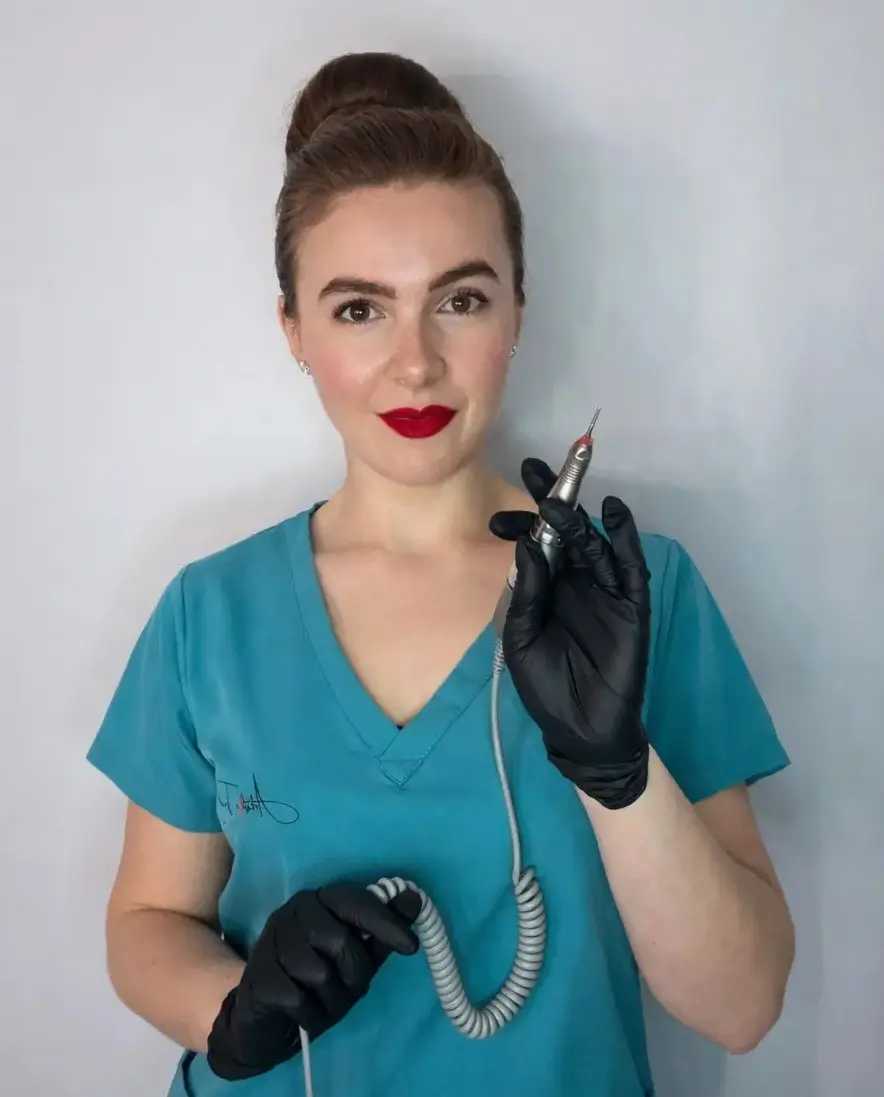
Radina Ignatova operates Artistic Touch Nail Training Academy, specialising in advanced nail techniques including Russian Manicure, BIAB, and e-file methods. With over 12 years of salon experience since 2014, she combines practical nail expertise with COSCA-accredited counselling skills to create comprehensive educational programmes.
Radina’s teaching philosophy centres on “honest education” – showing real mistakes and solutions rather than perfect Instagram-style results. This approach differentiates her courses from competitors who only showcase flawless demonstrations. She emphasises safety-first protocols, proper anatomical terminology, and evidence-based techniques over shortcuts or simplified methods.
The academy offers both online courses worldwide and one-to-one in-person training in Dundee, with certificates of completion and masterclasses designed for working nail technicians seeking professional development.
Note: This guide reflects UK-specific nail education standards and insurance requirements as of February 2026. Requirements may vary by location, insurance provider, and local council. Always verify current requirements with relevant authorities before making professional decisions based on this information.