Cuticle Haematoma: When to Stop Any Nail Service
Quick Answer
When should you stop any nail service due to a cuticle haematoma? Stop immediately if you see visible bruising (haematoma), swelling, tenderness, recent trauma, or any sign of infection. This applies to all nail services including e-file work, manual cuticle work, Russian Manicure, gel polish application, and nail enhancements. Working on damaged tissue delays healing, increases infection risk, and can cause permanent nail matrix damage. Professional nail technicians prioritise client safety over completing the service.
Most nail education content shows you perfect conditions. Perfect cuticles. Perfect nails. No complications. But that is not real salon work.
Real clients present with bruised cuticles, inflamed skin, recent injuries, and dozens of other conditions that require you to make professional decisions in the moment. And one of the most important decisions you will ever make as a nail technician is knowing when to stop.
In this article, I am going to show you a real example from my own hand where continuing with any nail service would cause genuine harm. This is not a perfect demonstration. This is real professional decision-making, and it is exactly what separates trained professionals from self-taught technicians who think watching tutorials prepares them for paying clients.
What You Are Looking At: Understanding Haematomas
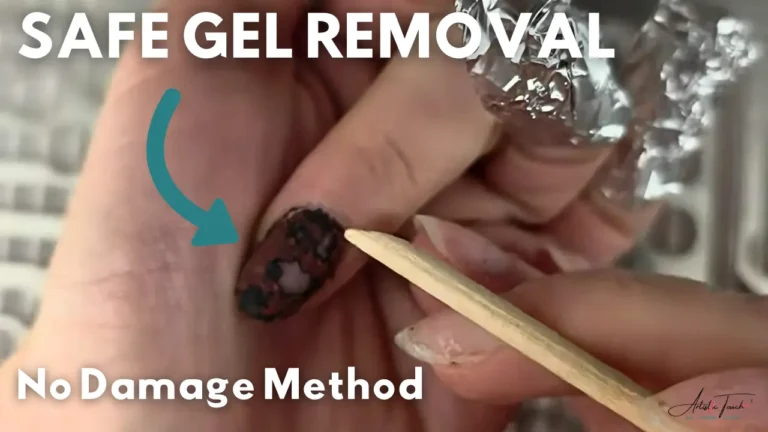
A haematoma is blood that has pooled under the skin from burst capillaries. In this case, I accidentally hit my finger against something a few days ago, and you can see visible bruising underneath the cuticle area.
The skin looks intact on the surface, but underneath, the tissue is damaged. There is inflammation. There is bruising. And most importantly, the area is still healing.
Now, if this were a client sitting in front of you during a Russian Manicure, gel polish application, BIAB enhancement, or any other nail service, would you continue working on this finger? Or would you stop and explain why you cannot work on this area?
The correct answer is you stop. And I am going to explain exactly why.
Why You Cannot Work on a Haematoma
When you see a haematoma, you are looking at blood that has pooled under the skin from burst capillaries. The tissue is damaged. The body is actively trying to heal that area by reabsorbing the blood and repairing the vessels.
If you perform any nail service on this area – whether that is e-file work, manual cuticle nippers, pushing back the cuticle, buffing the nail plate, or applying product – you are introducing friction, pressure, and mechanical stress to tissue that is already compromised.
What Happens When You Work on Damaged Tissue
That friction and pressure can rupture more capillaries, making the bruising worse. It delays healing because you are adding trauma to an area that is trying to repair itself. And with any cuticle work, it increases the risk of breaking the skin, which creates an entry point for bacteria.
The client might not feel significant pain because the damage is under the surface, but that does not mean it is safe to work on. You are making the injury worse, not better.
A professional stops when they see this. It is not about being overly cautious. It is about understanding tissue health and making the right decision.
⚠️ Critical Safety Point: Never assume that lack of pain means it is safe to continue with any nail service. Damaged tissue under the surface can be made significantly worse by e-file work, manual tools, or product application, even if the client says it does not hurt.
What Happens If You Continue Anyway
Let me be clear about what happens if you ignore the haematoma and continue working:
- You make the bruising worse. The mechanical action of any tool – e-file, cuticle nipper, or even a cuticle pusher – can rupture additional capillaries. What was a small bruise becomes a larger one.
- You delay healing. The body is trying to repair this tissue. When you add friction, pressure, or trauma from any nail service, you interrupt that process. What could heal in a few days now takes longer.
- You increase infection risk. If any tool creates even a tiny break in the skin over the damaged tissue, bacteria can enter. This applies to e-files, nippers, pushers, and even product application if the skin breaks. Damaged tissue is more vulnerable to infection than healthy tissue.
- You cause unnecessary discomfort. Even if the client does not say anything, bruised tissue is more sensitive. Any cuticle work or nail preparation on it is uncomfortable.
- You damage your professional reputation. If the client goes home and the bruising gets worse, or if they develop an infection, they will connect that to your service. And they will not come back.
Learn Professional Nail Safety
Want to master safe cuticle work with full safety protocols, contraindications, and troubleshooting for real salon situations?
View Professional CoursesHow to Recognise When You Should Not Continue
So how do you recognise when a cuticle is not safe to work on? Here are the signs you need to look for before you start:
Visual Warning Signs
- Visible bruising or discolouration. If you see purple, red, blue, or dark discolouration under the skin, that is a haematoma. Do not work on it.
- Swelling or puffiness. If the cuticle area looks swollen compared to the other fingers, that is inflammation from trauma. Do not work on it.
- Cuts, hangnails, or open skin. Any break in the skin creates infection risk.
- Redness around the proximal nail fold. This indicates inflammation or possible infection.
Physical Warning Signs
- Tenderness when you touch the area. If the client flinches or says it feels sore, stop. That is a sign the tissue is damaged.
- Heat in the area. Warm skin indicates active inflammation.
- Recent trauma. If the client tells you they hit their finger, caught it in a door, or had any injury to that area in the last week or two, do not use an e-file on it.
If you see any of these signs, you explain to the client why you cannot work on that area. You either skip that finger entirely or work around the damaged area with extreme caution.
Most clients will appreciate your honesty. They will respect that you are prioritising their health over finishing the service quickly.
What to Do Instead
If you cannot work on the damaged area safely, what are your options?
Option One: Skip That Finger Entirely
If the haematoma is significant, do not perform any cuticle work or nail preparation on that finger. Explain to the client that it needs time to heal. Most clients understand and appreciate the honesty.
You might say: “I can see you have some bruising under the skin on this finger. Working on it with any tools would delay healing and could make it worse. I am going to leave this one and focus on the others. It should be healed enough for next time.”
Option Two: Work Around the Damaged Area
If the bruising is localised to one side of the cuticle, you may be able to work on the rest of the nail whilst avoiding that specific area. But only if you can do so without putting any pressure or stress on the damaged tissue.
This might mean you can apply gel polish or BIAB to the nail plate whilst completely avoiding any cuticle work on that finger.
Option Three: Reschedule That Finger
If the client wants a full service on all fingers, offer to complete that one finger at their next appointment when the bruising has healed.
The key is this: You do not push through. You do not ignore the signs. You make a professional decision based on what is safe for the client.
Why This Decision Protects Both You and the Client
Making the decision to stop is not just good for the client. It protects you as well.
Client Protection
- Prevents worsening of the injury
- Reduces infection risk
- Allows proper healing time
- Demonstrates professional care
Your Professional Protection
- Liability protection. If a client’s haematoma gets worse or becomes infected after you worked on it, you could be held responsible.
- Insurance coverage. Your insurance might not cover you if you ignored obvious warning signs and caused harm.
- Reputation building. When you explain why you cannot work on a damaged area, clients see that you care about their health, not just their money. That trust brings them back.
- Professional boundaries. Clients need to understand that nail services are about health and safety, not just aesthetics. When you set that standard, clients respect you more, not less.
Real Professional Standards in Action
This is what real professional nail work looks like. It is not about perfect Instagram photos. It is not about finishing every service no matter what. It is about making the right decision for the client, even when that decision means stopping.
Most nail content online shows you perfect conditions. Perfect cuticles. Perfect nails. No problems. But that is not real salon work.
Real salon work involves clients with damaged cuticles, bruised fingers, inflamed skin, and dozens of other issues that you need to assess and respond to professionally.
If you only learn how to do techniques under perfect conditions, you are not prepared for real clients. You need to know when to adapt, when to stop, and when to say no.
That is what separates a trained professional from someone who learned from YouTube and thinks they are ready to work on paying clients.
Master Professional Nail Techniques Safely
Learn proper cuticle work with comprehensive safety training, nail anatomy education, and real troubleshooting for situations exactly like this.
Our professional courses include:
- Complete safety protocols for all nail services
- Contraindications and when to stop
- Nail anatomy for safe cuticle work
- Troubleshooting for different nail types and conditions
- Lifetime access and student support
Frequently Asked Questions
What is a haematoma and how do I recognise it?
A haematoma is blood that has pooled under the skin from burst capillaries, usually from trauma or injury. You will see purple, red, blue, or dark discolouration under the skin around the cuticle area. The skin may look intact on the surface, but the tissue underneath is damaged and healing. Any visible bruising means you should not use an e-file on that area.
Can I work on a haematoma if I use manual tools instead of an e-file?
No. Any tool that creates friction, pressure, or stress on the damaged tissue can cause harm. This includes e-files, cuticle nippers, cuticle pushers, buffers, and even some product applications. The tissue is damaged regardless of which tool you use. The professional decision is to skip that finger entirely or work around the damaged area without touching it.
What should I tell the client when I cannot work on their cuticle?
Be honest and professional. Explain: “I can see you have some bruising under the skin on this finger. Working on it would delay healing and could make it worse. I am going to leave this one and focus on the others. It should be healed for next time.” Most clients appreciate this honesty and see it as professional care, not a refusal of service.
How long does a cuticle haematoma take to heal?
Small haematomas typically heal within 7 to 14 days as the body reabsorbs the blood. Larger or deeper bruising may take 2 to 3 weeks. The healing time depends on the severity of the trauma and whether the area is left alone to heal properly. Working on it with an e-file will delay this process.
What other conditions mean I should not perform cuticle work or nail services?
Do not work on cuticles or damaged areas if you see: active infection (pus, extreme redness, swelling), open cuts or wounds, severe inflammation, psoriasis or eczema around the cuticle, extremely thin or damaged nail plates, or if the client is on blood thinners. Also avoid working on areas with warts, fungal infections, or active dermatitis. When in doubt, stop and assess. Client safety always comes first.
Will the client be upset if I refuse to work on one finger?
Professional clients appreciate honesty and safety. When you explain why you cannot work on damaged tissue, most clients respect your judgment and see it as evidence of proper training and care. The clients who get upset about this are not the clients you want long-term. Professional boundaries protect both you and your business.
Where can I learn proper e-file safety protocols?
The E-File Manicure and Gel Polish Course at Artistic Touch Nail Training Academy covers comprehensive safety protocols, nail anatomy, contraindications like haematomas, and troubleshooting for real salon situations. The course includes lifetime access, detailed video demonstrations, and student support for questions exactly like these.
Ready to Learn Professional E-File Techniques?
Join students worldwide who have learned safe, effective e-file methods through structured professional training.
View All CoursesDisclaimer: This article is educational content for qualified and training nail technicians. Always follow health and safety regulations and work within your professional insurance coverage. When in doubt about client suitability for e-file services, consult with a medical professional or refer the client to appropriate care.
© 2025 Artistic Touch Nail Training Academy | Professional Nail Education | Scotland, UK